Natural Rubber Profile
CN → US| HS Code | Tariff Rate | Origin | Destination | Doc |
|---|---|---|---|---|
| 4016996050 | 37.5% | CN | US | Official Doc |
| 4016990300 | 38.0% | CN | US | Official Doc |
| 4008196000 | 38.3% | CN | US | Official Doc |
| 4008292000 | 37.9% | CN | US | Official Doc |
| 4002800000 | 35.0% | CN | US | Official Doc |
Product Images
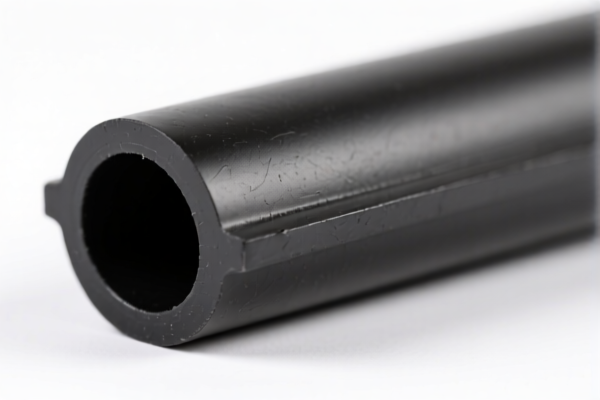
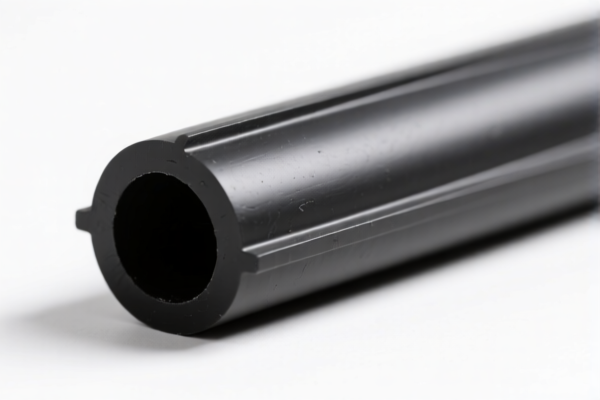
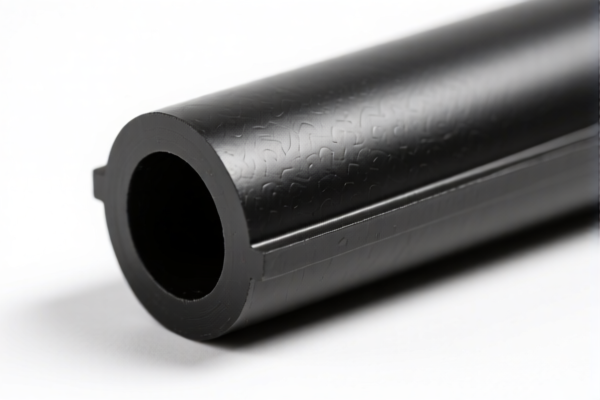
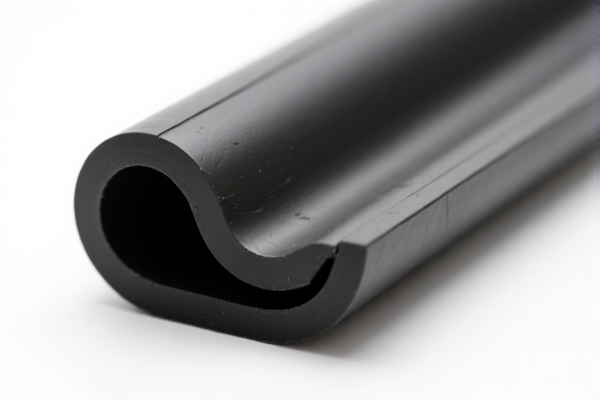
AI Analysis
🛡️ Natural Rubber Profile (Rubber Extrusions)
🌐 HS Code Reference & Customs Clearance Guide | 2026 Latest Tariff Analysis | Professional Clearance Strategy
📌 1. Product Definition & Classification: Do You Really Understand "Rubber Profile"?
Rubber Profile, also known as Rubber Extrusions or Sealing Strips, is a critical component in construction, automotive, and industrial applications. In international trade, these products are generally classified under Chapter 40 (Rubber and Articles Thereof).
The core characteristic is the material (Natural Rubber + Synthetic Rubber Blends) and the form (Continuous shapes/Profiles) rather than finished end-products like tires or belts.
⚠️ Key Distinction Point:
- If the product is a finished, vulcanized rubber shape (like a door seal, window gasket, or industrial strip) → It falls under Headings 4016 or 4008.
- If it is non-hard rubber in raw or semi-processed form → It may fall under Heading 4008.
- If it is a mix of natural and synthetic rubber in block or primary form → It may fall under Heading 4002.
📦 2. HS Code Classification Details (2026 Latest Tariff Authority Comparison)
| HS Code | Product Description | Application Scenario | Material/Form Match |
|---|---|---|---|
4016.99.60.50 |
Other articles of vulcanized rubber other than hard rubber | General rubber profiles, seals, gaskets | ✅ Vulcanized Rubber, Profile Shape |
4016.99.03.00 |
Other articles of vulcanized rubber other than hard rubber (Building Profiles) | Construction rubber seals, window profiles | ✅ Vulcanized Rubber, Building Profile |
4008.19.60.00 |
Plates, sheets, strip, rod and profile, of non-hard rubber | Non-hard rubber extrusions, raw profiles | ✅ Non-Hard Rubber, Profile Form |
4008.29.20.00 |
Plates, sheets, strip, rod and profile, of non-hard rubber (Other) | Other non-hard rubber profiles | ✅ Rubber Material, Profile Form |
4002.80.00.00 |
Mixtures of natural rubber and synthetic rubber | Mixed rubber blocks/primary forms | ✅ Mixture of Natural & Synthetic Rubber |
🔍 Important Reminder:
- Most commercial "Rubber Profiles" (finished seals) are vulcanized and belong to 4016.
- Raw extruded rubber strips before final vulcanization might be 4008.
- If the product is simply a mix of raw rubbers without shaping into a specific finished article, it may be 4002.
- Misclassification Risk: Declaring a finished vulcanized profile as "raw rubber" (4002) to avoid taxes will lead to severe penalties.
💰 3. 2026 Latest Tariff Rate Details (Including Surcharges & Policy Add-ons)
✅ Applicable Country: United States (US)
✅ Origin: China (CN)
✅ Effective Date: November 10, 2025 (and subsequent imports)
🎯 1. 4016.99.60.50 — Other Vulcanized Rubber Articles (General Profile)
| Item | Content |
|---|---|
| Base Tariff | 2.5% (ad valorem) |
| USITC Surcharge (Section 301) | +25.0% |
| IEEPA Surcharge (Section 122/China Specific) | +10.0% |
| Total Tariff Rate | 37.5% |
| Tax Calculation | CIF Value × 37.5% |
| De Minimis Exemption | ❌ Not Eligible (deny_de_minimis) |
| Legal Basis Path | USITC:4016.99.60.50 → FOOTNOTE:301 → IEEPA:122 |
📌 Explanation:
- This is the most common code for finished vulcanized rubber profiles (e.g., door seals, window gaskets).
- The 37.5% total rate is high, driven by the 25% Section 301 duty and 10% IEEPA surcharge.
- De Minimis (Section 321) does NOT apply, so small shipments are still taxed.
🎯 2. 4016.99.03.00 — Vulcanized Rubber Articles (Building Profiles)
| Item | Content |
|---|---|
| Base Tariff | 3.0% (ad valorem) |
| USITC Surcharge (Section 301) | +25.0% |
| IEEPA Surcharge (Section 122/China Specific) | +10.0% |
| Total Tariff Rate | 38.0% |
| Tax Calculation | CIF Value × 38.0% |
| De Minimis Exemption | ❌ Not Eligible (deny_de_minimis) |
| Legal Basis Path | USITC:4016.99.03.00 → FOOTNOTE:301 → IEEPA:122 |
📌 Note:
- Specifically for construction/building rubber profiles (e.g., EPDM seals for windows/doors).
- Slightly higher total rate than general profiles due to a higher base duty (3.0% vs 2.5%).
- Same high surcharges apply.
🎯 3. 4008.19.60.00 — Non-Hard Rubber Profiles
| Item | Content |
|---|---|
| Base Tariff | 3.3% (ad valorem) |
| USITC Surcharge (Section 301) | +25.0% |
| IEEPA Surcharge (Section 122/China Specific) | +10.0% |
| Total Tariff Rate | 38.3% |
| Tax Calculation | CIF Value × 38.3% |
| De Minimis Exemption | ❌ Not Eligible (deny_de_minimis) |
| Legal Basis Path | USITC:4008.19.60.00 → FOOTNOTE:301 → IEEPA:122 |
📌 Note:
- For non-hard rubber forms (strip, rod, profile) that are not yet vulcanized into finished articles.
- Highest base rate among the vulcanized/non-hard options in this list.
🎯 4. 4008.29.20.00 — Other Non-Hard Rubber Profiles
| Item | Content |
|---|---|
| Base Tariff | 2.9% (ad valorem) |
| USITC Surcharge (Section 301) | +25.0% |
| IEEPA Surcharge (Section 122/China Specific) | +10.0% |
| Total Tariff Rate | 37.9% |
| Tax Calculation | CIF Value × 37.9% |
| De Minimis Exemption | ❌ Not Eligible (deny_de_minimis) |
| Legal Basis Path | USITC:4008.29.20.00 → FOOTNOTE:301 → IEEPA:122 |
📌 Note:
- Another sub-category for non-hard rubber profiles.
- Total rate is 37.9%, slightly lower than4008.19.60.00but higher than4016.99.60.50.
🎯 5. 4002.80.00.00 — Mixtures of Natural & Synthetic Rubber
| Item | Content |
|---|---|
| Base Tariff | 0.0% (ad valorem) |
| USITC Surcharge (Section 301) | +25.0% |
| IEEPA Surcharge (Section 122/China Specific) | +10.0% |
| Total Tariff Rate | 35.0% |
| Tax Calculation | CIF Value × 35.0% |
| De Minimis Exemption | ❌ Not Eligible (deny_de_minimis) |
| Legal Basis Path | USITC:4002.80.00.00 → FOOTNOTE:301 → IEEPA:122 |
📌 Note:
- This code applies to mixed rubber compounds (natural + synthetic) in primary forms, NOT finished profiles.
- Lowest Base Rate (0%), resulting in the lowest Total Rate (35.0%) among all options.
- ⚠️ Warning: Only use this if the product is raw rubber compound/mixture, not a shaped profile. Misdeclaring shaped profiles as raw rubber is a common customs violation.
🛠️ 4. Customs Clearance Practical Advice (Battle-Tested Pitfall Guide)
✅ 1. Document Checklist (Non-Negotiable)
| Document | Required | Description |
|---|---|---|
| ✅ Product Specification Sheet | ✔️ | Must detail material composition (Natural/Synthetic %), hardness (Shore A), and dimensions. |
| ✅ Product Photos | ✔️ | Clear images showing the cross-section (profile shape) and any packaging labels. |
| ✅ Commercial Invoice | ✔️ | Must clearly state "Rubber Profile" or "Vulcanized Rubber Seal" – do not use vague terms like "Rubber Part". |
| ✅ Packing List | ✔️ | Include gross/net weight, dimensions, and quantity. |
| ✅ Material Safety Data Sheet (MSDS) | ✔️ | Required for rubber compounds containing chemicals. |
| ✅ Certificate of Origin (CO) | ✔️ | Essential for proving Chinese origin (triggers surcharges) or other origins (if applicable). |
✅ 2. Declaration Tips (Key Mantra)
🔥 "Shape Defines Code, Vulcanization Matters!"
| Scenario | Correct Declaration | Wrong Practice |
|---|---|---|
| Finished Seal/Profile (Vulcanized) | 4016.99.60.50 or 4016.99.03.00 |
Declaring as 4002 (Raw Rubber) → Penalty/Fraud |
| Raw Extruded Strip (Non-Vulcanized) | 4008.19.60.00 or 4008.29.20.00 |
Declaring as 4016 (Finished) → Overpayment |
| Mixed Raw Rubber Compound | 4002.80.00.00 |
Declaring as "Profile" → Incorrect HS |
| Building Window Seal | 4016.99.03.00 |
Generic "Rubber Part" → Delays |
📌 Critical Rule:
- If the rubber has been vulcanized (cured/hardened into final shape), it must be under 4016 or 4008 (if non-hard).
- If it is just a mixture of raw rubbers without forming a specific profile/article, use 4002.
- Never mix "finished product" descriptions with "raw material" HS codes.
✅ 3. Special Situations Handling
| Situation | Handling Advice |
|---|---|
| Custom-Extruded Profiles | Provide drawings or cross-sections. Customs may request proof of vulcanization status. |
| EPDM/Silicone Profiles | Specify the polymer type in the description. EPDM is common for building seals (4016.99.03.00). |
| Small Samples (De Minimis) | ❌ No Exemption: Even small samples of Chinese rubber profiles are subject to 35-38% duties. Do not use Section 321. |
| Re-export from Mexico/Vietnam | If raw materials are from China but processed into rubber profiles in Mexico/Vietnam with sufficient transformation, you may qualify for lower duties. Requires Proof of Substantial Transformation. |
🌍 5. Global Market Comparison (2026 Latest)
| Country/Region | Recommended HS Code | Tariff (China Origin) | Certification | Notes |
|---|---|---|---|---|
| 🇺🇸 USA | 4016.99.60.50 |
37.5% | None Required | High surcharges apply. No de minimis. |
| 🇨🇳 China | 4016.99.60.50 |
~2.5% | CCC (if applicable) | Low import duty for domestic production. |
| 🇪🇺 EU | 4016.99.90 |
0% (under GSP/TARIC) | REACH + RoHS | No additional surcharges. |
| 🇦🇺 Australia | 4016.99.10 |
5% | SAA Standards | No Section 301 equivalent. |
| 🇯🇵 Japan | 4016.93.00 |
5-8% | JIS Standards | No additional surcharges. |
📌 Conclusion:
- USA is the most expensive market due to 301 + IEEPA surcharges.
- EU, Australia, Japan have standard low MFN rates.
- Cost Optimization: If exporting to the US, consider supply chain relocation (e.g., processing in Vietnam/Mexico) to avoid Chinese origin surcharges, provided rules of origin are met.
📌 6. Common Errors & Pitfall Guide (Blood-Taught Lessons)
❌ Error 1: Declaring finished rubber seals as raw rubber pellets (4002)
👉 Consequence: Customs seizure, fraud penalties, and back taxes + fines.
✅ Fix: Always declare based on final state (vulcanized vs. raw).
❌ Error 2: Using vague terms like "Rubber Part" or "Rubber Piece"
👉 Consequence: Customs delays, request for additional info, potential re-classification with higher duty.
✅ Fix: Use precise terms: "EPDM Rubber Window Profile, Vulcanized".
❌ Error 3: Assuming small shipments are duty-free (de minimis)
👉 Consequence: Packages held by CBP, duties assessed retroactively, courier fees charged.
✅ Fix: Plan for 35-38% duty on all China-origin rubber profiles entering the US.
❌ Error 4: Confusing Hard Rubber (Ebonite) with Vulcanized Rubber
👉 Consequence: Incorrect HS code. Hard rubber (4001/4003) has different duties.
✅ Fix: Most rubber profiles are soft/flexible vulcanized rubber (4016), not hard ebonite.
✅ Correct Declaration Example:
"EPDM Vulcanized Rubber Profile for Window Sealing, Cross-Section 10mm x 5mm, HS 4016.99.60.50"
🎯 7. Conclusion: Professional Declaration, Save Cost, Avoid Risks!
🎯 Remember the Mantra:
🔹 "Vulcanized = 4016, Raw = 4008/4002, US Tariff = 35-38%!"
🔹 "De Minimis Does Not Apply to Rubber from China!"
🔹 "Precise Description Saves Time and Money!"
📌 Pro Tip:
If your rubber profiles are manufactured in Vietnam, Mexico, or Thailand, and the rubber compound is sourced from China but undergoes substantial transformation (extrusion + vulcanization + cutting), you may be able to claim a non-Chinese origin.
👉 Action: Consult a customs broker to apply for a Pre-Ruling or verify Rules of Origin for your specific supply chain.
📣 Immediate Action:
📞 Contact a licensed customs broker.
📤 Provide product photos and material specs.
🚀 Ensure your invoice matches the exact HS Code to avoid costly delays at US ports.
✨ Professional Clearance Starts with Accurate Classification!
💼 Your Profit Margin Depends on Precise Duty Calculation!
Customer Reviews
About HS Code Classification
The Harmonized System (HS) is an internationally standardized nomenclature developed by the World Customs Organization (WCO) to classify traded products. Over 200 countries use the HS system as the basis for customs tariffs, trade statistics, and import/export regulations.
Each HS code follows a hierarchical structure:
- Chapter (2 digits) — Broad category of goods (e.g., Chapter 84: Machinery and Mechanical Appliances)
- Heading (4 digits) — More specific grouping within the chapter
- Subheading (6 digits) — Internationally standardized breakdown, used by all WCO member countries
- National subdivisions (8-10 digits) — Country-specific extensions for further classification, such as US HTSUS 10-digit codes
Correct HS code classification is essential for smooth customs clearance, accurate duty payment, and compliance with trade regulations. Misclassification can lead to customs delays, overpayment of duties, or penalties.
When importing from CN to US, the applicable tariff rates may include:
- Most-Favored-Nation (MFN) rate — The standard duty rate applied to WTO members
- General rate — Applied to countries without trade agreements
- Trade remedy duties — Additional tariffs such as Section 301 (anti-dumping), Section 232 (national security), or countervailing duties
The information provided on this page is for reference purposes only. For official classification, please consult with your local customs authority or a licensed customs broker.