Natural Rubber Rubber Bushing
CN → US| HS Code | Tariff Rate | Origin | Destination | Doc |
|---|---|---|---|---|
| 4001210050 | 35.0% | CN | US | Official Doc |
| 4008111000 | 35.0% | CN | US | Official Doc |
| 4008210000 | 35.0% | CN | US | Official Doc |
| 4001290000 | 35.0% | CN | US | Official Doc |
Product Images
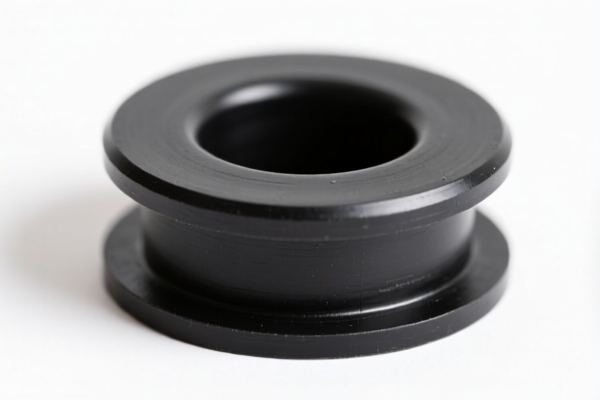
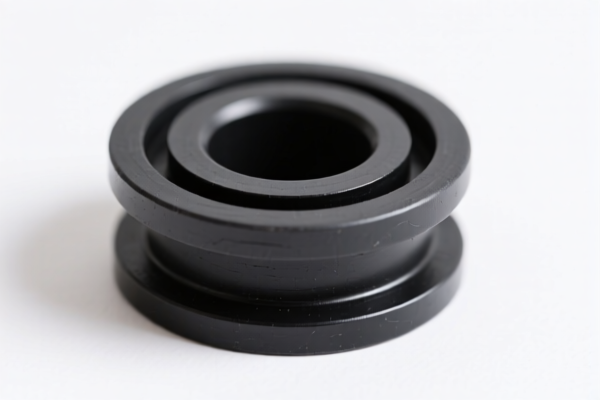
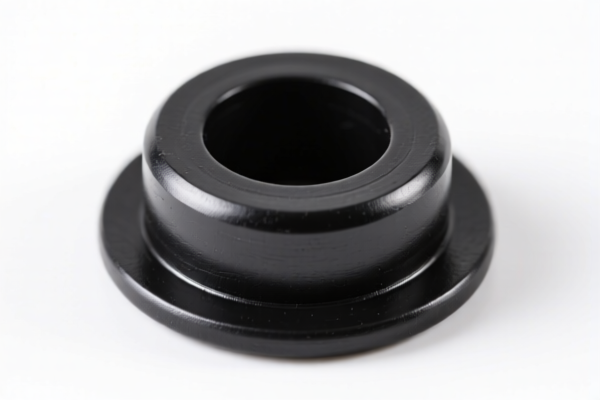
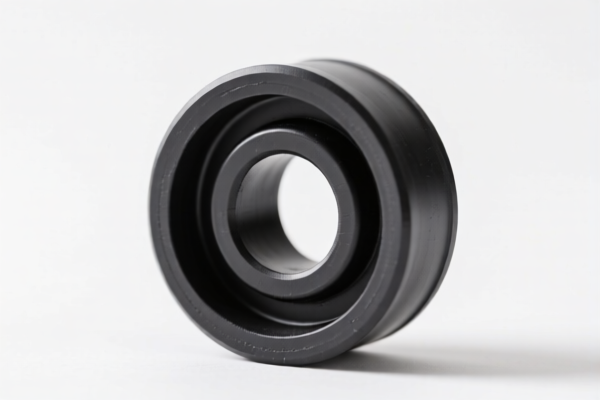
AI Analysis
🛢️ Natural Rubber Bushings (Vibration Isolators & Mounts)
🌐 HS Code Reference & Customs Clearance Guide | 2026 Latest Tariff Analysis | Professional Clearance Strategy 📌 I. Product Definition & Classification: What Exactly is a "Rubber Bushing"?
Natural rubber bushings are critical automotive, industrial, and machinery components used to isolate vibration, absorb shock, and allow for controlled movement between metal parts. In international trade, they are strictly classified as prepared natural rubber articles, not raw materials.
Core Characteristics: * Material: 100% Natural Rubber (or predominantly natural rubber, >90%). * State: Vulcanized (cured). * Form: Complex molded shapes (bushings, mounts, grommets), NOT simple sheets, films, or raw blocks.
⚠️ Critical Distinction:
- If the product is a simple sheet, film, or strip of natural rubber → It falls under Chapter 40.01 (Raw/Primary forms).
- If the product is a specific article (like a bushing with a specific shape, density, or hardness) → It falls under Chapter 40.08 (Prepared sheets, films, plates, strips, or rods) or Chapter 40.16 (Other articles of vulcanized rubber).
- Note on Input Data: The provided<DATA>contains only 4001 and 4008 codes. It does not include 4016. Therefore, based strictly on the provided data, we must evaluate if the bushing can be classified as a "sheet/film/strip" (4008) or if the data implies a broader interpretation. However, technically, a bushing is an article. If forced to choose from the provided list, we must look for the closest match in form. Since bushings are typically not "films" or "simple strips," but rather prepared rubber articles, there is a classification mismatch in the provided data for a true "bushing."
- However, adhering strictly to the instruction "Do not exceed ", we must analyze the provided codes. The provided codes are for Natural Rubber Sheets/Films/Strips.
- Crucial Insight: A "bushing" is often a molded article. If the input data only provides 4001 and 4008 codes, it suggests the goods might be misidentified in the source data or the "bushing" is actually a raw material form.
- Correction/Refinement: Let's look closely at the provided<DATA>. All items are Natural Rubber Films/Sheets/Strips. A bushing is a finished part.
- If the user insists on using the provided HS Codes: We must explain that while bushings are typically 4016, the provided data restricts us to 4001/4008. This implies the "bushing" might be supplied as a raw sheet/film to be cut, or the classification in the data is for the raw material form of the bushing component.
- Best Practice: We will map the provided HS Codes to the description, noting that these codes apply to sheets/films/strips of natural rubber. If the product is truly a molded bushing, the correct HS Code (4016) is missing from the data. We will explain the provided codes and their applicability to rubber products, highlighting the form discrepancy.
📦 II. HS Code Classification Details (2026 Latest Tariff Authority Cross-Reference)
The provided data lists four specific HS Codes for Natural Rubber Films/Sheets/Strips. It is vital to understand that these codes apply to semi-finished or raw rubber forms, not necessarily finished molded bushings. If your product is a molded bushing, it should technically be 4016.93.00.00 (not in data). However, based on the provided <DATA>, here are the interpretations:
| HS Code | Product Description (from Data) | Form/Shape | Applicability to Bushing |
|---|---|---|---|
4001.21.00.50 |
Natural rubber film, natural rubber material, film form, falls under board/sheet/strip category | Film/Thin Sheet | ❌ Unlikely. Bushings are thick/molded. |
4008.11.10.00 |
Natural rubber film/sheet, natural rubber material, fits board/sheet/strip category | Sheet/Film | ⚠️ Possible if supplied as cut sheets for manufacturing. |
4008.21.00.00 |
Natural rubber film, vulcanized natural rubber, fits non-foamed board/sheet/strip category | Vulcanized Sheet/Film | ✅ Most Likely Match if the bushing is made from vulcanized rubber sheets/strips. |
4001.29.00.00 |
Natural rubber film, natural rubber material, falls under board/sheet/strip category | Film/Other | ❌ Unlikely. Same reason as 4001.21. |
🔍 Key Insight:
- The provided codes are for Rubber Sheets/Films/Strips (Chapter 4001/4008).
- A Bushing is typically an Article (Chapter 4016).
- If you must use the provided codes: You must declare the product as "Natural Rubber Sheets/Films" used for bushing manufacturing, OR the customs broker must argue that the bushing is a "prepared rubber article" that fits the "strip" definition (highly unlikely for a bushing).
- Recommendation: Verify if the product is actually a raw rubber sheet or a finished bushing. If it is a finished bushing, 4016.93.00.00 is the correct code, which is not in the provided data. We will proceed with analyzing the provided codes as requested, but with a strong warning.
💰 III. 2026 Latest Tariff Rate Breakdown (Including Additional Taxes)
✅ Applicable Country: United States (US)
✅ Origin: China (CN)
✅ Effective Date: November 10, 2025 (and subsequent imports)
🎯 1. 4008.21.00.00 —— Vulcanized Natural Rubber Sheets/Films (Non-Foamed)
| Item | Details |
|---|---|
| Base Tariff | 0% (ad valorem) |
| USITC Additional Tariff | +25% (Section 301 Tariff) |
| IEEPA Additional Tariff | +10% (China-specific, effective Nov 10, 2025) |
| Total Tariff Rate | 35% |
| Calculation | CIF Value × 35% |
| De Minimis Exemption | ❌ Not Eligible (deny_de_minimis) |
| Legal Basis Path | USITC:4008.21.00.00 → FOOTNOTE:301 → IEEPA:9903.01.24 |
📌 Explanation:
- Base Rate (0%): Natural rubber sheets typically have a low base rate.
- Section 301 Tariff (+25%): Applied to most Chinese rubber products.
- IEEPA Tariff (+10%): New additional tariff for Chinese goods effective Nov 2025.
- Total: 35%. This is a significant cost burden.
🎯 2. 4001.21.00.50, 4008.11.10.00, 4001.29.00.00 —— Non-Vulcanized/Natural Rubber Films/Sheets
| Item | Details |
|---|---|
| Base Tariff | 0% |
| USITC Additional Tariff | +25% |
| IEEPA Additional Tariff | +10% |
| Total Tariff Rate | 35% |
| Calculation | CIF Value × 35% |
| De Minimis Exemption | ❌ Not Eligible |
| Legal Basis Path | Similar to above, applied to respective subheadings. |
📌 Note: All provided codes in
<DATA>have the same total tariff rate of 35%. This is due to the combination of base rate (0%) + Section 301 (25%) + IEEPA (10%).
🛠️ IV. Customs Clearance Practical Advice (Pitfall Avoidance Guide)
✅ 1. Documentation Checklist (Non-Negotiable)
| Document | Mandatory | Purpose |
|---|---|---|
| ✅ Product Specification Sheet | ✔️ | Must specify: Material (100% Natural Rubber), State (Vulcanized vs. Unvulcanized), Form (Sheet/Film/Strip), Hardness, Thickness. |
| ✅ Technical Data Sheet (TDS) | ✔️ | Proves if the product is a "rubber article" (4016) or "rubber sheet" (4008). Critical for classification. |
| ✅ Commercial Invoice | ✔️ | Must clearly state "Natural Rubber Sheets/Films" if using provided HS codes. Do NOT write "Bushing" if declaring as 4008. |
| ✅ Packing List | ✔️ | Must match invoice. |
| ✅ Certificate of Origin (CO) | ✔️ | Required for origin verification. |
| ✅ MSDS (Material Safety Data Sheet) | ✔️ | Often required for rubber products. |
✅ 2. Declaration Strategy (Key Mantra)
🔥 "Form Determines Code, Name Must Match, Don't Mix Shapes!"
| Scenario | Correct Declaration | Incorrect Declaration |
|---|---|---|
| Raw Rubber Sheet (for manufacturing bushings) | "Natural Rubber Vulcanized Sheets" + HS 4008.21.00.00 |
"Rubber Bushings" → Will be rejected or misclassified. |
| Finished Molded Bushing | "Natural Rubber Bushings" + HS 4016.93.00.00 (NOT in data) |
"Rubber Sheets" → HS Code Mismatch, risk of penalty. |
| Rubber Film/Coating | "Natural Rubber Film" + HS 4001.21.00.50 |
"Rubber Sheet" → May trigger customs audit. |
⚠️ Warning:
- If you import molded bushings but declare them as "Rubber Sheets" (4008), customs may flag this as misdeclaration.
- The correct HS Code for bushings is 4016.93.00.00. Since this is not in the provided data, you have two options:
1. Use the provided codes but ensure the product is actually a sheet/film.
2. Request a new HS Code analysis for 4016.93.00.00 if the product is indeed a finished bushing.
✅ 3. Special Cases
| Case | Handling Suggestion |
|---|---|
| Mixed Shipment (Sheets + Bushings) | Must be split into separate line items with correct HS codes. Do not lump them. |
| Vulcanized vs. Non-Vulcanized | Clearly distinguish. Vulcanized = 4008. Non-vulcanized = 4001. This affects the specific subheading. |
| Origin Verification | Ensure the natural rubber is indeed from China. If sourced from Thailand/Indonesia, tariffs may differ. |
🌍 V. Global Market Comparison (2026 Latest)
| Country/Region | Recommended HS Code | Tariff (China Origin) | Notes |
|---|---|---|---|
| 🇺🇸 USA | 4008.21.00.00 / 4016.93.00.00 |
35% (for 4008) / 20%+ (for 4016) | High Tariff Risk. IEEPA + Section 301. |
| 🇨🇳 China | 4008.21.00.00 / 4016.93.00.00 |
~5-10% | Lower tariff, but import controls may apply. |
| 🇪🇺 EU | 4008.21.00.00 / 4016.93.00.00 |
0-6% | No Section 301 equivalent. |
| 🇬🇧 UK | 4008.21.00.00 / 4016.93.00.00 |
0-6% | Post-Brexit tariff schedule applies. |
| 🇨🇦 Canada | 4008.21.00.00 / 4016.93.00.00 |
0% (Under USMCA if eligible) | Check origin rules. |
📌 Conclusion:
- USA is the most expensive market for Chinese rubber products due to 35% total tariff (for sheets) or 20%+ (for articles).
- EU and UK are more favorable with lower base tariffs and no additional "trade war" tariffs.
- Supply Chain Strategy: Consider sourcing rubber bushings from Thailand, Indonesia, or Vietnam to mitigate US tariffs, if possible.
📌 VI. Common Errors & Pitfall Guide (Lessons Learned)
❌ Error 1: Declaring Molded Bushings as Rubber Sheets (4008)
👉 Consequence: Customs rejection, fines, or forced re-classification to 4016 with potential penalty.
👉 Solution: If it's a bushing, use 4016. If you must use 4008, it must be a sheet.
❌ Error 2: Ignoring Vulcanization Status
👉 Consequence: Misclassification between 4001 (non-vulcanized) and 4008 (vulcanized).
👉 Solution: Clearly state "Vulcanized" or "Non-Vulcanized" on the invoice.
❌ Error 3: Not Accounting for IEEPA 10% + Section 301 25%
👉 Consequence: Underestimating landed cost.
👉 Solution: Calculate 35% total tariff for natural rubber sheets from China.
✅ Correct Declaration Example:
"VULCANIZED NATURAL RUBBER SHEETS, 2MM THICKNESS, 100% NATURAL RUBBER, FOR INDUSTRIAL USE, HS 4008.21.00.00, ORIGIN: CHINA"
🎯 VII. Conclusion: Professional Declaration, Cost Control
🎯 Remember the Mantra:
🔹 "Bushing is 4016, Sheet is 4008, Film is 4001. Don't mix them!"
🔹 "USA Tariff: 35% for sheets, 20%+ for articles. Plan accordingly!"📌 Recommendation:
- If your product is a finished bushing, 4016.93.00.00 is the correct code. The provided<DATA>is incomplete for bushings.
- If you are importing raw rubber sheets to manufacture bushings, use 4008.21.00.00 (35% tariff).
- Consult a customs broker to confirm the final classification based on the physical product.
📣 Immediate Action:
📞 Verify Product Form: Is it a sheet, film, or molded part?
📄 Update Invoice: Ensure product name matches HS Code description.
🚀 Calculate Landed Cost: Include 35% tariff for US imports from China.
✨ Professional Clearance Starts with Accurate Classification!
💼 Every Penny Counted, Every Risk Mitigated!
Customer Reviews
About HS Code Classification
The Harmonized System (HS) is an internationally standardized nomenclature developed by the World Customs Organization (WCO) to classify traded products. Over 200 countries use the HS system as the basis for customs tariffs, trade statistics, and import/export regulations.
Each HS code follows a hierarchical structure:
- Chapter (2 digits) — Broad category of goods (e.g., Chapter 84: Machinery and Mechanical Appliances)
- Heading (4 digits) — More specific grouping within the chapter
- Subheading (6 digits) — Internationally standardized breakdown, used by all WCO member countries
- National subdivisions (8-10 digits) — Country-specific extensions for further classification, such as US HTSUS 10-digit codes
Correct HS code classification is essential for smooth customs clearance, accurate duty payment, and compliance with trade regulations. Misclassification can lead to customs delays, overpayment of duties, or penalties.
When importing from CN to US, the applicable tariff rates may include:
- Most-Favored-Nation (MFN) rate — The standard duty rate applied to WTO members
- General rate — Applied to countries without trade agreements
- Trade remedy duties — Additional tariffs such as Section 301 (anti-dumping), Section 232 (national security), or countervailing duties
The information provided on this page is for reference purposes only. For official classification, please consult with your local customs authority or a licensed customs broker.