Natural Rubber Shock Absorber Rod
CN → US| HS Code | Tariff Rate | Origin | Destination | Doc |
|---|---|---|---|---|
| 8487900040 | 38.9% | CN | US | Official Doc |
| 4016995500 | 37.5% | CN | US | Official Doc |
| 4016993000 | 35.0% | CN | US | Official Doc |
| 8487900080 | 88.9% | CN | US | Official Doc |
Product Images
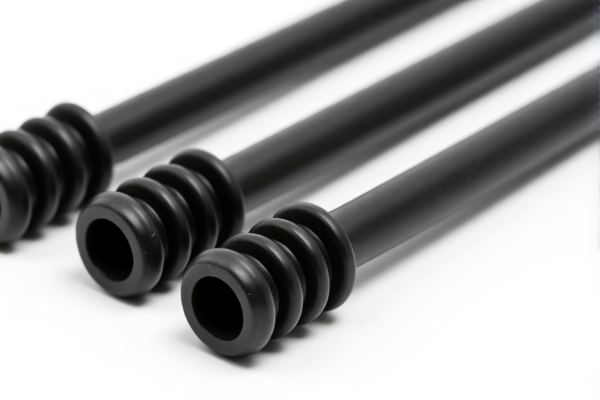
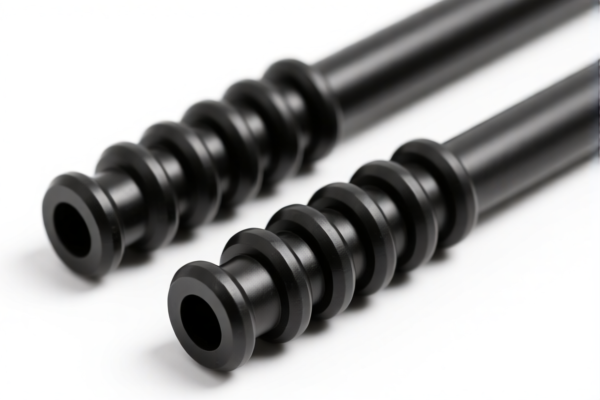
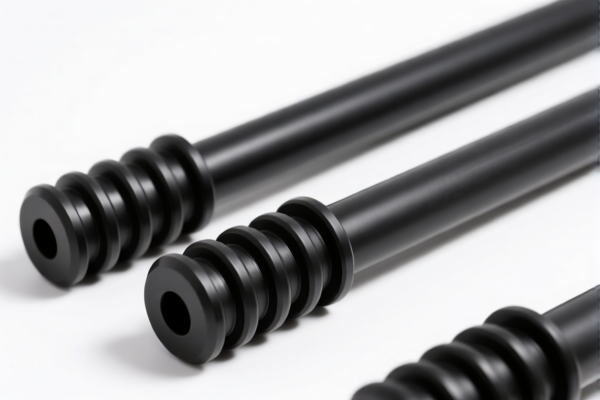

AI Analysis
🛡️ Natural Rubber Shock Absorber Rod
HS Code Classification & US Import Tariff Guide | 2026 Latest Analysis
🌐 HS Code Reference & Customs Clearance Guide | 2026 Tariff Authority Analysis | Professional Clearance Strategy
📌 I. Product Definition & Classification: What Exactly is a "Natural Rubber Shock Absorber Rod"?
A Natural Rubber Shock Absorber Rod is a mechanical damping component used in vehicles, industrial machinery, or structural systems to absorb vibrations and reduce impact forces. It typically consists of: - Core Material: Natural rubber (elastomer) for elasticity and damping. - Structure: Rod-shaped or cylindrical, often combined with metal housings or bushings (depending on design). - Function: Isolates shock, reduces noise, and stabilizes movement.
⚠️ Key Distinction:
- If it is a pure rubber component without electrical parts → Classified under Chapter 40 (Rubber Products) or Chapter 84 (Mechanical Parts).
- If it integrates metal frames, bearings, or electrical sensors → Classification may shift to Chapter 87 (Vehicle Parts) or Chapter 84 (Machinery Parts).
- Critical Point: The presence of steel, aluminum, or copper components may trigger additional 122-Clause tariffs (50% surcharge).
📦 II. HS Code Classification Details (2026 Latest Tariff Authority Mapping)
| HS Code | Product Description | Applicable Scenario | Key Composition |
|---|---|---|---|
| 8487.90.00.40 | Rubber Shock Absorbers, Mechanical Damping Components | Pure rubber or rubber-metal composite shock absorbers | ✅ Rubber + Metal (non-electrical) |
| 4016.99.55.00 | Vulcanized Rubber Articles for Vehicle Shock Control | Rubber bushings, mounts, or rods for vehicle suspension | ✅ Rubber (vulcanized) |
| 4016.99.30.00 | Rubber Material for Vehicle Shock Products | General rubber damping parts | ✅ Rubber |
| 8487.90.00.80 | Rubber Mechanical Parts, No Electrical Components | Shock absorber rods without electrical integration | ✅ Rubber + Metal (non-electrical) |
🔍 Important Notes:
- 8487.90.00.40 and 8487.90.00.80 are classified under Chapter 84 (Machinery Parts), suitable for mechanical damping components.
- 4016.99.55.00 and 4016.99.30.00 are classified under Chapter 40 (Rubber Products), suitable for pure rubber or vulcanized rubber articles.
- Misclassification Risk: If the shock absorber rod includes electrical components (e.g., sensors), it may be reclassified under 8537 or 8543, triggering different tariffs.
💰 III. 2026 Latest Tariff Rate Breakdown (Including Additional Taxes & Policy Surcharges)
✅ Applicable Country: United States (US)
✅ Origin: China (CN)
✅ Effective Date: November 10, 2025 (and subsequent imports)
🎯 1. 8487.90.00.40 – Rubber Shock Absorbers, Mechanical Damping Components
| Item | Content |
|---|---|
| Base Tariff | 3.9% (ad valorem) |
| Section 301 Surcharge | +25% |
| Section 122 Surcharge | +10% (if applicable) |
| Total Tariff Rate | 38.9% |
| Tax Calculation | CIF Value × 38.9% |
| De Minimis Exemption | ❌ Not Eligible (deny_de_minimis) |
| Legal Basis Path | Section 301 → Section 122 → USITC:8487.90.00.40 |
📌 Explanation:
- 3.9% Base Tariff: Standard US import duty for mechanical parts.
- 25% Section 301 Surcharge: Additional tariff on Chinese-origin machinery parts.
- 10% Section 122 Surcharge: Applied to certain rubber products under US trade law.
- Total: 38.9%, which is highly significant for cost planning.
🎯 2. 4016.99.55.00 – Vulcanized Rubber Articles for Vehicle Shock Control
| Item | Content |
|---|---|
| Base Tariff | 2.5% (ad valorem) |
| Section 301 Surcharge | +25% |
| Section 122 Surcharge | +10% |
| Total Tariff Rate | 37.5% |
| Tax Calculation | CIF Value × 37.5% |
| De Minimis Exemption | ❌ Not Eligible |
| Legal Basis Path | Section 301 → Section 122 → USITC:4016.99.55.00 |
📌 Note:
- 2.5% Base Tariff: Standard duty for rubber articles.
- 25% Section 301 + 10% Section 122: Same surcharges as above.
- Total: 37.5%, slightly lower than8487.90.00.40but still very high.
🎯 3. 4016.99.30.00 – Rubber Material for Vehicle Shock Products
| Item | Content |
|---|---|
| Base Tariff | 0.0% (ad valorem) |
| Section 301 Surcharge | +25% |
| Section 122 Surcharge | +10% |
| Total Tariff Rate | 35.0% |
| Tax Calculation | CIF Value × 35.0% |
| De Minimis Exemption | ❌ Not Eligible |
| Legal Basis Path | Section 301 → Section 122 → USITC:4016.99.30.00 |
📌 Note:
- 0% Base Tariff: Lowest base rate among all options.
- 25% Section 301 + 10% Section 122: Still apply.
- Total: 35.0%, the lowest among all four HS Codes, but still significant.
🎯 4. 8487.90.00.80 – Rubber Mechanical Parts, No Electrical Components
| Item | Content |
|---|---|
| Base Tariff | 3.9% (ad valorem) |
| Section 301 Surcharge | +25% |
| Section 122 Surcharge | +10% |
| Steel/Aluminum/Copper Surcharge | +50% (if applicable) |
| Total Tariff Rate | 88.9% (without metal surcharge) / 138.9% (with metal surcharge) |
| Tax Calculation | CIF Value × 88.9% or 138.9% |
| De Minimis Exemption | ❌ Not Eligible |
| Legal Basis Path | Section 301 → Section 122 → USITC:8487.90.00.80 |
📌 Warning:
- 88.9% Base: Extremely high due to Section 301 and Section 122.
- Additional 50%: If the product contains steel, aluminum, or copper components, this surcharge applies.
- Total: Up to 138.9%, making this the most expensive classification.
🛠️ IV. Customs Clearance Practical Advice (Real-World Pitfall Avoidance Guide)
✅ 1. Documentation Checklist (Essential)
| Document | Required | Notes |
|---|---|---|
| ✅ Product Specification Sheet | ✔️ | Include dimensions, material composition (rubber % vs. metal %), load capacity |
| ✅ Material Composition Declaration | ✔️ | Clearly state if steel, aluminum, or copper is present |
| ✅ Product Photos (Including Label) | ✔️ | Show part number, brand, and material indicators |
| ✅ Third-Party Test Report | ✔️ | If applicable: ISO, CE, or industry-specific certifications |
| ✅ Commercial Invoice | ✔️ | Must specify "Natural Rubber Shock Absorber Rod" |
| ✅ Certificate of Origin (CO) | ✔️ | If non-China origin, may qualify for reduced tariffs |
| ✅ Packing List | ✔️ | Clarify if shipped as single unit or with accessories |
✅ 2. Declaration Tips (Critical Mnemonic)
🔥 "Rubber First, Metal Second, No Electricity, Avoid 88.9%!"
| Scenario | Correct Declaration | Wrong Practice |
|---|---|---|
| Pure Rubber Rod | 4016.99.30.00 (35.0%) |
Misclassified as 8487.90.00.80 → 88.9% |
| Rubber + Metal Housing | 8487.90.00.40 (38.9%) |
Split declaration → Higher tax |
| Rubber + Electrical Sensor | Reclassify Under Chapter 85 | Misclassified as mechanical part → Penalty |
| Rubber Rod with Steel Core | 8487.90.00.80 (88.9% + 50% if metal) |
Ignore metal content → 138.9% |
✅ 3. Special Case Handling
| Scenario | Recommendation |
|---|---|
| OEM Custom Shock Absorbers | Provide client order + design drawings to avoid "non-standard" classification |
| Shock Absorbers for Medical Equipment | If specialized, apply for "non-commercial" exemption with proof |
| Shock Absorbers for Military/Aerospace | Apply for "special purpose" declaration, potential tariff reduction |
| Rubber Rod with Metal Insert | Declare both materials clearly; avoid under-declaring metal content |
🌍 V. Global Market Comparison (2026 Latest)
| Country/Region | Recommended HS Code | Tariff Rate | Certification Requirements | Notes |
|---|---|---|---|---|
| 🇺🇸 USA | 4016.99.30.00 |
35.0% (lowest) | None (standard) | Highest tariffs globally |
| 🇨🇳 China | 4016.99.30.00 |
5.0% | None | No additional surcharges |
| 🇪🇺 EU | 4016.99.30.00 |
0% (if CE compliant) | CE + RoHS | No surcharges |
| 🇦🇺 Australia | 4016.99.30.00 |
5.0% | RCM | No surcharges |
| 🇯🇵 Japan | 4016.99.30.00 |
0% | PSE | No surcharges |
📌 Conclusion:
- USA is the only market imposing heavy surcharges on Chinese-origin rubber shock absorbers.
- China-origin shock absorbers face 35%–88.9% tariffs, making supply chain diversification critical.
📌 VI. Common Mistakes & Pitfall Avoidance (Lessons Learned)
❌ Mistake 1: Declaring a metal-containing shock absorber as "pure rubber"
👉 Consequence: Tariff jumps from 35% to 138.9% → Massive penalty!
❌ Mistake 2: Splitting a complete shock absorber assembly into "rubber + metal" components
👉 Consequence: Each component taxed separately → Total tariff exceeds 100%!
❌ Mistake 3: Ignoring Section 122 surcharges for rubber products
👉 Consequence: Underestimating costs by 10% → Profit margin erosion!
❌ Mistake 4: Using "Shock Absorber" as a generic term without specifying material
👉 Consequence: Customs ambiguity → Delays or re-inspection!
✅ Correct Approach:
"Natural Rubber Shock Absorber Rod, Model XYZ, 50% Rubber/50% Steel Core, ISO Certified, For Automotive Suspension"
🎯 VII. Conclusion: Professional Declaration, Cost Optimization, Risk Reduction
🎯 Remember This Mantra:
🔹 "Rubber First, Metal Second, No Electricity, Avoid 88.9%!"
🔹 "HS Code Determines Tax, 35% vs 88.9%, Declare Correctly, Save Thousands!"
📌 Pro Tip:
If your shock absorber rods are originating from Vietnam, Mexico, Thailand, or Malaysia, you may qualify for IEEPA exemptions, reducing tariffs to 0%–5%.
Recommendation: Apply for Advance Ruling (Pre-classification) to avoid clearance risks.
📣 Immediate Action Required:
📞 Contact a licensed customs broker + Provide product specs + Apply for HS Code Pre-classification
🚀 Ensure smooth clearance, efficient export, and maximized profit margins!
✨ Professional clearance starts with accurate classification!
💼 Every dollar saved is a dollar earned!
Customer Reviews
About HS Code Classification
The Harmonized System (HS) is an internationally standardized nomenclature developed by the World Customs Organization (WCO) to classify traded products. Over 200 countries use the HS system as the basis for customs tariffs, trade statistics, and import/export regulations.
Each HS code follows a hierarchical structure:
- Chapter (2 digits) — Broad category of goods (e.g., Chapter 84: Machinery and Mechanical Appliances)
- Heading (4 digits) — More specific grouping within the chapter
- Subheading (6 digits) — Internationally standardized breakdown, used by all WCO member countries
- National subdivisions (8-10 digits) — Country-specific extensions for further classification, such as US HTSUS 10-digit codes
Correct HS code classification is essential for smooth customs clearance, accurate duty payment, and compliance with trade regulations. Misclassification can lead to customs delays, overpayment of duties, or penalties.
When importing from CN to US, the applicable tariff rates may include:
- Most-Favored-Nation (MFN) rate — The standard duty rate applied to WTO members
- General rate — Applied to countries without trade agreements
- Trade remedy duties — Additional tariffs such as Section 301 (anti-dumping), Section 232 (national security), or countervailing duties
The information provided on this page is for reference purposes only. For official classification, please consult with your local customs authority or a licensed customs broker.