Natural Rubber Stabilizer Material
CN → US| HS Code | Tariff Rate | Origin | Destination | Doc |
|---|---|---|---|---|
| 4001290000 | 35.0% | CN | US | Official Doc |
| 4001220050 | 35.0% | CN | US | Official Doc |
| 4005200000 | 35.0% | CN | US | Official Doc |
| 3824992900 | 41.5% | CN | US | Official Doc |
| 4001290000 | 35.0% | CN | US | Official Doc |
Product Images


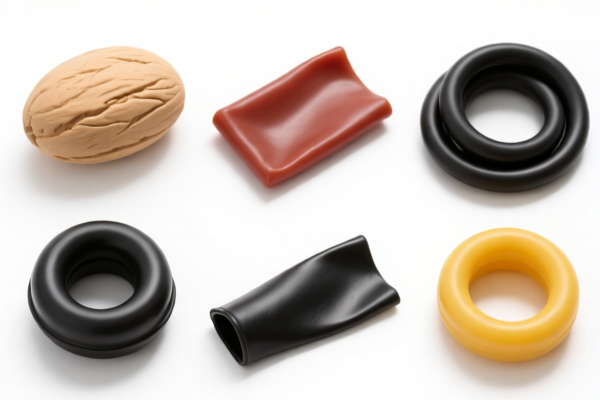
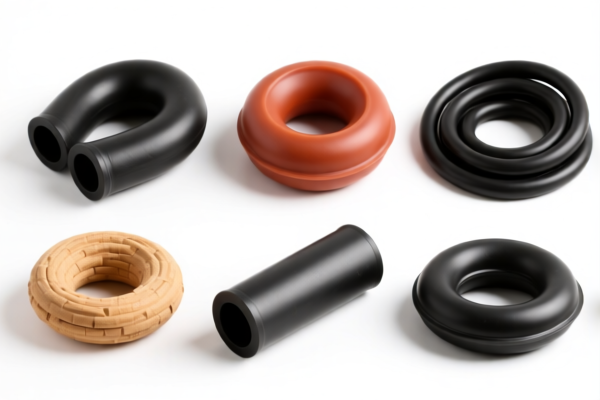
AI Analysis
🌿 Natural Rubber Stabilizer Material (天然橡胶稳定剂/母粒)
🌐 HS Code Reference & Customs Clearance Guide | 2026 Latest Tariff Analysis | Professional Clearance Strategy
📌 I. Product Definition: What is "Natural Rubber Stabilizer"?
Natural Rubber Stabilizers are critical additives used in the processing and storage of natural rubber (such as Latex Concentrate or Crumb Rubber). Their primary functions are to: 1. Prevent Coagulation: Keep latex stable during storage and transportation. 2. Improve Processing: Enhance the dispersion of other chemicals (like sulfur or accelerators) in rubber compounding. 3. Extend Shelf Life: Prevent premature aging or hardening of the rubber material.
These materials typically come in the form of granules (masterbatches), powders, or liquid concentrates. In international trade, they are often classified based on whether they are considered primary rubber products or chemical preparations.
⚠️ Key Classification Distinction:
- If the product is primarily identified as a form of Natural Rubber itself (even if stabilized), it falls under Chapter 40.
- If the product is primarily a Chemical Preparation or Masterbatch used as an additive, it may fall under Chapter 38.
📦 II. HS Code Classification Details (Based on Provided Data)
Based on the input data, the product Natural Rubber Stabilizer Material is evaluated against four potential HS Codes. The choice depends on the specific physical form and the customs authority's interpretation of the "essential character" of the goods.
| HS Code | Product Description & Match Logic | Tax Rate | Tax Details Breakdown |
|---|---|---|---|
4001.29.00.00 |
Natural Rubber, Other Forms Match Logic: The product name contains "Natural Rubber". Since it is classified as "Other" (non-specified forms) and has no obvious conflict in form or use, it is matched by material. |
35.0% | Base: 0.0% Add'l: 25.0% 122 Sec: 10% |
4001.22.00.50 |
Natural Rubber, Stabilized Match Logic: Material is explicitly "Natural Rubber". As a "stabilizing material," it is viewed as a primary/auxiliary form in the processing of natural rubber, compatible with the "Other" category logic in TSNR. No material conflict. |
35.0% | Base: 0.0% Add'l: 25.0% 122 Sec: 10% |
4005.20.00.00 |
Compounded Rubber (Unvulcanized) Match Logic: "Natural Rubber" matches "Unvulcanized Compounded Rubber". "Stabilizer Material" is interpreted as a primary/intermediate form of rubber配料 (rubber ingredients) or dispersion. Logic aligns with primary forms/solutions/dispersions. |
35.0% | Base: 0.0% Add'l: 25.0% 122 Sec: 10% |
3824.99.29.00 |
Chemical Products & Preparations (Other) Match Logic: Inferring from the term "Masterbatch" (母粒), the form is chemical industrial granules. It fits the "Other" category of "Chemical Products & Preparations" not elsewhere specified. The stabilizer is a chemical formulation, fitting the definition of chemical preparations. |
41.5% | Base: 6.5% Add'l: 25.0% 122 Sec: 10% |
🔍 Critical Note:
- Codes4001.29.00.00,4001.22.00.50, and4005.20.00.00all carry a 35% total tax burden. They treat the product as a variant of natural rubber. - Code3824.99.29.00carries a 41.5% total tax burden. It treats the product as a chemical preparation/masterbatch. - Risk: Misclassifying a chemical masterbatch as rubber, or vice versa, can lead to significant duty discrepancies and customs delays.
💰 III. 2026 Latest Tariff Rate Breakdown (Including Surcharges)
✅ Applicable Country: United States (US)
✅ Country of Origin: China (CN)
✅ Effective Date: Applies to imports after November 10, 2025
🎯 1. Rubber-Classified Codes (4001.29.00.00, 4001.22.00.50, 4005.20.00.00)
| Item | Details |
|---|---|
| Base Duty Rate | 0% (Ad Valorem) |
| USITC Additional Duty (Section 301) | +25% |
| IEEPA Additional Duty (Section 122/EO) | +10% |
| Total Duty Rate | 35.0% |
| Duty Calculation | CIF Value × 35% |
| De Minimis Exemption | ❌ Not Applicable (Denied) |
| Legal Basis Path | USITC:4001.29.00.00 → Footnote: 301 → IEEPA:9903.01.25 |
📌 Explanation:
- Although the base duty for natural rubber is often 0%, the 25% Section 301 tariff and 10% IEEPA tariff apply to Chinese-origin goods. - These codes are generally considered more favorable if the product can be justified as a natural rubber derivative.
🎯 2. Chemical-Classified Code (3824.99.29.00)
| Item | Details |
|---|---|
| Base Duty Rate | 6.5% |
| USITC Additional Duty (Section 301) | +25% |
| IEEPA Additional Duty (Section 122/EO) | +10% |
| Total Duty Rate | 41.5% |
| Duty Calculation | CIF Value × 41.5% |
| De Minimis Exemption | ❌ Not Applicable (Denied) |
| Legal Basis Path | USITC:3824.99.29.00 → Footnote: 301 → IEEPA:9903.01.25 |
📌 Note:
- This classification incurs a 6.5% higher total tax compared to the rubber-classified codes due to the non-zero base rate. - This is typically applied if the product is explicitly sold as a "Chemical Masterbatch" or "Additive" rather than a rubber form.
🛠️ IV. Customs Clearance Practical Advice (Pitfall Avoidance Guide)
✅ 1. Required Documentation Checklist
| Document | Mandatory? | Description |
|---|---|---|
| ✅ Product Specification Sheet | ✔️ | Must specify: Is it Latex Stabilizer? Crumb Rubber Stabilizer? Granules or Liquid? |
| ✅ Certificate of Analysis (COA) | ✔️ | To prove chemical composition vs. rubber content. Crucial for distinguishing between Ch. 40 and Ch. 38. |
| ✅ Commercial Invoice | ✔️ | Must clearly describe the product. Avoid vague terms like "Stabilizer"; use "Natural Rubber Stabilizing Agent for Latex Processing." |
| ✅ Proof of Origin (CO) | ✔️ | To verify China origin and apply correct surtaxes. |
| ✅ Packing List | ✔️ | Detail net/gross weight. |
| ✅ Photos of Product & Labeling | ✔️ | Show packaging clearly indicating "Natural Rubber" or "Chemical Additive." |
✅ 2. Declaration Strategy (Key Tips)
🔥 "Define by Composition, Not Just Function!"
| Scenario | Recommended HS Code | Reasoning |
|---|---|---|
| Product is primarily Natural Rubber with stabilizers added | 4001.29.00.00 or 4001.22.00.50 |
Essential character is rubber. |
| Product is Compounded/Unvulcanized Rubber | 4005.20.00.00 |
Fits "Compounded Rubber" definition. |
| Product is a Chemical Masterbatch/Granule (Non-rubber base) | 3824.99.29.00 |
Fits "Chemical Preparation." |
| Product is Latex Stabilizer Liquid | Consult Expert | May fall under 3824 if chemical, or 4001 if latex-based. |
✅ 3. Special Considerations
| Situation | Advice |
|---|---|
| Misclassification Risk | If you declare as 4001 (35%) but it is chemically a 3824 (41.5%), you risk underpayment penalties. If you declare 3824 but it is 4001, you overpay. |
| Granules vs. Rubber Sheets | If the product looks like rubber granules, customs may lean towards 4001. If it looks like industrial chemical pellets, 3824 is more likely. |
| 122 Clause Tariff | Ensure your supplier confirms the Country of Origin. If not China, the 10% IEEPA tariff may not apply. |
🌍 V. Global Market Comparison (2026)
| Country/Region | Recommended HS Code (China Origin) | Total Tariff | Key Certification | Notes |
|---|---|---|---|---|
| 🇺🇸 USA | 4001.29.00.00 / 3824.99.29.00 |
35% / 41.5% | None specific | High surtaxes due to US-China trade tensions. |
| 🇨🇳 China | 4001.29.00 / 3824.99 |
~5-10% | ISO, RoHS | Lower base duties, no Section 301. |
| 🇪🇺 EU | 4001.29 / 3824.99 |
~6.5-8% | REACH | REACH registration may be required for chemicals. |
| 🇬🇧 UK | 4001.29 / 3824.99 |
~6.5-8% | UKCA | Post-Brexit regulations apply. |
📌 Conclusion:
- USA is the most expensive market due to Section 301 (25%) and IEEPA (10%) surcharges. - Classification Choice saves 6.5% of the CIF value. Choosing4001series is financially superior if legally justifiable.
📌 VI. Common Mistakes & Pitfalls
❌ Mistake 1: Declaring "Stabilizer" as a generic "Chemical Additive" without specifying it's for Natural Rubber.
👉 Consequence: May be incorrectly classified under 3824 with higher base duty, or detained for missing ingredient disclosure.
❌ Mistake 2: Ignoring the Physical Form.
👉 Consequence: If you declare 4001 (Rubber) but ship chemical granules (3824), customs will flag the discrepancy between description and physical goods.
❌ Mistake 3: Assuming De Minimis (Section 321) applies.
👉 Consequence: Do not expect $800 exemption. These items are subject to full duty declaration regardless of value if shipped as commercial cargo.
✅ Correct Practice:
"Natural Rubber Latex Stabilizing Agent, Liquid Form, for Industrial Rubber Processing, HS 4001.29.00.00"
OR
"Rubber Compounding Masterbatch, Granular, Containing Natural Rubber Stabilizers, HS 3824.99.29.00"
🎯 VII. Conclusion: Professional Declaration, Cost Optimization!
🎯 Key Takeaways:
🔹 Cost Saving: Classifying under
4001series saves 6.5% compared to3824. 🔹 Total Cost: Budget for 35% (for rubber-classified) or 41.5% (for chemical-classified) total landed duty. 🔹 Documentation: Provide COA and Product Specs to prove the "Natural Rubber" content if claiming4001.📌 Pro Tip:
If your product is a pure chemical stabilizer (no rubber content), you must use3824.99.29.00. If it is a stabilized rubber product, use4001.
Pre-advance Ruling (Ruling Request) is highly recommended to lock in the correct HS Code and avoid post-entry audits.
📣 Immediate Action:
📞 Contact a Customs Broker: Provide your COA and Product Photos.
🚀 Choose the Right HS Code:4001.29.00.00is likely the most cost-effective legal option for Natural Rubber Stabilizers.
✨ Professional Customs Clearance Starts with Accurate Classification!
💼 Every 6.5% Matters in High-Tariff Trade!
Customer Reviews
About HS Code Classification
The Harmonized System (HS) is an internationally standardized nomenclature developed by the World Customs Organization (WCO) to classify traded products. Over 200 countries use the HS system as the basis for customs tariffs, trade statistics, and import/export regulations.
Each HS code follows a hierarchical structure:
- Chapter (2 digits) — Broad category of goods (e.g., Chapter 84: Machinery and Mechanical Appliances)
- Heading (4 digits) — More specific grouping within the chapter
- Subheading (6 digits) — Internationally standardized breakdown, used by all WCO member countries
- National subdivisions (8-10 digits) — Country-specific extensions for further classification, such as US HTSUS 10-digit codes
Correct HS code classification is essential for smooth customs clearance, accurate duty payment, and compliance with trade regulations. Misclassification can lead to customs delays, overpayment of duties, or penalties.
When importing from CN to US, the applicable tariff rates may include:
- Most-Favored-Nation (MFN) rate — The standard duty rate applied to WTO members
- General rate — Applied to countries without trade agreements
- Trade remedy duties — Additional tariffs such as Section 301 (anti-dumping), Section 232 (national security), or countervailing duties
The information provided on this page is for reference purposes only. For official classification, please consult with your local customs authority or a licensed customs broker.