Natural Rubber Stopper
CN → US| HS Code | Tariff Rate | Origin | Destination | Doc |
|---|---|---|---|---|
| 4016935010 | 37.5% | CN | US | Official Doc |
| 4016991500 | 20.2% | CN | US | Official Doc |
| 4503102000 | 35.0% | CN | US | Official Doc |
| 4503106000 | 35.0% | CN | US | Official Doc |
| 4502000000 | 35.0% | CN | US | Official Doc |
Product Images

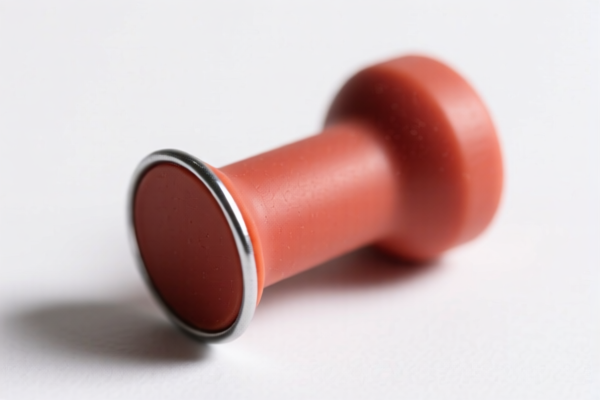


AI Analysis
🛑 Natural Rubber Stopper: HS Code Classification & US Customs Clearance Guide (2026 Update)
🌐 HS Code Reference & Customs Clearance Guide | 2026 Latest Tariff Analysis | Professional-Level Strategy for Natural Rubber & Cork Stoppers
📌 I. Product Definition & Classification: Do You Truly Understand "Stoppers"?
A Natural Rubber Stopper is a critical sealing component used in laboratory glassware, pharmaceutical vials, industrial piping, and consumer goods. In international trade, the classification depends heavily on the material composition and specific form.
While the user query specifies "Natural Rubber Stopper," the provided data includes classifications for both Natural Rubber and Natural Cork. It is crucial to distinguish between them to avoid misclassification, which can lead to severe penalty rates or shipment delays.
Key Distinctions: * Natural Rubber Stoppers (Vulcanized): Made from processed latex. These are classified under Chapter 40 (Rubber and Articles Thereof). * Natural Cork Stoppers: Made from the bark of the Quercus suber tree. These are classified under Chapter 45 (Cork and Articles of Cork).
⚠️ Critical Warning:
- If the material is vulcanized natural rubber, it falls under HS 4016.
- If the material is natural cork, it falls under HS 4502 or HS 4503.
- Do not mix them up. The tariff rates differ significantly, and incorrect classification can trigger automatic holds.
📦 II. HS Code Classification Matrix (Based on Provided Data)
| HS Code | Product Description | Material | Form/Feature | Total Tax Rate* |
|---|---|---|---|---|
4016.93.50.10 |
Natural Rubber Stopper | Natural Rubber | Stopper (Vulcanized Rubber Seal) | 37.5% |
4016.99.15.00 |
Natural Rubber Stopper | Natural Rubber | Stopper (General Rubber Product) | 20.2% |
4503.10.20.00 |
Natural Cork Stopper | Natural Cork | Natural Cork Product | 35.0% |
4503.10.60.00 |
Natural Cork Stopper | Natural Cork | Stopper (Cork Specific) | 35.0% |
4502.00.00.00 |
Natural Cork Stopper | Natural Cork | Natural Cork (General) | 35.0% |
*Tax rates apply to imports from China to the USA, including Base Tariff, Section 301 (Additional) Tariffs, and Section 122 Tariffs.
💰 III. Detailed Tariff Breakdown (2026 US Customs Rates)
✅ Applicable Country: United States (US)
✅ Origin: China (CN)
✅ Effective Time: Current policies apply (Note: Section 122 and Section 301 tariffs are active)
🎯 1. Natural Rubber Stoppers (HS 4016 Series)
A. 4016.93.50.10 – Specific Vulcanized Rubber Seals
| Item | Details |
|---|---|
| Base Tariff | 2.5% |
| Section 301 Additional Tariff | 25.0% |
| Section 122 Tariff | 10.0% |
| Total Effective Rate | 37.5% |
| Calculation | CIF Value × 37.5% |
| De Minimis Eligibility | ❌ No (De Minimis does not apply to China-origin goods under these sections) |
| Legal Basis | HTSUS 4016.93.50.10 → Footnote Section 301 → Footnote Section 122 |
📌 Explanation:
- This code is for specific vulcanized rubber seals/stoppers.
- The 25% Section 301 tariff is the primary cost driver.
- The 10% Section 122 tariff applies to certain rubber articles.
- Total Burden: High. Ensure your pricing model accounts for this 37.5% landed cost increase.
B. 4016.99.15.00 – Other Rubber Articles (Stopper)
| Item | Details |
|---|---|
| Base Tariff | 2.7% |
| Section 301 Additional Tariff | 7.5% |
| Section 122 Tariff | 10.0% |
| Total Effective Rate | 20.2% |
| Calculation | CIF Value × 20.2% |
| De Minimis Eligibility | ❌ No |
| Legal Basis | HTSUS 4016.99.15.00 → Footnote Section 301 (Lower bracket) → Footnote Section 122 |
📌 Explanation:
- This code may apply if the stopper does not meet the specific "seal" criteria of 4016.93 or falls under "other" rubber articles.
- Significant Savings: Compared to the first rubber code, this saves 17.3% in total duties.
- Strategy: If your product fits the definition of4016.99.15.00, prioritize this classification to reduce costs.
🎯 2. Natural Cork Stoppers (HS 450x Series)
(Included for comprehensive reference, though the query specified "Natural Rubber")
General Rate for Cork: 4502.00.00.00, 4503.10.20.00, 4503.10.60.00
| Item | Details |
|---|---|
| Base Tariff | 0.0% |
| Section 301 Additional Tariff | 25.0% |
| Section 122 Tariff | 10.0% |
| Total Effective Rate | 35.0% |
| Calculation | CIF Value × 35.0% |
| De Minimis Eligibility | ❌ No |
📌 Explanation:
- Even though the base tariff is 0%, the 25% Section 301 and 10% Section 122 tariffs apply, bringing the total to 35%.
- Note: If the item is misclassified as Rubber (4016) when it is Cork (450x), you might pay 37.5% instead of 35.0%, or vice versa. Material testing is recommended.
🛠️ IV. Customs Clearance Practical Advice (Pitfall Avoidance Guide)
✅ 1. Documentation Checklist (Mandatory)
| Document | Required? | Description |
|---|---|---|
| ✅ Commercial Invoice | ✔️ | Must clearly state "Natural Rubber Stopper" or "Natural Cork Stopper" + HS Code. |
| ✅ Packing List | ✔️ | Detailed breakdown of quantities and weights. |
| ✅ Material Test Report | ✔️ | Critical: Proof of material composition (Rubber vs. Cork). Lab report showing vulcanization status for rubber. |
| ✅ Certificate of Origin (CO) | ✔️ | Confirm China origin to apply correct tariff footnotes. |
| ✅ Product Photos | ✔️ | Show the stopper’s shape, texture, and any markings. |
| ✅ Firm’s Power of Attorney | ✔️ | For the US Customs Broker to file entries. |
✅ 2. Declaration Tips (Key Mnemonic)
🔥 "Material First, Code Second, Tax Footnotes Third!"
| Scenario | Correct Declaration | Incorrect Declaration |
|---|---|---|
| Vulcanized Rubber Stopper | 4016.93.50.10 or 4016.99.15.00Description: "Vulcanized Natural Rubber Stopper for Pharma Use" |
Misclassified as Cork (4503) → 35% or misclassified as Plastic (3926) → Higher Risk. |
| Natural Cork Stopper | 4503.10.20.00 / 4502.00.00.00Description: "Natural Cork Stopper for Wine Bottles" |
Misclassified as Rubber (4016) → 37.5%. |
| Mixed Shipment | Split lines: Line 1: Rubber; Line 2: Cork. | Combined line → Customs Hold for inspection. |
✅ 3. Special Handling & Compliance
| Situation | Recommendation |
|---|---|
| OEM/Private Label | Provide client’s purchase order and design specs. Proves "commercial use" and prevents misclassification as "sample." |
| Medical/Lab Use | If intended for medical devices, ensure FDA registration is up-to-date. Customs may ask for FDA Prior Notice. |
| Section 122 Applicability | Both rubber and cork stoppers from China are subject to the 10% Section 122 tariff. Do not overlook this in cost calculations. |
| De Minimis (Section 321) | Does NOT apply to China-origin goods for these HS codes. All shipments must go through formal entry with duty payment. |
🌍 V. Global Market Comparison (2026 Overview)
| Country/Region | Recommended HS Code | Est. Tariff (China Origin) | Certification | Notes |
|---|---|---|---|---|
| 🇺🇸 USA | 4016.93.50.10 / 4016.99.15.00 |
20.2% - 37.5% | FDA (if medical) | High tariff burden due to Section 301 & 122. |
| 🇨🇳 China | 4016.93 / 4016.99 |
~2.5% - 5% | CE/RoHS (for export) | Low entry tariff. |
| 🇪🇺 EU | 4016.93 / 4016.99 |
0% - 6% | REACH | No equivalent to US Section 301. Much lower duty. |
| 🇬🇧 UK | 4016.93 / 4016.99 |
0% - 6% | UKCA | Post-Brexit rules apply; generally low duty. |
| 🇯🇵 Japan | 4016.93 / 4016.99 |
~3% - 6% | JIS | CPTPP may reduce duty for eligible goods. |
📌 Conclusion:
- The US market is the most expensive for Chinese-made rubber/cork stoppers due to additive tariffs.
- EU/UK/Japan offer significantly lower tariff barriers. Consider supply chain diversification if targeting the US heavily.
📌 VI. Common Errors & Pitfalls (Lessons Learned)
❌ Error 1: Misidentifying Vulcanized Rubber as Natural Rubber Latex (Unvulcanized)
👉 Consequence: Wrong HS Code (Chapter 40 vs Chapter 40). Unvulcanized rubber has different tariff treatment. Incorrect classification leads to re-classification penalties.
❌ Error 2: Confusing Cork with Rubber
👉 Consequence: Rubber (4016) has a higher Section 301 rate (25%) in some subcodes compared to Cork (4503)’s specific footnotes, or vice versa. Misclassification leads to underpayment/overpayment of duties.
❌ Error 3: Ignoring Section 122 Tariffs
👉 Consequence: Assuming only Section 301 applies. Section 122 adds an extra 10%. Total oversight can lead to unexpected 10% cost spike.
❌ Error 4: Using vague descriptions like "Plastic Stopper" for Rubber/Cork
👉 Consequence: Customs will inspect and reclassify, likely assigning the highest applicable duty rate and imposing demurrage charges for delay.
✅ Correct Practice:
"Vulcanized Natural Rubber Stopper, for Laboratory Use, HS 4016.93.50.10, Made in China"
OR
"Natural Cork Stopper, for Wine Bottles, HS 4503.10.20.00, Made in China"
🎯 VII. Conclusion: Precise Classification Saves Money!
🎯 Remember the Key Takeaways:
🔹 "Rubber vs. Cork: Check the Material First!"
🔹 "Section 301 + Section 122 = High Tariffs for China Origin"
🔹 "4016.99.15.00 (20.2%) vs 4016.93.50.10 (37.5%): Choose the Right Subcode!"
🔹 "De Minimis is OFF for China: Pay Duties Early!"
📌 Pro Tip:
If you are importing large volumes, consider applying for an Advance Ruling from US Customs and Border Protection (CBP) to confirm the HS Code and duty calculation. This provides legal certainty and prevents future audits.
📣 Immediate Action:
📞 Verify Material Composition (Rubber vs. Cork)
📊 Calculate Landed Cost (CIF + 20.2%/37.5% Duties)
📄 Prepare Technical Specs & Material Certificates
🚀 Ensure Smooth Customs Clearance & Maximize Profit Margins!
✨ Professional Clearance Starts with Accurate Classification!
💼 Every Cent of Duty is Counted, Every Shipment is Secure!
Customer Reviews
About HS Code Classification
The Harmonized System (HS) is an internationally standardized nomenclature developed by the World Customs Organization (WCO) to classify traded products. Over 200 countries use the HS system as the basis for customs tariffs, trade statistics, and import/export regulations.
Each HS code follows a hierarchical structure:
- Chapter (2 digits) — Broad category of goods (e.g., Chapter 84: Machinery and Mechanical Appliances)
- Heading (4 digits) — More specific grouping within the chapter
- Subheading (6 digits) — Internationally standardized breakdown, used by all WCO member countries
- National subdivisions (8-10 digits) — Country-specific extensions for further classification, such as US HTSUS 10-digit codes
Correct HS code classification is essential for smooth customs clearance, accurate duty payment, and compliance with trade regulations. Misclassification can lead to customs delays, overpayment of duties, or penalties.
When importing from CN to US, the applicable tariff rates may include:
- Most-Favored-Nation (MFN) rate — The standard duty rate applied to WTO members
- General rate — Applied to countries without trade agreements
- Trade remedy duties — Additional tariffs such as Section 301 (anti-dumping), Section 232 (national security), or countervailing duties
The information provided on this page is for reference purposes only. For official classification, please consult with your local customs authority or a licensed customs broker.