Natural Rubber Support
CN → US| HS Code | Tariff Rate | Origin | Destination | Doc |
|---|---|---|---|---|
| 4016995500 | 37.5% | CN | US | Official Doc |
| 4016993000 | 35.0% | CN | US | Official Doc |
| 3926305000 | 22.8% | CN | US | Official Doc |
Product Images
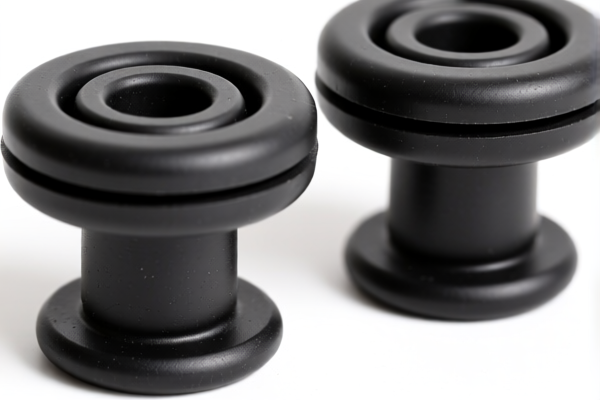
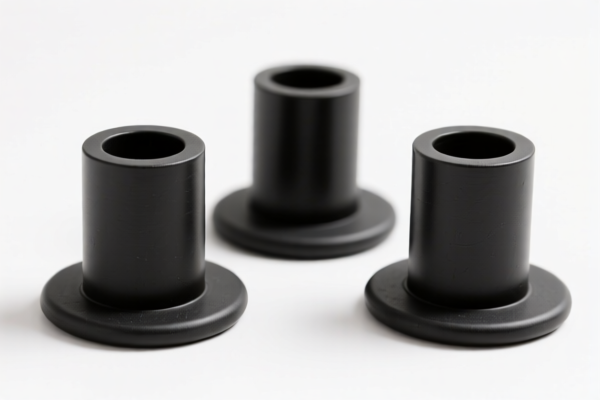
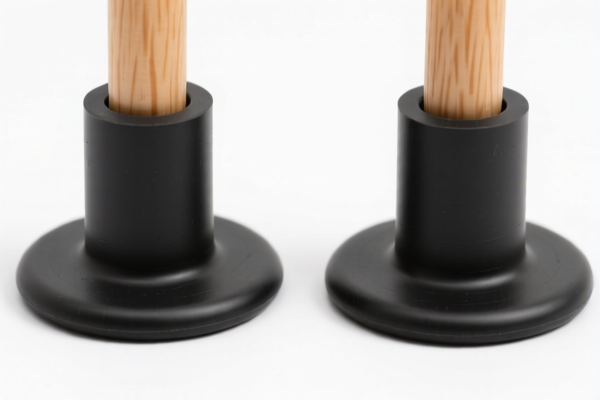
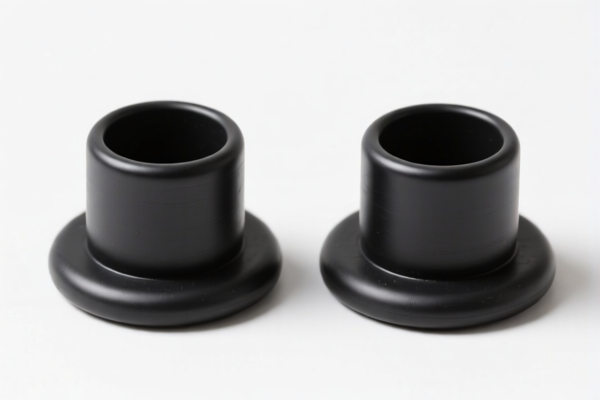
AI Analysis
🛡️ Natural Rubber Support (Shock Absorption/Isolation Components)
🌐 HS Code Reference & Customs Clearance Guide | 2026 Latest Tariff Analysis | Professional Clearance Strategy
📌 One, Product Definition & Classification: Do You Understand "Rubber Supports"?
Natural Rubber Support refers to components made of vulcanized rubber designed for shock absorption, vibration control, or mechanical support in various industrial, automotive, or consumer applications. In international trade, the classification depends heavily on the specific function (e.g., automotive part vs. general industrial part) and material composition.
⚠️ Key Distinction Points: - If the item is a general industrial rubber part (not specifically identifiable as an automotive part), it falls under Chapter 40. - If it is a specialized automotive suspension component (like a bushing or mount specifically for vehicles), it might fall under Chapter 40 but with a different subheading, or potentially Chapter 87 if considered a "part of motor vehicles." However, based on the provided data, the focus is on Chapter 40 (Rubber) and Chapter 39 (Plastics/Other Materials). - The provided data suggests a debate between Rubber (4016) and Plastic/Other Material (3926) classifications. Note: "Natural Rubber" strongly points to Chapter 40, but customs may classify certain composite or specific industrial supports under Chapter 39 if they are deemed "other articles of plastics" due to specific molding processes or additives.
📦 Two, HS Code Classification Details (Based on Provided Data)
The following HS Codes are derived strictly from the provided <DATA> source.
| HS Code | Product Description (Summary from Data) | Estimated Total Tax (China Origin -> US) | Key Tax Components |
|---|---|---|---|
4016.99.55.00 |
Other vulcanized rubber articles (General Purpose) • Material: Rubber • Form: Support • Category: Shock absorption control parts • Fallback: Other rubber articles |
37.5% | Base: 2.5% Sec 301: 25.0% Section 122: 10.0% |
4016.99.30.00 |
Shock/Absorption Parts for Vehicles • Material: Rubber • Function: Shock absorption/Buffing • Inference: Used for vehicle suspension products |
35.0% | Base: 0.0% Sec 301: 25.0% Section 122: 10.0% |
3926.30.50.00 |
Other Plastic/Material Articles - Connectors/Parts • Material: Classified as "Other Material" (Plastic Logic) • Function: Support/Connection • Logic: Fallback for other plastic/material parts |
22.8% | Base: 5.3% Sec 301: 7.5% Section 122: 10.0% |
🔍 Critical Note on Classification: -
4016.99.30.00is likely the most accurate for a "Natural Rubber Support" if it is specifically for vehicles (automotive bushings, mounts, etc.), as it has the lowest base duty (0%). -4016.99.55.00is the fallback for general rubber parts not specifically identified for other uses, carrying a higher base duty (2.5%). -3926.30.50.00is a less likely classification for pure natural rubber, but may be used if the product is considered a "plastic-like" molded part or if customs misclassifies the material. It has the lowest total tax but carries the highest risk of misclassification if the item is indeed 100% natural rubber.
💰 Three, 2026 Latest Tariff Rate Breakdown (With Surcharges & Policy Add-ons)
✅ Applicable Country: United States (US)
✅ Origin: China (CN)
✅ Effective Time: Current rates apply (Section 301 & 122 tariffs are active)
🎯 1. 4016.99.55.00 —— Other Rubber Articles (General)
| Item | Content |
|---|---|
| Base Duty Rate | 2.5% (ad valorem) |
| Section 301 Surcharge | +25.0% (USITC Footnote 9903.88.01) |
| Section 122 Surcharge | +10.0% (针对中国产品) |
| Total Effective Rate | 37.5% |
| Tax Calculation | CIF Value × 37.5% |
| De Minimis Exemption | ❌ Not Applicable (Deny de minimis) |
| Legal Basis Path | USITC:4016.99.55.00 → FOOTNOTE:9903.88.01 → Section 122 |
📌 Explanation: - This is the default classification for rubber parts not specifically provided for elsewhere. - The 2.5% base duty makes it more expensive than the automotive-specific rubber code. - High Risk: Customs may challenge this if the part is clearly for automotive use.
🎯 2. 4016.99.30.00 —— Shock Absorption Parts for Vehicles
| Item | Content |
|---|---|
| Base Duty Rate | 0.0% (ad valorem) |
| Section 301 Surcharge | +25.0% |
| Section 122 Surcharge | +10.0% |
| Total Effective Rate | 35.0% |
| Tax Calculation | CIF Value × 35.0% |
| De Minimis Exemption | ❌ Not Applicable |
| Legal Basis Path | USITC:4016.99.30.00 → FOOTNOTE:9903.88.01 → Section 122 |
📌 Explanation: - This is the most cost-effective classification for natural rubber supports if they are automotive parts. - Zero Base Duty is a significant advantage. - Requirement: Must prove the part is specifically designed for vehicle suspension/shock absorption.
🎯 3. 3926.30.50.00 —— Other Plastic/Material Parts (Connectors)
| Item | Content |
|---|---|
| Base Duty Rate | 5.3% (ad valorem) |
| Section 301 Surcharge | +7.5% |
| Section 122 Surcharge | +10.0% |
| Total Effective Rate | 22.8% |
| Tax Calculation | CIF Value × 22.8% |
| De Minimis Exemption | ❌ Not Applicable |
| Legal Basis Path | USITC:3926.30.50.00 → FOOTNOTE:9903.88.01 → Section 122 |
📌 Explanation: - Lowest Total Tax at 22.8%. - High Risk: This classification assumes the product is plastic or a "other material" article, not natural rubber. If customs determines the product is 100% natural rubber, this is a misclassification, leading to penalties, back duties, and potential fraud allegations. - Use Case: Only if the product is a composite material or if there is a strong argument that it falls under "other articles of plastics" (e.g., heavily reinforced with plastic).
🛠️ Four, Customs Clearance Practical Advice (Real-World Pitfall Guide)
✅ 1. Preparation Checklist (Essential Documents)
| Document | Required? | Notes |
|---|---|---|
| ✅ Product Specification Sheet | ✔️ | Must specify: Material (100% Natural Rubber?), Hardness, Dimensions, Application (Auto vs. General). |
| ✅ Technical Data Sheet | ✔️ | Show vulcanization process, additives. |
| ✅ Product Photos | ✔️ | Clear images showing part numbers, labels, and context (e.g., installed in a vehicle?). |
| ✅ Commercial Invoice | ✔️ | Description must match HS Code logic (e.g., "Automotive Rubber Shock Absorber"). |
| ✅ Certificate of Origin | ✔️ | Required for tariff calculation. |
| ✅ Bill of Lading | ✔️ | Standard shipping document. |
✅ 2. Declaration Strategy (Key Mantras)
🔥 "Function Defines Code, Material Defines Chapter, Automative is Key!"
| Scenario | Recommended HS Code | Reasoning |
|---|---|---|
| Automotive Rubber Mount/Bushing | 4016.99.30.00 |
Specific for shock absorption in vehicles. Lowest tax among rubber codes. |
| General Industrial Rubber Pad/Support | 4016.99.55.00 |
General purpose rubber part. Safe fallback. |
| Composite/Plastic-Like Support | 3926.30.50.00 |
Only if material is not primarily rubber. High risk if misused. |
📌 Critical Advice: - Do NOT declare a natural rubber automotive part as
3926.30.50.00unless you have a strong legal opinion supporting "plastic" classification. The risk of penalty is high. - Prioritize4016.99.30.00if the product is for vehicles. It saves 2.5% base duty compared to4016.99.55.00.
✅ 3. Special Cases & Handling
| Situation | Handling Advice |
|---|---|
| OEM Automotive Parts | Provide OEM drawings or customer purchase orders showing vehicle application. This supports 4016.99.30.00. |
| Mixed Material Parts | If rubber is bonded to metal/plastic, analyze the essential character. If rubber dominates, Chapter 40 applies. |
| Samples vs. Production | Samples may be de minimis, but commercial shipments are subject to full duties. |
| Pre-Ruling | Highly Recommended: File an HTSUS Pre-Ruling Request with CBP to confirm the correct HS Code. This provides legal protection. |
🌍 Five, Global Market Comparison (2026 Latest)
| Country/Region | Recommended HS Code | Tariff (China Origin) | Notes |
|---|---|---|---|
| 🇺🇸 USA | 4016.99.30.00 |
35.0% | Includes Sec 301 & 122. Best for automotive rubber parts. |
| 🇺🇸 USA | 4016.99.55.00 |
37.5% | General rubber parts. Higher base duty. |
| 🇺🇸 USA | 3926.30.50.00 |
22.8% | Risky for natural rubber. Low tax but high compliance risk. |
| 🇨🇳 China | 4016.99.30.00 |
5-10% | Varies by import policy. No Sec 301. |
| 🇪🇺 EU | 4016.99.90 |
3.5% | No major US-style surcharges. Standard MFN rate. |
📌 Conclusion: - USA imposes significant surcharges on Chinese rubber goods. - Automotive-specific rubber parts (
4016.99.30.00) are more tax-efficient than general rubber parts. - Misclassification as plastic (3926) is a major compliance risk.
📌 Six, Common Mistakes & Pitfalls (Lessons Learned)
❌ Mistake 1: Declaring automotive rubber supports as 3926.30.50.00 to save tax.
👉 Consequence: CBP may reclassify, leading to back duties + penalties (up to 2-3x the duty difference).
❌ Mistake 2: Using 4016.99.55.00 for automotive parts without justification.
👉 Consequence: Overpayment of 2.5% base duty. No penalty, but lost profit.
❌ Mistake 3: Vague product descriptions like "Rubber Part."
👉 Consequence: Customs will likely assign the highest duty code or hold the shipment for inspection.
✅ Correct Approach:
"Natural Rubber Automotive Shock Absorber Mount, Model XYZ, for [Vehicle Make/Model], 100% Vulcanized Rubber"
🎯 Seven, Conclusion: Professional Classification, Cost Optimization!
🎯 Remember the Mantra:
🔹 "Automotive Rubber →
4016.99.30.00(35%)
🔹 General Rubber →4016.99.55.00(37.5%)
🔹 Plastic/Composite →3926.30.50.00(22.8%) [Use with Caution!]"
📌 Pro Tip:
- Apply for a CBP Pre-Ruling if the product application is ambiguous.
- Ensure your documentation clearly states the intended use (e.g., "For Use in Automobile Suspension Systems").
- Consult a licensed customs broker to validate the classification before shipment.
📣 Immediate Action:
📞 Contact a Customs Broker + Provide Product Specs + Request HS Code Pre-Ruling
🚀 Clear Customs Smoothly, Reduce Costs, and Avoid Penalties!
✨ Professional Clearance Starts with Accurate Classification!
💼 Every Dollar Counts in International Trade!
Customer Reviews
About HS Code Classification
The Harmonized System (HS) is an internationally standardized nomenclature developed by the World Customs Organization (WCO) to classify traded products. Over 200 countries use the HS system as the basis for customs tariffs, trade statistics, and import/export regulations.
Each HS code follows a hierarchical structure:
- Chapter (2 digits) — Broad category of goods (e.g., Chapter 84: Machinery and Mechanical Appliances)
- Heading (4 digits) — More specific grouping within the chapter
- Subheading (6 digits) — Internationally standardized breakdown, used by all WCO member countries
- National subdivisions (8-10 digits) — Country-specific extensions for further classification, such as US HTSUS 10-digit codes
Correct HS code classification is essential for smooth customs clearance, accurate duty payment, and compliance with trade regulations. Misclassification can lead to customs delays, overpayment of duties, or penalties.
When importing from CN to US, the applicable tariff rates may include:
- Most-Favored-Nation (MFN) rate — The standard duty rate applied to WTO members
- General rate — Applied to countries without trade agreements
- Trade remedy duties — Additional tariffs such as Section 301 (anti-dumping), Section 232 (national security), or countervailing duties
The information provided on this page is for reference purposes only. For official classification, please consult with your local customs authority or a licensed customs broker.