Natural Rubber Vehicle Mat Sheet
CN → US| HS Code | Tariff Rate | Origin | Destination | Doc |
|---|---|---|---|---|
| 4016910000 | 37.7% | CN | US | Official Doc |
| 4008210000 | 35.0% | CN | US | Official Doc |
| 4016100000 | 35.0% | CN | US | Official Doc |
| 4008111000 | 35.0% | CN | US | Official Doc |
Product Images
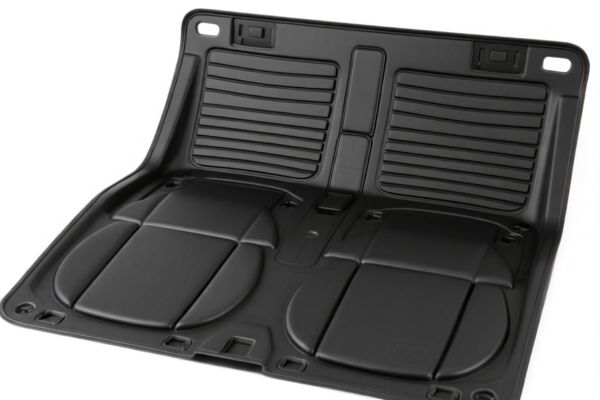
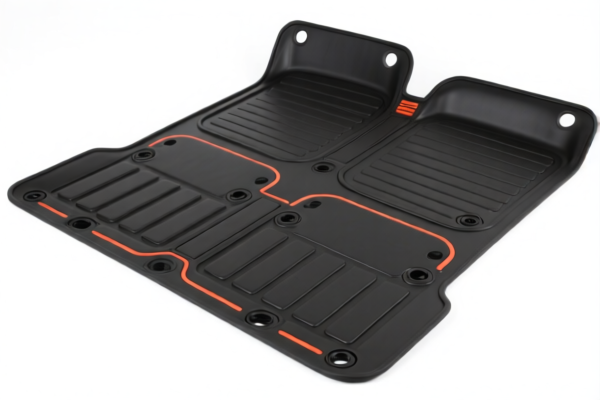
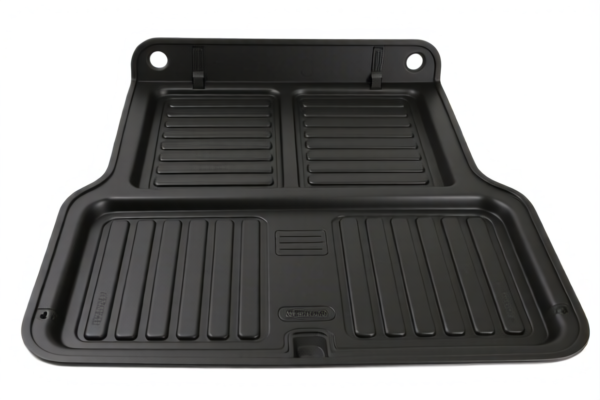
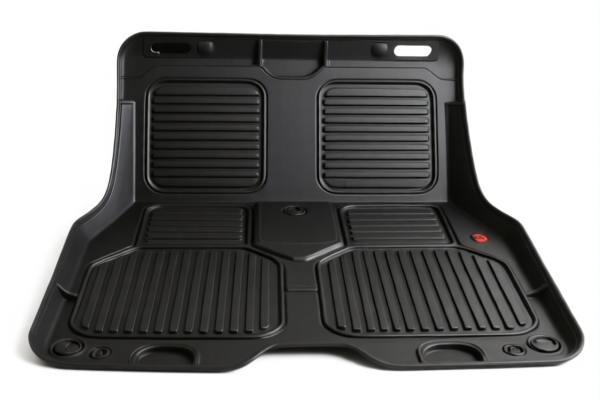
AI Analysis
🚗 Rubber Vehicle Mats (Natural Rubber)
🌐 HS Code Reference & Customs Clearance Guide | 2026 Latest Tariff Analysis | Professional Entry Strategy
📌 I. Product Definition & Classification: What Exactly Is a "Rubber Vehicle Mat Sheet"?
Vehicle mats (also known as floor mats, ped mats, or chassis mats) are critical automotive accessories designed to protect the interior or exterior of vehicles from dirt, moisture, and wear. In international trade, classification depends heavily on material composition (natural rubber vs. synthetic), form (sheet vs. finished mat), and specific use.
⚠️ Key Distinction Point:
- If the product is a finished, shaped mat specifically for vehicle interiors/extiors → Typically falls under 4016.91.00.00 (Rubber mats/carpets).
- If the product is a raw sheet of non-foam rubber intended for further processing or general industrial use → May fall under 4008.21.00.00 or 4008.11.10.00.
- Note: The term "Sheet" in the input suggests a flat form, but if it is explicitly for "Vehicle Mats," customs often prioritize the end-use classification (4016) over the form classification (4008), unless it is clearly unshaped raw material.
📦 II. HS Code Classification Details (2026 Latest Tariff Authoritative Comparison)
| HS Code | Product Description | Application Scenario | Tax Rate (US Import from CN) |
|---|---|---|---|
4016.91.00.00 |
Other articles of vulcanized rubber other than hard rubber: Floor mats and mats. | Finished or semi-finished vehicle floor mats, rubber carpets. | 37.7% |
4008.21.00.00 |
Non-foam rubber plates, sheets, strips, rods and profile shapes, of synthetic rubber, whether or not reinforced: | Rubber sheets (synthetic, not natural) for general use. Note: Input says "Natural Rubber", so this code is technically mismatched for material, but the summary indicates a match based on "sheet" form. | 35.0% |
4016.10.00.00 |
Other articles of vulcanized rubber other than hard rubber: Gaskets, washers and other seals. | Rubber gaskets/seals. Summary states match due to vulcanized rubber material. | 35.0% |
4008.11.10.00 |
Natural rubber plates, sheets, strips, rods and profile shapes, whether or not reinforced: | Natural rubber sheets (non-foam). | 35.0% |
🔍 Critical Analysis:
-4016.91.00.00: The most accurate classification for finished or semi-finished vehicle mats. The summary explicitly states: "Product name explicitly contains material (rubber) and use (mat), completely consistent with 'vulcanized rubber articles' and 'carpets and mats'."
-4008.11.10.00/4008.21.00.00: These codes classify based on form (sheet) rather than end-use (mat). If the "sheet" is unshaped raw material, these apply. However, if it is pre-cut for vehicles, 4016 is often preferred. The data provided lists all four as valid matches, likely reflecting different interpretations of "sheet" vs. "mat."
-4016.10.00.00: Listed in the data, but typically for gaskets/seals. The summary forces a match based on "vulcanized rubber," which is technically weak for "mats." Use with caution.
💰 III. 2026 Latest Tariff Rate Breakdown (Including Surcharges, Policy Surcharges)
✅ Applicable Country: United States (US)
✅ Country of Origin: China (CN)
✅ Effective Date: November 10, 2025 (and subsequent imports)
🎯 1. 4016.91.00.00 —— Floor Mats and Mats (Vulcanized Rubber)
| Item | Content |
|---|---|
| Base Tariff | 2.7% (Ad Valorem) |
| Section 301 Surcharge | +25.0% (From USITC Footnote 9903.88.01) |
| IEEPA Surcharge | +10.0% (Targeting China/HK products, effective Nov 10, 2025) |
| Total Tariff Rate | 37.7% |
| Tax Calculation | CIF Value × 37.7% |
| De Minimis Exemption Eligible? | ❌ No (deny_de_minimis) |
| Legal Basis Path | IEEPA:9903.01.25 → IEEPA:9903.01.24 → USITC:4016.91.00.00 → FOOTNOTE:9903.88.01 |
📌 Explanation:
- This is the most accurate code for "Vehicle Mats."
- The 37.7% total rate includes base duty, Section 301 tariffs, and IEEPA tariffs.
- No de minimis exemption: Even small shipments are subject to full taxation.
🎯 2. 4008.21.00.00 & 4008.11.10.00 & 4016.10.00.00 —— Rubber Sheets/Gaskets (General Use)
| Item | Content |
|---|---|
| Base Tariff | 0.0% |
| Section 301 Surcharge | +25.0% |
| IEEPA Surcharge | +10.0% |
| Total Tariff Rate | 35.0% |
| Tax Calculation | CIF Value × 35.0% |
| De Minimis Exemption Eligible? | ❌ No (deny_de_minimis) |
| Legal Basis Path | IEEPA:9901.25 → IEEPA:9903.01.24 → USITC:[Code] → FOOTNOTE:9903.88.01 |
📌 Note:
- If classified as "rubber sheets" (4008 series), the base rate is 0%, making the total 35.0%.
- Risk: If customs determines the product is actually a "mat" (4016), you will face back taxes + penalties for misclassification (difference between 35% and 37.7% + interest).
- Material Discrepancy:4008.21is for synthetic rubber. If your product is natural rubber (as stated in input),4008.11is the correct sheet code.4008.21is listed in the data but may be a mismatch for "Natural Rubber."
🛠️ IV. Customs Clearance Practical Advice (Combat Pitfall Avoidance Guide)
✅ 1. Document Checklist (None are Optional)
| Document | Must Provide | Description |
|---|---|---|
| ✅ Product Specification Sheet | ✔️ | Include dimensions, weight, material composition (Natural Rubber %), hardness (Shore A). |
| ✅ Product Photos (Clear) | ✔️ | Show the item both as a "sheet" and if possible, as a "mat." Highlight any pre-cut shapes for vehicle models. |
| ✅ Material Certificate | ✔️ | Prove it is Natural Rubber vs. Synthetic. Crucial for distinguishing between 4008.11 and 4008.21. |
| ✅ Commercial Invoice | ✔️ | Describe as "Rubber Floor Mat for Vehicle" or "Vulcanized Rubber Sheet." Avoid vague terms like "Rubber Part." |
| ✅ Packing List | ✔️ | Detail quantity and weight. |
| ✅ HTS Pre-Ruling (Optional but Recommended) | ✔️ | If volume is high, apply for an advance ruling to confirm 4016.91.00.00 vs. 4008. |
✅ 2. Declaration Tips (Key Mantra)
🔥 “Material First, Use Second: Natural vs. Synthetic, Sheet vs. Mat!”
| Scenario | Correct Declaration | Wrong Practice |
|---|---|---|
| Finished Mat (Pre-cut for car) | 4016.91.00.00 |
Declare as "Rubber Sheet" → Risk of reclassification + penalty |
| Raw Unshaped Sheet | 4008.11.10.00 (Natural) |
Declare as "Mat" → Misuse declaration |
| Natural Rubber | Must specify "Natural Rubber" | If marked "Synthetic," will trigger 4008.21 errors or fraud checks |
| Foamed Rubber | Different HS Code (not in list) | If it’s foam, 4016.91 and 4008 are WRONG |
✅ 3. Special Case Handling
| Scenario | Handling Advice |
|---|---|
| OEM Custom Mats | Provide vehicle model compatibility (e.g., "For Toyota Camry 2023"). Proves "End Use" → Supports 4016.91.00.00. |
| "Sheet" in Name | If the invoice says "Sheet," but the product is a mat, customs may still classify as 4016 based on appearance. Be honest: Use "Rubber Mat (Sheet Form)" or similar. |
| Natural vs. Synthetic | If you declare Natural Rubber but test shows Synthetic, you will be fined. Ensure lab test matches declaration. |
| Small Sample Shipments | Even for samples, 37.7% or 35% tax applies. No de minimis exemption. Budget accordingly. |
🌍 V. Global Market Customs Comparison (2026 Latest)
| Country/Region | Recommended HS Code | Tariff (CN Origin) | Certification Req. | Notes |
|---|---|---|---|---|
| 🇺🇸 USA | 4016.91.00.00 |
37.7% | None specific | High tariffs due to Section 301 & IEEPA |
| 🇨🇳 China | 4016.91.00.00 |
~5-7% | CCC (if automotive part) | No anti-dumping |
| 🇪🇺 EU | 4016.91.00.00 |
~2.5% | REACH / RoHS | Lower tariffs, no Section 301 |
| 🇬🇧 UK | 4016.91.00.00 |
~2.5% | UKCA / REACH | Post-Brexit standards apply |
| 🇦🇺 Australia | 4016.91.00.00 |
~5% | None | Moderate tariffs |
📌 Conclusion:
- USA is the most expensive market for rubber vehicle mats due to 37.7% total tariff.
- EU/UK/Australia are more cost-effective for pricing.
- Supply Chain Strategy: Consider sourcing from Vietnam or Mexico (if origin rules allow) to avoid US surcharges.
📌 VI. Common Mistakes & Pitfall Guide (Blood & Tears Lessons)
❌ Mistake 1: Declaring "Vehicle Mats" as "Rubber Sheets" (4008) to save 2.7% base duty.
👉 Consequence: Customs inspection finds shaped mats → Reclassification to 4016 + Penalty + Back Taxes. The risk is not worth the 2.7% saving.
❌ Mistake 2: Ignoring the "Natural vs. Synthetic" distinction.
👉 Consequence: If declared as Natural (4008.11) but is Synthetic (4008.21), or vice versa, it triggers fraud investigation or misdeclaration fines.
❌ Mistake 3: Assuming "Sheet" means lower duty.
👉 Consequence: Customs looks at function. If it’s clearly a floor mat, it’s 4016. Form does not override function.
❌ Mistake 4: Ignoring IEEPA 10% surcharge.
👉 Consequence: Budgeting only for Section 301 (25%) → Underestimating costs by 10%, impacting profit margins significantly.
✅ Correct Action:
"Vulcanized Natural Rubber Floor Mat, Pre-cut for Auto Interior, Model XYZ, Origin: China"
🎯 VII. Conclusion: Professional Declaration, Cost Efficiency, Risk Reduction
🎯 Remember the Mantra:
🔹 "Mat is 4016 (37.7%), Sheet is 4008 (35.0%)."
🔹 "Natural Rubber? Check Code 4008.11. Synthetic? Check 4008.21."
🔹 "No De Minimis! Pay the 37.7% or 35.0%."
📌 Pro Tip:
If your product is exporting to the US, ensure the commercial invoice clearly states "Rubber Floor Mat" and not just "Rubber Sheet." If it is truly a raw sheet, provide a Certificate of Analysis proving it is unfinished. For finished mats, 4016.91.00.00 is the safest, most compliant choice, despite the slightly higher rate.
📣 Immediate Action:
📞 Contact a licensed customs broker + Provide product photos + Apply for HTS Pre-Ruling if shipment volume is high.
🚀 Let your rubber mats clear customs smoothly, avoid penalties, and maximize profit!
✨ Professional customs clearance starts with accurate classification!
💼 Every percentage point of tariff counts!
Customer Reviews
About HS Code Classification
The Harmonized System (HS) is an internationally standardized nomenclature developed by the World Customs Organization (WCO) to classify traded products. Over 200 countries use the HS system as the basis for customs tariffs, trade statistics, and import/export regulations.
Each HS code follows a hierarchical structure:
- Chapter (2 digits) — Broad category of goods (e.g., Chapter 84: Machinery and Mechanical Appliances)
- Heading (4 digits) — More specific grouping within the chapter
- Subheading (6 digits) — Internationally standardized breakdown, used by all WCO member countries
- National subdivisions (8-10 digits) — Country-specific extensions for further classification, such as US HTSUS 10-digit codes
Correct HS code classification is essential for smooth customs clearance, accurate duty payment, and compliance with trade regulations. Misclassification can lead to customs delays, overpayment of duties, or penalties.
When importing from CN to US, the applicable tariff rates may include:
- Most-Favored-Nation (MFN) rate — The standard duty rate applied to WTO members
- General rate — Applied to countries without trade agreements
- Trade remedy duties — Additional tariffs such as Section 301 (anti-dumping), Section 232 (national security), or countervailing duties
The information provided on this page is for reference purposes only. For official classification, please consult with your local customs authority or a licensed customs broker.