Natural Rubber Vulcanizing Agent
CN → US| HS Code | Tariff Rate | Origin | Destination | Doc |
|---|---|---|---|---|
| 3812101000 | 41.5% | CN | US | Official Doc |
| 3812105000 | 40.0% | CN | US | Official Doc |
| 3913901000 | 35.0% | CN | US | Official Doc |
| 4001100000 | 35.0% | CN | US | Official Doc |
| 4001290000 | 35.0% | CN | US | Official Doc |
Product Images


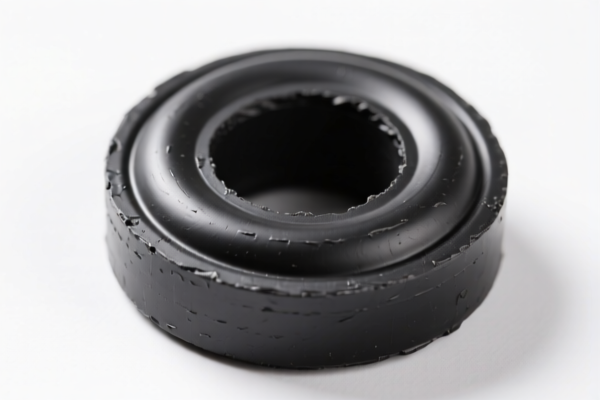

AI Analysis
🧪 Natural Rubber Vulcanizing Agent (Crosslinking Agents)
🌐 HS Code Reference & Customs Clearance Guide | 2026 Latest Tariff Analysis | Professional Customs Strategy 📌 I. Product Definition & Classification: What Exactly is a "Vulcanizing Agent"?
A Natural Rubber Vulcanizing Agent is a critical chemical additive used in the rubber manufacturing industry. Its primary function is to induce vulcanization—a chemical process that creates cross-links between polymer chains, transforming soft, sticky raw rubber into durable, elastic, and heat-resistant rubber products (e.g., tires, seals, hoses).
In international trade, these agents are often grouped under Rubber Auxiliaries or Chemical Derivatives. The classification depends heavily on whether the agent is viewed as a specific curing accelerator/promoter (Chapter 38) or a modified natural polymer (Chapter 39/40).
⚠️ Key Classification Distinction: - If the agent acts as a promoter or accelerator for the vulcanization process → Classified under Chapter 38 (Miscellaneous Chemical Products). - If the agent is considered a modified natural rubber or latex product → Classified under Chapter 39 or Chapter 40.
📦 II. HS Code Classification Details (2026 Latest Tariff Authority Comparison)
| HS Code | Product Description | Application Scenario | Classification Logic |
|---|---|---|---|
3812.10.10.00 |
Vulcanizing Agents for Rubber | Specifically designed curing agents; acts as rubber auxiliaries | ✅ Rubber Auxiliaries: Matches the function of rubber promoters |
3812.10.50.00 |
Other Rubber Promoters / Modifiers | Broad category for other curing aids not specified elsewhere | ✅ Other Promoters: Fits general "other rubber promoter/modifier" criteria |
3913.90.10.00 |
Modified Natural Polymers | Chemical derivatives of natural rubber; classified as modified polymers | ✅ Chemical Derivative: Viewed as a modified natural polymer substance |
4001.10.00.00 |
Natural Rubber Pre-vulcanized Latex | Liquid latex state; already partially cured/vulcanized | ✅ Pre-vulcanized Latex: Fits the form (latex) and state (pre-vulcanized) |
4001.29.00.00 |
Other Natural Rubber | Miscellaneous natural rubber forms not covered in specific subheads | ✅ Other NR: General catch-all for natural rubber materials |
🔍 Critical Reminder: - Chapter 38 (3812.xxxx) is the most common classification for chemical curing agents (powders, granules, or solutions acting as catalysts). - Chapter 39/40 classifications apply if the product is essentially rubber itself in a different physical state (e.g., latex) or significantly modified chemically beyond mere catalysis. - Misclassification between Chapter 38 and Chapter 40 can lead to significant duty differences due to Section XIII Notes vs. Section XVI Notes.
💰 III. 2026 Latest Tariff Rate Breakdown (Including Additional Duties & Policy Surcharges)
✅ Applicable Country: United States (US) ✅ Country of Origin: China (CN) ✅ Effective Date: November 10, 2025 onwards (for subsequent imports)
🎯 1. 3812.10.10.00 —— Vulcanizing Agents for Rubber (Rubber Auxiliaries)
| Item | Content |
|---|---|
| Base Duty Rate | 6.5% (ad valorem) |
| USITC Additional Duty | +25% (Under USITC Footnote 9903.88.01, Section 301 Tariff) |
| IEEPA Additional Duty | +10% (Against Chinese/HK products, effective Nov 10, 2025) |
| Total Duty Rate | 41.5% |
| Tax Calculation | CIF Value × 41.5% |
| De Minimis Exemption Available? | ❌ No (deny_de_minimis applies) |
| Legal Path | IEEPA:9903.01.25 → IEEPA:9903.01.24 → USITC:3812.10.10.00 → FOOTNOTE:9903.88.01 |
📌 Explanation: - The 25% USITC duty stems from the "Section 301" additional tariffs on Chinese goods. - The 10% IEEPA duty is the new surcharge under the International Emergency Economic Powers Act targeting specific Chinese imports. - Total 41.5% is a very high tariff, requiring advance planning!
🎯 2. 3812.10.50.00 —— Other Rubber Promoters / Modifiers
| Item | Content |
|---|---|
| Base Duty Rate | 5.0% |
| USITC Additional Duty | +25% |
| IEEPA Additional Duty | +10% |
| Total Duty Rate | 40.0% |
| Tax Calculation | CIF × 40.0% |
| De Minimis Exemption Available? | ❌ No |
| Legal Path | IEEPA:9901.25 → IEEPA:9903.01.24 → USITC:3812.10.50.00 → FOOTNOTE:9903.88.01 |
📌 Note: - Slightly lower base duty (5.0%) than
3812.10.10.00, but total impact is nearly identical (40% vs 41.5%). - Applies to broader "promoter/modifier" definitions where specific "vulcanizing agent" designation is less precise.
🎯 3. 3913.90.10.00 —— Modified Natural Polymers
| Item | Content |
|---|---|
| Base Duty Rate | 0.0% |
| USITC Additional Duty | +25% |
| IEEPA Additional Duty | +10% |
| Total Duty Rate | 35.0% |
| Tax Calculation | CIF × 35.0% |
| De Minimis Exemption Available? | ❌ No |
| Legal Path | IEEPA:9903.01.25 → IEEPA:9903.01.24 → USITC:3913.90.10.00 → FOOTNOTE:9903.88.01 |
📌 Explanation: - Lowest total duty (35%) among chemical classifications because the base rate is 0%. - Only applicable if the product can be legally argued as a "modified natural polymer" rather than a simple additive. Requires strong technical documentation.
🎯 4. 4001.10.00.00 —— Natural Rubber Pre-vulcanized Latex
| Item | Content |
|---|---|
| Base Duty Rate | 0.0% |
| USITC Additional Duty | +25% |
| IEEPA Additional Duty | +10% |
| Total Duty Rate | 35.0% |
| Tax Calculation | CIF × 35.0% |
| De Minimis Exemption Available? | ❌ No |
| Legal Path | IEEPA:9903.01.25 → IEEPA:9903.01.24 → USITC:4001.10.00.00 → FOOTNOTE:9903.88.01 |
📌 Note: - Applies only if the vulcanizing agent is in latex form and already pre-vulcanized. - Not suitable for standard powder/granular curing agents.
🎯 5. 4001.29.00.00 —— Other Natural Rubber
| Item | Content |
|---|---|
| Base Duty Rate | 0.0% |
| USITC Additional Duty | +25% |
| IEEPA Additional Duty | +10% |
| Total Duty Rate | 35.0% |
| Tax Calculation | CIF × 35.0% |
| De Minimis Exemption Available? | ❌ No |
| Legal Path | IEEPA:9901.25 → IEEPA:9903.01.24 → USITC:4001.29.00.00 → FOOTNOTE:9903.88.01 |
📌 Note: - General "other natural rubber" category. - Riskier classification; customs may argue it’s a chemical additive (Chapter 38), not rubber itself.
🛠️ IV. Customs Clearance Practical Advice (Real-World Pitfall Avoidance Guide)
✅ 1. Required Documentation Checklist (Mandatory)
| Document | Must Provide | Description |
|---|---|---|
| ✅ Product Specification Sheet | ✔️ | Must detail chemical composition, physical form (powder/latex), and function (curing accelerator vs. polymer modifier). |
| ✅ Technical Data Sheet (TDS) | ✔️ | Explains the vulcanization mechanism, recommended dosage, and chemical structure. |
| ✅ Product Photos (with Label) | ✔️ | Clear image of packaging, batch number, and hazard symbols (if any). |
| ✅ Third-Party Test Report | ✔️ | SDS (Safety Data Sheet) is critical for chemical imports; confirm no restricted substances. |
| ✅ Commercial Invoice | ✔️ | Must accurately describe as "Vulcanizing Agent for Natural Rubber" or "Rubber Promoter". |
| ✅ Certificate of Origin (CO) | ✔️ | If non-Chinese origin, may qualify for lower duties (e.g., ASEAN, RCEP). |
| ✅ Packing List | ✔️ | Separate packing lists for chemicals vs. rubber goods if shipped together. |
✅ 2. Declaration Tips (Key Mantras)
🔥 "Function Dictates Chapter, Form Matters for 4001, Chemical Additive = 3812!"
| Scenario | Correct Declaration | Incorrect Practice |
|---|---|---|
| Standard Powder/Granule Curing Agent | 3812.10.10.00 or 3812.10.50.00 |
Misclassified as "Rubber Raw Material" → Higher scrutiny |
| Latex-based Pre-cured Agent | 4001.10.00.00 |
Misclassified as "Chemical" → Delay for function review |
| Modified Polymer Additive | 3913.90.10.00 |
Must prove "modified polymer" status, not just additive |
| Mixed Shipment (Rubber + Agent) | Separate Declarations | Bundling → Potential misclassification penalties |
✅ 3. Special Circumstances Handling
| Situation | Handling Advice |
|---|---|
| OEM Custom Vulcanizing Agent | Provide client purchase order + technical agreement to prove specific function. |
| Agent Containing Restricted Chemicals | Must comply with TSCA (Toxic Substances Control Act) in the US; provide TSCA certification. |
| Latex Form Agent | Ensure proper labeling as "Pre-vulcanized Latex" to support 4001 classification. |
| Non-Chinese Origin | If sourced from Vietnam, Thailand, or Indonesia, apply for preferential tariffs under USMCA or ASEAN-China FTA. |
🌍 V. Global Market Comparison for Clearance (2026 Latest)
| Country/Region | Recommended HS Code | Duty Rate | Certification Requirements | Notes |
|---|---|---|---|---|
| 🇺🇸 USA | 3812.10.10.00 |
41.5% (CN Origin) | TSCA + SDS | High duty due to Section 301 + IEEPA |
| 🇨🇳 China | 3812.10.10.00 |
6.5% | CCC (if applicable) | Base duty only; no surcharges |
| 🇪🇺 EU | 3812.10.90 |
5.3% | REACH Registration | No Section 301 equivalent |
| 🇦🇺 Australia | 3812.10.90 |
5.0% | AICIS | Low base duty |
| 🇯🇵 Japan | 3812.10.90 |
0% - 3.9% | JIS | Favorable under JEPA |
📌 Conclusion: - USA imposes the highest barrier due to combined 25% (301) + 10% (IEEPA) + base rate. - China, EU, Australia, Japan have significantly lower duties. - Consider supply chain diversification if exporting to the US with high volume.
📌 VI. Common Errors & Pitfalls Guide (Lessons Learned)
❌ Error 1: Classifying "Vulcanizing Agent" as "Raw Rubber" (4001.10.00.00)
👉 Consequence: Customs may reject if it’s not in latex form. Even if accepted, duty is 35%, but you risk misdeclaration penalties.
❌ Error 2: Using "Other Chemical Product" (3824) for Vulcanizing Agent
👉 Consequence: Higher scrutiny; customs will reclassify to 3812 (Rubber Auxiliaries) anyway, causing delays.
❌ Error 3: Failing to Provide SDS for Chemical Imports 👉 Consequence: Shipment held at port for hazardous material review; potential fines.
❌ Error 4: Ignoring IEEPA 10% Surcharge 👉 Consequence: Underpayment of duties; audit and back-taxes with interest.
✅ Correct Approach:
"Natural Rubber Vulcanizing Agent (Rubber Promoter), Powder Form, Chemical Composition: [X], HS Code 3812.10.10.00, TSCA Certified"
🎯 VII. Conclusion: Precise Classification, Cost Savings, Efficient Clearance!
🎯 Remember These Mantras:
🔹 "Chemical Additive = Chapter 38, Latex = Chapter 40, Modified Polymer = Chapter 39"
🔹 "3812 Duty: 41.5% (CN to US), 3913/4001 Duty: 35.0% (CN to US)"
🔹 "Base Rate + 25% (301) + 10% (IEEPA) = Total Cost"
📌 Pro Tip: If your vulcanizing agent is originated from Vietnam, Thailand, Malaysia, or Indonesia, you may qualify for lower duties or exemptions under free trade agreements. Apply for Pre-Ruling (Advance Ruling) with US Customs (CBP) to secure classification certainty before shipment.
📣 Immediate Action:
📞 Contact Professional Customs Broker + Provide Technical Data Sheet + Apply for HS Code Pre-Ruling 🚀 Ensure your Natural Rubber Vulcanizing Agent clears customs smoothly, minimizes costs, and maximizes profit!
✨ Professional Clearance Starts with Accurate Classification!
💼 Every Percentage Point of Duty Savings Counts!
Customer Reviews
About HS Code Classification
The Harmonized System (HS) is an internationally standardized nomenclature developed by the World Customs Organization (WCO) to classify traded products. Over 200 countries use the HS system as the basis for customs tariffs, trade statistics, and import/export regulations.
Each HS code follows a hierarchical structure:
- Chapter (2 digits) — Broad category of goods (e.g., Chapter 84: Machinery and Mechanical Appliances)
- Heading (4 digits) — More specific grouping within the chapter
- Subheading (6 digits) — Internationally standardized breakdown, used by all WCO member countries
- National subdivisions (8-10 digits) — Country-specific extensions for further classification, such as US HTSUS 10-digit codes
Correct HS code classification is essential for smooth customs clearance, accurate duty payment, and compliance with trade regulations. Misclassification can lead to customs delays, overpayment of duties, or penalties.
When importing from CN to US, the applicable tariff rates may include:
- Most-Favored-Nation (MFN) rate — The standard duty rate applied to WTO members
- General rate — Applied to countries without trade agreements
- Trade remedy duties — Additional tariffs such as Section 301 (anti-dumping), Section 232 (national security), or countervailing duties
The information provided on this page is for reference purposes only. For official classification, please consult with your local customs authority or a licensed customs broker.