Natural Rubber Weather Resistant Rubber Parts
CN → US| HS Code | Tariff Rate | Origin | Destination | Doc |
|---|---|---|---|---|
| 4008111000 | 35.0% | CN | US | Official Doc |
| 4016993000 | 35.0% | CN | US | Official Doc |
| 4008192000 | 35.0% | CN | US | Official Doc |
| 4016996050 | 37.5% | CN | US | Official Doc |
| 4016996050 | 37.5% | CN | US | Official Doc |
Product Images
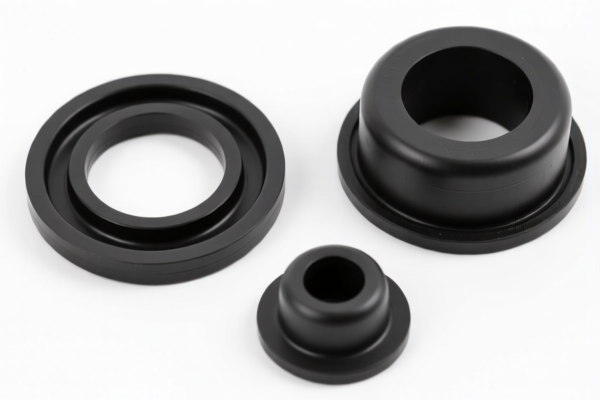
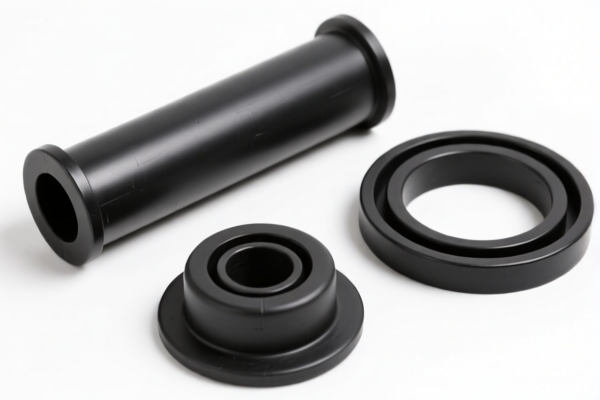
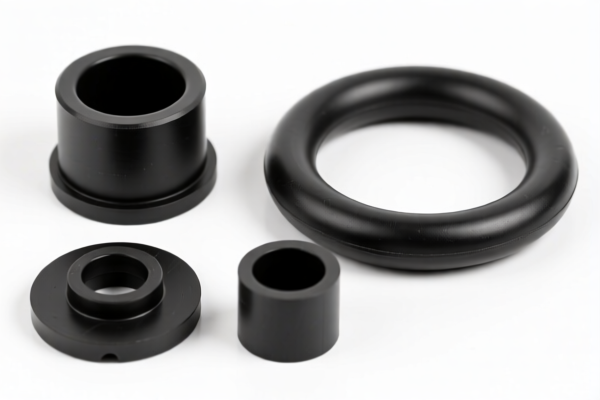
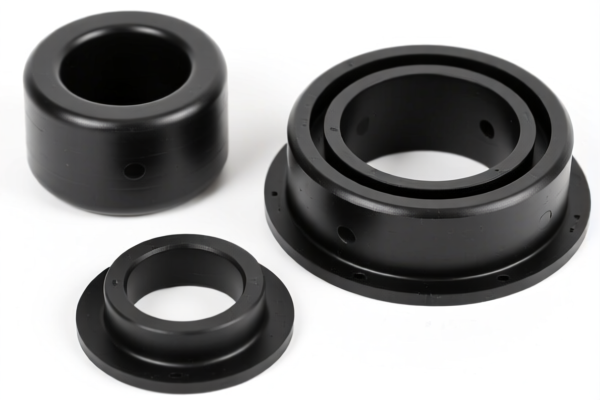
AI Analysis
🛡️ Natural Rubber Weather Resistant Rubber Parts: HS Code Classification & 2026 Customs Clearance Guide
🌐 HS Code Reference & Clearance Strategy | 2026 Latest Tariff Analysis | Professional Compliance Guide
📌 I. Product Definition & Classification: Understanding "Weather Resistant Rubber Parts"
Natural rubber weather resistant rubber parts are specialized components made from Natural Rubber (or sulfured natural rubber) designed to withstand environmental factors such as UV rays, ozone, temperature fluctuations, and moisture. In international trade, these parts are generally classified under Chapter 40 (Rubber and Articles Thereof), specifically as Articles of Rubber or Specific Rubber Parts.
The key distinction lies in the material form and specific application: * Raw/Unmanufactured Forms: If the item is simply shaped rubber pieces without complex assembly, it may fall under 4008 (Plates, sheets, strip, rods, and profile shapes, of vulcanized rubber other than hard rubber). * Finished Articles: If the item is a specific mechanical part (like a seal, gasket, or vibration damper), it often falls under 4016 (Other articles of vulcanized rubber other than hard rubber).
⚠️ Critical Classification Point: - If the product is described as "Weather Resistant" or "Abrasion Resistant" rubber components made of Natural Rubber, Customs primarily looks at whether it is a "profile shape/strip" (4008) or a "general article" (4016). - Natural Rubber Origin: The use of natural rubber rather than synthetic rubber (like SBR or Nitrile) is crucial for determining the correct subheading.
📦 II. HS Code Classification Details (2026 Latest Tariff Authority Reference)
Based on the provided data, the following HS Codes are applicable for Natural Rubber Weather Resistant Rubber Parts. Note that multiple codes may apply depending on the specific physical form and declared usage.
| HS Code | Product Description | Material/Form | Tax Rate (Total) | Tax Breakdown |
|---|---|---|---|---|
| 4008.11.10.00 | Natural Rubber Abrasion-Resistant Rubber Parts | Material: Natural Rubber Form: Rubber Parts |
35.0% | Base: 0.0% Addl: 25.0% Sec 122: 10% |
| 4016.99.30.00 | Natural Rubber Abrasion-Resistant Rubber Parts | Material: Compliant Natural Rubber Form: Rubber Parts Use: Shock Absorption / Wear Parts |
35.0% | Base: 0.0% Addl: 25.0% Sec 122: 10% |
| 4008.19.20.00 | Natural Rubber Abrasion-Resistant Rubber Parts | Material: Natural Rubber Form: Components / Spare Parts |
35.0% | Base: 0.0% Addl: 25.0% Sec 122: 10% |
| 4016.99.60.50 | Natural Rubber Abrasion-Resistant Rubber Parts (Also: Low-Temperature Tolerant Material) |
Material: Sulfured Rubber Form: Manufactured Articles Use: Non-Specific / Conflict-Free |
37.5% | Base: 2.5% Addl: 25.0% Sec 122: 10% |
🔍 Important Notes: - 4008 vs. 4016: Codes
4008.xxxxtypically refer to basic rubber shapes (strips, plates, profiles). Codes4016.xxxxrefer to other manufactured rubber articles (gaskets, seals, vibration isolators). - Tax Discrepancy:4008codes have a 0% base tariff, while4016.99.60.50has a 2.5% base tariff. This results in a 2.5% difference in total tax burden. - "Sulfured Rubber": The4016.99.60.50code explicitly mentions "Sulfured Rubber." If your natural rubber parts are vulcanized (sulfured), this code may apply, but it carries a higher base rate.
💰 III. 2026 Latest Tariff Rate Details (Including Surcharges & Policy Add-ons)
✅ Applicable Country: United States (US)
✅ Country of Origin: China (CN) (Implied by 122 Section & 25% surcharge typical of China-US trade context)
✅ Effective Date: Current 2026 Tariff Regime
🎯 1. Codes 4008.11.10.00, 4016.99.30.00, 4008.19.20.00
Product: Natural Rubber Parts (Base Tariff Exempt)
| Item | Details |
|---|---|
| Base Tariff | 0.0% |
| Section 301 Surcharge | +25.0% |
| Section 122 Tariff | +10.0% |
| Total Effective Rate | 35.0% |
| Calculation | CIF Value × 35.0% |
| De Minimis Eligibility | ❌ No (Section 301 and 122 tariffs generally do not apply to de minimis exemptions) |
| Legal Basis Path | USITC:4008.11.10.00 → FOOTNOTE:301 (25%) → FOOTNOTE:122 (10%) |
📌 Explanation: - 0% Base: Natural rubber parts often enjoy lower base duties. - +25% Section 301: Standard tariff on many Chinese rubber articles. - +10% Section 122: Additional duty targeting specific Chinese imports. - Total 35%: A significant cost factor that must be included in pricing.
🎯 2. Code 4016.99.60.50
Product: Sulfured Rubber Articles (Low-Temp Tolerant / Non-Specific)
| Item | Details |
|---|---|
| Base Tariff | 2.5% |
| Section 301 Surcharge | +25.0% |
| Section 122 Tariff | +10.0% |
| Total Effective Rate | 37.5% |
| Calculation | CIF Value × 37.5% |
| De Minimis Eligibility | ❌ No |
| Legal Basis Path | USITC:4016.99.60.50 → FOOTNOTE:301 (25%) → FOOTNOTE:122 (10%) |
📌 Explanation: - This code attracts the full 2.5% base duty on top of the surcharges. - Warning: If your product is clearly "Natural Rubber" and fits
4008or4016.99.30, using this code may result in overpayment of 2.5%. However, if the rubber is vulcanized and classified as a "general article" without a specific wear/resistant designation, Customs may insist on this code.
🛠️ IV. Clearance Practical Advice (Avoiding Pitfalls)
✅ 1. Required Documentation Checklist
| Document | Must Provide? | Explanation |
|---|---|---|
| ✅ Product Specification Sheet | ✔️ | Must specify Natural Rubber content (not synthetic). |
| ✅ Material Safety Data Sheet (MSDS) | ✔️ | Confirms chemical composition (Sulfured vs. Natural). |
| ✅ Product Photos | ✔️ | Show shape, texture, and any branding. |
| ✅ Commercial Invoice | ✔️ | Must explicitly state: "Natural Rubber Weather Resistant Parts". Avoid vague terms like "Rubber Goods." |
| ✅ Certificate of Origin (CO) | ✔️ | Required to verify China origin for Section 301/122 assessment. |
| ✅ Packing List | ✔️ | Detail weight and dimensions. |
✅ 2. Declaration Tips (Key Mantras)
🔥 “Specify Material: Natural. Specify Use: Weather/Abrasion. Avoid Vague Terms.”
| Scenario | Correct Declaration | Incorrect Declaration |
|---|---|---|
| Natural Rubber Seal/Gasket | "Natural Rubber Weather Resistant Gasket, HS 4016.99.30" |
"Rubber Parts" or "Seals" |
| Vulcanized Rubber Strip | "Natural Rubber Profile Shape, HS 4008.11.10" |
"Plastic Profile" |
| Low-Temp Rubber Part | "Sulfured Rubber Low-Temp Component, HS 4016.99.60.50" |
"Winter Rubber Part" |
⚠️ Risk Alert: - If you declare "Synthetic Rubber" but Customs tests find Natural Rubber, you may face misclassification penalties. - If you declare "Natural Rubber" but the product is actually EPDM/SBR, you risk tariff evasion charges.
✅ 3. Special Handling
| Situation | Recommendation |
|---|---|
| Mixed Materials | If the part contains metal inserts, declare the rubber part if rubber is the essential character. |
| OEM/Custom Parts | Provide the design drawing to prove the specific "weather resistant" or "abrasion resistant" nature. |
| Kit Assemblies | If the rubber part is part of a larger mechanical kit, consider declaring the entire kit (which might have a different HS Code) to optimize duty. |
🌍 V. Global Market Comparison (2026)
| Country/Region | Recommended HS Code | Estimated Duty | Notes |
|---|---|---|---|
| 🇺🇸 USA | 4008.11.10.00 / 4016.99.30.00 |
35.0% | High due to Section 301 & 122. |
| 🇨🇳 China | 4008.11.10.00 / 4016.99.30.00 |
Low (0-5%) | Import duties into China are generally lower. |
| 🇪🇺 EU | 4016.93.00 / 4016.99.90 |
Varies (0-6.5%) | No Section 301 equivalent. Check EUR.1 for preferences. |
| 🇨🇦 Canada | 4016.93.00 |
Low (0-5%) | CUSMA agreement may apply if originating. |
📌 Conclusion: - The USA imposes the highest total tariff (35-37.5%) on these goods due to specific trade policies. - Accuracy in material declaration (Natural vs. Synthetic) is critical to avoiding audits and penalties.
📌 VI. Common Errors & Pitfalls (Lessons Learned)
❌ Error 1: Declaring as "Plastic Parts" 👉 Consequence: Misclassification, potential 20-30% duty discrepancy, plus fines.
❌ Error 2: Using "Rubber Articles" as a generic description 👉 Consequence: Customs may assign the highest possible duty code or delay shipment for examination.
❌ Error 3: Ignoring "Sulfured/Vulcanized" status
👉 Consequence: If the product is vulcanized, 4008 (which sometimes covers unvulcanized or specific processed forms) may be rejected. Use 4016.
❌ Error 4: Failing to disclose Section 122 applicability 👉 Consequence: Underpayment of the 10% additional duty.
✅ Correct Practice:
"Natural Rubber, Weather Resistant, Abrasion Resistant Rubber Gasket, HS 4016.99.30.00, Made in China"
🎯 VII. Conclusion: Professional Declaration for Smooth Clearance
🎯 Remember the Mantra:
🔹 “Material: Natural. Form: Part. Duty: 35%. Declared Precisely.”
🔹 “HS Code Choice Affects Cost by 2.5%. Choose Wisely.”
📌 Pro Tip: If your rubber parts are not from China (e.g., from Thailand or Indonesia, which are major natural rubber producers), you may qualify for lower or zero tariffs under trade agreements (like CPTPP or bilateral deals). Always verify the Country of Origin before finalizing the HS Code.
📣 Immediate Action:
📞 Consult a licensed customs broker for a Pre-Ruling on your specific product design. 🚀 Ensure your Invoice Description matches the HS Code Summary exactly.
✨ Professional Customs Clearance Starts with Accurate Classification!
💼 Every Percentage Point Counts in International Trade!
Customer Reviews
About HS Code Classification
The Harmonized System (HS) is an internationally standardized nomenclature developed by the World Customs Organization (WCO) to classify traded products. Over 200 countries use the HS system as the basis for customs tariffs, trade statistics, and import/export regulations.
Each HS code follows a hierarchical structure:
- Chapter (2 digits) — Broad category of goods (e.g., Chapter 84: Machinery and Mechanical Appliances)
- Heading (4 digits) — More specific grouping within the chapter
- Subheading (6 digits) — Internationally standardized breakdown, used by all WCO member countries
- National subdivisions (8-10 digits) — Country-specific extensions for further classification, such as US HTSUS 10-digit codes
Correct HS code classification is essential for smooth customs clearance, accurate duty payment, and compliance with trade regulations. Misclassification can lead to customs delays, overpayment of duties, or penalties.
When importing from CN to US, the applicable tariff rates may include:
- Most-Favored-Nation (MFN) rate — The standard duty rate applied to WTO members
- General rate — Applied to countries without trade agreements
- Trade remedy duties — Additional tariffs such as Section 301 (anti-dumping), Section 232 (national security), or countervailing duties
The information provided on this page is for reference purposes only. For official classification, please consult with your local customs authority or a licensed customs broker.