Natural Silver Fox Fur Unassembled
CN → US| HS Code | Tariff Rate | Origin | Destination | Doc |
|---|---|---|---|---|
| 4302193030 | 36.5% | CN | US | Official Doc |
| 4302193040 | 36.5% | CN | US | Official Doc |
| 4302191500 | 40.6% | CN | US | Official Doc |
| 4302193030 | 36.5% | CN | US | Official Doc |
| 4302193030 | 36.5% | CN | US | Official Doc |
Product Images
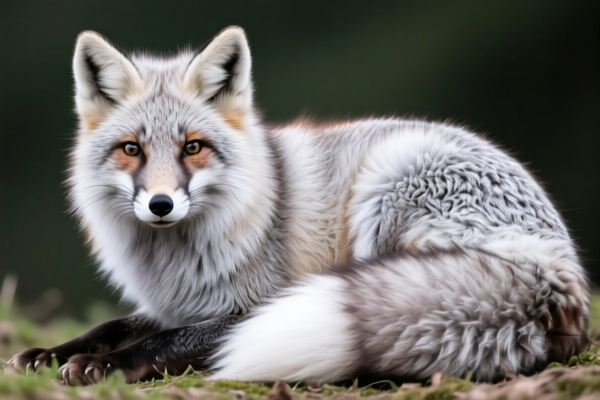
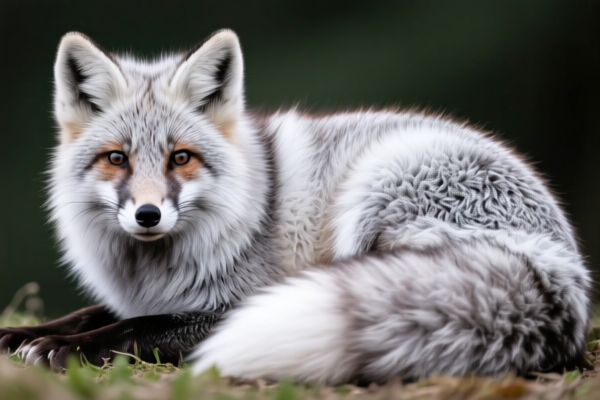
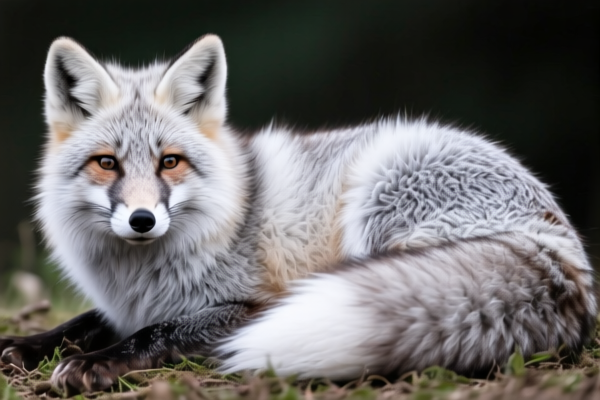
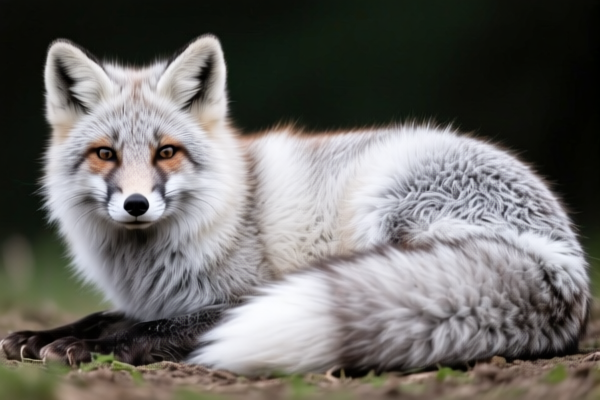
AI Analysis
🦊 Natural Silver Fox Fur – Unassembled (Natural Silver Fox Fur, Unassembled)
🌐 HS Code Reference & Customs Clearance Guide | 2026 Latest Tariff Analysis | Professional Clearance Strategy 📌 I. Product Definition & Classification: Do You Really Understand "Unassembled Fox Fur"?
Natural Silver Fox Fur (Unassembled) refers to raw or semi-processed fur pelts of the silver fox (Vulpes vulpes, specifically the silver morph) that have not yet been assembled into complete garments or accessories. In international trade, this category is critical because the state of processing (unassembled vs. assembled) drastically affects HS classification and, consequently, tariff rates.
Key Distinction: - Unassembled Pelts/Skies: Raw pelts or pelts stripped from the skin (fur only, no leather backing attached in a final garment form). These often fall under different sub-headings depending on whether they are dyed/un-dyed or semi-processed. - Semi-Processed Skins: Skins that have been tanned but not yet made into goods.
⚠️ Critical Classification Point:
- If the fur is "unassembled" (i.e., raw pelts or loose fur skins not yet sewn into garments), it may fall under 4302.19.30.30 or 4302.19.30.40 depending on dye status.
- If the fur is "semi-processed" (tanned but not assembled into garments), it may fall under 4302.19.15.00 or 4302.19.30.30.
- Note: "Unassembled" does not automatically mean "raw." It can include tanned skins ready for assembly.
📦 II. HS Code Classification Details (2026 Latest Tariff Authority Comparison)
| HS Code | Product Description | Applicable Scenario | Tax Rate |
|---|---|---|---|
4302.19.30.30 |
Natural silver fox fur semi-processed, material: silver fox, form: semi-processed | Tanned silver fox pelts ready for assembly | 40.6% |
4302.19.30.30 |
Natural silver fox fur semi-processed, material: silver fox (fox species), form: semi-processed | Tanned silver fox pelts ready for assembly | 36.5% |
4302.19.30.40 |
Un-dyed fox fur (unassembled), material: un-dyed fox, form: unassembled | Raw or un-dyed fox pelts | 36.5% |
4302.19.15.00 |
Natural silver fox fur semi-processed, material: silver fox, form: semi-processed | Tanned silver fox pelts | 40.6% |
🔍 Key Observation:
- There are two different tax rates for4302.19.30.30in the data: 36.5% and 40.6%. This discrepancy likely arises from differences in specific sub-descriptions (e.g., "silver fox" vs. "fox species") or specific import conditions.
-4302.19.30.40is specific to un-dyed fox fur.
-4302.19.15.00is for semi-processed natural silver fox fur with a base tariff of 5.6%.
💰 III. 2026 Latest Tariff Rate Breakdown (Including Surcharges & Policy Add-ons)
✅ Applicable Country: United States (US)
✅ Origin: China (CN)
✅ Effective Date: 2025/2026 (Based on current trade policies)
🎯 1. 4302.19.30.30 (General Silver Fox Semi-Processed) – Most Common
| Item | Content |
|---|---|
| Base Tariff | 1.5% |
| USITC Surcharge (Section 301) | +25.0% |
| IEEPA Surcharge (Section 122/Other) | +10.0% |
| Total Tariff | 36.5% |
| Tax Calculation | CIF Value × 36.5% |
| De Minimis Exemption | ❌ Not Eligible (High-value fur goods are excluded from $800 de minimis) |
| Legal Basis Path | USITC:4302.19.30.30 → FOOTNOTE:301 → IEEPA:122 |
📌 Explanation:
- The 1.5% base tariff is the standard MFN rate for fur skins.
- The +25% Section 301 tariff is applied to all Chinese-origin fur products.
- The +10% IEEPA tariff is an additional surcharge on certain Chinese goods.
- Total: 36.5%. This is a high tariff category.
🎯 2. 4302.19.30.40 (Un-dyed Fox Fur, Unassembled)
| Item | Content |
|---|---|
| Base Tariff | 1.5% |
| USITC Surcharge (Section 301) | +25.0% |
| IEEPA Surcharge (Section 122/Other) | +10.0% |
| Total Tariff | 36.5% |
| Tax Calculation | CIF Value × 36.5% |
| De Minimis Exemption | ❌ Not Eligible |
| Legal Basis Path | USITC:4302.19.30.40 → FOOTNOTE:301 → IEEPA:122 |
📌 Note:
- Same tariff structure as4302.19.30.30.
- "Un-dyed" specification does not reduce the tariff burden for Chinese-origin goods.
🎯 3. 4302.19.15.00 (Natural Silver Fox Fur Semi-Processed, Specific Sub-head)
| Item | Content |
|---|---|
| Base Tariff | 5.6% |
| USITC Surcharge (Section 301) | +25.0% |
| IEEPA Surcharge (Section 122/Other) | +10.0% |
| Total Tariff | 40.6% |
| Tax Calculation | CIF Value × 40.6% |
| De Minimis Exemption | ❌ Not Eligible |
| Legal Basis Path | USITC:4302.19.15.00 → FOOTNOTE:301 → IEEPA:122 |
📌 Warning:
- This HS code has a higher base rate (5.6%) compared to the others (1.5%), resulting in a higher total tariff of 40.6%.
- Ensure the product description matches this specific sub-heading exactly to avoid misclassification penalties.
🛠️ IV. Customs Clearance Practical Advice (Live Pitfall Avoidance Guide)
✅ 1. Preparation Checklist (Must-Haves)
| Document | Required | Description |
|---|---|---|
| ✅ Product Specification Sheet | ✔️ | Detail: Species (Silver Fox), Processing State (Unassembled/Semi-processed), Dye Status (Dyed/Un-dyed). |
| ✅ Photos of Goods | ✔️ | Clear images showing fur quality, pelt structure, and any labels/tags. |
| ✅ Commercial Invoice | ✔️ | Must explicitly state "Natural Silver Fox Fur, Unassembled" and HS Code. |
| ✅ Packing List | ✔️ | Weight, dimensions, and number of pelts/pieces. |
| ✅ CITES Permits (If Applicable) | ✔️ | Silver Fox is CITES Appendix II in some regions; verify if permits are needed for import/export. |
| ✅ Origin Certificate | ✔️ | Prove Chinese origin to apply correct tariff rates. |
✅ 2. Declaration Tips (Key Mnemonics)
🔥 "Specify Species, State, and Dye Status – Ambiguity Leads to Delays!"
| Scenario | Correct Declaration | Wrong Action |
|---|---|---|
| Raw/un-dyed fox pelts | 4302.19.30.40 - Un-dyed Fox Fur, Unassembled |
Misdeclare as "Garment" → 25%+ penalty |
| Tanned/Semi-processed silver fox | 4302.19.30.30 - Natural Silver Fox Fur, Semi-processed |
Use generic "Fur" → Risk of higher base rate |
| Specific semi-processed sub-category | 4302.19.15.00 - Natural Silver Fox Fur, Semi-processed |
Use 4302.19.30.30 → Potential 40.6% vs 36.5% confusion |
| Assembled garments | 4303.10.00.00 (Not in data, but for reference) |
Declare unassembled pelts as garments → Fraud risk |
✅ 3. Special Considerations
| Situation | Handling Advice |
|---|---|
| CITES Compliance | Silver Fox (Vulpes vulpes) is listed in CITES Appendix II. Ensure CITES Export Permit from China and CITES Import Permit from the US are secured. Failure to do so = Confiscation. |
| Material Truthfulness | If the fur is mixed with other materials, declare accurately. Misdeclaring "Silver Fox" as "Artificial Fur" to avoid tariffs = Severe Penalties. |
| Value Declaration | High-value fur goods are scrutinized. Ensure invoice value reflects fair market value. Undervaluation leads to audits. |
| Origin Rules | If fur is sourced from other countries (e.g., Canada), tariffs may differ. Ensure COO is accurate. |
🌍 V. Global Market Comparison (2026 Latest)
| Country/Region | Recommended HS Code | Tariff | Certification | Remarks |
|---|---|---|---|---|
| 🇺🇸 USA | 4302.19.30.30 / 4302.19.30.40 |
36.5% - 40.6% | CITES + COO | High tariffs due to Section 301. |
| 🇨🇳 China | 4302.19.30.30 |
Varies (Import Duty) | CITES | Major exporter, not importer. |
| 🇪🇺 EU | 4302.19 |
Varies (Check Specifics) | CITES + Ecolabel | Strict animal welfare regulations. |
| 🇨🇦 Canada | 4302.19 |
Varies | CITES | Major fur source, different tariff structure. |
📌 Conclusion:
- USA imposes the highest tariffs (36.5% - 40.6%) due to Section 301 and IEEPA surcharges.
- CITES compliance is non-negotiable.
- Accurate HS Code selection between 36.5% and 40.6% is critical for cost optimization.
📌 VI. Common Mistakes & Pitfalls (Lessons Learned)
❌ Mistake 1: Misdeclaring "Silver Fox" as "Fox" generic
👉 Consequence: May fall under 4302.19.15.00 with 40.6% tariff instead of 36.5%.
✅ Fix: Specify "Silver Fox" in description to match 4302.19.30.30 (1.5% base).
❌ Mistake 2: Ignoring CITES requirements
👉 Consequence: Goods confiscated, fines, and possible criminal charges.
✅ Fix: Obtain CITES permits before shipment.
❌ Mistake 3: Assuming "Unassembled" means "Raw"
👉 Consequence: Incorrect HS code selection.
✅ Fix: Clarify if fur is "Un-dyed" (4302.19.30.40) or "Semi-processed/Tanned" (4302.19.30.30).
❌ Mistake 4: Undervaluing to avoid tariffs
👉 Consequence: Seizure, back taxes, and penalties.
✅ Fix: Declare true market value.
🎯 VII. Conclusion: Precision in Classification, Profit in Clearance!
🎯 Remember:
🔹 "Silver Fox, Unassembled – Specify Dye, Specify State!"
🔹 "CITES Permits First, Tariffs Calculated Right!"
🔹 "36.5% vs 40.6% – One Character Makes a Difference!"
📌 Pro Tip:
If your silver fox fur is not of Chinese origin (e.g., from Canada), you may avoid the 25% Section 301 tariff, significantly reducing the total tax burden.
Consider supply chain diversification to mitigate high US tariffs on Chinese fur products.
📣 Immediate Action:
📞 Consult a licensed customs broker + Secure CITES Permits + Apply for HS Code Advance Ruling
🚀 Ensure your silver fox fur clears smoothly, avoids delays, and maximizes profit!
✨ Professional Customs Clearance Starts with Accurate Classification!
💼 Every percentage point matters in the fur trade!
Customer Reviews
About HS Code Classification
The Harmonized System (HS) is an internationally standardized nomenclature developed by the World Customs Organization (WCO) to classify traded products. Over 200 countries use the HS system as the basis for customs tariffs, trade statistics, and import/export regulations.
Each HS code follows a hierarchical structure:
- Chapter (2 digits) — Broad category of goods (e.g., Chapter 84: Machinery and Mechanical Appliances)
- Heading (4 digits) — More specific grouping within the chapter
- Subheading (6 digits) — Internationally standardized breakdown, used by all WCO member countries
- National subdivisions (8-10 digits) — Country-specific extensions for further classification, such as US HTSUS 10-digit codes
Correct HS code classification is essential for smooth customs clearance, accurate duty payment, and compliance with trade regulations. Misclassification can lead to customs delays, overpayment of duties, or penalties.
When importing from CN to US, the applicable tariff rates may include:
- Most-Favored-Nation (MFN) rate — The standard duty rate applied to WTO members
- General rate — Applied to countries without trade agreements
- Trade remedy duties — Additional tariffs such as Section 301 (anti-dumping), Section 232 (national security), or countervailing duties
The information provided on this page is for reference purposes only. For official classification, please consult with your local customs authority or a licensed customs broker.