Natural Vegetable Fiber Handbag
CN → US| HS Code | Tariff Rate | Origin | Destination | Doc |
|---|---|---|---|---|
| 6305900000 | 23.7% | CN | US | Official Doc |
| 4202228930 | 52.6% | CN | US | Official Doc |
| 6305200000 | 23.7% | CN | US | Official Doc |
| 4202224020 | 42.4% | CN | US | Official Doc |
Product Images
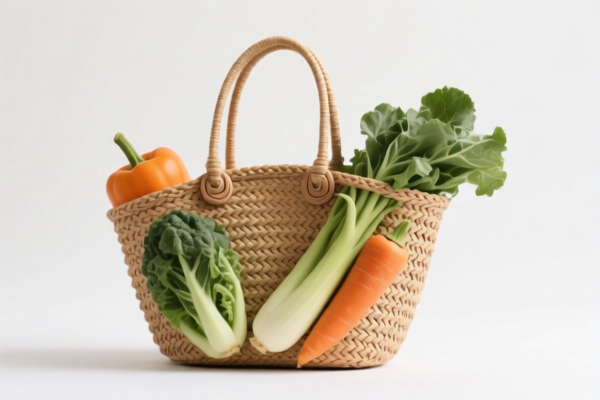
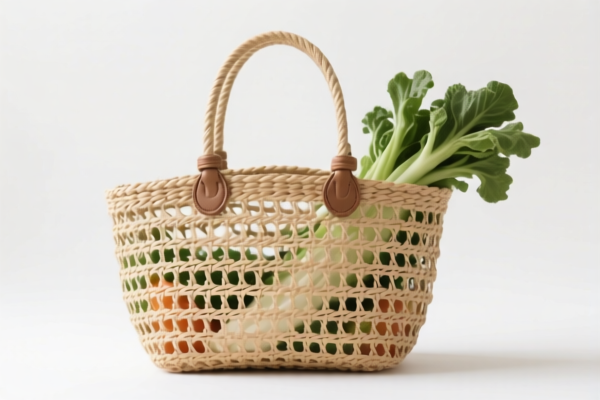
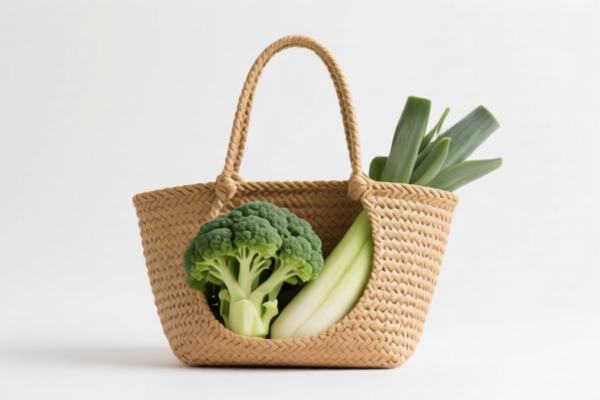
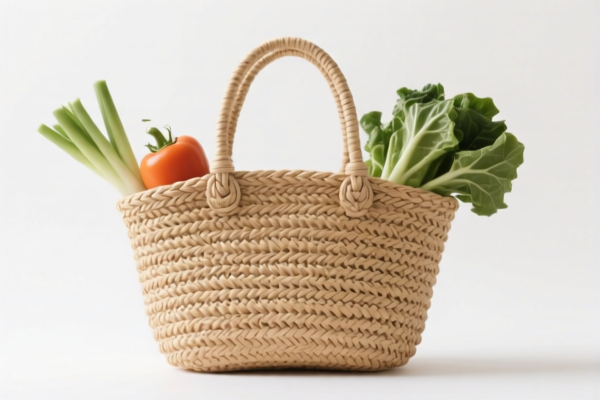
AI Analysis
👜 Natural Vegetable Fiber Handbag
🌐 HS Code Reference & Customs Clearance Guide | 2026 Latest Tariff Full Analysis | Professional-Level Clearance Strategy
📌 I. Product Definition & Classification: Do You Really Understand "Handbags"?
Natural Vegetable Fiber Handbags are accessories made from plant-based materials (such as raffia, straw, bamboo, rattan, or other woven natural fibers). In international trade, their classification depends heavily on the primary material composition and whether they are classified as "handbags" (Chapter 42) or "sacks/bags" (Chapter 63).
Key Distinction:
- Chapter 42 (Handbags): If the bag’s external surface is textile/natural fiber and it functions primarily as a fashion accessory/handbag (structured, straps, specific handbag shape) →归入 4202 series.
- Chapter 63 (Other Textile Bags): If classified broadly as "sacks" or "bags" made of specific natural fibers (like cotton or other textile fibers not meeting Chapter 42 specificity) →归入 6305 series.
⚠️ Critical Clarification:
- The term "Natural Vegetable Fiber" often overlaps with "Textile Materials" in HS classification. If the fiber is cotton, it falls under cotton-specific rules. If it’s raffia/straw/bamboo but structured as a handbag with textile-like characteristics, it may still fall under 4202 depending on construction.
- The provided DATA shows four possible HS codes with significantly different tax rates, highlighting the importance of precise description.
📦 II. HS Code Classification Details (2026 Latest Tariff Authority Comparison)
| HS Code | Product Description (from DATA) | Applicable Scenario | Total Tax Rate |
|---|---|---|---|
6305.90.00.00 |
Cotton fabric handbag, belongs to other bags made of textile materials | Handbags made of cotton fabric, falling under "other textile materials" | 23.7% |
4202.22.89.30 |
Handbag with outer surface of textile material | General handbags with textile outer surface, not further specified by material | 52.6% |
6305.20.00.00 |
Cotton-made bags | Bags specifically made of cotton, broader category than handbags | 23.7% |
4202.22.40.20 |
Handbag with outer surface of textile material, made of cotton | Handbags with cotton outer surface, specific sub-category | 42.4% |
🔍 Key Insight:
- The tax rate varies dramatically from 23.7% to 52.6% based on the exact wording and specificity of the description.
- "Cotton" vs. "Textile Material": If the vegetable fiber is cotton, using 6305 codes can save ~30% compared to 4202.22.89.30.
- Specificity:4202.22.40.20(Cotton handbag) is cheaper (42.4%) than4202.22.89.30(General textile handbag,52.6%), showing that specifying "cotton" reduces tariff even within Chapter 42.
💰 III. 2026 Latest Tariff Rate Breakdown (Including Additional Taxes, Policy Surcharges)
✅ Applicable Country: United States (US)
✅ Origin: China (CN)
✅ Effective Date: 2025/2026 (Subject to current 301/122 provisions)
🎯 1. 6305.90.00.00 & 6305.20.00.00 —— Cotton Bags (Lower Tax Tier)
| Item | Detail |
|---|---|
| Base Tariff | 6.2% |
| Section 301 Additional Tariff | 7.5% |
| Section 122 Tariff | 10% |
| Total Tax Rate | 23.7% |
| Tax Calculation | CIF Value × 23.7% |
| De Minimis Exemption | ❌ Not Available (Deny de minimis for Section 301/122 goods) |
| Legal Basis Path | Section 301: Footnote 9903.88.01 → Section 122: IEEPA → USITC:6305.xx.xx.xx |
📌 Explanation:
- Base 6.2%: Standard MFN rate for textile bags.
- Section 301 7.5%: Additional duty on Chinese textile products under Trade Act Section 301.
- Section 122 10%: Additional duty under Section 122 of the Trade Act of 1974 (often applied to specific categories or during trade remedy investigations).
- Total 23.7%: The most favorable rate among the options if the product can be classified under Chapter 63.
🎯 2. 4202.22.40.20 —— Cotton Handbags (Medium Tax Tier)
| Item | Detail |
|---|---|
| Base Tariff | 7.4% |
| Section 301 Additional Tariff | 25.0% |
| Section 122 Tariff | 10% |
| Total Tax Rate | 42.4% |
| Tax Calculation | CIF Value × 42.4% |
| De Minimis Exemption | ❌ Not Available |
| Legal Basis Path | Section 301: Footnote 9903.88.01 → Section 122: IEEPA → USITC:4202.22.40.20 |
📌 Explanation:
- Base 7.4%: Standard MFN rate for handbags of textile materials.
- Section 301 25.0%: Higher additional duty applied to handbags (Chapter 42) compared to general bags (Chapter 63).
- Section 122 10%: Same as above.
- Total 42.4%: Significantly higher than Chapter 63 codes. Must justify if "Cotton Handbag" fits this code better than "Cotton Bag."
🎯 3. 4202.22.89.30 —— General Textile Handbags (Highest Tax Tier)
| Item | Detail |
|---|---|
| Base Tariff | 17.6% |
| Section 301 Additional Tariff | 25.0% |
| Section 122 Tariff | 10% |
| Total Tax Rate | 52.6% |
| Tax Calculation | CIF Value × 52.6% |
| De Minimis Exemption | ❌ Not Available |
| Legal Basis Path | Section 301: Footnote 9903.88.01 → Section 122: IEEPA → USITC:4202.22.89.30 |
📌 Explanation:
- Base 17.6%: High base rate for unspecified textile handbags.
- Section 301 25.0%: High additional duty.
- Section 122 10%: Same as above.
- Total 52.6%: The most expensive option. Avoid unless the product structure strictly requires this code and cannot be classified as cotton-specific.
🛠️ IV. Customs Clearance Practical Advice (Battle-Tested Pitfall Avoidance Guide)
✅ 1. Preparation Checklist (All Documents Required)
| Document | Mandatory? | Notes |
|---|---|---|
| ✅ Product Specification Sheet | ✔️ | Include material composition (% natural vegetable fiber, e.g., 100% Raffia, 80% Cotton/20% Polyester), dimensions, strap length. |
| ✅ Material Certificate | ✔️ | Confirm "Natural Vegetable Fiber" origin (e.g., Coconut coir, Bamboo, Cotton). If cotton, provide cotton fiber test report. |
| ✅ Product Photos (Clear) | ✔️ | Front, back, inside, handles, labels. Show if it’s a structured handbag or a soft sack. |
| ✅ Commercial Invoice | ✔️ | Clearly state "Handbag" vs. "Bag." If using 6305, use "Bag" or "Sack." If using 4202, use "Handbag." |
| ✅ Packing List | ✔️ | Detail quantities, weights, and package dimensions. |
| ✅ Origin Certificate (CO) | ✔️ | Required for proving Chinese origin (triggering 301/122). |
✅ 2. Declaration Strategy (Key Rules of Thumb)
🔥 "Material Specifics Save Money, Handbag vs. Bag Changes Everything!"
| Scenario | Recommended HS Code | Risk if Misdeclared |
|---|---|---|
| Product is 100% Cotton, soft bag | 6305.20.00.00 or 6305.90.00.00 |
If declared as 4202.22.89.30 → Pay 52.6% instead of 23.7% |
| Product is Cotton, structured handbag | 4202.22.40.20 |
If declared as 4202.22.89.30 → Pay 52.6% instead of 42.4% |
| Product is Raffia/Straw (Not Cotton), handbag | 4202.22.89.30 (likely) |
Cannot use 6305 codes if not textile/cotton. Must accept 52.6%. |
| Product is Mixed Fiber (Cotton + Poly) | 4202.22.40.20 (if cotton >50%) |
Misclassification leads to 301/122 penalties. |
📌 Note: "Natural Vegetable Fiber" is a broad term. Cotton is explicitly listed in the DATA. If your fiber is raffia, straw, or bamboo, it may still fall under "Textile Materials" in Chapter 42, but not under the cotton-specific 6305 codes. Therefore: - If Cotton: Use
6305(23.7%) or4202.22.40.20(42.4%). - If Other Vegetable Fiber (Raffia/Straw): Likely falls under4202.22.89.30(52.6%) unless specific rulings say otherwise.
✅ 3. Special Considerations
| Situation | Handling Advice |
|---|---|
| OEM Custom Handbags | Provide design blueprints showing material composition. If using "Natural Vegetable Fiber" but it’s actually cotton, ensure invoice says "Cotton." |
| Mixed Materials | If 50%+ is cotton, argue for cotton-specific code. Otherwise, use general textile handbag code. |
| Sample vs. Bulk | Both subject to same rates. No de minimis exemption for Section 301/122 goods, so even samples incur tax. |
| Country of Origin | If the fiber is grown in the US but manufactured in China, origin is still China, triggering 301/122. |
🌍 V. Global Market Comparison (2026 Latest)
| Country/Region | Recommended HS Code (Example) | Tariff (China Origin) | Notes |
|---|---|---|---|
| 🇺🇸 USA | 6305.20.00.00 |
23.7% | Most favorable if cotton. 4202.22.89.30 is 52.6%. |
| 🇪🇺 EU | 4202.22.00 |
~12% | No Section 301/122. Lower base rates. |
| 🇨🇳 China | 4202.22.00 |
~10% | Import tariff for export goods re-imported. |
| 🇬🇧 UK | 4202.22.00 |
~12% | Post-Brexit tariff. No 301/122 equivalent. |
📌 Conclusion:
- The US market has the highest tariff complexity due to Section 301 and Section 122.
- Classification accuracy is critical: A 28.9% difference exists between6305(23.7%) and4202.22.89.30(52.6%).
- Cotton is your friend: Use cotton-specific codes to lower tax.
📌 VI. Common Mistakes & Pitfall Avoidance (Lessons Learned)
❌ Mistake 1: Declaring "Raffia Bag" as "Cotton Bag" to get 23.7%
👉 Consequence: Customs audit, penalty, and possible seizure. Material must match.
❌ Mistake 2: Using "Handbag" in description but declaring under 6305
👉 Consequence: Customs may reclassify to 4202 → Tax jumps from 23.7% to 42.4%+
❌ Mistake 3: Assuming "Natural Vegetable Fiber" is exempt from Section 301
👉 Consequence: All Chinese textile/handbag products are subject to 301/122. No exemption.
✅ Correct Practice:
If Cotton: "Handbag, 100% Cotton, Woven, Model ABC" → Declare under
4202.22.40.20(42.4%) or6305.90.00.00(23.7%) if structure allows.
If Raffia/Straw: "Handbag, 100% Raffia, Woven, Model XYZ" → Declare under4202.22.89.30(52.6%).
🎯 VII. Conclusion: Professional Declaration, Save Costs, Avoid Delays!
🎯 Remember the Mantra:
🔹 "Cotton = Cheaper (23.7%), General Textile = Expensive (52.6%)!"
🔹 "Be Specific: 'Cotton Handbag' vs. 'Textile Bag' makes a 29% difference!"
🔹 "No De Minimis for Section 301/122: Even small shipments pay full tax!"
📌 Pro Tip:
If your product is not 100% cotton but contains other natural vegetable fibers (raffia, straw), you cannot use the 6305 cotton codes. You are stuck with 4202 codes.
Recommendation:
1. Confirm Material: Get a lab test to prove if the "natural vegetable fiber" is cotton.
2. If Cotton: Use6305.20.00.00or6305.90.00.00for the lowest tax (23.7%).
3. If Not Cotton: Use4202.22.40.20if it’s clearly a handbag (42.4%), otherwise4202.22.89.30(52.6%).
4. Apply for Pre-Ruling: Submit to US Customs for an Advance Ruling to avoid post-clearance audits.
📣 Immediate Action:
📞 Contact a Customs Broker + Provide Material Test Report + Apply for HS Code Pre-Ruling
🚀 Ensure your handbag passes through smoothly, pays the lowest legal tax, and reaches your customer on time!
✨ Professional Clearance Starts with Accurate Classification!
💼 Every percentage point of tax saved is profit earned!
Customer Reviews
About HS Code Classification
The Harmonized System (HS) is an internationally standardized nomenclature developed by the World Customs Organization (WCO) to classify traded products. Over 200 countries use the HS system as the basis for customs tariffs, trade statistics, and import/export regulations.
Each HS code follows a hierarchical structure:
- Chapter (2 digits) — Broad category of goods (e.g., Chapter 84: Machinery and Mechanical Appliances)
- Heading (4 digits) — More specific grouping within the chapter
- Subheading (6 digits) — Internationally standardized breakdown, used by all WCO member countries
- National subdivisions (8-10 digits) — Country-specific extensions for further classification, such as US HTSUS 10-digit codes
Correct HS code classification is essential for smooth customs clearance, accurate duty payment, and compliance with trade regulations. Misclassification can lead to customs delays, overpayment of duties, or penalties.
When importing from CN to US, the applicable tariff rates may include:
- Most-Favored-Nation (MFN) rate — The standard duty rate applied to WTO members
- General rate — Applied to countries without trade agreements
- Trade remedy duties — Additional tariffs such as Section 301 (anti-dumping), Section 232 (national security), or countervailing duties
The information provided on this page is for reference purposes only. For official classification, please consult with your local customs authority or a licensed customs broker.