Natural bovine belting leather
CN → US| HS Code | Tariff Rate | Origin | Destination | Doc |
|---|---|---|---|---|
| 4205004000 | 36.8% | CN | US | Official Doc |
| 4205000500 | 37.9% | CN | US | Official Doc |
| 4203300000 | 37.7% | CN | US | Official Doc |
| 4203290800 | 49.0% | CN | US | Official Doc |
Product Images
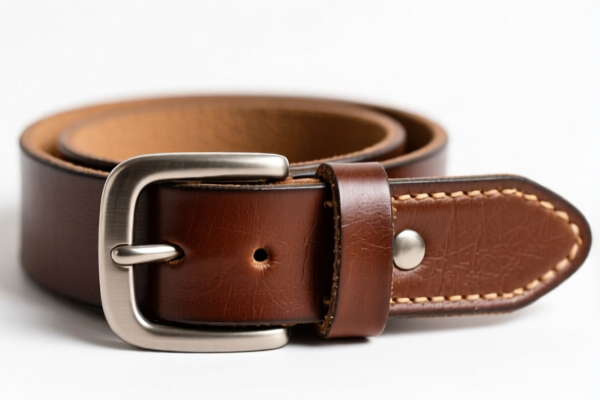
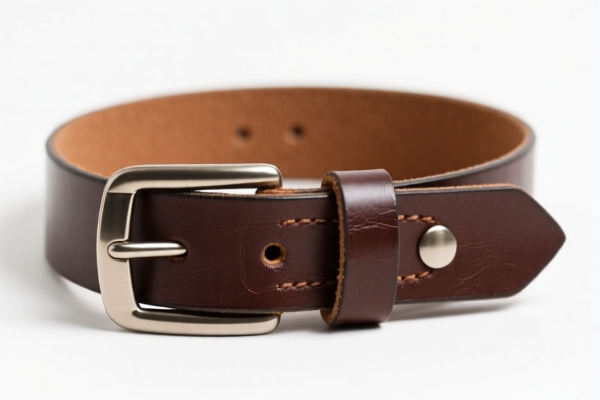
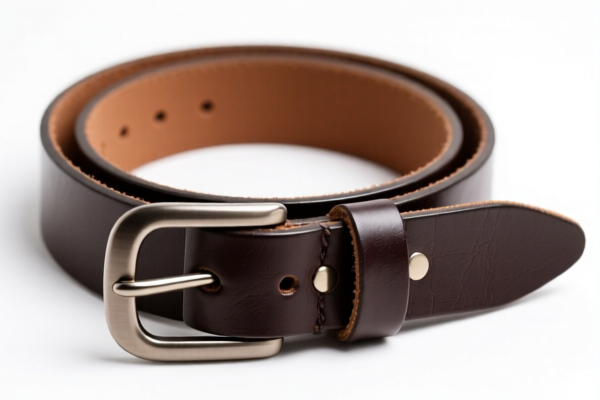
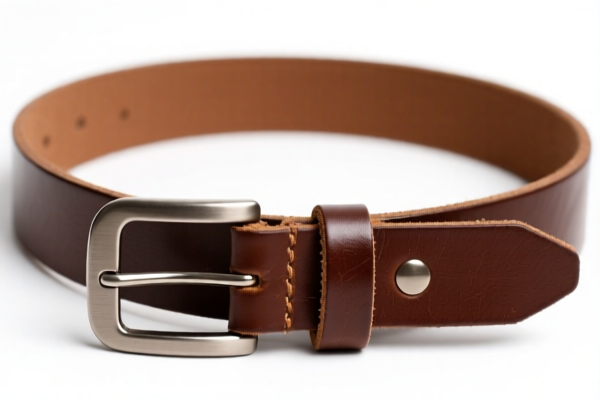
AI Analysis
🐂 Natural Bovine Belting Leather (天然牛皮皮带革)
🌐 HS Code Reference & Customs Clearance Guide | 2026 Latest Tariff Analysis | Professional Entry Strategy
📌 Part I: Product Definition & Classification: Do You Really Understand "Belting Leather"?
Natural Bovine Belting Leather is a specialized semi-finished leather product used primarily in the manufacture of belts, straps, and other accessories. In international trade, it is categorized based on its state of processing and specific form.
The critical distinction lies between: 1. Belting Leather (Specific Form): Leather cut or shaped specifically for belts, often with a specific width or thickness suitable for immediate belt production. 2. Other Leather Goods/Accessories (General Form): Leather that may be used for belts but is not yet processed into the specific "belting" form, or is classified under broader categories of leather articles. 3. Belts (Finished Article): Finished products with buckles or hardware, classified under apparel accessories.
⚠️ Key Distinction Point:
- If the item is raw/unfinished leather strips intended specifically for belts → Look at 4205.00.
- If the item is a finished belt (with buckle/holes) → Look at 4203.30.
- If the item is a finished belt but classified as a general leather accessory (no buckle specified or general category) → Look at 4203.29.
📦 Part II: HS Code Classification Details (2026 Latest Tariff Authority Comparison)
| HS Code | Product Description | Application Scenario | Processing State |
|---|---|---|---|
4205.00.40.00 |
Natural bovine belting leather | Raw/unfinished leather strips specifically for belts | ✅ Raw Leather (Belting Form) |
4205.00.05.00 |
Natural bovine belting leather | General leather goods/articels from bovine | ✅ Raw Leather (General Form) |
4203.30.00.00 |
Unprocessed bovine belt | Unfinished belts (with/without buckle) for apparel | ✅ Semi-Finished Accessory |
4203.29.08.00 |
Unprocessed bovine belt | Other leather accessories, not elsewhere specified | ✅ Semi-Finished Accessory |
🔍 Critical Reminder:
- "Belting Leather" (4205) refers to the material itself, ready for manufacturing.
- "Belts" (4203) refers to the finished accessory, even if "unprocessed" (meaning no final finishing like polishing, but still assembled).
- Misclassification between "Leather Material" (4205) and "Finished Accessory" (4203) leads to significant tariff differences and potential customs delays.
💰 Part III: 2026 Latest Tariff Rate Breakdown (Including Surcharges & Policy Add-ons)
✅ Applicable Country: United States (US)
✅ Country of Origin: China (CN)
✅ Effective Time: As per current trade policies (Section 301 & 122)
🎯 1. 4205.00.40.00 —— Natural Bovine Belting Leather (Specific Form)
| Item | Content |
|---|---|
| Base Tariff | 1.8% |
| Section 301 Surcharge | 25.0% |
| Section 122 Surcharge | 10.0% |
| Total Tariff Rate | 36.8% |
| Tax Calculation | CIF Value × 36.8% |
| De Minimis Exemption | ❌ Not Eligible (Denied under IEEPA/301 rules for these categories) |
| Legal Basis Path | USITC:4205.00.40.00 → Footnote 9903.88.01 (25%) → IEEPA:9903.01.24 (10%) |
📌 Explanation:
- Base 1.8%: Standard MFN rate for leather articles.
- 25% Section 301: Retaliatory tariff on Chinese imports.
- 10% Section 122: National security/trade deficit tariff.
- Total 36.8%: High tariff burden. Must be factored into landed cost.
🎯 2. 4205.00.05.00 —— Natural Bovine Belting Leather (General Form)
| Item | Content |
|---|---|
| Base Tariff | 2.9% |
| Section 301 Surcharge | 25.0% |
| Section 122 Surcharge | 10.0% |
| Total Tariff Rate | 37.9% |
| Tax Calculation | CIF Value × 37.9% |
| De Minimis Exemption | ❌ Not Eligible |
| Legal Basis Path | USITC:4205.00.05.00 → Footnote 9903.88.01 (25%) → IEEPA:9903.01.24 (10%) |
📌 Note:
- Slightly higher total rate due to higher base tariff (2.9% vs 1.8%).
- Both 4205 codes are subject to the same surcharges. The difference is purely in the base MFN rate.
🎯 3. 4203.30.00.00 —— Unprocessed Bovine Belt (Apparel Accessory)
| Item | Content |
|---|---|
| Base Tariff | 2.7% |
| Section 301 Surcharge | 25.0% |
| Section 122 Surcharge | 10.0% |
| Total Tariff Rate | 37.7% |
| Tax Calculation | CIF Value × 37.7% |
| De Minimis Exemption | ❌ Not Eligible |
| Legal Basis Path | USITC:4203.30.00.00 → Footnote 9903.88.01 (25%) → IEEPA:9903.01.24 (10%) |
📌 Explanation:
- Classified under "Footwear, headgear, umbrellas..." as an accessory.
- 37.7% total rate.
- Applicable if the item is a belt (even unfinished) rather than raw leather.
🎯 4. 4203.29.08.00 —— Unprocessed Bovine Belt (Other Leather Accessory)
| Item | Content |
|---|---|
| Base Tariff | 14.0% |
| Section 301 Surcharge | 25.0% |
| Section 122 Surcharge | 10.0% |
| Total Tariff Rate | 49.0% |
| Tax Calculation | CIF Value × 49.0% |
| De Minimis Exemption | ❌ Not Eligible |
| Legal Basis Path | USITC:4203.29.08.00 → Footnote 9903.88.01 (25%) → IEEPA:9903.01.24 (10%) |
📌 Critical Warning:
- This is the highest tariff at 49.0%.
- Occurs when the product is classified as a "Other" leather accessory under 4203.29, often due to lack of specific description as "belting leather" or "belt".
- Must avoid this classification if the product is clearly belting leather or a standard belt.
🛠️ Part IV: Customs Clearance Practical Advice (Battle-Tested Pitfall Avoidance)
✅ 1. Documentation Checklist (Essential)
| Document | Required | Description |
|---|---|---|
| ✅ Product Specification Sheet | ✔️ | Must specify "Natural Bovine Leather", "Belting", thickness, width. |
| ✅ Photos of Product | ✔️ | Show grain, side, and any specific shaping for belts. |
| ✅ Commercial Invoice | ✔️ | Clearly state "Natural Bovine Belting Leather" or "Boone Belts". |
| ✅ Packing List | ✔️ | Detail weight, dimensions, and contents. |
| ✅ Supply Chain Proof | ✔️ | Proof of origin (China) to apply correct tariffs. |
✅ 2. Declaration Strategy (Key Mantra)
🔥 "Form Defines Code, Description Defines Rate!"
| Scenario | Correct Declaration | Error Consequence |
|---|---|---|
| Raw leather strips for belts | 4205.00.40.00 (36.8%) | If misdeclared as "Accessories" → 49.0% |
| General leather goods | 4205.00.05.00 (37.9%) | If misdeclared as "Finished Belts" → 37.7% or 49.0% |
| Unfinished belts (no buckle) | 4203.30.00.00 (37.7%) | If misdeclared as "Raw Leather" → 36.8% (may be rejected if too finished) |
| Other leather accessories | 4203.29.08.00 (49.0%) | Highest Tax! Avoid unless truly "other". |
✅ 3. Special Cases Handling
| Situation | Recommendation |
|---|---|
| OEM Custom Leather | Provide design specs to prove "Belting Leather" status → Target 36.8% or 37.7%. |
| Finished Belts with Buckle | Must declare as 4203.30.00.00 (37.7%). Do NOT declare as raw leather. |
| Mixed Shipments | Separate raw leather from finished belts. Different HS Codes → Different duties. |
| Origin: China | All codes above include 35% surcharges (25% + 10%). No de minimis. |
🌍 Part V: Global Market Comparison (2026 Latest)
| Country/Region | Recommended HS Code | Tariff Rate (China Origin) | Key Notes |
|---|---|---|---|
| 🇺🇸 USA | 4205.00.40.00 |
36.8% | High surcharges. Most efficient for raw belting leather. |
| 🇺🇸 USA | 4203.29.08.00 |
49.0% | Avoid this code for belting leather. |
| 🇨🇳 China | 4205.00.40.00 |
Low Base (0-3%) | Import into China: Lower base duty, no US surcharges. |
| 🇪🇺 EU | 4205.00.40.00 |
~4% | No Section 301/122 surcharges. Much lower cost. |
| 🇬🇧 UK | 4205.00.40.00 |
~4% | Post-Brexit, tariffs aligned with EU. |
📌 Conclusion:
- USA is the most expensive market due to Section 301 and Section 122 tariffs.
- Choosing the correct HS Code within 4205 is crucial to minimize the base rate (1.8% vs 2.9%).
- Avoid 4203.29.08.00 unless absolutely necessary, as it doubles the tax burden compared to 4205.
📌 Part VI: Common Mistakes & Pitfalls (Blood-Teached Lessons)
❌ Mistake 1: Declaring "Belting Leather" as "Leather Goods" (4205.00.05.00)
👉 Result: Higher base rate (2.9% vs 1.8%) → Extra 1.1% tax.
❌ Mistake 2: Declaring "Finished Belts" as "Raw Leather" (4205.00.40.00)
👉 Result: Customs may reject, demand reclassification, or apply 49.0% rate → Delay + Fine.
❌ Mistake 3: Using vague terms like "Leather Strips"
👉 Result: Customs officer has discretion → Likely to assign 4203.29.08.00 (49.0%).
❌ Mistake 4: Ignoring Section 122 & 301
👉 Result: Underestimating landed cost → Profit Margin Erased.
✅ Correct Practice:
"Natural Bovine Belting Leather, Unfinished, for Belt Manufacturing, China Origin, Model BLT-101"
🎯 Part VII: Conclusion: Precise Classification Saves Money!
🎯 Remember the Mantra:
🔹 "Raw Leather: 4205, Base 1.8% or 2.9%. Finished Belt: 4203, Base 2.7% or 14%. Avoid 49%!"
🔹 "35% Surcharges Are Inevitable for China. Minimize Base Rate!"
📌 Pro Tip:
- If you are importing into the US, ensure your supplier provides a detailed specification proving the product is "Belting Leather" (4205.00.40.00) rather than a general leather good.
- Consider pre-ruling with US Customs (CBP) if you have high-volume shipments to lock in the 36.8% rate.
📣 Immediate Action:
📞 Consult a customs broker + Provide product photos + Verify HS Code pre-entry
🚀 Let your Natural Bovine Belting Leather clear customs smoothly, efficiently, and cost-effectively!
✨ Professional Clearance Starts with Accurate Classification!
💼 Every Percent Matters in Tariff Costs!
Customer Reviews
About HS Code Classification
The Harmonized System (HS) is an internationally standardized nomenclature developed by the World Customs Organization (WCO) to classify traded products. Over 200 countries use the HS system as the basis for customs tariffs, trade statistics, and import/export regulations.
Each HS code follows a hierarchical structure:
- Chapter (2 digits) — Broad category of goods (e.g., Chapter 84: Machinery and Mechanical Appliances)
- Heading (4 digits) — More specific grouping within the chapter
- Subheading (6 digits) — Internationally standardized breakdown, used by all WCO member countries
- National subdivisions (8-10 digits) — Country-specific extensions for further classification, such as US HTSUS 10-digit codes
Correct HS code classification is essential for smooth customs clearance, accurate duty payment, and compliance with trade regulations. Misclassification can lead to customs delays, overpayment of duties, or penalties.
When importing from CN to US, the applicable tariff rates may include:
- Most-Favored-Nation (MFN) rate — The standard duty rate applied to WTO members
- General rate — Applied to countries without trade agreements
- Trade remedy duties — Additional tariffs such as Section 301 (anti-dumping), Section 232 (national security), or countervailing duties
The information provided on this page is for reference purposes only. For official classification, please consult with your local customs authority or a licensed customs broker.