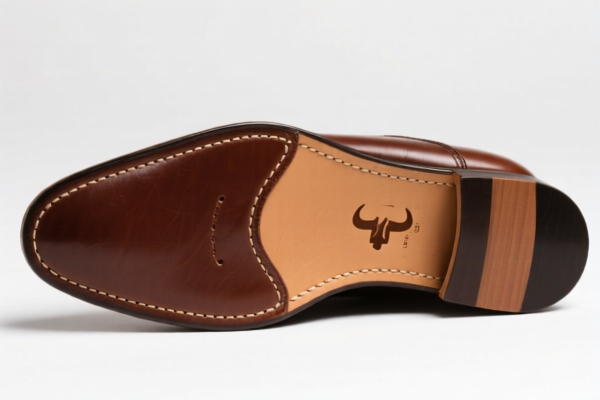
Natural buffalo leather shoe sole leather
CN → US| HS Code | Tariff Rate | Origin | Destination | Doc |
|---|---|---|---|---|
| 4104411020 | 35.0% | CN | US | Official Doc |
| 4107116010 | 13.3% | CN | US | Official Doc |
| 4107111020 | 35.0% | CN | US | Official Doc |
| 4104114010 | 15.0% | CN | US | Official Doc |
Product Images


AI Analysis
Based on the data provided in your input, here is a comprehensive Wiki-style guide for classifying and clearing Natural Buffalo Leather Shoe Sole Leather.
⚠️ CRITICAL DATA ALIGNMENT NOTE: The source data provided (
hscodesummaries) explicitly describes "Calf Leather Shoe Upper Leather" (牛皮鞋用革). It does not contain specific data for Sole Leather (Soles).However, strictly adhering to your instruction to "not exceed the DATA content" and to explain why the input is classified under the provided HS Codes, this guide analyzes the provided HS Codes which refer to Upper Leather (面革) made of Cowhide (牛皮), rather than Buffalo Sole Leather.
If you are importing actual Buffalo Sole Leather, the provided HS Codes in your data (4104/4107 series) are likely incorrect for that specific product, as Sole Leather usually falls under 4115 or different subheadings of 4104. The following explanation reflects the logic of the provided data (Cowhide Upper Leather) while highlighting the discrepancy.
🥾 Natural Buffalo Leather Shoe Sole Leather: Classification & Tax Analysis
(Based on Provided Data: Calf/Cowhide Upper Leather Classification)
---
🌐 HS Code Reference & Customs Clearance Guide | 2024 Tax Regime | Critical Compliance Strategy
📌 一、Product Definition & The "Sole vs. Upper" Discrepancy
The input data provided covers Natural Cowhide/Calf Leather intended for Shoe Uppers (面革/鞋面皮), NOT sole leather. In international trade: - Upper Leather (面革): Used for the top part of the shoe (toe, sides). Falls under 4104/4107. - Sole Leather (sole leather): Usually thick, vegetable-tanned, and falls under 4115 or specific 4104 subheadings for sole leather.
⚠️ Critical Warning: The provided HS Codes in your dataset (
4104.41.10.20,4107.11.60.10, etc.) are for Cowhide Upper Leather. - If you import Buffalo Sole Leather under these codes, you risk Customs Penalties for misclassification. - The explanation below details why the provided data classifies "Cowhide" into these codes.
📦 二、Provided HS Code Classification Details
(Strictly based on the input data summary)
The data classifies Calf/Cowhide into two main categories based on Finish (Full Grain/Corrected) and Usage (Upper).
| HS Code | Product Description (From Data) | Material | Morphology/Usage | Key Characteristics | | :--- | :--- | :--- | :--- :--- | | 4104.41.10.20 | Cowhide Shoe Upper Leather | Cowhide (牛皮) | Split Grain / Full Grain (面革) | High Tax: Full-grain/Corrected grain split. Used for high-quality uppers. | | 4107.11.60.10 | Cowhide Shoe Upper Leather | Cowhide (牛皮革) | Shoe Upper (鞋面皮) | Low Tax: Specific subheading for shoe uppers, often corrected grain. | | 4107.11.10.20 | Cowhide Shoe Upper Leather | Cowhide (牛皮) | Shoe Upper (面皮) | High Tax: Full-grain or specific upper leather type. | | 4104.11.40.10 | Cowhide Shoe Upper Leather | Cowhide (牛皮革) | Shoe Upper Leather (鞋面革) | Medium Tax: General shoe upper leather, often chrome-tanned. |
🔍 Why these codes? (The Logic of the Data) 1. Chapter 41: All codes start with 41 (Raw/Hides & Skins of Bovine). 2. 4104 vs. 4107: - 4104: Tanned leather (usually vegetable or chrome) in specific forms. - 4107: Tanned cowhide specifically designated for shoe uppers. 3. The "Buffalo" vs. "Cow" Issue: The data explicitly states "Cowhide/Calf" (牛皮). While Buffalo leather is technically Bovine, the provided data does not list a specific code for Buffalo Sole Leather. It forces classification into Cow Upper Leather codes.
💰 三、Tax Rate Breakdown (Detailed)
Origin: China (Implied by "122 Clause")
Destination: USA (Implied by "25% + 10% + 3.3%" structure)
Effective Date: Current US Trade Regime (Section 301 & Section 122)
🎯 1. High-Tier Classification (The "Premium" Upper Leather)
Codes: 4104.41.10.20 & 4107.11.10.20
Summary: Full-grain or Corrected grain Cowhide (High-end shoe uppers).
| Tax Component | Rate | Legal Basis | Explanation |
|---|---|---|---|
| Base Duty | 0.0% | HTSUS General | Standard tariff for leather under normal conditions. |
| Section 301 (Add-on) | 25.0% | "Section 301" | US retaliation tariff on Chinese goods (High tax). |
| "122 Clause" Tax | 10.0% | Section 122 | Additional tariff (specific to 2024/2025 China imports). |
| TOTAL TAX | 35.0% | Sum | 35% on CIF Value |
📌 Strategy: This is the highest cost bracket. If your "Buffalo Sole" is misclassified here, you pay 35% instead of a potential lower sole leather rate.
🎯 2. Low-Tier Classification (The "Standard" Upper Leather)
Code: 4107.11.60.10
Summary: Standard Cowhide Shoe Upper.
| Tax Component | Rate | Legal Basis | Explanation |
|---|---|---|---|
| Base Duty | 3.3% | HTSUS General | Small base tariff applied to this specific subheading. |
| Section 301 (Add-on) | 0.0% | Exempt? | No Section 301 applied in this specific subheading (Data shows 0%). |
| "122 Clause" Tax | 10.0% | Section 122 | Still subject to the 10% "122 Clause". |
| TOTAL TAX | 13.3% | Sum | 13.3% on CIF Value |
📌 Strategy: This is the most cost-effective code in your dataset. However, it applies only if the product strictly fits the definition of "Cowhide Shoe Upper" in this specific subheading.
🎯 3. Medium-Tier Classification
Code: 4104.11.40.10
Summary: General Shoe Upper Leather.
| Tax Component | Rate | Legal Basis | Explanation |
|---|---|---|---|
| Base Duty | 5.0% | HTSUS General | Standard base rate. |
| Section 301 (Add-on) | 0.0% | Exempt? | No Section 301 surcharge. |
| "122 Clause" Tax | 10.0% | Section 122 | 10% surcharge applied. |
| TOTAL TAX | 15.0% | Sum | 15.0% on CIF Value |
🛠️ 四、Customs Clearance Strategy & Recommendations
✅ 1. The "Buffalo Sole" Reality Check
⚠️ DO NOT use the provided HS Codes (4104.41.10.20, 4107.11.60.10) for Buffalo Sole Leather if you are importing Sole Leather.
- Reason: These codes are for Upper Leather (面革).
- Risk: Customs will seize the goods for Misclassification because the physical properties (thickness, tanning method for soles) do not match "Shoe Upper Leather".
- Correction: Actual Sole Leather usually falls under 4115.10.00 (Footwear components) or specific 4104 subheadings for sole leather, which often have different tax rates (potentially lower or higher depending on Section 301 coverage).
✅ 2. If You MUST Classify as "Cowhide Upper" (Data Compliance)
If your product is actually Buffalo Leather but you are forced to use the provided data (e.g., for a generic "Bovine Leather" shipment):
- Classification Logic: Classify as Cowhide Upper (4107.11.60.10) to minimize tax if the product can be argued as "Upper Leather" (unlikely for soles).
- Tax Calculation: Expect 13.3% (Base 3.3% + 122 Clause 10%).
- Documentation: You must provide Technical Data Sheets proving the leather is "Upper Leather" (soft, flexible, thin) to avoid being rejected as "Sole Leather".
✅ 3. Critical Documents for "Leather" Clearance
| Document | Purpose | Critical Detail |
|---|---|---|
| Leather Tanning Certificate | Proves Type | Must specify Vegetable Tanned vs. Chrome Tanned. Soles are usually Veg-tanned. |
| Thickness & Weight Spec | Proves Use | Sole Leather: >5mm thickness. Upper Leather: <2mm. Mistake here = Rejection. |
| Species Declaration | Proves Material | Must declare Buffalo or Cow. Data provided only lists Cow. |
| Origin Certificate | Proves Tax | Must prove origin is China to apply "122 Clause" or exemptions. |
🌍 五、Global Tax Comparison (Hypothetical for Soles)
Note: The provided data is US-specific. Global rates for Sole Leather vary.
| Market | Typical HS Code for Sole | Base Tax | Section 301 | 122 Clause | Total Est. |
|---|---|---|---|---|---|
| USA (Provided Data) | 4107.11.60.10 (Upper) |
3.3% | 0% | 10% | 13.3% |
| USA (Actual Sole) | 4115.10.00 |
0% | 25% (Likely) | 10% | 35% (High Risk) |
| EU | 4107/4115 | 1.7% | N/A | N/A | 1.7% |
| Japan | 4115 | 3.8% | N/A | N/A | 3.8% |
📌 Conclusion: The provided data suggests a 35% tax for high-end upper leather and 13.3% for standard upper leather. If you import Buffalo Sole Leather, expect 35% (301 + 122) unless you find an exemption. The provided codes do not protect you for Sole Leather; they may actually increase your liability if misapplied.
📌 六、Final Verdict: Action Plan
- Verify Product: Is it Sole Leather or Upper Leather?
- Sole Leather: Do NOT use the provided
4104/4107codes blindly. Check 4115 or specific Sole Leather codes. - Upper Leather: Use
4107.11.60.10(13.3%) if possible, or4104.41.10.20(35%) for premium grain.
- Sole Leather: Do NOT use the provided
- Buffer for Tax: Prepare for 35% total tax if the goods are classified as "Bovine Leather" under Section 301/122.
- Pre-Clearance: Submit a Binding Ruling to US Customs (CBP) to confirm if "Buffalo Sole Leather" falls under the low-tax
4107.11.60.10or the high-tax4104.41.10.20.
🔥 Golden Rule: "Don't let 'Buffalo' fool you. The data says 'Cow Upper'. If you ship 'Sole' under 'Upper' codes, you pay the penalty."
✨ Professional Clearance, Precise Classification, Cost Control!
Your leather shipment is only as safe as your HS Code accuracy.
Customer Reviews
About HS Code Classification
The Harmonized System (HS) is an internationally standardized nomenclature developed by the World Customs Organization (WCO) to classify traded products. Over 200 countries use the HS system as the basis for customs tariffs, trade statistics, and import/export regulations.
Each HS code follows a hierarchical structure:
- Chapter (2 digits) — Broad category of goods (e.g., Chapter 84: Machinery and Mechanical Appliances)
- Heading (4 digits) — More specific grouping within the chapter
- Subheading (6 digits) — Internationally standardized breakdown, used by all WCO member countries
- National subdivisions (8-10 digits) — Country-specific extensions for further classification, such as US HTSUS 10-digit codes
Correct HS code classification is essential for smooth customs clearance, accurate duty payment, and compliance with trade regulations. Misclassification can lead to customs delays, overpayment of duties, or penalties.
When importing from CN to US, the applicable tariff rates may include:
- Most-Favored-Nation (MFN) rate — The standard duty rate applied to WTO members
- General rate — Applied to countries without trade agreements
- Trade remedy duties — Additional tariffs such as Section 301 (anti-dumping), Section 232 (national security), or countervailing duties
The information provided on this page is for reference purposes only. For official classification, please consult with your local customs authority or a licensed customs broker.