Natural rubber foot pads
CN → US| HS Code | Tariff Rate | Origin | Destination | Doc |
|---|---|---|---|---|
| 4016990500 | 20.9% | CN | US | Official Doc |
| 4016996050 | 37.5% | CN | US | Official Doc |
| 4014905000 | 14.2% | CN | US | Official Doc |
| 4014901000 | 10.0% | CN | US | Official Doc |
| 3926909989 | 22.8% | CN | US | Official Doc |
Product Images
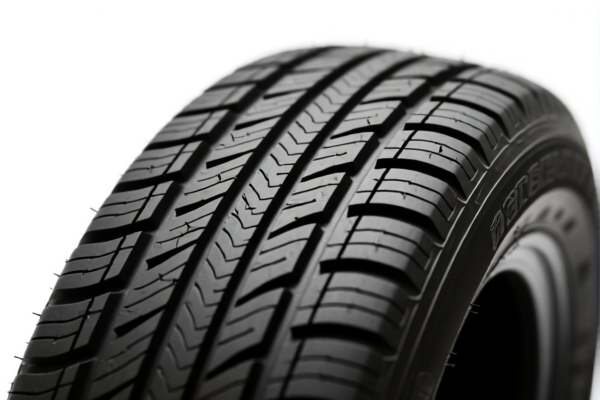

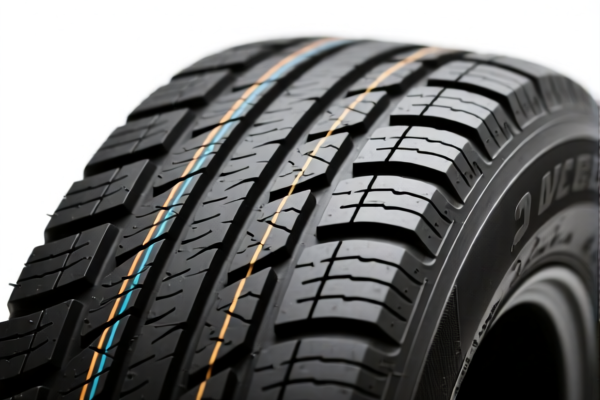

AI Analysis
🦶 Natural Rubber Foot Pads: The Ultimate Import Guide (HS Codes & Tariff Strategy 2026)
🌐 HS Code Reference & Customs Clearance Guide | 2026 Latest Tariff Analysis | Professional Strategy for Rubber Components
📌 Part 1: Product Definition & Classification — Do You Really Know "Natural Rubber Foot Pads"?
Natural Rubber Foot Pads are essential components used to stabilize furniture, machinery, and household items. They provide shock absorption, prevent slipping, and protect floors from scratches. In international trade, the classification of these pads is highly sensitive. The difference between a "furniture leg cap" (HS 4016) and a "general rubber gasket" (HS 4014) can result in a 3.5x difference in tax burden.
International Customs authorities (especially US CBP) scrutinize the intended use and material composition strictly.
⚠️ Critical Classification Distinctions: * Furniture Application: If explicitly designed as "Leg Caps" or "Anti-Slip Pads" for tables/chairs, they often fall under 4016 or 3926. * Industrial/Mechanical: If used as general gaskets, seals, or parts for machinery, they may fall under 4014 (Gaskets & Seals). * Material Specifics: "Natural Rubber" vs. "Vulcanized Rubber" changes the sub-heading. * The "China Surcharge" Trap: Most entries above carry a 10% Section 301 (122) surcharge on top of base and anti-dumping duties.
📦 Part 2: HS Code Classification Matrix (2026 Latest Tariff Authority)
Below is the authoritative breakdown of the 5 potential HS Codes for Natural Rubber Foot Pads, including tax details.
| HS Code | Product Summary & Classification Logic | Total Tax Rate | Tax Breakdown (Base + Add-ons) |
|---|---|---|---|
| 4016.99.05.00 | Rubber Table Leg Pads Logic: Classified as "Other vulcanized rubber articles." Specifically identified as household furniture accessories. |
20.9% | Base: 3.4% + China Surcharge: 7.5% + Sec. 301: 10% |
| 4016.99.60.50 | Rubber Table Leg Pads (General) Logic: "Other rubber articles" (shape: pad, use: furniture). This is the "catch-all" for specific furniture pads not covered by 05/10. |
37.5% | Base: 2.5% + China Surcharge: 25.0% + Sec. 301: 10% |
| 4014.90.50.00 | Rubber Gasket/Furniture Part Logic: Classified as "Parts of sanitary/waste articles" (excluding specific medical use). Used for furniture protection but structured as a gasket. |
14.2% | Base: 4.2% + China Surcharge: 0.0% + Sec. 301: 10% |
| 4014.90.10.00 | Rubber Gasket (Daily Use) Logic: "Gaskets & Seals" for household/daily use. Lowest base duty, but still faces the 301 surcharge. |
10.0% | Base: 0.0% + China Surcharge: 0.0% + Sec. 301: 10% |
| 3926.90.99.89 | Rubber Foot Pad (General Plastic/Rubber) Logic: "Other articles of plastics/rubber" acting as a fallback (兜底). If rubber content is low or classification is ambiguous. |
22.8% | Base: 5.3% + China Surcharge: 7.5% + Sec. 301: 10% |
🔍 Key Insight: * The "Sweet Spot": HS 4014.90.10.00 offers the lowest total tax (10%) because it has 0% Base Duty and 0% China Surcharge (likely due to specific duty rate exemptions for certain gasket types), yet still applies the 10% Section 301. * The "Risk Zone": HS 4016.99.60.50 carries a massive 37.5% total tax due to the heavy 25% China Surcharge and 10% Section 301. Avoid this code unless the product strictly fits the definition of this specific sub-heading.
💰 Part 3: 2026 Tariff Rate Deep Dive (Detailed Policy Analysis)
✅ Market Focus: United States (US) ✅ Origin: China (CN) ✅ Applicable Regime: Section 301 (122 Clause) & Base MFN Rates
🎯 1. 4016.99.05.00 — The Household Furniture Standard
- Base Tariff: 3.4% (General MFN rate for rubber articles).
- China Surcharge: 7.5% (Specific penalty rate for this sub-category).
- Section 301 (122 Clause): +10% (Mandatory for all Chinese-origin rubber goods).
- Total Effective Rate: 20.9%
- Legal Path:
301-List-3→4016.99.05.00→Section 301: 10%
📌 Explanation: This is the most "standard" classification for dedicated rubber foot pads. It assumes the product is clearly a furniture accessory.
🎯 2. 4016.99.60.50 — The High-Tax "Other" Category
- Base Tariff: 2.5%.
- China Surcharge: 25.0% (Heavy penalty for this specific "Other" category).
- Section 301 (122 Clause): +10%.
- Total Effective Rate: 37.5%
- Legal Path:
301-List-3(High Rate Tier) →4016.99.60.50.
📌 Warning: This rate is nearly double the 4016.99.05.00 rate. It applies if the product description is too vague or fits the "Other" definition poorly. Do not use this code if 4016.99.05.00 is a valid alternative.
🎯 3. 4014.90.50.00 — The "Gasket" Alternative
- Base Tariff: 4.2%.
- China Surcharge: 0.0% (No additional surcharge for this specific gasket type).
- Section 301 (122 Clause): +10%.
- Total Effective Rate: 14.2%
- Legal Path:
4014.90.50.00→Section 301: 10%.
📌 Strategy: If the foot pad can be argued as a "sealing part" or "protection part" rather than a "furniture leg cap," this code saves 6.7% compared to 4016.99.05.00.
🎯 4. 4014.90.10.00 — The Optimal Tariff (10%)
- Base Tariff: 0.0% (Duty-free base rate for specific household gaskets).
- China Surcharge: 0.0% (No surcharge).
- Section 301 (122 Clause): +10%.
- Total Effective Rate: 10.0%
- Legal Path:
4014.90.10.00→Section 301: 10%.
📌 Strategy: This is the most cost-effective code provided the product fits the definition of "Gaskets for household use." If you can justify the product as a "protection gasket" rather than a "furniture pad," you save 10.9% vs the standard 4016.99.05.00.
🎯 5. 3926.90.99.89 — The Fallback "Other" Article
- Base Tariff: 5.3%.
- China Surcharge: 7.5%.
- Section 301 (122 Clause): +10%.
- Total Effective Rate: 22.8%
- Legal Path:
3926(Plastic/Rubber misc) →301: 10%.
📌 Note: Use this only if the rubber content is low or the product is deemed a "Plastic" article first. It is more expensive than
4014.90.10.00.
🛠️ Part 4: Customs Clearance Practical Advice (Avoiding Pitfalls)
✅ 1. Documentation Checklist (Non-Negotiable)
| Document | Requirement | Why It Matters |
|---|---|---|
| Product Specification Sheet | Must explicitly state "Natural Rubber" or "Vulcanized Rubber" & "Table Leg" usage. | Determines HS 4016 vs. 4014. |
| Material Composition Report | % Rubber vs. % Fillers vs. % Additives. | If >50% rubber, it goes to Ch 40 (4014/4016). If plastic dominates, it goes to Ch 39. |
| Technical Drawing | Shows the "pad" shape, thickness, and intended mounting (glue/adhesive). | Proves it is a "foot pad" and not a general gasket (or vice versa). |
| Commercial Invoice | Must use the exact HS Code description (e.g., "Rubber Table Leg Pads"). | Prevents "Misclassification" audits. |
| Country of Origin (CO) | Essential for Section 301 verification. | Confirms "Made in China" triggers the 10% surcharge. |
✅ 2. Strategic Declaration Tips (The "10% Trick")
🔥 Golden Rule: "Classify as Gasket if Possible, Avoid 'Other' if it's Heavy Taxed!"
| Scenario | Recommended HS Code | Reasoning |
|---|---|---|
| Product is clearly a table leg pad | 4016.99.05.00 |
Most accurate, but pays 20.9%. |
| Product is a general "protective pad" for furniture | 4014.90.10.00 |
Lowest Tax (10%). Argue it as a "gasket/seal" for furniture protection. |
| Product is for machinery/industrial use | 4014.90.50.00 |
Avoids the 25% surcharge of 4016.99.60.50. |
| Product is Plastic-Rubber Composite | 3926.90.99.89 |
Only if rubber content is low (<50%). |
| Vague Description (e.g., "Rubber Pad") | ❌ Danger Zone | Risk of being stuck at 4016.99.60.50 (37.5%). Always specify "Table Leg" or "Gasket"! |
✅ 3. Special Handling for Section 301 (122 Clause)
- The 10% "122 Clause": This is a non-negotiable surcharge for most rubber goods from China in 2026. No code in the list above offers an exemption on this 10% portion.
- Calculation Base: The 10% is applied to the CIF Value (Cost + Insurance + Freight), not just the product cost.
- Mitigation: You cannot avoid the 10%, but you CAN avoid the China Surcharge (0%, 7.5%, or 25%) by selecting the right sub-category (e.g.,
4014.90.10.00has 0% surcharge).
🌍 Part 5: Global Market Comparison (2026)
| Market | Recommended HS Code | Total Tax (China Origin) | Key Requirement |
|---|---|---|---|
| 🇺🇸 USA | 4014.90.10.00 |
10.0% | Critical: Must prove "Gasket/Seal" use to get 0% Base/Surch. |
| 🇨🇳 China | 4016.99.05.00 |
3.4% | Domestic consumption, no export taxes. |
| 🇪🇺 EU | 4016.99.05.00 |
4.5% (approx) | No Section 301, but strict REACH compliance. |
| 🇯🇵 Japan | 4016.99.05.00 |
3.0% | No Section 301. |
📌 Conclusion: * USA is the most aggressive market with Section 301 tariffs. * Target
4014.90.10.00to minimize total tax to 10% (10% Sec 301 only). * Avoid4016.99.60.50unless absolutely necessary (37.5% tax kills margins).
📌 Part 6: Common Mistakes & Pitfalls (Lessons Learned)
❌ Mistake 1: Vague Description ("Rubber Pad")
👉 Consequence: Customs may default to
4016.99.60.50(37.5% tax) because it's the "catch-all." ✅ Fix: Explicitly state "Table Leg Pad" or "Gasket for Furniture."
❌ Mistake 2: Misidentifying Material
👉 Consequence: Declaring as Plastic (3926) when it's 90% Rubber leads to penalties. ✅ Fix: Provide a Material Safety Data Sheet (MSDS) confirming rubber dominance.
❌ Mistake 3: Ignoring the 122 Clause
👉 Consequence: Underestimating the 10% fixed surcharge on all Chinese rubber goods. ✅ Fix: Budget for 10% + Base + Surch. Always.
🎯 Part 7: Final Strategy — Save Money, Ship Faster!
🔹 The "10% Goal": Aim for HS 4014.90.10.00. It offers the lowest total tax (10%) by avoiding the 25% surcharge. 🔹 The "20% Floor": If
4014.90.10.00is not applicable,4016.99.05.00(20.9%) is your next best bet. 🔹 The "37.5% Trap": NEVER use4016.99.60.50unless you have no other choice. It is a margin killer.
📣 Call to Action:
📞 Contact your Forwarder: Provide the Product Drawing and Material Breakdown. 🚀 Request HS Code Pre-Ruling: Confirm if
4014.90.10.00is accepted for your specific foot pad design before shipping. 💼 Optimize: Every 1% tax saved on a 1000-unit shipment is real profit. Classify correctly!
✨ Professional Customs, Precise Classification, Maximum Profit! 💼 Your Cost, Calculated Exactly.
Customer Reviews
About HS Code Classification
The Harmonized System (HS) is an internationally standardized nomenclature developed by the World Customs Organization (WCO) to classify traded products. Over 200 countries use the HS system as the basis for customs tariffs, trade statistics, and import/export regulations.
Each HS code follows a hierarchical structure:
- Chapter (2 digits) — Broad category of goods (e.g., Chapter 84: Machinery and Mechanical Appliances)
- Heading (4 digits) — More specific grouping within the chapter
- Subheading (6 digits) — Internationally standardized breakdown, used by all WCO member countries
- National subdivisions (8-10 digits) — Country-specific extensions for further classification, such as US HTSUS 10-digit codes
Correct HS code classification is essential for smooth customs clearance, accurate duty payment, and compliance with trade regulations. Misclassification can lead to customs delays, overpayment of duties, or penalties.
When importing from CN to US, the applicable tariff rates may include:
- Most-Favored-Nation (MFN) rate — The standard duty rate applied to WTO members
- General rate — Applied to countries without trade agreements
- Trade remedy duties — Additional tariffs such as Section 301 (anti-dumping), Section 232 (national security), or countervailing duties
The information provided on this page is for reference purposes only. For official classification, please consult with your local customs authority or a licensed customs broker.