Natural rubber rubber tubes
CN → US| HS Code | Tariff Rate | Origin | Destination | Doc |
|---|---|---|---|---|
| 4009110000 | 37.5% | CN | US | Official Doc |
| 4009120050 | 20.0% | CN | US | Official Doc |
Product Images
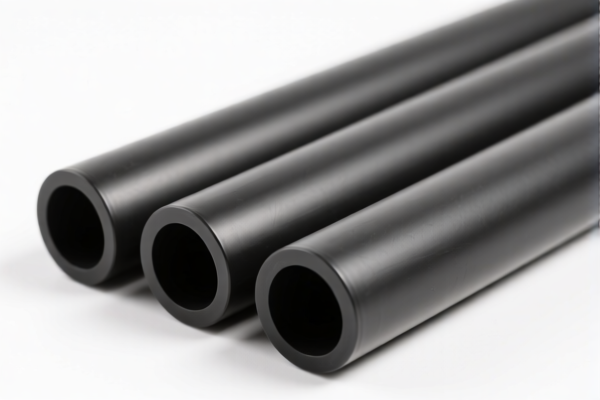
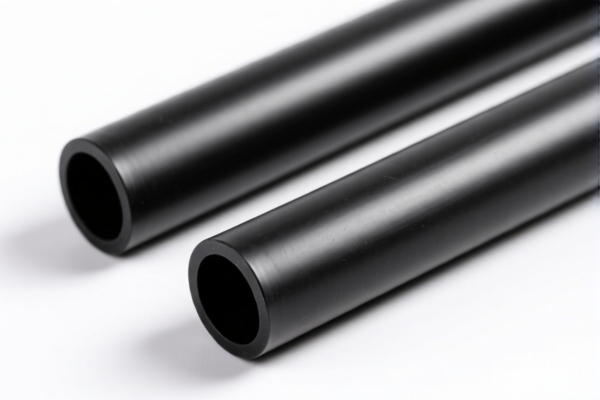
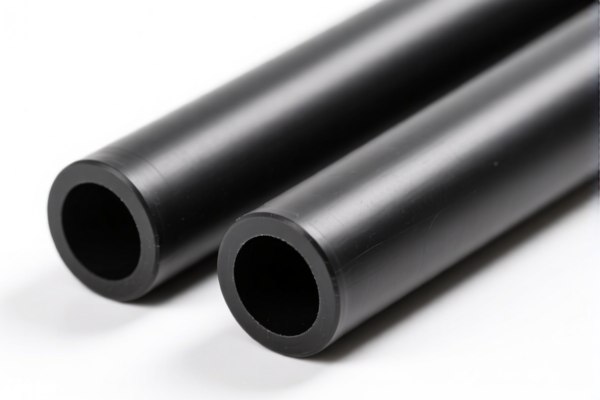
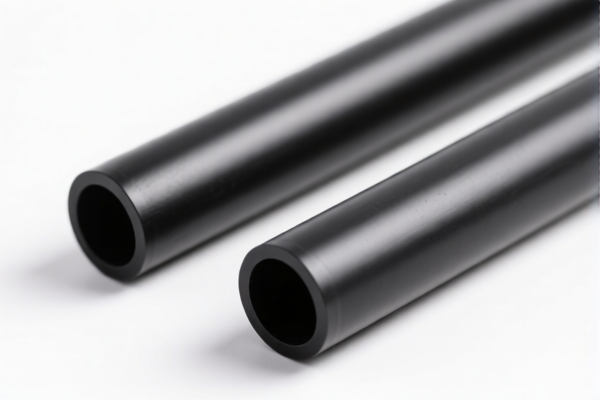
AI Analysis
🔮 Vulcanized Rubber Tubes, Pipes & Hoses (Natural Rubber Base)
🌐 HS Code Reference & Customs Clearance Guide | 2026 Latest Tariff Analysis | Professional Clearance Strategy
📌 I. Product Definition & Classification: Do You Really Understand "Rubber Tubes"?
Vulcanized Rubber Tubes, often simply referred to as "rubber hoses" or "tubing," are flexible conduits used for transporting liquids, gases, or powders. In international trade, the classification hinges on two critical factors: 1. Material Composition: Are they reinforced with metal, fabric, or other materials? 2. Configuration: Are they supplied without fittings or with fittings (elbows, joints, flanges)?
⚠️ Key Distinction Point: - Without Fittings: Plain tubes, hoses, or pipes, cut to length, with no attached joints → Falls under 4009.11.00.00. - With Fittings: Tubes equipped with attached joints, elbows, flanges, or other connectors → Falls under 4009.12.00.50.
📌 Important Note on Material: The source data specifies "vulcanized rubber other than hard rubber". While your input says "Natural rubber," natural rubber is vulcanized to create functional hoses. The HS codes below apply to non-reinforced vulcanized rubber tubes (including natural rubber bases) that are not combined with other materials (like steel braiding or fabric reinforcement).
📦 II. HS Code Classification Details (2026 Latest Tariff Authority Cross-Reference)
| HS Code | Product Description | Application Scenario | Reinforcement Status | Fittings Status |
|---|---|---|---|---|
4009.11.00.00 |
Tubes, pipes & hoses, of vulcanized rubber other than hard rubber, not reinforced or otherwise combined with other materials, without fittings | Plain rubber tubing, garden hoses (basic), industrial suction hoses (unreinforced), medical tubing | ❌ No | ❌ No |
4009.12.00.50 |
Tubes, pipes & hoses, of vulcanized rubber other than hard rubber, not reinforced or otherwise combined with other materials, with fittings Other | Rubber hoses with attached elbows, connectors, or flanges | ❌ No | ✅ Yes |
🔍 Critical Reminder: - If the tube is reinforced (e.g., with steel wire, nylon, or fabric), it DOES NOT belong to these HS codes. It would fall under
4009.20,4009.30, or4009.40. - If the tube is made of "hard rubber" (ebonite), it belongs to Chapter 39 or 40 subsections for hard rubber, not4009. -4009.12.00.50is for "With fittings Other" – meaning it has fittings but doesn't fit specific higher-priority subcategories (if any existed, though here it captures the general "with fittings" category for non-reinforced tubes).
💰 III. 2026 Latest Tariff Rate Breakdown (Including Additional Duties, Policy Surcharges)
✅ Applicable Country: United States (US)
✅ Origin: China (CN)
✅ Effective Date: 2025 November 10 onwards (for subsequent imports)
🎯 1. 4009.11.00.00 —— Non-Reinforced Rubber Tubes, Without Fittings
| Item | Content |
|---|---|
| Base Tariff Rate | 2.5% (ad valorem) |
| Section 301 Additional Duty | +25.0% (USITC Footnote for Chinese origin) |
| Total Tax Rate | 27.5% |
| Tax Calculation | CIF Value × 27.5% |
| De Minimis Eligibility | ❌ No (Not eligible for de minimis exemption for this category) |
| Legal Basis Path | USITC: 4009.11.00.00 → Section 301: 301.01.01 |
📌 Explanation: - The 2.5% is the standard Most Favored Nation (MFN) base rate for rubber tubes without reinforcement and without fittings. - The 25% is the punitive "Section 301" tariff imposed on a wide range of Chinese-made goods, including rubber products of this type. - Total 27.5% is a significant cost factor that must be priced into your supply chain.
🎯 2. 4009.12.00.50 —— Non-Reinforced Rubber Tubes, With Fittings (Other)
| Item | Content |
|---|---|
| Base Tariff Rate | 0.0% |
| Section 301 Additional Duty | 0.0% |
| Total Tax Rate | 0.0% |
| Tax Calculation | CIF Value × 0% |
| De Minimis Eligibility | ❌ No (General rule for this classification) |
| Legal Basis Path | USITC: 4009.12.00.50 |
📌 Explanation: - This is a critical loophole/optimization point. - If the same rubber tube is supplied with attached fittings (e.g., a hose with a brass or plastic connector molded or glued on), the HS code shifts to
4009.12.00.50. - Under the provided data, this classification enjoys 0% Base Tariff and 0% Additional Duty. - Total Tax: 0.0%. - Note: Always verify with current CBP rulings, as "with fittings" can sometimes trigger different classification rules if the fitting constitutes a "machine part" or other category, but based strictly on the provided , it is 0%.
🛠️ IV. Customs Clearance Practical Advice (Real-World Pitfall Avoidance Guide)
✅ 1. Preparation Checklist (Non-Negotiable)
| Document | Required? | Explanation |
|---|---|---|
| ✅ Product Specification Sheet | ✔️ | Must explicitly state: "Vulcanized Natural Rubber," "Non-Reinforced," "Without/With Fittings." |
| ✅ Technical Drawings / Photos | ✔️ | Clear images showing cross-section (to prove no reinforcement) and ends (to prove presence/absence of fittings). |
| ✅ Commercial Invoice | ✔️ | Must accurately describe the item as "Rubber Hose with Elbow" or "Plain Rubber Tubing" matching the HS code. |
| ✅ Packing List | ✔️ | Detail contents: "100 pcs Rubber Hose, each with 1x PVC Connector." |
| ✅ Material Composition Statement | ✔️ | Confirm: "100% Vulcanized Rubber, No Steel, No Fabric, No Wire." |
| ✅ Certificate of Origin (CO) | ✔️ | Required to prove Chinese origin for 301 tariff assessment. |
✅ 2. Declaration Strategy (Key Mantras)
🔥 “Reinforcement Check, Fitting Status, Tax Savings Huge!”
| Scenario | Correct Declaration | Wrong Practice | Consequence |
|---|---|---|---|
| Plain hose, no connectors | 4009.11.00.00 |
Misdeclare as 4009.12 |
Risk of Penalties + Back Taxes (27.5% vs 0%) |
| Hose with attached elbow | 4009.12.00.50 |
Declare as 4009.11 |
Overpayment of 27.5% unnecessary taxes |
| Reinforced hose (steel wire) | 4009.20 or 4009.30 |
Misdeclare as 4009.11 |
Severe Penalty, Cargo Seizure, Fraud Allegation |
| Hard rubber tube | Chapter 39/40 Hard Rubber | Misdeclare as 4009.11 |
Wrong Classification, Delay in Clearance |
✅ 3. Special Cases & Optimization Tips
| Situation | Handling Advice |
|---|---|
| Can You Add Fittings? | If you sell plain tubes, consider manufacturing or sourcing hoses pre-fitted with simple plastic/rubber connectors. This can shift classification to 4009.12.00.50 and save 27.5% in tariffs. Consult a customs broker to ensure the fitting doesn't change the essential character. |
| Mixed Shipments | If a container has both plain tubes and fitted hoses, declare them separately with distinct HS codes. Do not lump them under the higher tariff code. |
| "Other" Fittings | The term "Other" in 4009.12.00.50 is broad. Ensure fittings are attached (molded, glued, clamped) and not shipped loose. Loose fittings would be classified separately (e.g., as rubber parts or metal fittings). |
| Natural vs. Synthetic | The HS code 4009.1x covers all vulcanized rubber (natural, synthetic, or reclaimed) as long as it's not "hard rubber." You do not need to specify "Natural" in the HS code, but be transparent on the invoice. |
🌍 V. Global Market Comparison (2026 Latest)
| Country/Region | Recommended HS Code | Tariff Rate | Certification | Note |
|---|---|---|---|---|
| 🇺🇸 USA | 4009.11.00.00 (Plain) |
27.5% (China) | None Specific | High tariff if un-fitted. |
| 🇺🇸 USA | 4009.12.00.50 (Fitted) |
0.0% (China) | None Specific | Optimal Strategy if fittings can be added. |
| 🇨🇳 China | 4009.11.00 |
~2.5% | CCC (if applicable) | Lower base rate. |
| 🇪🇺 EU | 4009.11 |
3.5% | REACH, RoHS | No Section 301 equivalent. |
| 🇬🇧 UK | 4009.11 |
3.5% | UKCA | Post-Brexit alignment with EU. |
📌 Conclusion: - The US market presents a 27.5% tariff cliff for non-reinforced, unfitted rubber tubes from China. - Strategic sourcing or manufacturing adjustments to include attached fittings can reduce this to 0%, offering a massive competitive advantage. - Ensure no reinforcement (steel/fabric) is present, as that changes the HS code entirely and may have different tariff implications.
📌 VI. Common Mistakes & Pitfall Guide (Lessons Learned)
❌ Mistake 1: Declaring "Rubber Hose" without specifying fittings.
👉 Result: Customs may default to the higher-tariff code (4009.11) or request clarification, causing delays.
👉 Fix: Explicitly state "Without Fittings" or "With Elbows."
❌ Mistake 2: Assuming all rubber tubes are 4009.11.
👉 Result: Missing out on the 0% tariff opportunity for fitted hoses.
👉 Fix: Analyze product design. Can we add a connector for $0.10 to save $2.75 per $10? Yes.
❌ Mistake 3: Confusing "Vulcanized Rubber" with "Hard Rubber."
👉 Result: Hard rubber (ebonite) is rigid and not suitable for hoses. If your product is rigid, it’s not 4009.
👉 Fix: Ensure product flexibility is evident in photos and specs.
❌ Mistake 4: Ignoring Reinforcement.
👉 Result: If there’s a steel braid, 4009.11 is wrong. It becomes 4009.20 or 4009.30, which have different tax rates and may be subject to different trade remedies.
👉 Fix: Inspect cross-sections. No metal/cord = 4009.1x. Yes metal/cord = 4009.2x/3x/4x.
✅ Correct Description Example:
"Vulcanized Natural Rubber Hose, Non-Reinforced, 1/2" Diameter, 10ft Length, With Attached PVC Elbow Fitting at Both Ends. Model: RH-123-FIT."
🎯 VII. Conclusion: Professional Declaration, Time-Saving, Cost Reduction!
🎯 Remember the Mantra:
🔹 "Plain Tube = 27.5% Fitted Tube = 0% (USA)"
🔹 "No Reinforcement, Just Rubber, Fit It Up, Save Your Buck!"
🔹 "HS Code is Life, Tax Rate is Profit, Declare Right, Stay Compliant!"
📌 Pro Tip:
If you are currently importing
4009.11.00.00at 27.5% duty, consult your supplier about adding simple, non-metallic fittings (like rubber or plastic elbows). This small change can drastically reduce landed cost. However, always get a Pre-Ruling from US Customs and Border Protection (CBP) to confirm the classification before mass shipment.
📣 Immediate Action:
📞 Contact your customs broker with product photos
📋 Specify: "Non-reinforced, Vulcanized Rubber"
🔍 Determine: "With or Without Fittings?"
🚀 Clear the customs barrier efficiently, maximize your margin!
✨ Professional Customs Clearance Starts with Precise Classification!
💼 Every dollar of tariff saved is pure profit!
Customer Reviews
About HS Code Classification
The Harmonized System (HS) is an internationally standardized nomenclature developed by the World Customs Organization (WCO) to classify traded products. Over 200 countries use the HS system as the basis for customs tariffs, trade statistics, and import/export regulations.
Each HS code follows a hierarchical structure:
- Chapter (2 digits) — Broad category of goods (e.g., Chapter 84: Machinery and Mechanical Appliances)
- Heading (4 digits) — More specific grouping within the chapter
- Subheading (6 digits) — Internationally standardized breakdown, used by all WCO member countries
- National subdivisions (8-10 digits) — Country-specific extensions for further classification, such as US HTSUS 10-digit codes
Correct HS code classification is essential for smooth customs clearance, accurate duty payment, and compliance with trade regulations. Misclassification can lead to customs delays, overpayment of duties, or penalties.
When importing from CN to US, the applicable tariff rates may include:
- Most-Favored-Nation (MFN) rate — The standard duty rate applied to WTO members
- General rate — Applied to countries without trade agreements
- Trade remedy duties — Additional tariffs such as Section 301 (anti-dumping), Section 232 (national security), or countervailing duties
The information provided on this page is for reference purposes only. For official classification, please consult with your local customs authority or a licensed customs broker.