Navigation Instrument
CN → US| HS Code | Tariff Rate | Origin | Destination | Doc |
|---|---|---|---|---|
| 8526910020 | 35.0% | CN | US | Official Doc |
| 8526910040 | 35.0% | CN | US | Official Doc |
| 9014208080 | 35.0% | CN | US | Official Doc |
| 9014208040 | 35.0% | CN | US | Official Doc |
Product Images
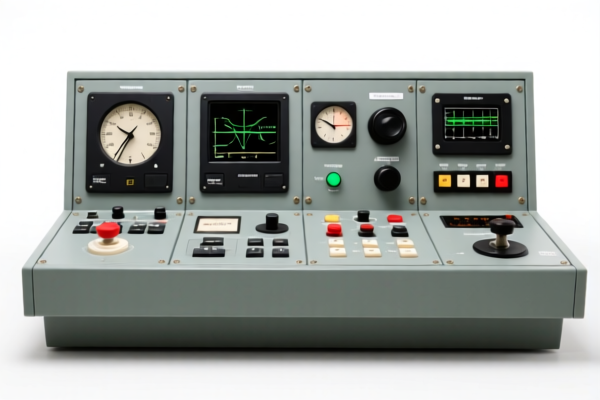
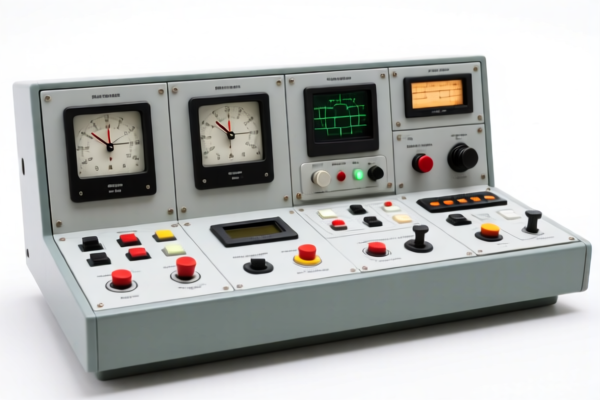
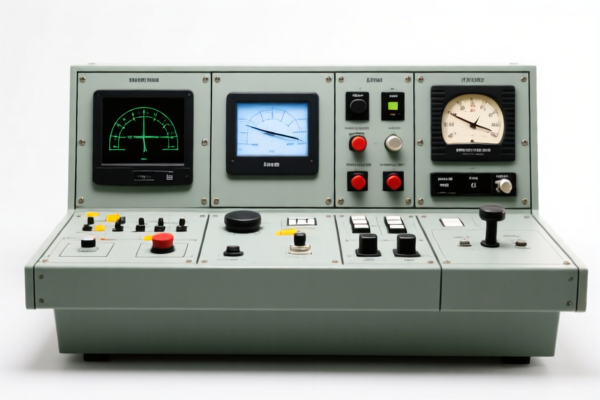
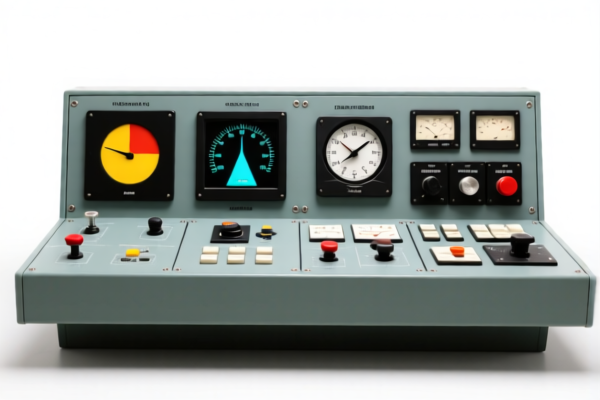
AI Analysis
🧭 Navigation Instruments & Devices
🌐 HS Code Reference & Clearance Guide | 2026 Latest Tariff Analysis | Professional Customs Strategy
📌 I. Product Definition: What Exactly Is a "Navigation Instrument"?
In international trade, "Navigation Instruments" generally refer to devices used for determining position, direction, or speed during sea, air, or land travel. These devices often overlap with Radio Navigation Aids and General Surveying Instruments.
Because "Navigation Instrument" is a broad term, its classification depends heavily on technology type (Radio vs. Optical/Mechanical) and specific function.
⚠️ Key Distinction:
- Radio/Electronic Navigation (GPS, Radar, Gyrocompass) → Typically falls under Chapter 85 (Electrical Machinery) or Chapter 90 (Optical/Scientific Instruments).
- Optical/Mechanical Navigation (Sextants, Binoculars) → Typically falls under Chapter 90.
- Conflict Check: The provided data indicates no material or functional conflict for the listed HS codes, meaning these codes are compatible with standard electronic navigation devices.
📦 II. HS Code Classification Details (2026 Authoritative Reference)
Based on the provided data, here are the four most relevant HS Codes for Navigation Instruments. All listed codes share the same tax structure.
| HS Code | Product Description & Logic | Key Characteristics |
|---|---|---|
| 8526.91.00.20 | Radio Navigation Aids / Navigation Equipment Summary: Functionally consistent with radio navigation aids; no material or functional conflict found. |
• Electronic signals • Radio-based positioning • Compatible with radar/GPS systems |
| 8526.91.00.40 | Radio Navigation Aids (Fallback Category) Summary: Highly matching with radio navigation aids; no explicit material restrictions; fits the "catch-all" category. |
• Electronic signals • Standard navigation hardware • No conflicting materials identified |
| 9014.20.80.80 | Other Navigation Instruments & Appliances Summary: Perfect match for navigation instruments; belongs to the "other" catch-all category; no obvious conflicts. |
• General navigation tools • May include hybrid electronic-optical devices • Broad classification for specialized gear |
| 9014.20.80.40 | Other Navigation Instruments (Preferred) Summary: Function aligns with classification explanations; no material or form conflicts; tends toward compliance. |
• Precision navigation tools • Standard industrial/navigation use • Preferred fit for general "navigation instruments" |
🔍 Critical Insight:
- The codes8526.91.00.20and8526.91.00.40fall under Chapter 85, implying electronic/radio-based navigation systems.
- The codes9014.20.80.80and9014.20.80.40fall under Chapter 90, implying instrumental/optical/electronic hybrid navigation devices.
- No Material Conflict: All four options explicitly state there are no material or functional conflicts, simplifying the declaration process.
💰 III. 2026 Latest Tariff Rate Breakdown (Including Surcharges)
✅ Applicable Country: United States (US)
✅ Origin: China (CN)
✅ Effective Date: Post-November 2025 (Current Policy)
All four HS Codes listed above share the exact same tax structure:
🎯 1. Common Tax Structure for All Listed HS Codes
| Item | Content |
|---|---|
| Basic Tariff (MFN) | 0.0% |
| Section 301 Surtax | +25.0% (USITC Footnote 9903.88.01) |
| Section 122 Tariff | +10.0% (Specific to China-origin goods under recent provisions) |
| Total Effective Rate | 35.0% |
| Calculation Base | CIF Value (Cost, Insurance, Freight) × 35% |
| De Minimis Exemption | ❌ Not Applicable (High tariffs prevent small parcel exemptions) |
| Legal Basis Path | USITC:8526.91.00 / 9014.20.80 → FOOTNOTE:9903.88.01 → Section 122 Provision |
📌 Explanation:
- Base Rate 0%: Navigation instruments are often viewed as essential or specialized, hence the low base rate.
- 301 Surtax 25%: Standard trade war penalty on Chinese goods.
- Section 122 Tariff 10%: Additional penalty under recent national security trade laws.
- Total 35%: This is a high effective tax rate. Importers must plan for significant cost increases.
🛠️ IV. Customs Clearance Practical Advice
✅ 1. Required Documentation Checklist
| Document | Mandatory? | Notes |
|---|---|---|
| Product Technical Manual | ✔️ | Must detail if it uses radio waves (Ch. 85) or optical/instrumental principles (Ch. 90). |
| Functional Description | ✔️ | Clearly state: "Radio Navigation Aid" or "Navigation Instrument." Avoid vague terms like "GPS Device" without context. |
| Product Photos | ✔️ | Show ports, antennas, and display interfaces to verify electronic nature. |
| Commercial Invoice | ✔️ | Must match HS Code description precisely. |
| Bill of Lading/Air Waybill | ✔️ | Standard shipping docs. |
| Certificate of Origin | ✔️ | Required to confirm China origin for accurate tariff application. |
✅ 2. Declaration Strategy (Key Tips)
🔥 "Match Function, Declare Clearly, Avoid Ambiguity!"
| Scenario | Recommended HS Code | Why? |
|---|---|---|
| GPS Receiver, Radar, Radio Compass | 8526.91.00.20 or 8526.91.00.40 |
These are radio navigation aids. The data confirms functional consistency. |
| Sextant, Gyrocompass, Theodolite (Electronic) | 9014.20.80.80 or 9014.20.80.40 |
These are instruments. 9014.20 is the specific heading for "Direction finding compasses; other navigational instruments and appliances." |
| Hybrid Device (e.g., GPS Chartplotter) | Prefer 8526.91.00.40 |
If the primary function is radio signal processing, Chapter 85 is often preferred by US Customs for electronic cores. |
⚠️ Warning:
- Do not declare as "Computer Accessories" (Chapter 84) or "Toys" (Chapter 95) if they are genuine navigation instruments.
- Inconsistency Penalty: If you declare a GPS device as a "Consumer Electronic" (lower tax) but it is a "Radio Navigation Aid" (35% tax), you risk penalties, fines, and cargo seizure.
✅ 3. Special Case Handling
| Situation | Advice |
|---|---|
| OEM/Custom Branding | Provide original design specs. Branding does not change HS Code. |
| Part vs. Whole | If importing only navigation modules (circuits), they may still fall under 8526.91. If importing accessories only, check Chapter 90 notes. |
| Dual-Use Devices | If the device is used for both military and civilian purposes, ensure it is not restricted under BIS (Bureau of Industry and Security) controls. |
🌍 V. Global Market Comparison (2026 Overview)
| Country/Region | Recommended HS Code | Tariff (China Origin) | Key Certifications |
|---|---|---|---|
| 🇺🇸 USA | 8526.91.00.20/40 or 9014.20.80.80/40 |
35% (0% Base + 25% 301 + 10% Sec 122) | FCC (if radio), RoHS |
| 🇨🇳 China | 9014.20.80.00 (General) |
~0-5% | CCC (if applicable) |
| 🇪🇺 EU | 9014.80.00 or 8526.91 |
0-4% | CE, RoHS, RED |
| 🇬🇧 UK | 9014.80.00 |
0-4% | UKCA, RoHS |
| 🇯🇵 Japan | 9014.80.00 |
0-3% | TELEC (if radio) |
📌 Conclusion:
- The USA has the highest effective tariff (35%) due to Section 301 and Section 122.
- EU and UK have significantly lower tariffs (0-4%), making them more cost-effective for Chinese origin navigation instruments.
- Certification: For radio-based navigation devices (8526), FCC (US) and RED (EU) certifications are mandatory.
📌 VI. Common Mistakes & Pitfalls (Learn from Others' Errors)
❌ Mistake 1: Declaring a Radio Navigation Aid as a "GPS Receiver for Cars" under Chapter 8531 (Sound/Visual signals).
👉 Result: Customs may reclassify to 8526.91 and apply the 35% rate retroactively.
❌ Mistake 2: Ignoring the "Section 122" tariff.
👉 Result: Underestimating costs by 10%. Many importers only budget for the 25% 301 tariff.
❌ Mistake 3: Confusing "Navigation Software" with "Navigation Hardware".
👉 Result: Software is often 0% or digital services tax, but if bundled with hardware, the hardware tariff (35%) applies to the entire package.
❌ Mistake 4: Using vague descriptions like "Electronic Device".
👉 Result: High risk of audit, delays, and potential penalties for misclassification.
✅ Correct Approach:
"Radio Navigation Aid, Model XYZ, Uses GPS/GNSS Signals, For Maritime/Aerial Use, FCC Certified."
🎯 VII. Conclusion: Precision is Profit
🎯 Key Takeaway:
🔹 Navigation Instruments from China face a 35% total tariff in the US.
🔹 No material conflict exists for the listed HS codes, so focus on functional accuracy.
🔹 Chapter 85 (8526.91) is for Radio Navigation Aids.
🔹 Chapter 90 (9014.20) is for Other Navigation Instruments.
📌 Pro Tip:
If your product is a pure electronic radio navigation aid, use 8526.91.00.40 as the safe "catch-all."
If it is a precision instrument (e.g., gyrocompass, sextant), use 9014.20.80.40.
📣 Immediate Action Required:
📞 Verify with a Customs Broker: Confirm if your specific device falls under Radio (
8526) or Instrument (9014).
📄 Prepare Technical Docs: Ensure FCC/CE certs are ready for radio devices.
💰 Budget for 35%: Factor the full 35% into your landed cost calculation for the US market.
✨ Clear Classification, Smooth Customs, Maximum Profit!
💼 Don't let tariff misclassification eat your margins!
Customer Reviews
About HS Code Classification
The Harmonized System (HS) is an internationally standardized nomenclature developed by the World Customs Organization (WCO) to classify traded products. Over 200 countries use the HS system as the basis for customs tariffs, trade statistics, and import/export regulations.
Each HS code follows a hierarchical structure:
- Chapter (2 digits) — Broad category of goods (e.g., Chapter 84: Machinery and Mechanical Appliances)
- Heading (4 digits) — More specific grouping within the chapter
- Subheading (6 digits) — Internationally standardized breakdown, used by all WCO member countries
- National subdivisions (8-10 digits) — Country-specific extensions for further classification, such as US HTSUS 10-digit codes
Correct HS code classification is essential for smooth customs clearance, accurate duty payment, and compliance with trade regulations. Misclassification can lead to customs delays, overpayment of duties, or penalties.
When importing from CN to US, the applicable tariff rates may include:
- Most-Favored-Nation (MFN) rate — The standard duty rate applied to WTO members
- General rate — Applied to countries without trade agreements
- Trade remedy duties — Additional tariffs such as Section 301 (anti-dumping), Section 232 (national security), or countervailing duties
The information provided on this page is for reference purposes only. For official classification, please consult with your local customs authority or a licensed customs broker.