Necklace
CN → US| HS Code | Tariff Rate | Origin | Destination | Doc |
|---|---|---|---|---|
| 7113192900 | 15.5% | CN | US | Official Doc |
| 7117901000 | 17.5% | CN | US | Official Doc |
| 7116201500 | 24.0% | CN | US | Official Doc |
| 7117909000 | 28.5% | CN | US | Official Doc |
| 6117909005 | 32.1% | CN | US | Official Doc |
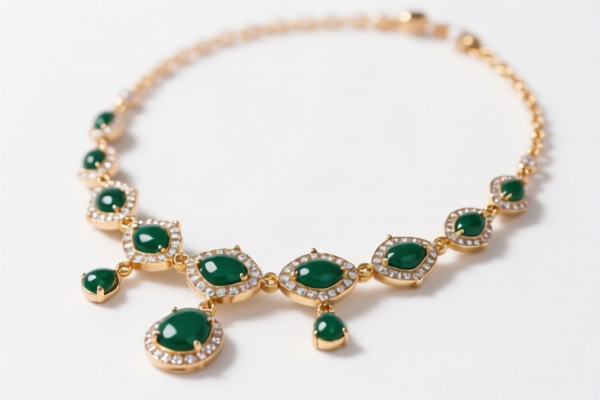
Product Images


AI Analysis
📿 Necklace (Jewelry Accessories)
🌐 HS Code Reference & Customs Clearance Guide | 2026 Latest Tariff Analysis | Professional Clearance Strategy
📌 I. Product Definition & Classification: Do You Really Understand "Necklaces"?
A Necklace is an article of jewelry worn around the neck. In international trade, the classification is not determined solely by the name "Necklace," but by Material, Function, and Manufacturing Method.
Key Distinctions: 1. Precious/Metallic Necklaces: Made of gold, silver, platinum, or base metals. These fall under Chapter 71 (Chapter 71 covers natural or cultured pearls, precious/semi-precious stones, and artificial jewelry). 2. Base Metal/Imitation Necklaces: Made of plastic, resin, wood, or non-precious metals. 3. Textile/Accessory Necklines: If the item is primarily a woven textile accessory (like a wool scarf or knitted trim) rather than a "jewelry piece," it may fall under Chapter 61 (Knitted/Crocheted Articles of Apparel).
⚠️ Critical Classification Point:
- If the item is a jewelry piece (ornamental), regardless of material (even plastic), it usually falls under Chapter 71 (e.g., 7116, 7113, 7117).
- If the item is a woven textile accessory (e.g., a wool knitted collar/neck warmer that is not primarily jewelry), it falls under Chapter 61.
- Do not classify plastic jewelry as clothing parts if it is clearly marketed as jewelry.
📦 II. HS Code Classification Details (Latest Tariff Alignment)
Based on the provided data, here are the specific HS Codes applicable to Necklaces/Collars, categorized by material and form:
| HS Code | Product Description | Material Inference | Form/Function |
|---|---|---|---|
7116.20.15.00 |
Necklace, Jewelry Form | Precious/Semi-Precious Stone/Gem | Ornamental Jewelry |
7113.19.29.00 |
Necklace, Jewelry Form | Metal (Precious) | Ornamental Jewelry |
7117.90.10.00 |
Necklace, Jewelry Form | Plastic/Fiber | Artificial Jewelry |
7117.90.90.00 |
Collar, Imitation Jewelry | Non-precious Metal/Plastic/Resin | Imitation Jewelry |
6117.90.90.05 |
Collar, Apparel Accessory | Wool/Animal Hair (Knitted) | Textile Accessory |
🔍 Key Insight:
-7113.19.29.00is typically for precious metal jewelry (Gold/Silver). It has the lowest total tax (15.5%).
-7117.90.10.00and7117.90.90.00cover base metal or artificial jewelry (plastic, alloy). Taxes vary significantly (17.5% vs 28.5%).
-6117.90.90.05is an outlier: it classifies a "collar" as a textile/apparel accessory (e.g., a wool knit collar), not jewelry. This has the highest tax (32.1%).
💰 III. 2026 Latest Tariff Rate Breakdown (Detailed Tax Clauses)
✅ Applicable Country: United States (US)
✅ Origin: China (CN)
✅ 生效时间: 2025年11月10日起 (Effective from Nov 10, 2025)
🎯 1. 7113.19.29.00 —— Precious Metal Necklace (Most Favorable)
| Item | Content |
|---|---|
| Base Duty Rate | 5.5% (ad valorem) |
| Section 301 Add-on | 0.0% (No additional Section 301 tariff for this specific subheading) |
| Section 122 Tariff | +10% (Specific China-related surcharge) |
| Total Tax Rate | 15.5% |
| Tax Calculation | CIF Value × 15.5% |
| De Minimis Exemption | ❌ Not Eligible (Deemed as Jewelry/Article of Importation subject to full duty) |
| Legal Path | Base Tariff: 5.5% + IEEPA: 10% = 15.5% |
📌 Interpretation:
- This is the most cost-effective classification for precious metal necklaces.
- Note: Even though Section 301 is 0%, the 10% Section 122 tariff still applies.
🎯 2. 7116.20.15.00 —— Stone/Precious Stone Necklace
| Item | Content |
|---|---|
| Base Duty Rate | 6.5% |
| Section 301 Add-on | 7.5% (Applied under certain conditions for semi-precious/stone goods) |
| Section 122 Tariff | +10% |
| Total Tax Rate | 24.0% |
| Tax Calculation | CIF Value × 24.0% |
| De Minimis Exemption | ❌ Not Eligible |
| Legal Path | Base Tariff: 6.5% + USITC Footnote: 7.5% + IEEPA: 10% = 24.0% |
📌 Interpretation:
- Higher than precious metal due to the 7.5% Section 301 add-on.
- Applicable for necklaces with gemstones, pearls, or semi-precious materials.
🎯 3. 7117.90.10.00 —— Artificial/Plastic Necklace
| Item | Content |
|---|---|
| Base Duty Rate | 0.0% |
| Section 301 Add-on | 7.5% |
| Section 122 Tariff | +10% |
| Total Tax Rate | 17.5% |
| Tax Calculation | CIF Value × 17.5% |
| De Minimis Exemption | ❌ Not Eligible |
| Legal Path | Base Tariff: 0.0% + USITC Footnote: 7.5% + IEEPA: 10% = 17.5% |
📌 Interpretation:
- Despite 0% base duty, the Section 301 (7.5%) and Section 122 (10%) tariffs push the total to 17.5%.
- Common for fashion jewelry, plastic beads, etc.
🎯 4. 7117.90.90.00 —— Imitation Jewelry Collar (Other Base Materials)
| Item | Content |
|---|---|
| Base Duty Rate | 11.0% |
| Section 301 Add-on | 7.5% |
| Section 122 Tariff | +10% |
| Total Tax Rate | 28.5% |
| Tax Calculation | CIF Value × 28.5% |
| De Minimis Exemption | ❌ Not Eligible |
| Legal Path | Base Tariff: 11.0% + USITC Footnote: 7.5% + IEEPA: 10% = 28.5% |
📌 Interpretation:
- Higher base duty (11%) leads to a higher total tax (28.5%).
- Use this for imitation jewelry that doesn't fit the "plastic fiber" category of 7117.90.10.
🎯 5. 6117.90.90.05 —— Wool/Textile Collar (Apparel Accessory)
| Item | Content |
|---|---|
| Base Duty Rate | 14.6% |
| Section 301 Add-on | 7.5% |
| Section 122 Tariff | +10% |
| Total Tax Rate | 32.1% |
| Tax Calculation | CIF Value × 32.1% |
| De Minimis Exemption | ❌ Not Eligible |
| Legal Path | Base Tariff: 14.6% + USITC Footnote: 7.5% + IEEPA: 10% = 32.1% |
📌 Interpretation:
- Highest Tax Rate. Only applicable if the item is truly a textile accessory (e.g., wool knit collar) and not jewelry.
- Warning: Do not classify jewelry as this code to avoid misclassification penalties. If it looks like jewelry, it’s Chapter 71.
🛠️ IV. Customs Clearance Practical Advice (Pitfall Avoidance Guide)
✅ 1. Required Documentation Checklist
| Document | Mandatory | Description |
|---|---|---|
| ✅ Product Description | ✔️ | Must specify: "Necklace," "Material (e.g., 14K Gold, Plastic, Stainless Steel)," "Weight," "Length." |
| ✅ Material Declaration | ✔️ | Critical for distinguishing between 7113, 7116, and 7117. |
| ✅ Product Photos | ✔️ | Show closure type, material texture, and overall shape. |
| ✅ Commercial Invoice | ✔️ | Clearly state HS Code and tariff implications. |
| ✅ Certificate of Origin | ✔️ | For China origin, to apply specific tariffs. |
✅ 2. Classification Tips (Key Mnemonics)
🔥 "Metal Precious Low Tax, Plastic Base Medium, Wool Textile High Tax!"
| Scenario | Correct HS Code | Reason |
|---|---|---|
| Gold/Silver Necklace | 7113.19.29.00 |
Precious metal jewelry |
| Plastic Bead Necklace | 7117.90.10.00 |
Artificial jewelry, plastic material |
| Stone/Pearl Necklace | 7116.20.15.00 |
Contains precious/semi-precious stones |
| Alloy/Imitation Necklace | 7117.90.90.00 |
Base metal/imitation jewelry |
| Wool Knit Collar | 6117.90.90.05 |
Textile accessory, not jewelry |
⚠️ Common Error:
- Misclassifying Plastic Jewelry as Apparel: If you declare a plastic necklace as "Clothing Accessory" (Chapter 61) to avoid tariffs, Customs may reclassify it as Chapter 71 and charge 17.5-28.5% + penalties.
- Over-declaring Value: Ensure the declared value includes the cost of the clasp, packaging, and any stones.
✅ 3. Special Cases
| Case | Handling Advice |
|---|---|
| Mixed Materials | If a necklace has both metal and plastic parts, classify based on the dominant value or material. Usually, if metal >50% value, it may be 7113. |
| Set with Gift | If included in a gift set, the essential character determines the HS Code. |
| OEM Custom Jewelry | Provide design specs to prove material composition. |
🌍 V. Global Market Comparison (2026 Latest)
| Country/Region | Recommended HS Code | Tariff (China Origin) | Certification Requirements | Notes |
|---|---|---|---|---|
| 🇺🇸 USA | 7113.19.29.00 |
15.5% (Precious Metal) | No specific cert | Section 122 (+10%) applies to all jewelry |
| 🇺🇸 USA | 7117.90.10.00 |
17.5% (Plastic) | No specific cert | Section 301 (+7.5%) + Section 122 (+10%) |
| 🇨🇳 China | 7113.19.29.00 |
5.5% | CCC (if applicable) | Lower base duty, no Section 122 |
| 🇪🇺 EU | 7113.19.29.00 |
0-4.3% | CE (if metal alloys) | No Section 301/122 tariffs |
| 🇬🇧 UK | 7113.19.29.00 |
0-4.3% | UKCA | Post-Brexit rules apply |
📌 Conclusion:
- USA is the most expensive market due to Section 122 and Section 301 tariffs.
- Precious metal jewelry (7113) has the lowest total tax (15.5%) in the US compared to other types.
- Plastic/Artificial jewelry (7117) is taxed higher (17.5-28.5%) due to Section 301 add-ons.
📌 VI. Common Mistakes & Pitfall Guide (Lessons Learned)
❌ Mistake 1: Classifying all necklaces as 7117.90.90.00
👉 Consequence: Overpaying taxes if it’s precious metal (15.5% vs 28.5%).
❌ Mistake 2: Classifying plastic jewelry as Apparel (6117)
👉 Consequence: Customs reclassification, back taxes + penalties. Plastic jewelry is Chapter 71, not Chapter 61.
❌ Mistake 3: Ignoring Section 122 Tariff
👉 Consequence: Under-declaring cost by 10%. All China-origin jewelry is subject to Section 122.
✅ Correct Practice:
"Stainless Steel Chain Necklace, 18-inch, with Gold Plating, Fashion Jewelry"
→ Check material: Stainless Steel →7117.90.90.00(28.5%) or7117.90.10.00(17.5%) depending on composition.
🎯 VII. Conclusion: Precise Classification, Cost Saving!
🎯 Remember the Mnemonic:
🔹 "Precious Metal: 15.5% (Lowest)"
🔹 "Plastic/Artificial: 17.5% (Medium)"
🔹 "Stones: 24.0% (High)"
🔹 "Imitation Base: 28.5% (Higher)"
🔹 "Wool/Textile: 32.1% (Highest - Avoid if Jewelry)"
📌 Pro Tip:
If your necklace is not made in China (e.g., Vietnam, Italy), you may avoid Section 122 tariffs.
For China-origin goods, consider Advance Rulings to confirm the exact HS Code and avoid audits.
📣 Immediate Action:
📞 Consult a licensed customs broker
📄 Prepare detailed material specifications
🚀 Ensure accurate HS Code declaration to minimize costs and ensure smooth clearance!
✨ Professional Clearance Starts with Accurate Classification!
💼 Your Cost Savings Are Worth the Precision!
Customer Reviews
About HS Code Classification
The Harmonized System (HS) is an internationally standardized nomenclature developed by the World Customs Organization (WCO) to classify traded products. Over 200 countries use the HS system as the basis for customs tariffs, trade statistics, and import/export regulations.
Each HS code follows a hierarchical structure:
- Chapter (2 digits) — Broad category of goods (e.g., Chapter 84: Machinery and Mechanical Appliances)
- Heading (4 digits) — More specific grouping within the chapter
- Subheading (6 digits) — Internationally standardized breakdown, used by all WCO member countries
- National subdivisions (8-10 digits) — Country-specific extensions for further classification, such as US HTSUS 10-digit codes
Correct HS code classification is essential for smooth customs clearance, accurate duty payment, and compliance with trade regulations. Misclassification can lead to customs delays, overpayment of duties, or penalties.
When importing from CN to US, the applicable tariff rates may include:
- Most-Favored-Nation (MFN) rate — The standard duty rate applied to WTO members
- General rate — Applied to countries without trade agreements
- Trade remedy duties — Additional tariffs such as Section 301 (anti-dumping), Section 232 (national security), or countervailing duties
The information provided on this page is for reference purposes only. For official classification, please consult with your local customs authority or a licensed customs broker.