Needled Non woven Plastic Wall Covering
CN → US| HS Code | Tariff Rate | Origin | Destination | Doc |
|---|---|---|---|---|
| 3926903500 | 24.0% | CN | US | Official Doc |
| 3926904800 | 13.4% | CN | US | Official Doc |
| 3921901100 | 39.2% | CN | US | Official Doc |
| 3921901910 | 40.3% | CN | US | Official Doc |
| 3926903500 | 24.0% | CN | US | Official Doc |
Product Images
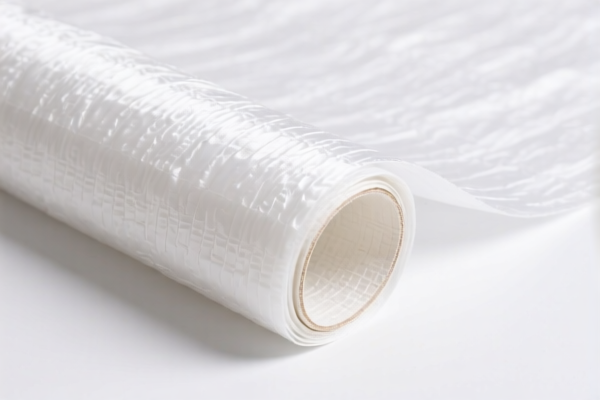
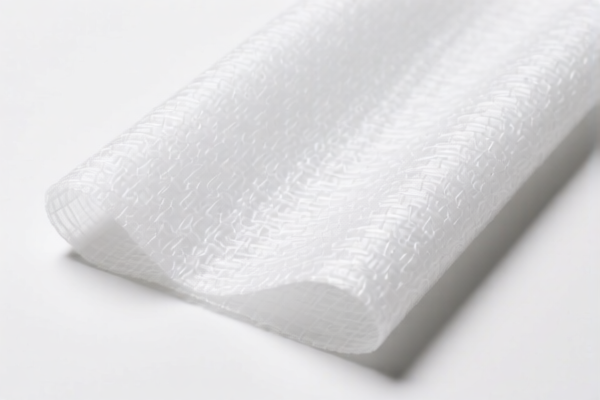
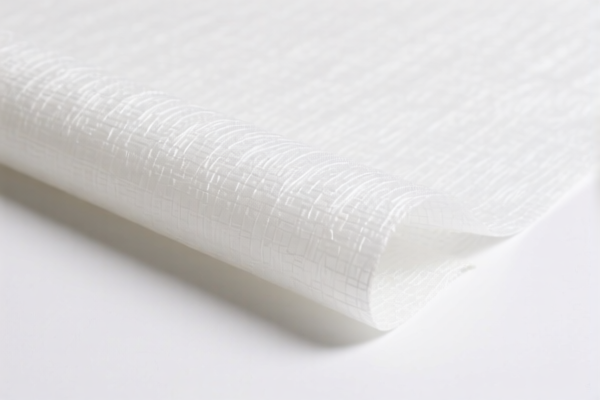
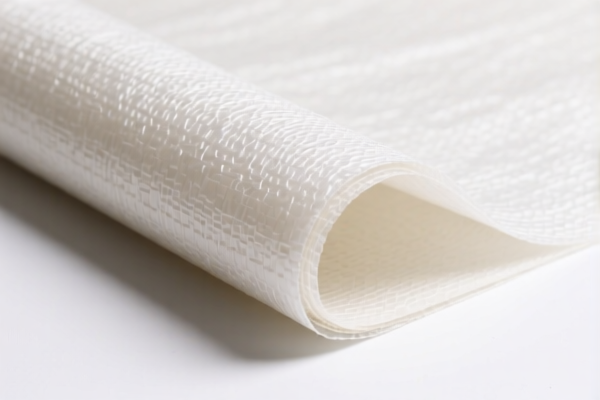
AI Analysis
🏗️ Needled Non-Woven Plastic Wall Covering (针刺非织造塑料墙布)
🌐 HS Code Reference & Customs Clearance Guide | 2026 Latest Tariff Analysis | Professional Clearance Strategy
📌 I. Product Definition & Classification: What Exactly is "Needled Non-Woven Plastic Wall Covering"?
Needled Non-Woven Plastic Wall Covering is a specific type of interior decoration material. Unlike spunbond or meltblown processes, it uses a mechanical needle punching method to interlock fibers. When the primary material is plastic (polypropylene, polyester, etc.), it falls under the category of Plastic Articles.
In international trade, the classification hinges on two critical factors: 1. Manufacturing Process: Is it mechanically needle-punched? (If yes, it leans towards specific non-woven plastic articles). 2. Primary Material: Is plastic the dominant material? If it contains textile/vegetable fiber but plastic dominates, it may still be classified under plastic chapters, but the specific subheading varies based on form (e.g., fabric vs. board/film).
⚠️ Key Distinction:
- If classified as "Other Plastic Articles" (Non-woven fabric products): It enjoys lower base tariffs.
- If classified as "Plastic Wall Covering/Wallpaper" under specific textile-plastic hybrid rules: It may face significantly higher duties due to "Section 301" and "122" clauses.
📦 II. HS Code Classification Details (2026 Latest Tariff Authority Comparison)
Based on the product "Needled Non-Woven Plastic Wall Covering", the following HS Codes are applicable. Note that HS Code 3926.90.35.00 appears twice in the source data with different tax implications, likely due to varying country-of-origin or specific trade remedy statuses.
| HS Code | Product Description | Application Scenario | Tax Rate (Total) | Key Tax Components |
|--------|--------------------------|--------------------------|----------------------|
| 3926.90.35.00 | Plastic Non-Woven Wall Covering
Made of plastic, shaped as non-woven fabric products, classified as other plastic articles. | Standard plastic wall coverings; needle-punched or other non-woven plastic wall fabrics. | 24.0% | Base: 6.5%
Addl: 7.5%
Sec 122: 10% |
| 3926.90.48.00 | Plastic Non-Woven Wall Covering
Plastic material, shaped as wall covering; reasonable extension of other plastic articles. | Wall coverings explicitly categorized as "other" plastic articles, not specifically "wallpaper." | 13.4% | Base: 3.4%
Addl: 0.0%
Sec 122: 10% |
| 3921.90.11.00 | Spunbond Non-Woven Plastic Wallpaper
Plastic-dominant material, shaped as wallpaper; fits the "other textile materials combined with high plastic weight" catch-all. | Specifically identified as "Wallpaper" (墙纸) rather than generic wall covering (墙布); often attracts higher scrutiny. | 39.2% | Base: 4.2%
Addl: 25.0%
Sec 122: 10% |
| 3921.90.19.10 | Spunbond Non-Woven Plastic Wallpaper
Contains textile/vegetable fiber attributes; shaped as plastic plate/film/sheet; deemed thin material. | Plastic-dominant but includes textile/fiber elements; classified as plastic plates/sheets rather than fabric. | 40.3% | Base: 5.3%
Addl: 25.0%
Sec 122: 10% |
🔍 Critical Note on "Needled" (针刺):
The source data primarily lists Spunbond (纺粘) for the high-tax items (3921...). However, Needled (针刺) non-wovens are mechanically entangled, not spunbonded.
- If declared as "Plastic Non-Woven Fabric" under3926.90, it typically falls into the 24.0% or 13.4% buckets.
- If declared as "Wallpaper" (墙纸) or "Plastic Plates/Sheets", it triggers the higher 39.2% or 40.3% rates.
- Recommendation: For "Needled" products,3926.90.35.00(24.0%) is the most standard and accurate classification for "Plastic Non-Woven Wall Covering" as it explicitly mentions "Non-woven fabric products" (非织造布制品).
💰 III. 2026 Latest Tariff Rate Details (Including Surcharges, Policy Surcharges)
✅ Applicable Country: United States (US)
✅ Origin: China (CN) (Inferred from "122 Clause" and Section 301 references)
✅ Effective Date: 2025/2026 Period
🎯 1. 3926.90.35.00 —— Plastic Non-Woven Wall Covering (Best Fit for Needled)
| Item | Content |
|---|---|
| Base Duty Rate | 6.5% |
| USITC Additional Duty (Sec 301) | +7.5% |
| Section 122 Duty | +10% |
| Total Duty Rate | 24.0% |
| Tax Calculation | CIF Value × 24.0% |
| De Minimis Eligibility | ❌ No (High risk of detention/seizure if shipped via small parcels without proper declaration) |
| Legal Basis Path | USITC:3926.90.35.00 → Sec301:7.5% → Sec122:10% |
📌 Explanation:
- This is the most favorable classification for Needled non-woven plastic wall coverings because it treats the product as a generic "other plastic article" rather than "wallpaper." - The 7.5% additional duty is part of the Section 301 tariff list for plastic articles. - The 10% is the "122 Clause" duty (often applied to certain imports under specific trade remedies).
🎯 2. 3926.90.48.00 —— Plastic Non-Woven Wall Covering (Alternative "Other" Category)
| Item | Content |
|---|---|
| Base Duty Rate | 3.4% |
| USITC Additional Duty (Sec 301) | 0.0% |
| Section 122 Duty | +10% |
| Total Duty Rate | 13.4% |
| Tax Calculation | CIF Value × 13.4% |
| De Minimis Eligibility | ❌ No |
| Legal Basis Path | USITC:3926.90.48.00 → Sec122:10% |
📌 Note:
- This code has 0% Section 301 duty, making it the cheapest option. - However, it requires proving that the product is not "wallpaper" (3921.90) but simply an "other plastic article" used as a wall covering. This is a high-risk declaration if the product is clearly marketed as "wallpaper."
🎯 3. 3921.90.11.00 & 3921.90.19.10 —— Plastic Wallpaper (High Tax Avoidance Target)
| Item | Content |
|---|---|
| Base Duty Rate | 4.2% / 5.3% |
| USITC Additional Duty (Sec 301) | +25.0% |
| Section 122 Duty | +10% |
| Total Duty Rate | 39.2% / 40.3% |
| Tax Calculation | CIF Value × ~40% |
| De Minimis Eligibility | ❌ No |
📌 Warning:
- These codes apply if the product is classified as "Wallpaper" (墙纸) or "Plastic Plates/Sheets" containing textile fibers. - The 25% Section 301 duty is the main cost driver. - Needled non-wovens are rarely classified here unless they are explicitly marketed as "wallpaper" and contain significant textile blends. Avoid this classification if possible.
🛠️ IV. Customs Clearance Practical Advice (Battle-Tested Pitfall Guide)
✅ 1. Documentation Checklist (Must-Have)
| Document | Required | Explanation |
|---|---|---|
| ✅ Product Specification Sheet | ✔️ | Must state: "Needled Non-Woven," Material: "100% Plastic (PP/PET)," Form: "Wall Covering/Fabric." |
| ✅ Manufacturing Process Description | ✔️ | Explicitly state: "Mechanical Needle Punching" to distinguish from Spunbond/Meltblown. |
| ✅ Product Photos | ✔️ | Show texture (needle-punched texture) and backside (plastic backing if any). |
| ✅ Commercial Invoice | ✔️ | Use term "Wall Covering" or "Wall Fabric" instead of "Wallpaper" if possible to align with 3926. |
| ✅ Packing List | ✔️ | Detail net/gross weight. Ensure no mixed shipments with non-plastic items. |
✅ 2. Declaration Tips (Key Mnemonics)
🔥 “Needled is Plastic, Not Paper; Declare as Covering, Not Wallpaper!”
| Scenario | Correct Declaration | Wrong Declaration | Risk |
|---|---|---|---|
| Needled Non-Woven Plastic Wall Covering | HS 3926.90.35.00 Desc: "Plastic Non-Woven Wall Covering, Needle-Punched" |
HS 3921.90.11.00 Desc: "Plastic Wallpaper" |
Paying 39.2% instead of 24.0% |
| Plastic Wall Covering (Thin Sheet) | HS 3926.90.48.00 Desc: "Other Plastic Article, Wall Covering" |
HS 3921.90.19.10 Desc: "Plastic Sheet with Textile" |
Paying 40.3% instead of 13.4% |
| Mixed Material (Plastic + Fabric) | HS 3926.90.35.00 (If Plastic Dominates) |
HS 5905.xxxx (Textiles) | Potential reclassification + penalties |
⚠️ Key Strategy:
- Use the term "Wall Covering" (墙布) rather than "Wallpaper" (墙纸) in the English description if the product is non-woven fabric-like. - Emphasize "Needled Non-Woven" (针刺非织造) to align with3926(Non-woven articles) rather than3921(Plates/Sheets/Film).
✅ 3. Special Handling Cases
| Situation | Handling Advice |
|---|---|
| OEM Custom Printed Wall Covering | Provide printing design files; declare as "Printed Plastic Non-Woven Wall Covering." Ensure ink is plastic-compatible. |
| Backed Non-Woven (Plastic + Fabric Backing) | If plastic is >50% by weight, use 3926. If fabric is dominant, it might move to textile chapters (5905), but plastic dominance is key for 3926. |
| Small Parcel (De Minimis) | Do NOT ship via De Minimis (Section 321). High tariffs (24-40%) mean seizures are likely. Use formal entry. |
🌍 V. Global Market Comparison (2026 Latest)
| Country/Region | Recommended HS Code | Duty Rate | Notes |
|---|---|---|---|
| 🇺🇸 United States | 3926.90.35.00 |
24.0% | Best balance of accuracy and cost. Avoid 3921 if possible. |
| 🇨🇳 China | 3926.90.35.00 |
~5-10% | Import duty may vary; focus on export clarity. |
| 🇪🇺 EU | 3926.90.99 |
6.5% | No Section 301. Standard EU duty applies. |
| 🇬🇧 UK | 3926.90.99 |
6.5% | Post-Brexit, UK mirrors EU but check local trade agreements. |
📌 Conclusion:
- The US market is the most complex due to Section 301 (7.5-25%) and Section 122 (10%) duties. - Correct classification as "Plastic Non-Woven Article" (3926) rather than "Wallpaper/Plastic Sheet" (3921) can save 15-17% in duties.
📌 VI. Common Errors & Pitfalls (Lessons Learned)
❌ Error 1: Declaring "Needled Non-Woven" as "Wallpaper" (3921)
👉 Consequence: Duty jumps from 24.0% to 39.2%. Loss of 15.2% margin.
❌ Error 2: Using "Spunbond" in description when product is "Needled"
👉 Consequence: Customs may flag discrepancy. If audited, reclassification to higher tax bracket possible.
❌ Error 3: Ignoring "Section 122" (10%)
👉 Consequence: Even if base + 301 is low, forgetting Sec 122 leads to underpayment and penalties.
❌ Error 4: Mixing "Plastic" and "Textile" without clear weight ratio
👉 Consequence: If textile >50%, HS Code changes to 5905 (Textile Wall Coverings), which may have different duties. Ensure Plastic Dominance.
✅ Correct Practice:
"Needled Non-Woven Plastic Wall Covering, 100% Polypropylene, Needle-Punched, For Interior Wall Decoration, HS 3926.90.35.00"
🎯 VII. Conclusion: Precise Classification, Cost Efficiency!
🎯 Remember the Mantra:
🔹 "Needled = Non-Woven (3926), Not Wallpaper (3921)"
🔹 "Plastic Dominant = 24% Duty, Not 40%"
🔹 "Avoid 'Wallpaper' Term, Use 'Wall Covering'"
📌 Pro Tip:
If your supplier claims the product is "Spunbond," verify it. Needled products are mechanically entangled and should be declared under 3926.90.35.00.
For maximum savings, argue for 3926.90.48.00 (13.4%) if the product can be defined as "Other Plastic Article" rather than fabric, but this carries higher audit risk.
📣 Immediate Action:
📞 Consult Customs Broker + Provide Product Photos + Confirm "Needled" Process
🚀 Clear Customs Smoothly, Minimize Duties, Maximize Profit!
✨ Professional Customs Clearance Starts with Accurate Classification!
💼 Every Percent of Duty Matters!
Customer Reviews
About HS Code Classification
The Harmonized System (HS) is an internationally standardized nomenclature developed by the World Customs Organization (WCO) to classify traded products. Over 200 countries use the HS system as the basis for customs tariffs, trade statistics, and import/export regulations.
Each HS code follows a hierarchical structure:
- Chapter (2 digits) — Broad category of goods (e.g., Chapter 84: Machinery and Mechanical Appliances)
- Heading (4 digits) — More specific grouping within the chapter
- Subheading (6 digits) — Internationally standardized breakdown, used by all WCO member countries
- National subdivisions (8-10 digits) — Country-specific extensions for further classification, such as US HTSUS 10-digit codes
Correct HS code classification is essential for smooth customs clearance, accurate duty payment, and compliance with trade regulations. Misclassification can lead to customs delays, overpayment of duties, or penalties.
When importing from CN to US, the applicable tariff rates may include:
- Most-Favored-Nation (MFN) rate — The standard duty rate applied to WTO members
- General rate — Applied to countries without trade agreements
- Trade remedy duties — Additional tariffs such as Section 301 (anti-dumping), Section 232 (national security), or countervailing duties
The information provided on this page is for reference purposes only. For official classification, please consult with your local customs authority or a licensed customs broker.