Neodymium Magnet
CN → US| HS Code | Tariff Rate | Origin | Destination | Doc |
|---|---|---|---|---|
| 8505110070 | 37.1% | CN | US | Official Doc |
| 8505110090 | 37.1% | CN | US | Official Doc |
| 9503000090 | 10.0% | CN | US | Official Doc |
Product Images
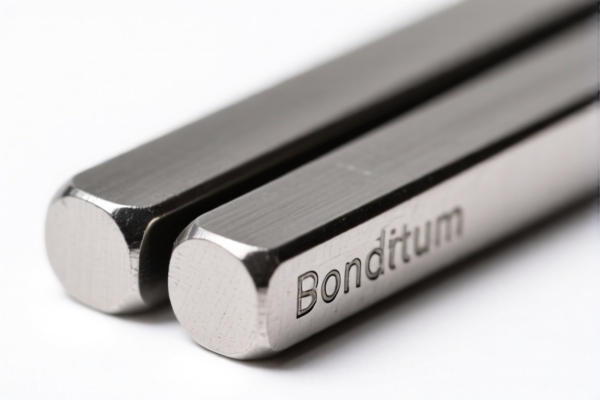
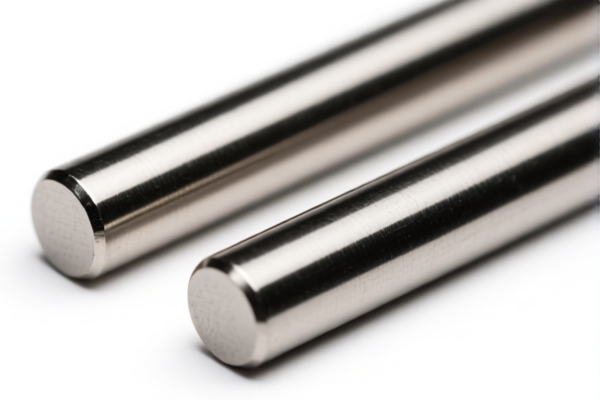
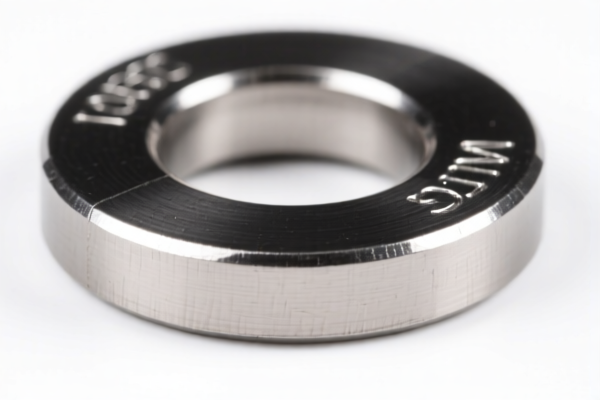
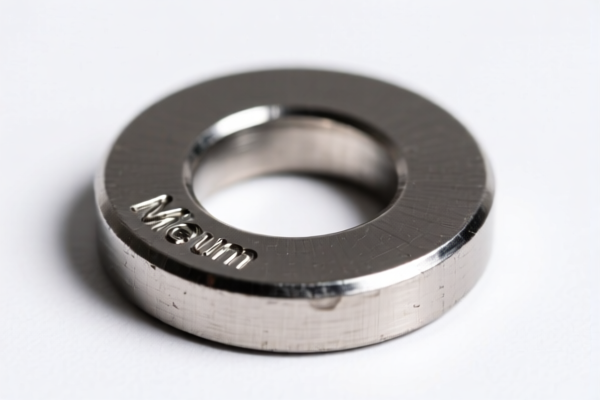
AI Analysis
🧲 Neodymium Magnets (NdFeB Magnets)
🌐 HS Code Reference & Customs Clearance Guide | 2026 Latest Tariff Analysis | Professional-Level Strategy
📌 I. Product Definition & Classification: Do You Really Understand "Neodymium Magnets"?
Neodymium magnets (NdFeB) are the strongest type of permanent magnets commercially available, composed primarily of neodymium, iron, and boron. In international trade, they are strictly categorized based on their material composition, physical form, and specific application. Misclassification is a common pitfall that leads to severe financial penalties and shipment delays, especially when importing into the United States from China.
⚠️ Key Distinction Point:
- If the magnet is a specific sintered NdFeB block designed for permanent magnetic use → Classified under 8505.11.00.70
- If the magnet is a generic metal-based permanent magnet (fallback classification) → Classified under 8505.11.00.90
- If the magnet is an accessory or spare part for an unspecified category → Classified under 9503.00.00.90
📦 II. HS Code Classification Details (2026 Latest Tariff Authority Comparison)
| HS Code | Product Description | Application Scenario | Material/Form |
|---|---|---|---|
8505.11.00.70 |
Neodymium Iron Boron Blocks, Sintered NdFeB, Permanent Magnets | Specific high-performance magnetic components | ✅ Sintered NdFeB |
8505.11.00.90 |
Magnets, Permanent Magnetic Purpose, Metal-Based Fallback | Generic metal magnets not specified elsewhere | ✅ Metal-based |
9503.00.00.90 |
Magnetic Objects, Accessories/Parts Not Elsewhere Specified | Unspecified accessories or spare parts | ❌ Generic/Accessory |
🔍 Key Reminder:
- 8505.11.00.70 is for specific sintered NdFeB blocks. This is the most accurate code for pure NdFeB magnets.
- 8505.11.00.90 serves as a fallback for metal-based permanent magnets if they don't fit specific descriptions.
- 9503.00.00.90 is a catch-all for magnetic objects that are accessories/parts and do not fit other categories. Do not use this for standalone magnets.
💰 III. 2026 Latest Tariff Rate Breakdown (Including Surcharges & Policy Add-ons)
✅ Applicable Country: United States (US)
✅ Origin: China (CN)
✅ Effective Time: Current trade policies (Section 301 & Section 122)
🎯 1. 8505.11.00.70 —— Neodymium Iron Boron Blocks (Sintered NdFeB)
| Item | Content |
|---|---|
| Base Tariff | 2.1% (ad valorem) |
| Section 301 Surcharge | +25.0% (Under US Trade Law Section 301) |
| Section 122 Surcharge | +10.0% (Trade Expansion Act of 1962, Section 122) |
| Total Tariff Rate | 37.1% |
| Tax Calculation | CIF Value × 37.1% |
| De Minimis Exemption | ❌ Not Eligible (High tariff rate excludes it from Section 321 de minimis relief) |
| Legal Basis Path | USITC:8505.11.00.70 → Section 301 Footnote → Section 122 Authority |
📌 Explanation:
- The 2.1% base rate is the standard Most Favored Nation (MFN) rate for permanent magnets.
- The 25% surcharge is imposed under Section 301 of the Trade Act of 1974, targeting Chinese imports.
- The 10% surcharge is added under Section 122 of the Trade Expansion Act, which allows the President to adjust duties for national security reasons.
- Total: 37.1%. This is a high-cost classification. Accurate declaration is critical to avoid overpayment or audit risks.
🎯 2. 8505.11.00.90 —— Magnets, Metal-Based Fallback
| Item | Content |
|---|---|
| Base Tariff | 2.1% |
| Section 301 Surcharge | +25.0% |
| Section 122 Surcharge | +10.0% |
| Total Tariff Rate | 37.1% |
| Tax Calculation | CIF Value × 37.1% |
| De Minimis Exemption | ❌ Not Eligible |
| Legal Basis Path | USITC:8505.11.00.90 → Section 301 Footnote → Section 122 Authority |
📌 Note:
- This code shares the same tariff rate (37.1%) as the specific NdFeB block code.
- It is used when the magnet is a metal-based permanent magnet but does not fit the specific "sintered NdFeB block" description.
- Even if the magnet is a different shape or alloy, as long as it's a permanent magnet from China, it likely falls into this category with the same high tariff.
🎯 3. 9503.00.00.90 —— Magnetic Objects (Accessories/Parts)
| Item | Content |
|---|---|
| Base Tariff | 0.0% |
| Section 301 Surcharge | 0.0% |
| Section 122 Surcharge | +10.0% |
| Total Tariff Rate | 10.0% |
| Tax Calculation | CIF Value × 10.0% |
| De Minimis Exemption | ⚠️ Check Eligibility (Lower rate may allow de minimis, but classification risk is high) |
| Legal Basis Path | USITC:9503.00.00.90 → Section 122 Authority |
📌 Caution:
- This code has a significantly lower total rate (10.0%) compared to the magnet-specific codes.
- However, it is only for items classified as accessories or spare parts for toys or other unspecified categories.
- Do not misclassify standalone NdFeB magnets as "accessories" to avoid customs audits, penalties, and retroactive tax assessments. Only use if the magnet is truly an integrated part of a larger toy or device.
🛠️ IV. Customs Clearance Practical Advice (Real-World Pitfall Avoidance)
✅ 1. Required Documentation Checklist (All are Mandatory)
| Document | Required | Description |
|---|---|---|
| ✅ Product Specification Sheet | ✔️ | Must detail material (NdFeB), dimensions, strength (Gauss), and coating |
| ✅ Product Photos | ✔️ | Clear images showing the magnet, any packaging, and labels |
| ✅ Commercial Invoice | ✔️ | Must clearly state "Neodymium Magnet" or "Permanent Magnet" – avoid vague terms |
| ✅ Packing List | ✔️ | Detail quantity, weight, and value per HS Code |
| ✅ Origin Certificate | ✔️ | Proves origin as China (CN) for tariff assessment |
| ✅ Material Safety Data Sheet (MSDS) | ✔️ | Required for shipping and customs due to chemical composition |
| ✅ Certification Reports | ✔️ | RoHS, REACH, or other compliance certificates if applicable |
✅ 2. Declaration Tips (Key Mantra)
🔥 "Accurate Material, Correct HS Code, Full Disclosure, Lower Risk!"
| Scenario | Correct Declaration | Wrong Action |
|---|---|---|
| Pure Sintered NdFeB Blocks | 8505.11.00.70 |
Misdeclare as "Accessory" → 10% rate but high audit risk |
| Generic Metal Magnets | 8505.11.00.90 |
Misdeclare as "Toy Part" → 10% rate but incorrect classification |
| Magnets Integrated in Toys | 9503.00.00.90 |
Declare as standalone magnet → 37.1% rate unnecessarily |
| Loose Magnets | 8505.11.00.70 or 8505.11.00.90 |
Declare as "Electronic Component" → Incorrect HS Code |
✅ 3. Special Circumstances Handling
| Scenario | Handling Advice |
|---|---|
| OEM Custom Magnets | Provide customer order and design specs. Still classified under 8505.11.00.70/90. |
| Magnets in Assembled Products | If magnets are integral to a larger device (e.g., motor, speaker), the device may have its own HS Code. Consult a specialist. |
| Small Quantity Imports | Even for small quantities, the 37.1% rate applies. De minimis exemption is not available for 8505.11.00.70/90. |
| Anti-Dumping Duties | Check if additional anti-dumping duties apply to NdFeB magnets from China. Some specific types may have additional duties. |
🌍 V. Global Market Customs Comparison (2026 Latest)
| Country/Region | Recommended HS Code | Tariff | Certification | Notes |
|---|---|---|---|---|
| 🇺🇸 USA | 8505.11.00.70 |
37.1% | RoHS, CE (optional) | High tariff due to Section 301 & 122 |
| 🇨🇳 China | 8505.11.00.70 |
6.5% | CCC (if applicable) | Lower base tariff, no Section 301 |
| 🇪🇺 EU | 8505.11.00.90 |
0% | CE, REACH | Low base tariff, no US-style surcharges |
| 🇬🇧 UK | 8505.11.00.90 |
0% | UKCA, REACH | Post-Brexit tariff alignment with EU |
| 🇯🇵 Japan | 8505.11.00.90 |
0% | PSE (if electrical) | No significant surcharges |
📌 Conclusion:
- The USA imposes the highest tariffs due to geopolitical trade policies.
- EU, UK, Japan, and China offer much lower tariff rates for similar products.
- For US imports, consider supply chain diversification (e.g., sourcing from Vietnam or India) to mitigate high tariffs.
📌 VI. Common Mistakes & Pitfall Avoidance (Lessons Learned)
❌ Mistake 1: Declaring Neodymium Magnets as "Accessories" to get the 10% rate
👉 Consequence: Customs audit, penalties, and retroactive tax of 37.1% + fines.
❌ Mistake 2: Using vague terms like "Magnetic Block" without specifying material
👉 Consequence: Customs may reclassify incorrectly, leading to delays or incorrect tariff assessment.
❌ Mistake 3: Ignoring Section 122 surcharges
👉 Consequence: Underestimating total landed cost by 10%.
❌ Mistake 4: Assuming de minimis exemption applies
👉 Consequence: Small shipments still subject to 37.1% tariff, causing unexpected costs.
✅ Correct Approach:
"Sintered Neodymium Iron Boron Permanent Magnet, Block Shape, Dimensions 10x10x5mm, Grade N52, Ni-Cu-Ni Coating, Model XYZ"
🎯 VII. Conclusion: Professional Declaration, Save Time, Reduce Costs!
🎯 Remember the Mantra:
🔹 "Material First, HS Code Second, Tariff Third, Risk Last!"
🔹 "37.1% is the Standard, 10% is the Trap, 0% is the Dream!"
📌 Pro Tip:
If your magnets are imported into the US, consider:
1. Applying for an Exclusion under Section 301 if available.
2. Using a Bonded Warehouse to defer tariffs.
3. Consulting a Customs Broker for a Pre-Ruling on your specific product.
📣 Immediate Action:
📞 Contact a Professional Customs Broker + Provide Product Specs + Apply for HS Code Pre-Ruling
🚀 Ensure Smooth Clearance, Efficient Export, and Maximized Profit!
✨ Professional Customs Clearance Starts with Accurate Classification!
💼 Every Cent of Your Cost Deserves to Be Precisely Calculated!
Customer Reviews
About HS Code Classification
The Harmonized System (HS) is an internationally standardized nomenclature developed by the World Customs Organization (WCO) to classify traded products. Over 200 countries use the HS system as the basis for customs tariffs, trade statistics, and import/export regulations.
Each HS code follows a hierarchical structure:
- Chapter (2 digits) — Broad category of goods (e.g., Chapter 84: Machinery and Mechanical Appliances)
- Heading (4 digits) — More specific grouping within the chapter
- Subheading (6 digits) — Internationally standardized breakdown, used by all WCO member countries
- National subdivisions (8-10 digits) — Country-specific extensions for further classification, such as US HTSUS 10-digit codes
Correct HS code classification is essential for smooth customs clearance, accurate duty payment, and compliance with trade regulations. Misclassification can lead to customs delays, overpayment of duties, or penalties.
When importing from CN to US, the applicable tariff rates may include:
- Most-Favored-Nation (MFN) rate — The standard duty rate applied to WTO members
- General rate — Applied to countries without trade agreements
- Trade remedy duties — Additional tariffs such as Section 301 (anti-dumping), Section 232 (national security), or countervailing duties
The information provided on this page is for reference purposes only. For official classification, please consult with your local customs authority or a licensed customs broker.