Net Bag
CN → US| HS Code | Tariff Rate | Origin | Destination | Doc |
|---|---|---|---|---|
| 6307909891 | 24.5% | CN | US | Official Doc |
| 5608903000 | 40.0% | CN | US | Official Doc |
| 5608192090 | 40.0% | CN | US | Official Doc |
| 4202929100 | 52.6% | CN | US | Official Doc |
| 4202926091 | 41.3% | CN | US | Official Doc |
Product Images

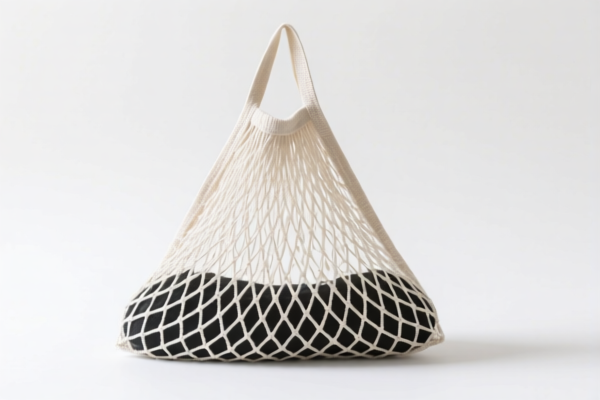
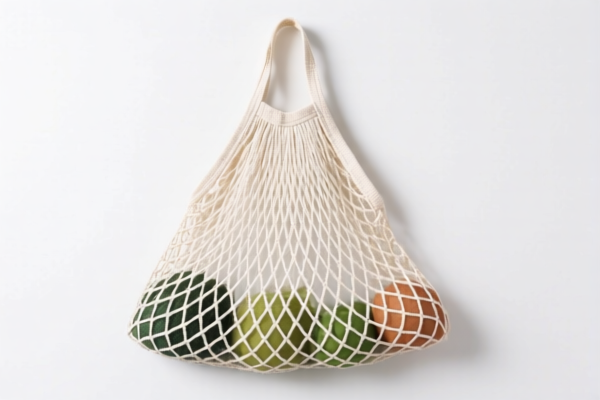

AI Analysis
🎒 Net Bag (Mesh Bag / Storage Net)
🌐 HS Code Reference & Customs Clearance Guide | 2026 Latest Tariff Analysis | Professional Clearance Strategy
📌 I. Product Definition and Classification: Do You Really Understand the "Net Bag"?
A Net Bag is a versatile container made of textile fibers, characterized by its open-mesh structure. It is used for laundry, grocery shopping, storage, or sports gear. In international trade, its classification depends heavily on material composition (synthetic vs. natural fiber) and functionality (general purpose vs. specific container).
⚠️ Key Distinction Points:
- If it is a finished bag/container with a specific use (like laundry or shopping) and has a defined shape, it often falls under Chapter 42 (Articles of Apparel Accessories) or Chapter 63 (Other Made Up Articles).
- If it is considered a raw textile mesh product without specific finishing as a bag, it may fall under Chapter 56 (Wadded Fabric, Lace, Netting, etc.).
- Critical Risk: Classification determines whether you pay 24.5% or up to 52.6% in duties due to Section 301 (122 Clause) tariffs.
📦 II. HS Code Classification Details (2026 Latest Tariff Authority Comparison)
| HS Code | Product Description | Application Scenario | Total Tariff Rate | Key Tariff Breakdown |
|---|---|---|---|---|
6307.90.98.91 |
Other Made-up Articles, classified as a bag made of textile fibers. | General use mesh bags, storage nets, low-complexity textile bags. | 24.5% | Base: 7.0%, Sec 301: 7.5%, 122 Clause: 10% |
5608.90.30.00 |
Tie Net and Other Nettings, classified as textile material nets. | Raw mesh products, industrial nets, or simple mesh without bag structure. | 40.0% | Base: 5.0%, Sec 301: 25.0%, 122 Clause: 10% |
5608.19.20.90 |
Other Nets, classified as man-made textile material nets. | Synthetic fiber nets, fishing nets, or non-woven mesh products. | 40.0% | Base: 5.0%, Sec 301: 25.0%, 122 Clause: 10% |
4202.92.91.00 |
Containers/Bags, outer surface made of textile materials. | Finished laundry bags, shopping totes, high-quality textile bags. | 52.6% | Base: 17.6%, Sec 301: 25.0%, 122 Clause: 10% |
4202.92.60.91 |
Bags/Containers, made of cotton or other materials. | Cotton mesh bags, specific textile containers under Chapter 42. | 41.3% | Base: 6.3%, Sec 301: 25.0%, 122 Clause: 10% |
🔍 Important Note:
-6307.90.98.91is often the most cost-effective classification for standard mesh bags if they are considered "other made-up articles."
-4202codes attract the highest tariffs (52.6%) because they are viewed as finished "containers" with a specific function, attracting higher base duties + Section 301.
-5608codes sit in the middle but exclude specific bag functionalities, which can lead to misclassification disputes.
💰 III. 2026 Latest Tariff Rate Details (Including Surcharges & Policy Add-ons)
✅ Applicable Country: United States (US)
✅ Origin: China (CN)
✅ Effective Date: 2025/2026 (Subject to ongoing trade policies)
🎯 1. 6307.90.98.91 — Other Made-up Articles (Lowest Risk/Rate)
| Item | Content |
|---|---|
| Base Duty Rate | 7.0% (ad valorem) |
| USITC Section 301 Surcharge | +7.5% |
| 122 Clause Tariff | +10.0% |
| Total Tariff Rate | 24.5% |
| Tax Calculation | CIF Value × 24.5% |
| De Minimis Eligibility | ❌ Not Eligible (Deny De Minimis for China origin under current rules) |
| Legal Basis Path | HTSUS:6307.90.98.91 → USITC Footnote 122 → Section 301 List |
📌 Explanation:
- This is the most favorable rate among the options for mesh bags.
- The "122 Clause" refers to specific enforcement actions against textile/apparel goods.
- Even at 24.5%, this is significantly cheaper than Chapter 42 options.
🎯 2. 5608.90.30.00 & 5608.19.20.90 — Textile Nets (Medium Risk/Rate)
| Item | Content |
|---|---|
| Base Duty Rate | 5.0% |
| USITC Section 301 Surcharge | +25.0% |
| 122 Clause Tariff | +10.0% |
| Total Tariff Rate | 40.0% |
| Tax Calculation | CIF Value × 40.0% |
| De Minimis Eligibility | ❌ Not Eligible |
| Legal Basis Path | HTSUS:5608.90.30.00 → Section 301 List → 122 Clause |
📌 Explanation:
- The high 25% Section 301 surcharge drives the total to 40%.
- These codes are for "nets" as materials or simple nets, not necessarily "bags" with closures or handles. Misclassifying a bag as a net here is risky if the bag has a distinct shape/function.
🎯 3. 4202.92.91.00 — Textile Bags (Highest Risk/Rate)
| Item | Content |
|---|---|
| Base Duty Rate | 17.6% |
| USITC Section 301 Surcharge | +25.0% |
| 122 Clause Tariff | +10.0% |
| Total Tariff Rate | 52.6% |
| Tax Calculation | CIF Value × 52.6% |
| De Minimis Eligibility | ❌ Not Eligible |
| Legal Basis Path | HTSUS:4202.92.91.00 → Section 301 List → 122 Clause |
📌 Explanation:
- WARNING: This is the most expensive option.
- Chapter 42 covers "Articles of Apparel Accessories and Parts." Bags are considered finished goods with higher base duties.
- Only use this if the bag is clearly a high-end fashion accessory or specific container not fitting other definitions.
🛠️ IV. Customs Clearance Practical Advice (Pitfall Avoidance Guide)
✅ 1. Documentation Checklist (Essential)
| Document | Required | Notes |
|---|---|---|
| ✅ Product Description | ✔️ | Must clearly state "Mesh Bag," "Laundry Net," or "Storage Net." |
| ✅ Material Composition | ✔️ | Specify % of Synthetic vs. Natural fibers (crucial for 5608 vs 6307). |
| ✅ Function Description | ✔️ | Is it a "netting material" or a "finished bag"? |
| ✅ Photos | ✔️ | Show the bag structure, handles, closures, and mesh size. |
| ✅ Commercial Invoice | ✔️ | Clearly link HS Code to product description. |
| ✅ Origin Certificate | ✔️ | To prove CN origin (triggering 301/122 taxes). |
✅ 2. Declaration Tips (Key Mnemonic)
🔥 “Finish Matters: Bag vs. Net, Price Varies Great!”
| Scenario | Recommended HS Code | Risk if Misclassified |
|---|---|---|
| Finished Laundry Bag (with ties/handles) | 6307.90.98.91 (24.5%) |
❌ If declared as 4202, pay 52.6% (Save 28.1%!) |
| Simple Mesh Net (no specific bag shape) | 5608.90.30.00 (40.0%) |
❌ If declared as 6307, may be rejected for lack of "bag" features. |
| High-End Fashion Tote (textile exterior) | 4202.92.91.00 (52.6%) |
✅ Acceptable if it fits Chapter 42 definition. |
| Cotton Mesh Bag | 4202.92.60.91 (41.3%) |
❌ Check if 6307 is more appropriate for "other made-up articles." |
✅ 3. Special Handling
| Situation | Advice |
|---|---|
| Customs Audit Risk | Customs may challenge 6307 for bags. Provide clear evidence that it is an "other made-up article" and not a "bag" under Chapter 42. |
| 122 Clause Enforcement | Ensure all paperwork explicitly states the 122 Clause tariff is accounted for. |
| De Minimis Loophole | Do not attempt to use $800 de minimis for China-origin net bags. It is currently blocked for these categories. |
🌍 V. Global Market Comparison (2026 Latest)
| Country/Region | Recommended HS Code | Estimated Tariff | Notes |
|---|---|---|---|
| 🇺🇸 USA | 6307.90.98.91 |
24.5% | Best balance. Avoid 4202 due to 52.6%. |
| 🇨🇳 China | 6307.90.98.91 |
~7-10% | Lower base duty, no 301/122. |
| 🇪🇺 EU | 6307.90.98.91 |
~6% | Standard duty, no US-style surcharges. |
| 🇬🇧 UK | 6307.90.98.91 |
~6% | Post-Brexit, standard rates apply. |
📌 Conclusion:
- USA is the highest cost market due to Section 301 and 122 Clause tariffs.
- Strategy: Aim for6307.90.98.91to minimize duty to 24.5% instead of 52.6%.
📌 VI. Common Errors & Pitfalls (Lessons Learned)
❌ Error 1: Classifying a finished laundry bag as 4202 out of habit.
👉 Result: Pay 52.6% instead of 24.5%. Overpay by 28.1%!
❌ Error 2: Classifying a structured bag as 5608 (Netting) to save on base duty.
👉 Result: Customs may reclassify to 4202 or 6307 after inspection, causing delays and potential penalties.
❌ Error 3: Ignoring the 122 Clause.
👉 Result: Underpayment of 10% tariff leads to back-taxes and fines.
✅ Correct Approach:
"Mesh Laundry Bag, Synthetic Fiber, Made-up Article, Not Specifically Named in Ch 42, Declared under HS 6307.90.98.91 with 24.5% Total Duty."
🎯 VII. Conclusion: Professional Classification Saves Money!
🎯 Remember the Mantra:
🔹 "Finish is Key: Bag vs. Net, Check Chapter First."
🔹 "6307 is Sweet: 24.5% is the Goal, 52.6% is the Pain."
🔹 "122 Clause Applies: Don't Forget the Extra 10%!"
📌 Tip:
If your product is a simple mesh net without a defined bag shape, consider 5608 (40.0%) but ensure it meets the "netting" definition. For structured bags, 6307 (24.5%) is your best friend.
📣 Immediate Action:
📞 Consult a customs broker to confirm if your "Net Bag" qualifies as a "made-up article" under 6307.
📝 Update your internal HS Code database to reflect the 24.5% rate for6307.90.98.91.
🚀 Clear Customs Smoothly, Optimize Costs, Maximize Profits!
✨ Professional Clearance Starts with Precise Classification!
💼 Every Percent Saved is Pure Profit!
Customer Reviews
About HS Code Classification
The Harmonized System (HS) is an internationally standardized nomenclature developed by the World Customs Organization (WCO) to classify traded products. Over 200 countries use the HS system as the basis for customs tariffs, trade statistics, and import/export regulations.
Each HS code follows a hierarchical structure:
- Chapter (2 digits) — Broad category of goods (e.g., Chapter 84: Machinery and Mechanical Appliances)
- Heading (4 digits) — More specific grouping within the chapter
- Subheading (6 digits) — Internationally standardized breakdown, used by all WCO member countries
- National subdivisions (8-10 digits) — Country-specific extensions for further classification, such as US HTSUS 10-digit codes
Correct HS code classification is essential for smooth customs clearance, accurate duty payment, and compliance with trade regulations. Misclassification can lead to customs delays, overpayment of duties, or penalties.
When importing from CN to US, the applicable tariff rates may include:
- Most-Favored-Nation (MFN) rate — The standard duty rate applied to WTO members
- General rate — Applied to countries without trade agreements
- Trade remedy duties — Additional tariffs such as Section 301 (anti-dumping), Section 232 (national security), or countervailing duties
The information provided on this page is for reference purposes only. For official classification, please consult with your local customs authority or a licensed customs broker.