Net Fabric
CN → US| HS Code | Tariff Rate | Origin | Destination | Doc |
|---|---|---|---|---|
| 6005360010 | 45.0% | CN | US | Official Doc |
| 6004100010 | 47.3% | CN | US | Official Doc |
| 6005370010 | 45.0% | CN | US | Official Doc |
| 6004909000 | 42.0% | CN | US | Official Doc |
| 5903102010 | 35.0% | CN | US | Official Doc |
Product Images
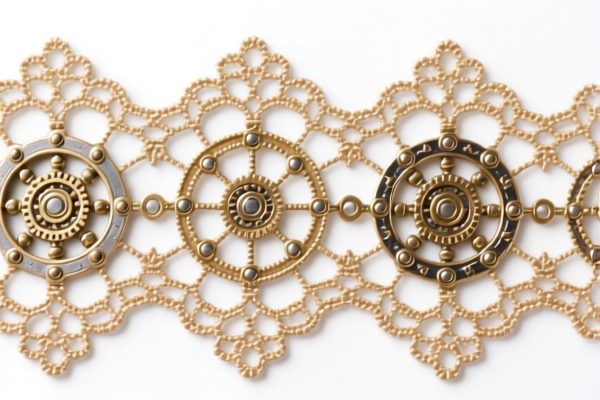


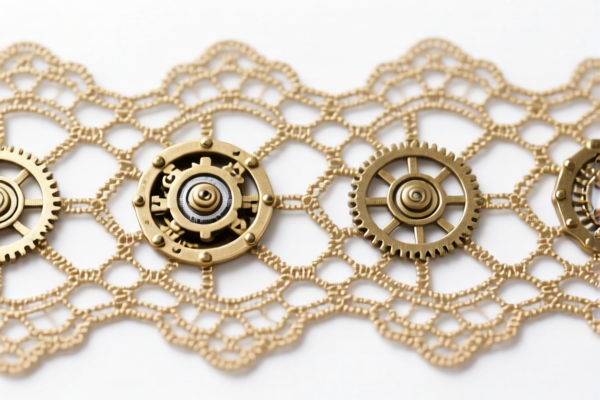
AI Analysis
🕸️ Net Fabric (Knitted Mesh Cloth)
🌐 HS Code Reference & Customs Clearance Guide | 2026 Latest Tariff Analysis | Professional Compliance Strategy
📌 I. Product Definition & Classification: Do You Really Understand "Net Fabric"?
Net fabric, specifically knitted mesh cloth, is a versatile textile material characterized by an open, porous structure. In international trade, its classification is critical because it bridges multiple textile categories depending on its material composition and structural treatment (e.g., coating).
Key Distinctions: * Pure Knitted Mesh: If it is simply knitted synthetic or artificial fiber mesh without special coatings, it falls under Chapter 60 (Knitted or Crocheted Fabrics). * Coated/Impregnated Mesh: If it is coated with plastic (like PVC) or rubber to make it water-resistant, odor-absorbent, or durable for industrial use, it reclassified into Chapter 59 (Impregnated, Coated, Covered or Laminated Textile Fabrics).
⚠️ Critical Classification Point:
- If it is plain knitted mesh → Check 6004 or 6005 (depending on warp knitting details).
- If it has a PVC/Plastic coating → It likely belongs to 5903 (Plastic-coated fabrics).
- Misclassification can lead to duty differences ranging from 35% to 47%!
📦 II. HS Code Classification Details (2026 Latest Tariff Authority Comparison)
Based on the provided data, here are the specific HS Codes for Knitted Net Fabric:
| HS Code | Product Description | Applicability / Summary | Total Tax Rate |
|---|---|---|---|
6005.36.00.10 |
Knitted mesh, openwork structure, synthetic fibers | Warp-knitted openwork fabric. Matches "knitted" form and "synthetic" material. | 45.0% |
6005.37.00.10 |
Knitted mesh, openwork structure, synthetic fibers | Warp-knitted openwork fabric. Similar to above; consistent with classification requirements for synthetic mesh. | 45.0% |
6004.10.00.10 |
Knitted mesh, matched material (knitted) | Other warp-knitted fabrics. Fits the "knitted" form and "mesh/openwork" nature. Slightly higher base duty. | 47.3% |
6004.90.90.00 |
Knitted mesh, generic knitted textile | Other knitted fabrics. No conflict in material or form; serves as a general fallback for knitted meshes not specifically listed elsewhere. | 42.0% |
5903.10.20.10 |
Knitted mesh, textile base with PVC/plastic coating | Plastic-coated textile. Often involves PVC or other plastics; falls under coated fabrics. | 35.0% |
5903.10.20.90 |
Knitted mesh, generic coated textile | Other plastic-coated fabrics. A "catch-all" for coated textiles (man-made fibers or cotton) not specifically covered above. | 35.0% |
🔍 Key Insight:
- Chapter 60 (6004/6005) is for uncoated knitted mesh.
- Chapter 59 (5903) is for plastic-coated knitted mesh.
- The material (synthetic vs. cotton) and structure (openwork vs. general) determine whether you use6005or6004.
💰 III. 2026 Latest Tariff Rate Breakdown (Including Additional Taxes & Policy Surcharges)
✅ Applicable Country: United States (US)
✅ Origin: China (CN)
✅ Effective Time: November 10, 2025 (and subsequent imports)
🎯 1. 6005.36.00.10 & 6005.37.00.10 —— Warp-Knitted Openwork Mesh (Synthetic)
| Item | Content |
|---|---|
| Base Tariff | 10.0% (Ad valorem) |
| Section 301 Surcharge | +25.0% |
| IEEPA Surcharge (Section 122) | +10.0% |
| Total Tax Rate | 45.0% |
| Tax Calculation | CIF Value × 45% |
| De Minimis Exemption? | ❌ No (Not eligible for de minimis treatment) |
| Legal Path | Base: 10% → Sec 301: 25% → 122 Clause: 10% |
📌 Explanation:
- These codes apply to synthetic fiber warp-knitted openwork fabrics.
- The 45% total rate is high due to the combination of base duty and political tariffs.
- Section 122 tariffs specifically target certain textile imports from China.
🎯 2. 6004.10.00.10 —— Other Warp-Knitted Mesh (General Synthetic)
| Item | Content |
|---|---|
| Base Tariff | 12.3% |
| Section 301 Surcharge | +25.0% |
| IEEPA Surcharge (Section 122) | +10.0% |
| Total Tax Rate | 47.3% |
| Tax Calculation | CIF Value × 47.3% |
| De Minimis Exemption? | ❌ No |
| Legal Path | Base: 12.3% → Sec 301: 25% → 122 Clause: 10% |
📌 Note:
- This code has a higher base duty (12.3%) compared to6005variants.
- Total rate is 47.3%, the highest among the options.
- Use this only if the fabric does not meet the specific "openwork" definition of6005.
🎯 3. 6004.90.90.00 —— Generic Knitted Mesh (Fallback)
| Item | Content |
|---|---|
| Base Tariff | 7.0% |
| Section 301 Surcharge | +25.0% |
| IEEPA Surcharge (Section 122) | +10.0% |
| Total Tax Rate | 42.0% |
| Tax Calculation | CIF Value × 42% |
| De Minimis Exemption? | ❌ No |
| Legal Path | Base: 7.0% → Sec 301: 25% → 122 Clause: 10% |
📌 Note:
- This is a more economical option (42%) if the fabric is a general knitted mesh not strictly defined as "openwork" under6005.
- Ensure the product description matches "other knitted fabrics" to avoid rejection.
🎯 4. 5903.10.20.10 & 5903.10.20.90 —— Plastic-Coated Net Fabric (PVC/Plastic)
| Item | Content |
|---|---|
| Base Tariff | 0.0% |
| Section 301 Surcharge | +25.0% |
| IEEPA Surcharge (Section 122) | +10.0% |
| Total Tax Rate | 35.0% |
| Tax Calculation | CIF Value × 35% |
| De Minimis Exemption? | ❌ No |
| Legal Path | Base: 0.0% → Sec 301: 25% → 122 Clause: 10% |
📌 Key Advantage:
- Lowest Total Tax Rate (35%)!
- If your net fabric is coated with PVC or other plastics (common for industrial netting, odor-absorbing mats, or protective covers), it falls under Chapter 59.
- Zero Base Duty makes this the most cost-effective classification if the product qualifies as coated.
🛠️ IV. Customs Clearance Practical Advice (Real-World Pitfall Guide)
✅ 1. Preparation Checklist (Missing Any Item = Delay)
| Document | Required? | Explanation |
|---|---|---|
| ✅ Product Specification Sheet | ✔️ | Must detail: Material (Synthetic/Cotton), Structure (Knitted/Coated), Diameter of holes, Width, Weight. |
| ✅ Photo of Cross-Section | ✔️ | Crucial to prove if there is a plastic coating (for 5903) or if it’s pure fiber (for 600x). |
| ✅ Commercial Invoice | ✔️ | Clearly state: "Knitted Mesh Cloth, Synthetic Fiber, [Coated/Uncoated]". |
| ✅ Packing List | ✔️ | Show net weight and gross weight. |
| ✅ Certificate of Origin | ✔️ | To verify Chinese origin for surcharge calculations. |
| ✅ Material Composition Test Report | ✔️ | To prove fiber content (e.g., 100% Polyester) for Chapter 60 classification. |
| ✅ Plastic Coating Verification | ✔️ | If claiming 5903, provide proof of plastic content >5% by weight. |
✅ 2. Declaration Tips (Key Mnemonics)
🔥 “Coating determines Chapter 59, Fiber determines Chapter 60. Name it right, save money!”
| Scenario | Correct HS Code | Common Mistake |
|---|---|---|
| Pure Knitted Mesh (No coating) | 6005.36.00.10 (45%) or 6004.90.90.00 (42%) |
Mislabeling as "Fabric" → Audit risk |
| PVC-Coated Mesh (e.g., Odor Mat) | 5903.10.20.10 (35%) |
Calling it "Textile" → Higher duty (45%+) |
| Openwork Synthetic Knitted Mesh | 6005.36/37 (45%) |
Using 6004 (47.3%) unnecessarily |
| Generic Knitted Mesh (Not Openwork) | 6004.90.90.00 (42%) |
Over-classifying as "Openwork" |
✅ 3. Special Cases
| Situation | Handling Advice |
|---|---|
| OEM Custom Mesh | Provide customer PO + Design Specs. Avoid vague descriptions like "Mesh". |
| Mesh with Elastic Threads | If elastic is >5%, it may still fall under 6005, but disclose it. |
| Odor-Absorbing Mats (Plastic Mesh) | Always declare as 5903. It’s coated plastic, not just textile. Saves 10-12% in tax! |
| Industrial Protection Net | Verify if it’s coated. If yes, 5903 is best. |
🌍 V. Global Market Clearance Comparison (2026 Latest)
| Country/Region | Recommended HS Code | Tariff (China Origin) | Certification | Remarks |
|---|---|---|---|---|
| 🇺🇸 USA | 5903.10.20.10 (if coated) |
35% Total (0% Base + 25% + 10%) | None specific | Best rate if coated. If uncoated, 42-47%. |
| 🇺🇸 USA | 6005.36.00.10 (uncoated) |
45% Total (10% Base + 25% + 10%) | None specific | High duty for pure synthetic mesh. |
| 🇨🇳 China | 6005.36.00.10 |
10% | None | No surcharges in China. |
| 🇪🇺 EU | 6005.36.00.10 |
12% | REACH | Lower than US tariffs. |
| 🇦🇺 Australia | 6005.36.00.10 |
5% | None | No Section 301/122 surcharges. |
📌 Conclusion:
- USA is the most expensive market for net fabric due to Section 301 (25%) and Section 122 (10%) surcharges.
- Strategy: If your product can be reasonably classified as plastic-coated (5903), you save 10-12% in total tax compared to pure textile (6005).
- China Origin: All rates above assume Chinese origin. Non-Chinese origins may avoid surcharges.
📌 VI. Common Errors & Pitfall Guide (Lessons Learned)
❌ Mistake 1: Declaring PVC-coated mesh as 6005 (Pure Textile)
👉 Consequence: You pay 45% instead of 35%. Loss of $10 per $100 value!
❌ Mistake 2: Declaring Uncoated mesh as 5903 (Coated)
👉 Consequence: Customs inspection will reveal no plastic coating. Misdeclaration penalty + Retention of Goods.
❌ Mistake 3: Using generic term "Net Cloth"
👉 Consequence: Customs may reject the classification or assign a higher default rate. Specify: "Warp-Knitted Synthetic Mesh, Uncoated".
❌ Mistake 4: Ignoring Section 122 Tariffs
👉 Consequence: Failing to account for the 10% 122 Clause leads to underpayment. Interest and penalties apply.
✅ Correct Declaration Example:
"Warp-Knitted Synthetic Mesh Cloth, Uncoated, 100% Polyester, 50cm Width" →
6005.36.00.10(45%)
"PVC-Coated Synthetic Knitted Net Fabric, for Odor Absorption" →5903.10.20.10(35%)
🎯 VII. Conclusion: Precision in Classification, Profit in Clearance
🎯 Remember the Mantra:
🔹 “Coated goes to 59 (35%), Pure Knitted to 60 (42-47%).”
🔹 “Don’t pay 45% if you can pay 35%!”
🔹 “Describe accurately: Material + Structure + Coating Status.”
📌 Pro Tip:
If your net fabric is not from China (e.g., Vietnam, Bangladesh), you may avoid the 25% Section 301 and 10% Section 122 surcharges.
- Vietnam Origin: Likely 0-12% duty.
- Bangladesh Origin: Likely 0-10% duty.
👉 Action: Consider supply chain diversification if shipping to the US.
📣 Immediate Action:
📞 Contact your customs broker with product photos and material specs.
📄 Request an Advance Ruling if the coating status is ambiguous.
🚀 Optimize your HS Code to choose between 35% (Coated) and 42-47% (Uncoated).
✨ Professional clearance starts with precise classification!
💼 Every percentage point saved is pure profit!
Customer Reviews
About HS Code Classification
The Harmonized System (HS) is an internationally standardized nomenclature developed by the World Customs Organization (WCO) to classify traded products. Over 200 countries use the HS system as the basis for customs tariffs, trade statistics, and import/export regulations.
Each HS code follows a hierarchical structure:
- Chapter (2 digits) — Broad category of goods (e.g., Chapter 84: Machinery and Mechanical Appliances)
- Heading (4 digits) — More specific grouping within the chapter
- Subheading (6 digits) — Internationally standardized breakdown, used by all WCO member countries
- National subdivisions (8-10 digits) — Country-specific extensions for further classification, such as US HTSUS 10-digit codes
Correct HS code classification is essential for smooth customs clearance, accurate duty payment, and compliance with trade regulations. Misclassification can lead to customs delays, overpayment of duties, or penalties.
When importing from CN to US, the applicable tariff rates may include:
- Most-Favored-Nation (MFN) rate — The standard duty rate applied to WTO members
- General rate — Applied to countries without trade agreements
- Trade remedy duties — Additional tariffs such as Section 301 (anti-dumping), Section 232 (national security), or countervailing duties
The information provided on this page is for reference purposes only. For official classification, please consult with your local customs authority or a licensed customs broker.