Network Analyzer
CN → US| HS Code | Tariff Rate | Origin | Destination | Doc |
|---|---|---|---|---|
| 9031200000 | 36.7% | CN | US | Official Doc |
| 9030333800 | 35.0% | CN | US | Official Doc |
| 8543706000 | 35.0% | CN | US | Official Doc |
| 8543709860 | 37.6% | CN | US | Official Doc |
| 9031808085 | 10.0% | CN | US | Official Doc |
Product Images
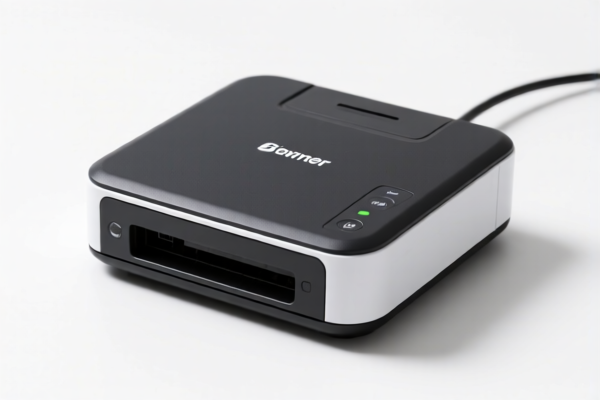
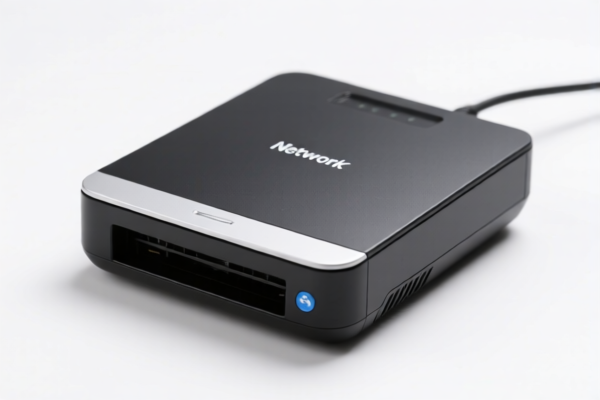
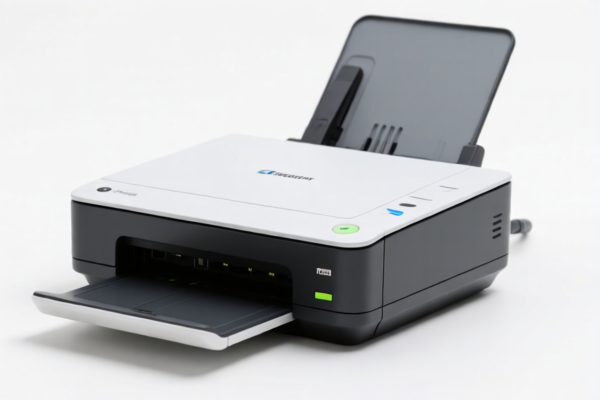
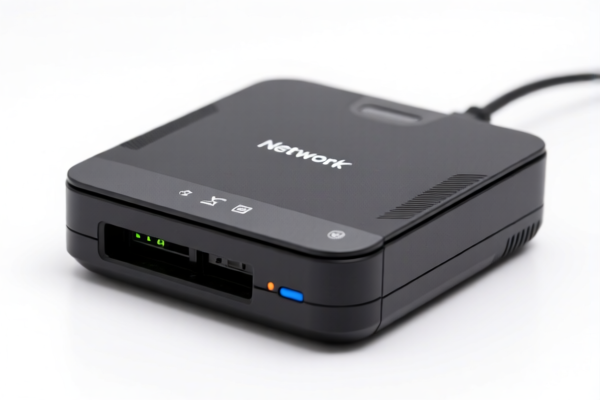
AI Analysis
📡 Network Cable Tester (Network Analyzer)
🌐 HS Code Reference & Clearance Guide | 2026 Latest Tariff Analysis | Professional Customs Strategy
📌 I. Product Definition & Classification: What Exactly is a "Network Analyzer"?
A Network Cable Tester (often referred to as a Network Analyzer in trade contexts) is a handheld or benchtop electronic device used to test and certify the integrity of network cabling (Ethernet, coaxial, etc.). Its primary functions include checking wire mapping, detecting opens/shorts/crosstalk, and measuring signal transmission performance.
In international trade, classification hinges on whether the device is considered a "Test Bench" system or an "Independent Electronic Testing Instrument." This distinction drastically affects the tariff rate due to current US trade policies.
⚠️ Key Distinction Point:
- If the device is viewed strictly as a "Test Bench/Test Instrument" for network signaling → Potential for 10% total tax (HS 9031.80).
- If the device is viewed as a general-purpose electronic measuring instrument (voltage/current/resistance) → Potential for 35%-37.6% total tax (HS 9030/8543).
📦 II. HS Code Classification Details (2026 Latest Tariff Authority Comparison)
Based on the provided data, here are the valid HS Code classifications for Network Cable Testers/Analyzers and their specific rationales:
| HS Code | Product Description / Rationale | Function Attribute | Total Tax Rate |
|---|---|---|---|
9031.20.00.00 |
Network signal detection tool; fits the functional attribute of Test Bench/Test Instrument. | Network Signal Detection | 36.7% |
9030.33.38.00 |
Instrument for measuring electrical signals; fits the use description of measuring voltage, current, resistance, or power. | Electrical Signal Measurement | 35.0% |
8543.70.60.00 |
Designed to connect to networks for testing; fits the definition of instruments with independent functions. | Independent Network Testing | 35.0% |
8543.70.98.60 |
Independent electronic measuring & testing device; fits the definition of other machines & apparatus. | General Electronic Testing | 37.6% |
9031.80.80.85 |
Measurement/inspection instrument; fits the definition of other measuring or inspecting instruments. | Most Optimized Path | 10.0% |
9030.40.00.00 |
Instrument for measuring electrical quantities; consistent with telecom-specific instrument needs. | Telecom Measurement | 35.0% |
🔍 Critical Insight:
- HS 9031.80.80.85 offers the lowest tariff (10%) because it is classified as a general "other measuring instrument" without the heavy "301 Clause" (25%) and "Section 122" (10%) additions that apply to many electronics and precision instruments.
- HS 9031.20.00.00, while logically fitting "Test Bench," incurs the highest tax (36.7%) due to the base tariff (1.7%) plus the 25% and 10% surcharges.
💰 III. 2026 Latest Tariff Rate Breakdown (Including Surcharges & Policy Add-ons)
✅ Applicable Country: United States (US)
✅ Country of Origin: China (CN)
✅ Effective Date: 2025/2026 (Current Trade Policy)
🎯 1. 9031.80.80.85 —— Best Case Scenario (Lowest Tax)
| Item | Content |
|---|---|
| Base Duty Rate | 0% (ad valorem) |
| USITC Surcharge (Section 301) | 0% (No 25% surcharge applies to this specific subheading) |
| IEEPA Surcharge (Section 122/Other) | +10% (Specific 122 Clause Tariff) |
| Total Tax Rate | 10% |
| Tax Calculation | CIF Value × 10% |
| De Minimis Eligibility | ❌ No (High value goods generally excluded, but rate is low regardless) |
| Legal Basis Path | USITC:9031.80.80.85 → FOOTNOTE:122_CLAUSE |
📌 Explanation:
- This classification is the "Golden Ticket." It avoids the harsh 25% Section 301 tariff applied to most electronics (Chapters 85/90 subsets).
- The only cost is the 10% 122-Clause Tariff.
- Strategy: Argue that the device is a general-purpose "measuring instrument" for physical network integrity, not a specialized "telecom production instrument" subject to heavier duties.
🎯 2. 9031.20.00.00 —— Test Bench / Precision Instrument (Highest Tax)
| Item | Content |
|---|---|
| Base Duty Rate | 1.7% |
| USITC Surcharge (Section 301) | +25% |
| IEEPA Surcharge (Section 122) | +10% |
| Total Tax Rate | 36.7% |
| Tax Calculation | CIF Value × 36.7% |
| De Minimis Eligibility | ❌ No |
| Legal Basis Path | USITC:9031.20.00.00 → FOOTNOTE:301_25 → FOOTNOTE:122_10 |
📌 Explanation:
- Even though it’s a "Test Instrument," this subheading attracts the full brunt of trade war tariffs (25% + 10%).
- Only use this if customs authorities mandate this code based on specific "Test Bench" definitions in the HTSUS.
🎯 3. 9030.33.38.00, 8543.70.60.00, 8543.70.98.60, 9030.40.00.00 —— Electronic Measuring Instruments (High Tax)
| Item | Content |
|---|---|
| Base Duty Rate | 0.0% - 2.6% |
| USITC Surcharge (Section 301) | +25% |
| IEEPA Surcharge (Section 122) | +10% |
| Total Tax Rate | 35.0% - 37.6% |
| Tax Calculation | CIF Value × (35% to 37.6%) |
| De Minimis Eligibility | ❌ No |
📌 Explanation:
- These codes classify the device as an electronic measurement tool (measuring voltage, current, or general electronic properties).
- They all attract the 25% Section 301 and 10% Section 122 surcharges.
- HS 8543.70.98.60 is the most expensive at 37.6% due to a 2.6% base rate.
🛠️ IV. Customs Clearance Practical Advice (Pitfall Avoidance Guide)
✅ 1. Document Preparation Checklist (Non-Negotiable)
| Document | Required | Notes |
|---|---|---|
| ✅ Product Specification Sheet | ✔️ | Must clearly state: "Network Cable Tester," "Copper Wire Mapping," "No Data Processing Capability." |
| ✅ Circuit Diagram / Block Diagram | ✔️ | Crucial: Show it has no CPU/OS. It is a passive/active signal injector, not a computer. |
| ✅ Product Photos (Labeled) | ✔️ | Show RJ45/RJ11 ports, LED indicators, and NO Ethernet ports that allow IP connectivity (unless purely for test loops). |
| ✅ Commercial Invoice | ✔️ | Description: "Handheld Network Cable Tester for Physical Layer Certification." |
| ✅ Declaration of Non-Data Processing | ✔️ | Explicitly state: "This device does not run an operating system, does not store data, and is not a computer." |
✅ 2. Declaration Strategy (Key Mantra)
🔥 "Test Bench, Not Computer; Physical Layer, Not Logic Layer!"
| Scenario | Recommended HS Code | Reason | Risk |
|---|---|---|---|
| Best Case | 9031.80.80.85 |
General "Other Measuring Instrument." Avoids 301 tariffs. | Requires strong argument that it’s not a "specialized telecom instrument." |
| Worst Case | 9031.20.00.00 |
Classified as "Test Bench/Precision Instrument." | Attracts 36.7% tax. |
| Alternative High | 9030.33.38.00 |
Classified as "Voltage/Current Measuring." | Attracts 35% tax. |
✅ 3. Special Handling Tips
| Situation | Advice |
|---|---|
| Device has Ethernet Port for Config | Argue that the Ethernet port is only for configuration via a dedicated software dongle or simple serial command, not for general network communication or data processing. Emphasize it is a test tool, not a network device. |
| OEM/White Label | Ensure the brand name on the device is consistent with the invoice. Mismatches cause delays. |
| Accessories (Cables, Probes) | Ship assembled or clearly bundled. Do not ship cables separately as "wires" (8544) to avoid higher combined duties. |
| Software Bundled | If it comes with a CD/USB with drivers, clarify it is firmware only, not a general-purpose software suite. |
🌍 V. Global Market Comparison (2026 Latest)
| Country/Region | Recommended HS Code | Est. Duty | Certification | Notes |
|---|---|---|---|---|
| 🇺🇸 USA | 9031.80.80.85 |
10% | FCC (Part 15B) | Best Rate. Avoid 9031.20 (36.7%). |
| 🇨🇳 China | 9031.80.80.85 |
0-5% | CCC (if applicable) | Lower base duty. |
| 🇪🇺 EU | 9031.80 |
0% | CE (EMC/LVD) | No extra surcharges. |
| 🇬🇧 UK | 9031.80 |
0% | UKCA | Post-Brexit rules apply. |
📌 Conclusion:
- The US market is the critical bottleneck.
- Classifying under9031.80.80.85saves up to 26.7% in duties compared to9031.20.00.00.
- EU and Asia are much more lenient, typically 0-5%.
📌 VI. Common Errors & Pitfalls (Lessons Learned)
❌ Mistake 1: Calling it a "Network Switch Tester" or "Network Computer"
👉 Consequence: Customs may classify it as a Computer/Peripheral (8471/8517) → 25%+301% Tax.
👉 Fix: Always use "Tester" or "Analyzer," never "Computer."
❌ Mistake 2: Shipping with a Laptop/PC for configuration
👉 Consequence: If the PC is declared separately, it incurs its own high duties. If bundled, the entire kit might be taxed at the higher rate.
👉 Fix: Ship tester and PC separately, or clearly declare the PC as a "Computer" and the tester as an "Instrument."
❌ Mistake 3: Providing a vague description: "Network Device"
👉 Consequence: Customs will guess the HS Code, likely picking a high-duty one.
👉 Fix: Be specific: "Handheld Network Cable Fault Locator, 4-Port RJ45, Battery Operated."
✅ Correct Declaration Example:
"Handheld Network Cable Tester, Model XYZ, Used for Testing Continuity and Wire Mapping of Ethernet Cables. No Operating System. FCC Certified. Country of Origin: China."
🎯 VII. Conclusion: Professional Declaration, Cost Savings!
🎯 Remember the Mantra:
🔹 "Instrument, Not Instrumentation; General Measure, Not Telecom Specific."
🔹 "9031.80 is the Key, 9031.20 is the Trap."
📌 Pro Tip:
If your network tester has advanced capabilities (like PoE detection, advanced crosstalk measurement), ensure the technical data sheet supports the claim that it is a "General Measuring Instrument."
Apply for an Advance Ruling (US CBP Ruling Letter) if shipping large volumes. This locks in the 10% rate and prevents future disputes.
📣 Immediate Action:
📞 Contact your freight forwarder + Provide Block Diagram + Request 9031.80.80.85 classification.
🚀 Clear Customs Smoothly, Maximize Margins!
✨ Professional Clearance Starts with Precise Classification!
💼 Every Percent Saved is Pure Profit!
Customer Reviews
About HS Code Classification
The Harmonized System (HS) is an internationally standardized nomenclature developed by the World Customs Organization (WCO) to classify traded products. Over 200 countries use the HS system as the basis for customs tariffs, trade statistics, and import/export regulations.
Each HS code follows a hierarchical structure:
- Chapter (2 digits) — Broad category of goods (e.g., Chapter 84: Machinery and Mechanical Appliances)
- Heading (4 digits) — More specific grouping within the chapter
- Subheading (6 digits) — Internationally standardized breakdown, used by all WCO member countries
- National subdivisions (8-10 digits) — Country-specific extensions for further classification, such as US HTSUS 10-digit codes
Correct HS code classification is essential for smooth customs clearance, accurate duty payment, and compliance with trade regulations. Misclassification can lead to customs delays, overpayment of duties, or penalties.
When importing from CN to US, the applicable tariff rates may include:
- Most-Favored-Nation (MFN) rate — The standard duty rate applied to WTO members
- General rate — Applied to countries without trade agreements
- Trade remedy duties — Additional tariffs such as Section 301 (anti-dumping), Section 232 (national security), or countervailing duties
The information provided on this page is for reference purposes only. For official classification, please consult with your local customs authority or a licensed customs broker.