Network Cable Crimper
CN → US| HS Code | Tariff Rate | Origin | Destination | Doc |
|---|---|---|---|---|
| 8203206030 | 0.0% | CN | US | Official Doc |
| 8203206060 | 0.0% | CN | US | Official Doc |
| 8467895090 | 17.5% | CN | US | Official Doc |
| 8467891000 | 17.5% | CN | US | Official Doc |
Product Images
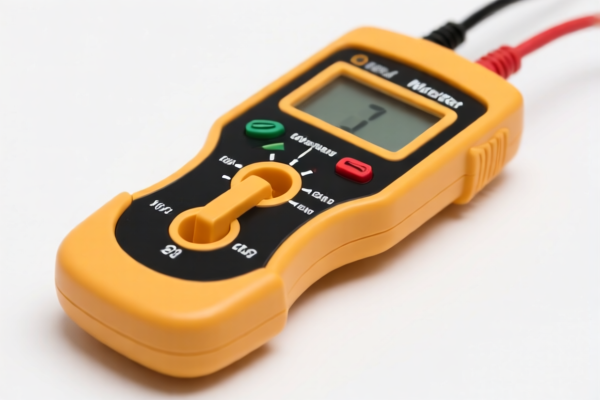
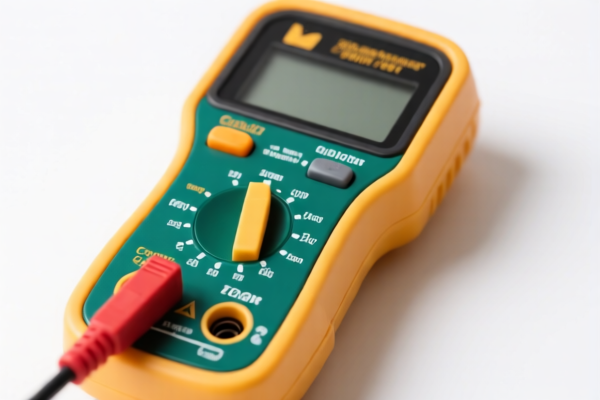
AI Analysis
🔌 Network Cable Crimper: HS Code Classification & Duty Breakdown (2026 Guide)
🌐 HS Code Reference & Customs Clearance Guide | 2026 Latest Tariff Analysis | Professional Clearance Strategy
📌 Part 1: Product Definition & Classification: Do You Really Understand the "Network Cable Crimper"?
A Network Cable Crimper is a handheld manual tool used primarily for terminating Ethernet cables (RJ45/RJ11 connectors). In international trade, its classification depends heavily on its material composition and functional description. While often grouped with general hardware, specific structural details can shift the HS Code between "Hand Tools" (Chapter 82) and "Tools for Working on Rubber/Plastic" (Chapter 84).
⚠️ Key Distinction Point:
- If classified strictly as a metal pliers/cutter tool → Chapter 82 (Tools)
- If classified as a general-purpose handheld tool (metal + plastic handle) or for working on insulation/plastic connectors → Chapter 84 (Machinery/Other Tools)
📦 Part 2: HS Code Classification Details (2026 Official Tariff Reference)
Based on the provided data, here are the two primary classification paths for Network Cable Crimpers. Note that the tariff burden varies significantly between them.
| HS Code | Product Description | Applicable Scenario | Material/Feature Focus |
|---|---|---|---|
8203.20.60.30 |
Pliers tools; Network pliers classified as metal pliers | Metal-dominant pliers; standard crimping | ✅ Metal body/cutting jaws |
8203.20.60.60 |
Pliers tools; Network pliers consistent with Pliers | General pliers classification | ✅ Metal body |
8467.89.50.90 |
Other tools; Handheld tools with metal & plastic mix | Composite material (Metal + Plastic handle) | ✅ Hybrid (Metal/Plastic) |
8467.89.10.00 |
Other tools; Manual tools for cable processing | Tools specifically for cable work | ✅ Manual / Cable-processing function |
🔍 Critical Reminder:
- Chapter 82 (8203.xxxx) items are taxed as Metal Hand Tools.
- Chapter 84 (8467.xxxx) items are taxed as General Hand Tools.
- The duty difference is substantial due to Section 301 (China-specific tariffs) and IEEPA surcharges.
💰 Part 3: 2026 Latest Tariff Rate Breakdown (Including Surcharges)
✅ Applicable Country: United States (US)
✅ Country of Origin: China (CN)
✅ Effective Date: Post-2025 (Current Policy)
🎯 1. 8203.20.60.30 & 8203.20.60.60 —— Pliers-Type Network Crimpers (Metal)
These codes fall under Chapter 82 (Tools, Implements... of Base Metal). They attract higher base tariffs.
| Item | Details |
|---|---|
| Base Tariff | 12¢/doz. + 5.5% (Ad Valorem) |
| Section 301 Surcharge | +25.0% (Additional Duty) |
| IEEPA Surcharge (122 Clause) | +10.0% (On China-origin goods) |
| Total Effective Duty | 40.5% + 12¢/doz. |
| Calculation Method | (CIF Value × 40.5%) + (12¢ × Quantity in Dozens) |
| De Minimis Eligibility | ❌ Not Eligible (High duty rate disqualifies it from $800 exemption) |
📌 Explanation:
- The 5.5% is the standard Most Favored Nation (MFN) rate for pliers.
- The +25% is the Section 301 tariff added to most Chinese metal tools.
- The +10% is the IEEPA (Section 122) surcharge applied to Chinese imports.
- Total: ~40.5% + specific duty. This is a HIGH duty rate.
🎯 2. 8467.89.50.90 & 8467.89.10.00 —— General Handheld Tools (Metal/Plastic or Cable-Specific)
These codes fall under Chapter 84 (Nuclear Reactors, Boilers, Machinery, etc. - specifically Part: Hand Tools). They have a lower base tariff.
| Item | Details |
|---|---|
| Base Tariff | 0.0% |
| Section 301 Surcharge | +7.5% (Additional Duty) |
| IEEPA Surcharge (122 Clause) | +10.0% (On China-origin goods) |
| Total Effective Duty | 17.5% |
| Calculation Method | CIF Value × 17.5% |
| De Minimis Eligibility | ❌ Not Eligible (Due to IEEPA 10% surcharge) |
📌 Explanation:
- The 0% base rate reflects that these are classified as "Other Hand Tools" not specifically listed in higher-tariff chapters.
- The +7.5% is a reduced Section 301 rate compared to Chapter 82 tools.
- The +10% IEEPA surcharge still applies to Chinese origins.
- Total: 17.5%. This is a MODERATE duty rate.
🛠️ Part 4: Customs Clearance Practical Advice (Avoid Pitfalls)
✅ 1. Documentation Checklist (Essential)
| Document | Required? | Notes |
|---|---|---|
| Product Description | ✔️ | Must clearly state "Network Cable Crimper" or "RJ45 Crimping Tool" |
| Material Composition | ✔️ | Specify % of Metal vs. Plastic. This determines Chapter 82 vs. 84. |
| Function Description | ✔️ | "Manual tool for crimping Ethernet connectors" |
| HS Code Recommendation | ✔️ | Provide both possibilities if unsure, but justify the preferred one. |
| Commercial Invoice | ✔️ | Value must be accurate (CIF) |
| Packing List | ✔️ | Include quantity per carton |
✅ 2. Classification Strategy: How to Choose?
| Scenario | Recommended HS Code | Duty Rate | Why? |
|---|---|---|---|
| All-Metal Tool (Heavy duty, no plastic) | 8203.20.60.30 |
~40.5% + 12¢/dz | It is strictly a "Plier" (Base Metal Tool). |
| Standard Consumer Tool (Plastic handles) | 8467.89.10.00 or 8467.89.50.90 |
17.5% | Classified as "Other Hand Tools" for cable work. Lower Duty! |
💡 Pro Tip:
If your crimper has plastic handles, argue for Chapter 84 (8467.89...). The duty is less than half (~17.5% vs. ~40.5%). Customs may challenge this if the metal mass is dominant, but it is a valid and common strategy for handheld tools.
✅ 3. Common Mistakes & Pitfalls
❌ Mistake 1: Using 8203.20.60.30 for a plastic-handled tool.
👉 Result: Paying 40.5% duty when 17.5% is possible.
👉 Fix: Argue for 8467.89.xxxx as a "Handheld tool for working on plastic/rubber" (cable insulation/connectors).
❌ Mistake 2: Claiming De Minimis ($800 exemption) for shipments from China.
👉 Result: Seizure or forced payment.
👉 Reason: Both classifications incur the 10% IEEPA surcharge, which blocks De Minimis eligibility for China-origin goods.
❌ Mistake 3: Ignoring the "12¢/doz." specific duty in Chapter 82.
👉 Result: Underpaying duties on high-volume small orders.
👉 Fix: Ensure your declaration includes both the ad valorem (5.5%) and the specific duty (12¢/doz).
🌍 Part 5: Global Market Comparison (Quick Reference)
| Market | HS Code Suggestion | Est. Duty (China Origin) | Notes |
|---|---|---|---|
| 🇺🇸 USA | 8467.89.10.00 |
17.5% | Best balance of cost and classification safety. |
| 🇺🇸 USA | 8203.20.60.30 |
~40.5% | Higher risk, higher cost. Only for all-metal tools. |
| 🇪🇺 EU | 8203.40.00.00 |
~3.7% | Lower base duty, no Section 301 equivalent. |
| 🇨🇳 China | 8203.20.00.00 |
0-5% | Import duty is low; VAT applies separately. |
📌 Part 6: Final Clearance Recommendations
- Prefer Chapter 84: If the tool has plastic handles, always push for
8467.89.10.00or8467.89.50.90. The 23%+ duty savings is significant. - Avoid Chapter 82 if possible: Unless it is purely metal, avoid
8203.20.60.30. The base rate is higher, and the specific duty adds complexity. - No De Minimis: Since the origin is China, do not use express postal services claiming $800 exemption. The 10% IEEPA surcharge will flag it. Use standard freight or air cargo with proper declaration.
- Labeling: Ensure the product label clearly states "Manual Tool" and "For Network Cables" to support the
8467classification as a tool for working on telecommunications/cable infrastructure.
🎯 Conclusion: Smart Classification Saves Money
🎯 Key Takeaway:
🔹 Plastic Handle? → Go for
8467.89(17.5% Duty).
🔹 All Metal? → Stuck with8203.20(~40.5% Duty).
🔹 China Origin? → No De Minimis Exemption. Prepare for full duty payment.
📌 Action Item:
📞 Contact your customs broker with product photos.
📝 Request an Advance Ruling if importing large volumes.
💰 Budget 17.5% for duty if you structure the product correctly (plastic handles).
✨ Professional Clearance Starts with Accurate Classification!
💼 Every percentage point saved is pure profit!
Customer Reviews
About HS Code Classification
The Harmonized System (HS) is an internationally standardized nomenclature developed by the World Customs Organization (WCO) to classify traded products. Over 200 countries use the HS system as the basis for customs tariffs, trade statistics, and import/export regulations.
Each HS code follows a hierarchical structure:
- Chapter (2 digits) — Broad category of goods (e.g., Chapter 84: Machinery and Mechanical Appliances)
- Heading (4 digits) — More specific grouping within the chapter
- Subheading (6 digits) — Internationally standardized breakdown, used by all WCO member countries
- National subdivisions (8-10 digits) — Country-specific extensions for further classification, such as US HTSUS 10-digit codes
Correct HS code classification is essential for smooth customs clearance, accurate duty payment, and compliance with trade regulations. Misclassification can lead to customs delays, overpayment of duties, or penalties.
When importing from CN to US, the applicable tariff rates may include:
- Most-Favored-Nation (MFN) rate — The standard duty rate applied to WTO members
- General rate — Applied to countries without trade agreements
- Trade remedy duties — Additional tariffs such as Section 301 (anti-dumping), Section 232 (national security), or countervailing duties
The information provided on this page is for reference purposes only. For official classification, please consult with your local customs authority or a licensed customs broker.