Network Cable Tester
CN → US| HS Code | Tariff Rate | Origin | Destination | Doc |
|---|---|---|---|---|
| 9031808085 | 10.0% | CN | US | Official Doc |
| 9030400000 | 35.0% | CN | US | Official Doc |
| 9031200000 | 36.7% | CN | US | Official Doc |
| 9030333800 | 35.0% | CN | US | Official Doc |
| 8543706000 | 35.0% | CN | US | Official Doc |
| 8543709860 | 37.6% | CN | US | Official Doc |
Product Images
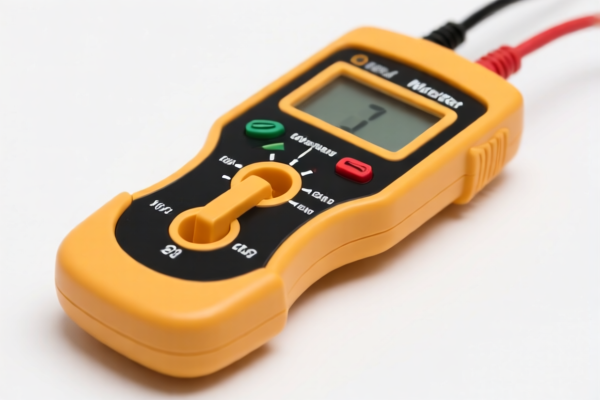
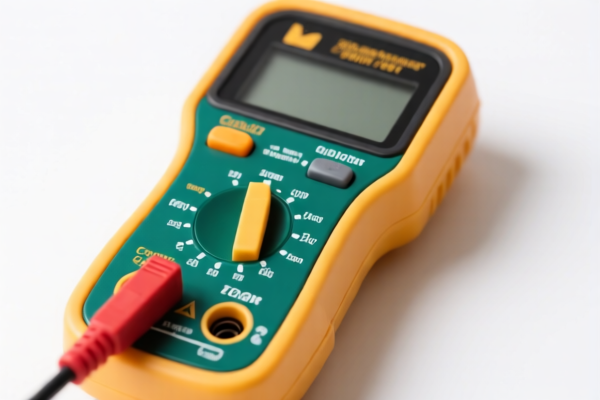
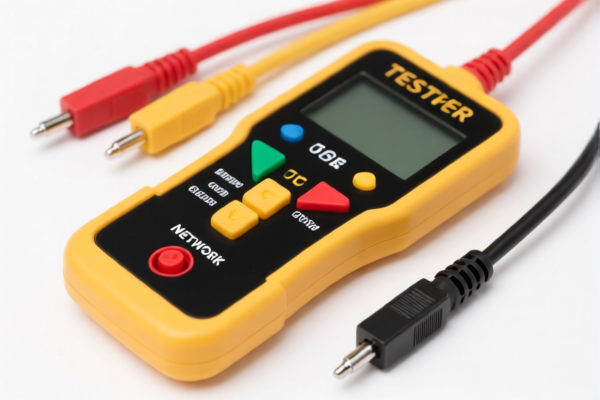
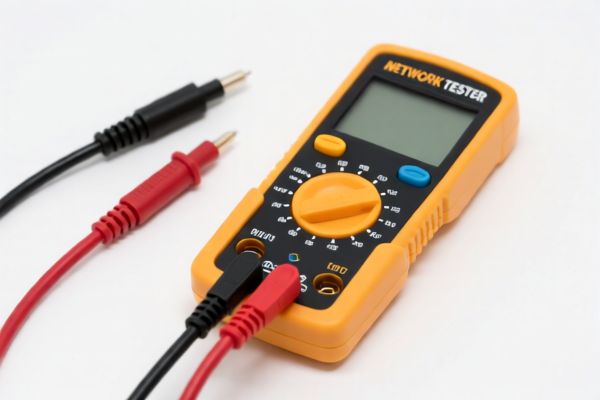
AI Analysis
🔌 Network Cable Tester (LAN Cable Tester)
🌐 HS Code Reference & Customs Clearance Guide | 2026 Latest Tariff Analysis | Professional Clearance Strategy
📌 I. Product Definition & Classification: Do You Really Understand "Network Cable Testers"?
A Network Cable Tester is a specialized diagnostic tool used to verify the physical integrity, continuity, and performance of Ethernet (LAN) cables (Cat5e, Cat6, Cat6a, Cat7, etc.). In international trade, its classification is highly debated because it straddles the line between general measurement instruments, telecommunication testing equipment, and independent electronic devices.
⚠️ Key Classification Dilemma:
- Is it a general measuring instrument? → Chapter 90
- Is it a telecom-specific tester? → Chapter 90 (but different heading)
- Is it an independent functional electronic device? → Chapter 85
Misclassification can lead to drastic tariff differences (from 10% to 37.6%), so precise identification is critical.
📦 II. HS Code Classification Matrix (Based on Provided Data)
| HS Code | Summary of Logic | Total Tax Rate | Tax Breakdown (US Import from China) |
|---|---|---|---|
9031.80.80.85 |
Classified as other measuring/detecting instruments. Used for detecting network lines, fitting the function of general inspection devices. | 10.0% | Base: 0.0% Add'l: 0.0% Sec 301/122: 10% |
9030.40.00.00 |
Classified under telecom-specific instruments. Viewed as measuring electrical quantities consistent with telecom measurement needs. | 35.0% | Base: 0.0% Add'l: 25.0% Sec 301/122: 10% |
9031.20.00.00 |
Classified as a test bench/testing instrument. Focuses on signal detection tools for networks. | 36.7% | Base: 1.7% Add'l: 25.0% Sec 301/122: 10% |
9030.33.38.00 |
Classified under voltage/current/resistance/power measuring. Since it measures电信号 (telecom signals), it fits this electrical measurement category. | 35.0% | Base: 0.0% Add'l: 25.0% Sec 301/122: 10% |
8543.70.60.00 |
Classified as an independent functional device. Designed to connect to networks, it is seen as a standalone testing apparatus not specifically for measurement. | 35.0% | Base: 0.0% Add'l: 25.0% Sec 301/122: 10% |
8543.70.98.60 |
Classified as other independent electronic measurement/testing devices. Fits the definition of "machines and apparatus with individual functions." | 37.6% | Base: 2.6% Add'l: 25.0% Sec 301/122: 10% |
🔍 Critical Insight:
- Lowest Rate (10%):9031.80.80.85– Requires arguing it’s a general detection tool, not specific to telecom data transmission or electrical measurement.
- Highest Rate (37.6%):8543.70.98.60– Often applied when customs view it as a complex electronic device with independent function, attracting base duty + Section 301 + IEEPA/122 duties.
💰 III. 2026 Tariff Structure Detailed Explanation
✅ Market: United States (US)
✅ Origin: China (CN)
✅ Effective Date: Post-2025 policies (Section 301 & IEEPA provisions)
🎯 1. The "Golden Ticket": 9031.80.80.85 (10% Total)
| Item | Details |
|---|---|
| Logic | "Other measuring or detecting instruments." |
| Base Duty | 0.0% |
| Section 301 (Add'l) | 0.0% (This classification often falls outside specific Section 301 lists for general instruments) |
| IEEPA/122 Duty | 10.0% |
| Total Cost Impact | 10% of CIF Value |
| Legal Path | 9031.80 (Other instruments) → 122 Provisions |
📌 Why this is optimal:
- It avoids the heavy 25% Section 301 surcharge that applies to most Chapter 90 (telecom/measurement) and Chapter 85 (electronic machines) codes.
- Strategy: Emphasize the tool's role in physical cable integrity (continuity, split pair) rather than network protocol testing.
🎯 2. The "Telecom/Electrical" Trap: 9030.xx Codes (35-36.7%)
| HS Code | Total Tax | Base | Add'l 301 | IEEPA 122 |
|---|---|---|---|---|
9030.40.00.00 |
35.0% | 0% | 25% | 10% |
9030.33.38.00 |
35.0% | 0% | 25% | 10% |
9031.20.00.00 |
36.7% | 1.7% | 25% | 10% |
📌 Risk Analysis:
- Customs may classify the device as measuring electrical signals (Voltage/Resistance) →9030.33
- Or as Telecom-specific test gear →9030.40
- Result: You pay an extra 25% surcharge compared to9031.80.
🎯 3. The "Independent Device" Route: 8543.70 (35-37.6%)
| HS Code | Total Tax | Base | Add'l 301 | IEEPA 122 |
|---|---|---|---|---|
8543.70.60.00 |
35.0% | 0% | 25% | 10% |
8543.70.98.60 |
37.6% | 2.6% | 25% | 10% |
📌 Risk Analysis:
- If the device is seen as a complex electronic apparatus with a specific function (e.g., PoE detection, cable certification), it may fall under Chapter 85.
-8543.70.98.60carries the highest base duty (2.6%), making it the most expensive option.
🛠️ IV. Customs Clearance Practical Advice (Avoiding Pitfalls)
✅ 1. Documentation Checklist (Critical for Low Rate)
| Document | Requirement | Purpose |
|---|---|---|
| Product Brochure | Must highlight "Continuity Tester," "Wire Integrity," "Cable Tracer" | Avoid terms like "Network Protocol Analyzer" or "Telecom Measurement Device" |
| Circuit Diagram | Simple LED/Buzzer circuit vs. Complex Microprocessor | Simpler circuits support 9031 (general instrument) |
| User Manual | Show basic usage (Plug in → Test Light) | Demonstrates general utility, not specialized telecom engineering |
| Commercial Invoice | Description: "Handheld Network Cable Continuity Tester" | Avoid vague terms; be specific about function |
| HS Code Ruling (If Available) | Previous CBP Ruling Letter | Strongest evidence for classification |
✅ 2. Declaration Strategy (Keywords Matter)
🔥 Golden Rule:
"Focus on PHYSICAL integrity, not DATA transmission."
| ❌ Bad Declaration (High Risk) | ✅ Good Declaration (Low Risk) |
|---|---|
| "Ethernet Network Test Instrument" | "Handheld LAN Cable Continuity Tester" |
| "Telecom Signal Measurement Device" | "Network Cable Integrity Checker" |
| "Digital Network Analyzer" | "RJ45 Cable Tester (Basic Model)" |
| "PoE Voltage Tester" | "Cable Wiring Order Detector" |
✅ 3. Handling Complex Features (PoE, Cat6a Certification)
| Feature | Classification Risk | Mitigation Strategy |
|---|---|---|
| Basic LED/Buzzer Tester | Low (Likely 9031.80) |
Keep description simple. No technical specs on voltage/current. |
| Digital Display (Shows Length/Fault) | Medium (May be 9030.33) |
Argue it’s still a "general measuring instrument" for physical lines. |
| Certifies Cat6/Cat7 Performance (Bandwidth) | High (May be 9030.40 or 8543) |
If it tests bandwidth/impedance, it’s likely "Telecom Specific." Consider if the higher duty is worth the feature set. |
| PoE (Power over Ethernet) Detection | Medium-High | Clearly state it detects presence of power, not measuring electrical quantity for billing/metering. |
🌍 V. Global Market Comparison (2026)
| Market | Recommended HS Code | Estimated Duty (China Origin) | Key Requirement |
|---|---|---|---|
| 🇺🇸 USA | 9031.80.80.85 |
10% | Avoid "Telecom" or "Electrical Measurement" keywords. |
| 🇪🇺 EU | 9031.49 |
~0-2% | CE Marking required. General test equipment. |
| 🇬🇧 UK | 9031.49 |
~0-2% | UKCA Marking required. |
| 🇨🇳 China Export | 9031.80 |
0-5% | Standard export declaration. |
📌 Note: The US market is unique due to Section 301 and IEEPA (122) tariffs. The EU/UK do not have these punitive surcharges, so classification is easier.
📌 VI. Common Mistakes & Blood-Soaked Lessons
❌ Mistake 1: Using "Network Analyzer" in the description
👉 Result: Customs assume it measures data protocols → 9030.40 → 35% Tax.
👉 Fix: Use "Cable Continuity Tester."
❌ Mistake 2: Ignoring the Base Duty in 8543 codes
👉 Result: 8543.70.98.60 has a 2.6% base duty + 25% + 10% = 37.6%.
👉 Fix: Always check the total landed cost, not just the add'l duties.
❌ Mistake 3: Claiming "De Minimis" Exemption
👉 Result: False. Section 301 and IEEPA duties do not apply to de minimis (under $800). However, if the value is >$800, full duty applies.
👉 Fix: For B2B shipments, budget for the full 10-37% tax.
🎯 VII. Conclusion: Strategic Recommendation
🏆 Best Strategy for Low Tariff (10%):
- HS Code:
9031.80.80.85 - Description: "Handheld Network Cable Continuity Tester for RJ45/RJ11 Connectors."
- Evidence: Provide photos showing only LED lights and beeps. Avoid showing complex digital menus that imply "electrical measurement."
- Justification: The device tests physical wiring order and continuity, not electrical parameters (voltage/current) or network protocols.
⚠️ If the Device is Advanced (Cat6a Certified):
- You may be forced into
9030.40or8543due to specialized functionality. - Cost Impact: Prepare for 35-37.6% total tax.
- Action: Calculate if the margin of the advanced tester justifies the higher duty, or if you can offer a "Basic" version separately.
📌 Pro Tip:
📞 Pre-Ruling is King: Before shipping, file an CBP Pre-Ruling Request with the US Customs and Border Protection.
📄 Submit: Photos, User Manual, and a letter arguing for9031.80.
💰 Savings: A $5000 shipment could save $1250 - $1380 in duties by securing the 10% rate.
✨ Professional Clearance, Start with Accurate Classification!
💼 Every Percent of Duty Saved is Pure Profit!
Customer Reviews
About HS Code Classification
The Harmonized System (HS) is an internationally standardized nomenclature developed by the World Customs Organization (WCO) to classify traded products. Over 200 countries use the HS system as the basis for customs tariffs, trade statistics, and import/export regulations.
Each HS code follows a hierarchical structure:
- Chapter (2 digits) — Broad category of goods (e.g., Chapter 84: Machinery and Mechanical Appliances)
- Heading (4 digits) — More specific grouping within the chapter
- Subheading (6 digits) — Internationally standardized breakdown, used by all WCO member countries
- National subdivisions (8-10 digits) — Country-specific extensions for further classification, such as US HTSUS 10-digit codes
Correct HS code classification is essential for smooth customs clearance, accurate duty payment, and compliance with trade regulations. Misclassification can lead to customs delays, overpayment of duties, or penalties.
When importing from CN to US, the applicable tariff rates may include:
- Most-Favored-Nation (MFN) rate — The standard duty rate applied to WTO members
- General rate — Applied to countries without trade agreements
- Trade remedy duties — Additional tariffs such as Section 301 (anti-dumping), Section 232 (national security), or countervailing duties
The information provided on this page is for reference purposes only. For official classification, please consult with your local customs authority or a licensed customs broker.