Neutral Filter Paper
CN → US| HS Code | Tariff Rate | Origin | Destination | Doc |
|---|---|---|---|---|
| 4823201000 | 35.0% | CN | US | Official Doc |
| 4823209000 | 35.0% | CN | US | Official Doc |
Product Images
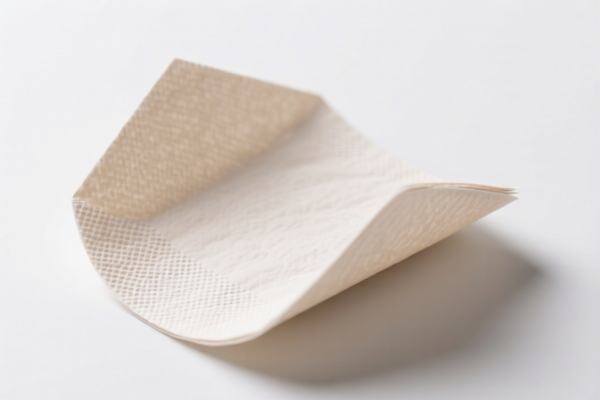
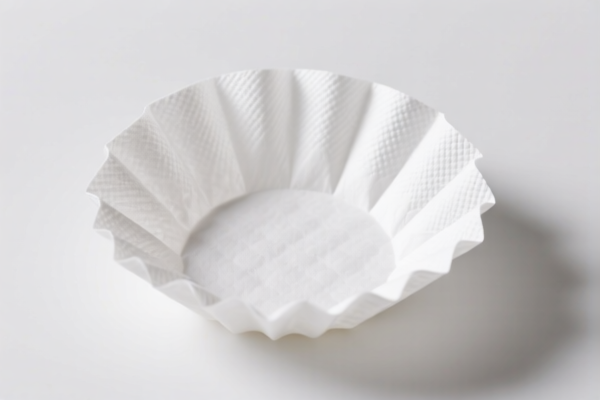
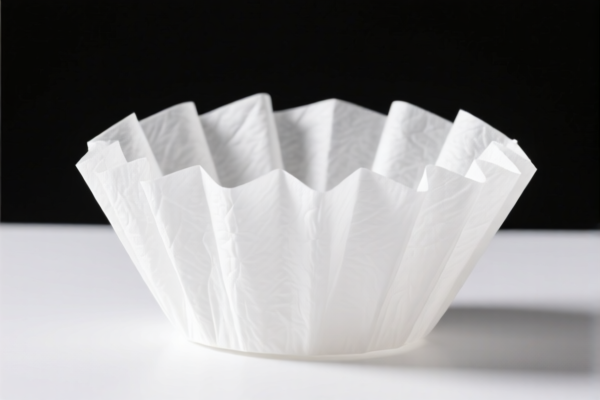
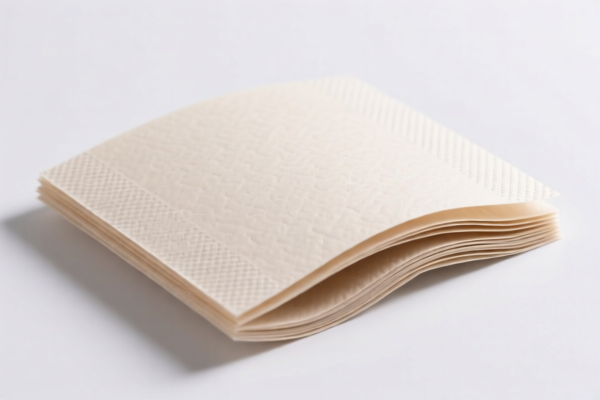
AI Analysis
📷 Neutral Filter Paper / Neutral Density Filters (Optical Filters)
🌐 HS Code Reference & Customs Clearance Guide | 2026 Latest Tariff Analysis | Professional Clearance Strategy
📌 I. Product Definition and Classification: What is "Neutral Filter Paper"?
In the context of optical trading, "Neutral Filter Paper" typically refers to Neutral Density (ND) Filters. These are optical components used to reduce the intensity of all wavelengths of light passing through them equally, without significantly changing the color balance of the transmitted light. They are widely used in photography, cinematography, laser safety, and scientific instrumentation.
Depending on the material (glass vs. coated paper/plastic) and application (photographic vs. general optical), they fall into different categories under the Harmonized System (HS).
⚠️ Key Distinction Point:
- If the filter is a rigid optical element (glass/silica) used as a general optical component → Likely 9001 or 9002;
- If the filter is specifically designed for photographic cameras (lens attachments) → Likely 9002.20;
- If the filter is a flexible sheet/foil (paper/plastic) acting as a light-absorbing material → Potentially 9001.20.
📦 II. HS Code Classification Details (2026 Latest Tariff Authority Mapping)
Based on the provided data, here are the four potential HS Codes for "Neutral Filter Paper/ND Filters" imported from China to the US:
| HS Code | Product Description | Application Scenario | Material/State |
|---|---|---|---|
9002.20.80.00 |
Optical filters, not for medical or surgical use, not elsewhere specified | General optical filters, laboratory use, generic ND filters | Glass or Optical Material |
9002.20.40.00 |
Optical filters, not for medical or surgical use, photographic | Camera lens filters, photographic ND filters | Photographic Lens Attachment |
9001.90.90.00 |
Optical fibers, bundles, cables, and other optical elements | General optical components, scientific instruments | Optical Glass/Element |
9001.20.00.00 |
Polarized materials in the form of plates, sheets, and films | ND filters in the form of flexible sheets/foils/paper | Optical Sheets/Films |
🔍 Important Reminder:
-9002.20series is for optical filters specifically. If it’s a rigid lens-type filter, it goes here.
-9001.20is for polarized or neutral density materials in sheet/film form. If your "filter paper" is actually a flexible coated sheet, this code is more accurate than 9002.
-9001.90is a "basket" code for other optical elements not specified elsewhere. Use this if the product doesn’t fit the strict definition of a photographic filter or polarized sheet.
💰 III. 2026 Latest Tariff Rate Breakdown (Including Additional Taxes & Policy Surcharges)
✅ Applicable Country: United States (US)
✅ Origin: China (CN)
✅ Effective Date: From November 10, 2025 onwards
🎯 1. 9002.20.80.00 — Optical Filters (General/Not Elsewhere Specified)
| Item | Details |
|---|---|
| Base Tariff | 0.0% (Ad Valorem) |
| USITC Section 301 Surcharge | +25.0% |
| IEEPA Section 122 Surcharge | +10.0% |
| Total Effective Rate | 35.0% |
| Tax Calculation | CIF Value × 35% |
| De Minimis Eligibility | ❌ No (Denied under current China-specific rules) |
| Legal Basis Path | IEEPA:9903.01.25 → USITC:9002.20.80.00 → FOOTNOTE:9903.88.01 |
📌 Explanation:
- The 0% base rate reflects the general MFN duty for optical filters;
- The 25% Section 301 tariff applies to most Chinese optical goods;
- The 10% IEEPA tariff (often referred to as "122 Clause" in some contexts) is an additional levy on Chinese origin products;
- Total 35% is a significant cost driver.
🎯 2. 9002.20.40.00 — Photographic Optical Filters
| Item | Details |
|---|---|
| Base Tariff | 0.0% |
| USITC Section 301 Surcharge | +25.0% |
| IEEPA Section 122 Surcharge | +10.0% |
| Total Effective Rate | 35.0% |
| Tax Calculation | CIF Value × 35% |
| De Minimis Eligibility | ❌ No |
| Legal Basis Path | IEEPA:9903.01.25 → USITC:9002.20.40.00 → FOOTNOTE:9903.88.01 |
📌 Note:
- Even though this is for photographic use, the tariff structure is identical to general optical filters;
- If your product is sold as a "Photography Accessory," ensure the description clearly states "Optical Filter for Camera Lenses" to avoid misclassification under electronics accessories.
🎯 3. 9001.90.90.00 — Other Optical Elements
| Item | Details |
|---|---|
| Base Tariff | 0.0% |
| USITC Section 301 Surcharge | +25.0% |
| IEEPA Section 122 Surcharge | +10.0% |
| Total Effective Rate | 35.0% |
| Tax Calculation | CIF Value × 35% |
| De Minimis Eligibility | ❌ No |
| Legal Basis Path | IEEPA:9903.01.25 → USITC:9001.90.90.00 → FOOTNOTE:9903.88.01 |
📌 Explanation:
- This code is used when the filter is considered a general optical element rather than a dedicated photographic filter;
- Common in scientific, industrial, or laser safety applications;
- Same tax burden as photographic filters.
🎯 4. 9001.20.00.00 — Polarized/Neutral Density Materials (Sheets/Films)
| Item | Details |
|---|---|
| Base Tariff | 0.0% |
| USITC Section 301 Surcharge | +25.0% |
| IEEPA Section 122 Surcharge | +10.0% |
| Total Effective Rate | 35.0% |
| Tax Calculation | CIF Value × 35% |
| De Minimis Eligibility | ❌ No |
| Legal Basis Path | IEEPA:9903.01.25 → USITC:9001.20.00.00 → FOOTNOTE:9903.88.01 |
📌 Critical Distinction:
- If your "Neutral Filter Paper" is actually a flexible sheet, foil, or coated paper (not a rigid glass lens), this is the most accurate code;
- Customs may scrutinize the term "filter paper" — ensure documentation clarifies it is an optical grade neutral density material, not laboratory filter paper for chemical filtration;
- Despite the name "Polarized," HS 9001.20 covers neutral density materials in sheet form as well.
🛠️ IV. Customs Clearance Practical Advice (Avoid Pitfalls)
✅ 1. Required Documentation Checklist
| Document | Mandatory? | Notes |
|---|---|---|
| ✅ Product Specification Sheet | ✔️ | Must detail: Optical density (e.g., ND2, ND4, ND1000), wavelength range, material (glass/coated polyester), form (rigid/flexible) |
| ✅ Product Photos | ✔️ | Clear images showing product form (sheet vs. lens), markings, packaging |
| ✅ Commercial Invoice | ✔️ | Must use precise term: "Neutral Density Optical Filter" or "ND Filter Sheet" — avoid vague "Filter Paper" |
| ✅ Bill of Lading | ✔️ | Ensure HS Code is declared if possible, or at least product description matches invoice |
| ✅ Certificate of Origin | ✔️ | Required to verify China origin for tariff calculation |
| ✅ Material Safety Data Sheet (MSDS) | If applicable | If coated with chemicals, may be requested |
✅ 2. Declaration Tips (Key Mnemonic)
🔥 “Shape Determines Code, Material Defines HS, Name Must Be Precise, Avoid ‘Paper’ Ambiguity!”
| Scenario | Correct Declaration | Incorrect Practice |
|---|---|---|
| Rigid glass lens | 9002.20.40.00 (Photographic) or 9002.20.80.00 (General) |
Declaring as “Paper Filter” → Misclassification Risk |
| Flexible sheet/film | 9001.20.00.00 |
Declaring as “Optical Glass” → Customs Inquiry |
| Scientific laser filter | 9001.90.90.00 |
Declaring as “Photographic Accessory” → Potential Penalty |
| Laboratory chemical filter | Not 9001/9002 (Go to 4911/3920) | Using optical codes for non-optical paper → Rejection |
✅ 3. Special Case Handling
| Scenario | Handling Advice |
|---|---|
| Misleading Name “Filter Paper” | Clearly state: “Optical Neutral Density Filter (Non-Chemical)” in all documents |
| Mixed Shipments (Glass + Sheets) | Declare separately with distinct HS Codes; do not lump together |
| OEM Custom Filters | Provide client design specs + optical certification to prove optical function |
| Small Sample Imports | Even small quantities are subject to 35% tariff; no de minimis exemption for China origin |
🌍 V. Global Market Comparison (2026 Latest)
| Country/Region | Recommended HS Code | Tariff (China Origin) | Certification | Notes |
|---|---|---|---|---|
| 🇺🇸 USA | 9002.20 or 9001.20 |
35% (0% base + 25% + 10%) | None specific | High tariff, strict classification |
| 🇨🇳 China | 9002.20 or 9001.20 |
0–6% (Import Duty) | CCC (if electronic) | Lower duty, no surcharges |
| 🇪🇺 EU | 9002.20 |
0% (Most FTA partners) | CE (if applicable) | No surcharges, VAT applies |
| 🇬🇧 UK | 9002.20 |
0% | UKCA | Post-Brexit, no US surcharges |
| 🇯🇵 Japan | 9002.20 |
0–3% | PSE (if electronic) | No surcharges |
📌 Conclusion:
- USA imposes a heavy 35% tariff on Chinese-origin neutral filters;
- No exemptions under current Section 301 and IEEPA rules;
- Strategic Sourcing: Consider sourcing from Vietnam, Malaysia, or Mexico to avoid surcharges (verify origin rules carefully).
📌 VI. Common Errors & Pitfalls (Lessons Learned)
❌ Mistake 1: Using the term “Filter Paper” without clarification
👉 Consequence: Customs may classify under 4911.91.00 (Other printed matter) or 3920 (Plastics), leading to duty disputes or delays.
❌ Mistake 2: Declaring flexible ND sheets as rigid lenses (9002.20)
👉 Consequence: Misclassification → Potential audit, penalties, or re-classification under 9001.20 with same tax but documentation mismatch.
❌ Mistake 3: Assuming de minimis ($800) exemption applies
👉 Consequence: No exemption for China origin under Section 301/IEEPA → Full 35% tax applies even for small shipments.
❌ Mistake 4: Failing to specify optical density (e.g., ND0.3, ND3.0)
👉 Consequence: Customs may reject declaration as “incomplete” → Delayed clearance.
✅ Correct Approach:
“Neutral Density Optical Filter, Glass, 50mm Diameter, ND4, for Photographic Lens Attachment, Model ND4-50, Made in China”
OR
“Neutral Density Optical Film, Polycarbonate Substrate, Coated ND Material, Roll Form, for Industrial Light Control, Made in China”
🎯 VII. Conclusion: Precision in Classification Saves Money!
🎯 Remember This Mnemonic:
🔹 “Glass Lens = 9002, Sheet Film = 9001, Both 35% Tax, No De Minimis, Avoid ‘Paper’ Ambiguity!”
🔹 “HS Code Determines Duty, 35% is the Baseline, Accurate Description is Key, Vague Terms Lead to Pain!”
📌 Pro Tip:
- If your volume is high, consider pre-ruling (Advance Ruling) from US CBP to confirm the HS Code and tax liability;
- If sourcing from China is unavoidable, factor the 35% tariff into your pricing model;
- Explore nearshoring options (Mexico, Vietnam) for US-bound goods to potentially reduce tariffs.
📣 Call to Action:
📞 Consult a licensed customs broker + Provide product specs + Request HS Code Advance Ruling
🚀 Ensure smooth customs clearance, predictable costs, and compliance for your optical filters!
✨ Professional Clearance, Starting with Accurate Classification!
💼 Every dollar of duty matters — optimize your HS Code strategy today!
Customer Reviews
About HS Code Classification
The Harmonized System (HS) is an internationally standardized nomenclature developed by the World Customs Organization (WCO) to classify traded products. Over 200 countries use the HS system as the basis for customs tariffs, trade statistics, and import/export regulations.
Each HS code follows a hierarchical structure:
- Chapter (2 digits) — Broad category of goods (e.g., Chapter 84: Machinery and Mechanical Appliances)
- Heading (4 digits) — More specific grouping within the chapter
- Subheading (6 digits) — Internationally standardized breakdown, used by all WCO member countries
- National subdivisions (8-10 digits) — Country-specific extensions for further classification, such as US HTSUS 10-digit codes
Correct HS code classification is essential for smooth customs clearance, accurate duty payment, and compliance with trade regulations. Misclassification can lead to customs delays, overpayment of duties, or penalties.
When importing from CN to US, the applicable tariff rates may include:
- Most-Favored-Nation (MFN) rate — The standard duty rate applied to WTO members
- General rate — Applied to countries without trade agreements
- Trade remedy duties — Additional tariffs such as Section 301 (anti-dumping), Section 232 (national security), or countervailing duties
The information provided on this page is for reference purposes only. For official classification, please consult with your local customs authority or a licensed customs broker.