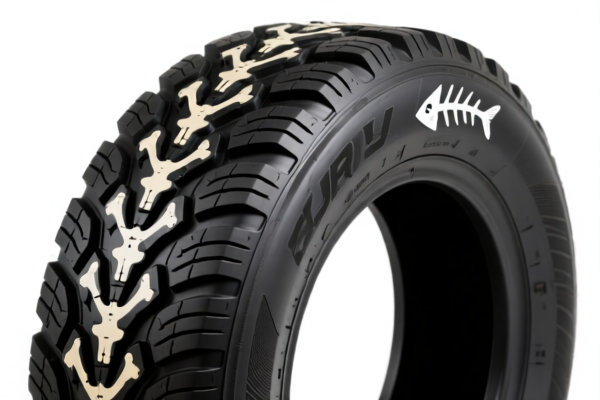
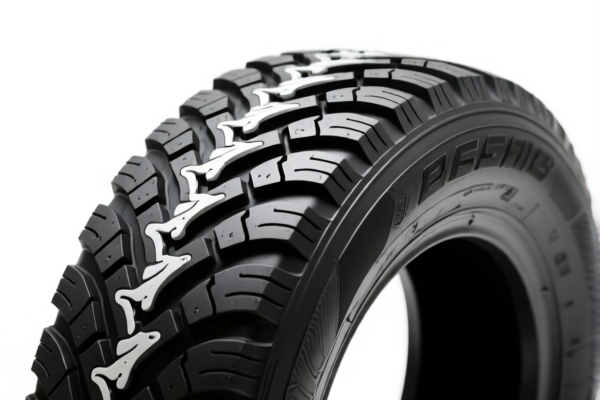
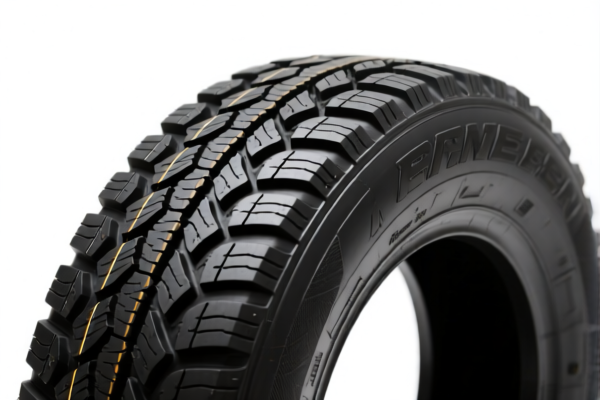
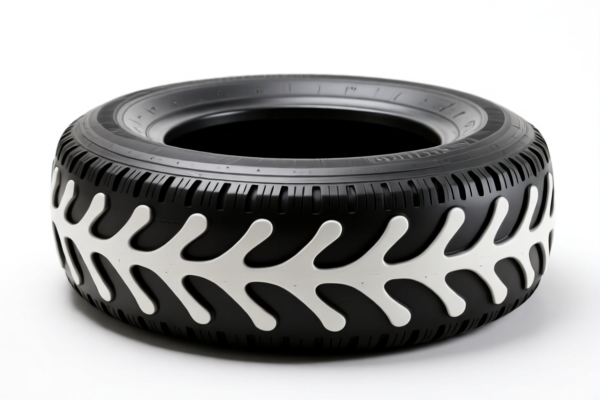
New Fishbone Pattern Golf Cart Tire
CN → US| HS Code | Tariff Rate | Origin | Destination | Doc |
|---|---|---|---|---|
| 4011901010 | 35.0% | CN | US | Official Doc |
| 4011908010 | 38.4% | CN | US | Official Doc |
Product Images
AI Analysis
🛞 New Fishbone Pattern Golf Cart Tire (Pneumatic Rubber Tires)
🌐 HS Code Reference & Customs Clearance Guide | 2026 Latest Tariff Analysis | Professional Clearance Strategy
📌 I. Product Definition & Classification: What Exactly Is a "Fishbone Tire"?
A "Fishbone Pattern" (also known as "Herring-bone") tire is a specific tread design characterized by V-shaped or zigzag grooves. In the context of New Pneumatic Tires of Rubber, this specific tread pattern triggers a distinct HS Code classification under Heading 4011.
In international trade, these tires are primarily categorized by their application. For golf carts, ATVs, turf equipment, and trailers, the classification depends strictly on whether the tread is explicitly defined as "herring-bone" or falls under the general "other" category.
⚠️ Key Distinction:
- "Herring-bone" or "Similar" Tread: Specifically refers to the fishbone pattern. This has a preferential (lower) base tariff.
- "Other" Tread: Applies to any tread pattern that is not herring-bone (e.g., smooth, block, lug, or standard asymmetric). This incurs a higher base tariff.
- Application: Both codes in the dataset below apply to tires of a kind used on golf carts, all-terrain vehicles (ATVs), turf/lawn/garden equipment, and trailers.
📦 II. HS Code Classification Details (2026 Latest Tariff Authority Comparison)
Based on the provided <DATA>, there are two possible HS Codes depending on the precise tread design description.
| HS Code | Product Description | Tread Type | Application Scope | Base Tariff |
|---|---|---|---|---|
4011.90.10.10 |
New pneumatic tires, of rubber: Other: Having a "herring-bone" or similar tread Of a kind used on golf carts... | ✅ Fishbone / Herring-bone | Golf carts, ATVs, Lawn/Turf, Trailers | 0.0% |
4011.90.80.10 |
New pneumatic tires, of rubber: Other: Other Of a kind used on golf carts... | ❌ Non-Herring-bone (Any other tread) | Golf carts, ATVs, Lawn/Turf, Trailers | 3.4% |
🔍 Critical Reminder:
- If your tire has a "Fishbone" or "Herring-bone" tread: You MUST use4011.90.10.10to benefit from the 0% base tariff.
- If your tire has ANY other tread pattern (e.g., standard block, lug, smooth): You must use4011.90.80.10, which incurs a 3.4% base tariff.
- Misclassification Risk: Declaring a non-herring-bone tire as "herring-bone" to save 3.4% is a customs violation. Conversely, declaring a herring-bone tire as "other" results in an unnecessary overpayment.
💰 III. 2026 Latest Tariff Rate Breakdown (Including Additional Duties & Policy Surcharges)
✅ Applicable Country: United States (US)
✅ Country of Origin: China (CN) (Assumed based on typical 25% additional duty context in the prompt)
✅ Effective Date: Current US Trade Policy (Section 301 & Base Rates)
🎯 1. 4011.90.10.10 — Tires with "Herring-bone" or Similar Tread
| Item | Content |
|---|---|
| Base Tariff Rate | 0.0% (ad valorem) |
| Section 301 Additional Tariff | +25.0% (China-origin specific) |
| Total Tariff Rate | 25.0% |
| Tax Calculation | CIF Value × 25% |
| De Minimis Eligibility | ❌ No (Deny de minimis for Section 301 goods) |
| Legal Basis Path | HTSUS:4011.90.10.10 → Section 301 Footnote |
📌 Explanation:
- The base duty is 0%, making this the most cost-effective code.
- However, an additional 25% is levied on Chinese-origin tires under Section 301.
- Total Cost: You pay 25% of the CIF value as duty.
- Why it matters: This 25% is fixed regardless of the tread pattern if the origin is China, but the base rate difference (0% vs 3.4%) means this code saves you 3.4% compared to the "other" code.
🎯 2. 4011.90.80.10 — Other Tires (Non-Herring-bone)
| Item | Content |
|---|---|
| Base Tariff Rate | 3.4% (ad valorem) |
| Section 301 Additional Tariff | +25.0% (China-origin specific) |
| Total Tariff Rate | 28.4% |
| Tax Calculation | CIF Value × 28.4% |
| De Minimis Eligibility | ❌ No (Deny de minimis for Section 301 goods) |
| Legal Basis Path | HTSUS:4011.90.80.10 → Section 301 Footnote |
📌 Explanation:
- The base duty is 3.4% because the tread is not "herring-bone."
- The additional 25% applies identically as above.
- Total Cost: You pay 28.4% of the CIF value as duty.
- Comparison: This code is 3.4% more expensive than4011.90.10.10. If your tire can be argued as having a "similar" tread, use code 1. If it is clearly a block or lug tread, you are forced to use code 2.
🛠️ IV. Customs Clearance Practical Advice (Avoid Pitfalls Guide)
✅ 1. Essential Documentation Checklist (No Exceptions)
| Document | Required | Explanation |
|---|---|---|
| ✅ Product Specification Sheet | ✔️ | Must clearly describe the tread pattern. Use terms like "V-shaped," "Herring-bone," "Fishbone," or "Zigzag." |
| ✅ High-Resolution Photos | ✔️ | Show the tread face clearly. Customs officers will verify if it matches "herring-bone." |
| ✅ Commercial Invoice | ✔️ | Must specify: "New Pneumatic Rubber Tire," "Golf Cart/ATV Application," and Exact HS Code. |
| ✅ Origin Declaration | ✔️ | Confirm Country of Origin (e.g., China). If not China, the 25% additional duty may not apply. |
| ✅ Packing List | ✔️ | Detail quantity, weight, and dimensions. |
✅ 2. Declaration Tips (Key Mnemonic)
🔥 "Tread Type Dictates Base Rate: Fishbone = 0%, Other = 3.4%. Add 25% on Top!"
| Scenario | Correct HS Code | Base Rate | Total Rate (China Origin) |
|---|---|---|---|
| Fishbone / Herring-bone Tread | 4011.90.10.10 |
0.0% | 25.0% |
| Standard Block / Lug / Smooth Tread | 4011.90.80.10 |
3.4% | 28.4% |
| Non-Chinese Origin (e.g., Vietnam) | Same Codes | 0.0% or 3.4% | 0.0% or 3.4% (Check current FTA status) |
📌 Strategic Advice:
- If your tire tread is ambiguous (e.g., mixed pattern), consult a customs broker. Some "similar" treads to herring-bone may qualify for the lower base rate.
- Do not misdeclare a block-tread tire as herring-bone. The visual inspection at the border is strict.
✅ 3. Special Handling
| Scenario | Handling Advice |
|---|---|
| OEM Custom Tires | Provide the client’s design specs. If the design is "herring-bone," stick with 4011.90.10.10. |
| Mixed Shipments | If a container has both fishbone and non-fishbone tires, you must declare them separately. Do not lump them under the lower rate. |
| Retreaded Tires | Note: The provided HS codes are for New tires. Retreaded tires fall under 4012.13.00.00 (different tariff structure). Ensure you are not misdeclaring retreads as new. |
| Turf/Lawn Mower Tires | Explicitly state "For Golf Cart/ATV/Turf" in the description to align with the subheading scope. |
🌍 V. Global Market Comparison (2026 Latest)
| Country/Region | Recommended HS Code | Base Tariff | Additional Tariff (CN Origin) | Total Tariff | Remarks |
|---|---|---|---|---|---|
| 🇺🇸 USA | 4011.90.10.10 |
0.0% | +25% | 25.0% | High barrier due to Section 301. |
| 🇺🇸 USA | 4011.90.80.10 |
3.4% | +25% | 28.4% | Less common for fishbone patterns. |
| 🇨🇳 China | 4011.90.10.10 |
0.0% | 0% | 0.0% | Domestic trade or exports from non-China. |
| 🇪🇺 EU | 4011.90.10.00 |
~5-10%* | 0%* | ~5-10% | EU does not have Section 301. *Rates vary by exact subheading. |
| 🇬🇧 UK | 4011.90.10.00 |
~0-5%* | 0%* | ~0-5% | Post-Brexit tariff schedule applies. |
📌 Conclusion:
- The 25% additional tariff is a unique burden for China-origin goods entering the US.
- For non-China origins (e.g., Vietnam, Thailand, EU), the total tariff is significantly lower, highlighting the importance of supply chain diversification if possible.
- Within the US, choosing the correct HS Code saves you 3.4% on the CIF value. On a large shipment, this is significant.
📌 VI. Common Mistakes & Pitfall Guide (Lessons Learned)
❌ Mistake 1: Declaring all golf cart tires under one HS Code regardless of tread.
👉 Consequence: If you use 4011.90.10.10 for a non-fishbone tire, you underpay duty. This leads to penalties, back taxes, and cargo detention.
❌ Mistake 2: Ignoring the "Similar Tread" clause.
👉 Consequence: A "zigzag" tread might be argued as "similar" to herring-bone. If customs disagrees, you pay the difference + interest. Pre-clearance ruling is recommended for ambiguous treads.
❌ Mistake 3: Failing to specify "New" vs "Retreaded."
👉 Consequence: Retreaded tires (4012.13.00.00) have different duties. Misdeclaration can lead to fraud allegations.
❌ Mistake 4: Assuming "Golf Cart Tire" is a standalone HS Code.
👉 Consequence: HS Codes are based on material (Rubber), Type (Pneumatic), and Tread. You must use the 10-digit code provided above, not a generic description.
✅ Correct Practice:
"New Pneumatic Rubber Tire, Herring-bone Tread, for Golf Cart Application, Model XYZ, Country of Origin: China, HS Code: 4011.90.10.10"
🎯 VII. Conclusion: Precision Classification Saves Money!
🎯 Remember the Golden Rule:
🔹 "Fishbone = 0% Base, Other = 3.4% Base. Add 25% if from China."
🔹 "Check the tread pattern! A small design change changes the tax!"
📌 Pro Tip:
If you are importing from China and the volume is high, consider:
1. Pre-classification Ruling: Ask CBP for an Advance Ruling on your specific tread pattern to ensure it qualifies as "herring-bone" under4011.90.10.10.
2. Supply Chain Shift: If possible, source tires from Vietnam or Thailand to avoid the 25% additional duty entirely (subject to current trade policies).
📣 Immediate Action:
📞 Verify Tread Design: Send photos of the tire tread to your customs broker.
📝 Choose the Right Code: Use4011.90.10.10for Fishbone,4011.90.80.10for Others.
🚀 Calculate Landed Cost: Factor in the 25% (or 28.4%) duty into your pricing model.
✨ Professional Clearance Starts with Accurate Classification!
💼 Every Percent Counts in Global Trade!
Customer Reviews
About HS Code Classification
The Harmonized System (HS) is an internationally standardized nomenclature developed by the World Customs Organization (WCO) to classify traded products. Over 200 countries use the HS system as the basis for customs tariffs, trade statistics, and import/export regulations.
Each HS code follows a hierarchical structure:
- Chapter (2 digits) — Broad category of goods (e.g., Chapter 84: Machinery and Mechanical Appliances)
- Heading (4 digits) — More specific grouping within the chapter
- Subheading (6 digits) — Internationally standardized breakdown, used by all WCO member countries
- National subdivisions (8-10 digits) — Country-specific extensions for further classification, such as US HTSUS 10-digit codes
Correct HS code classification is essential for smooth customs clearance, accurate duty payment, and compliance with trade regulations. Misclassification can lead to customs delays, overpayment of duties, or penalties.
When importing from CN to US, the applicable tariff rates may include:
- Most-Favored-Nation (MFN) rate — The standard duty rate applied to WTO members
- General rate — Applied to countries without trade agreements
- Trade remedy duties — Additional tariffs such as Section 301 (anti-dumping), Section 232 (national security), or countervailing duties
The information provided on this page is for reference purposes only. For official classification, please consult with your local customs authority or a licensed customs broker.