New Hip Resistance Band
CN → US| HS Code | Tariff Rate | Origin | Destination | Doc |
|---|---|---|---|---|
| 5604909000 | 40.0% | CN | US | Official Doc |
| 3926909905 | 22.8% | CN | US | Official Doc |
| 3926905900 | 37.4% | CN | US | Official Doc |
| 9506910030 | 22.1% | CN | US | Official Doc |
Product Images
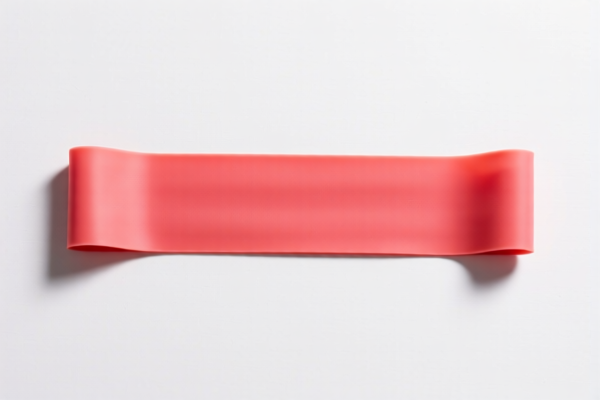
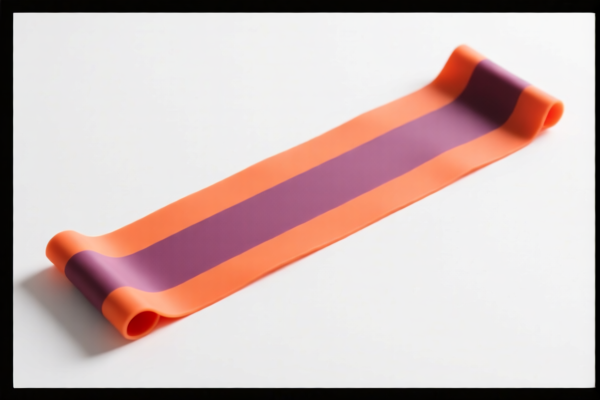


AI Analysis
🍑 New Hip Resistance Band: HS Code Guide & 2026 Clearance Strategy
🌐 HS Code Reference & Clearance Guide | 2026 Tariff Breakdown | Professional Strategy
📌 I. Product Definition & Classification: What Exactly is a "Hip Resistance Band"?
The New Hip Resistance Band is a popular fitness tool designed to target glute and hip muscles through elastic resistance. In international trade, its classification depends heavily on material composition and primary function:
Material-Based Scenarios: * Rubber/Textile-Protected Cord: A cord made of rubber or elastic material, often wrapped in fabric or covering. * Elastic Plastic (TPE/Latex) Strap: A flat or tubular band made of synthetic elastic plastic (like TPE or Thermoplastic Elastomer). * General Fitness Equipment: A finished elastic band intended specifically for gym/fitness use, potentially categorized under "General Sports Equipment."
⚠️ Critical Classification Point:
- Is it a simple rubber cord with a fabric cover? → Likely 5604.90.90.00.
- Is it a flat plastic/elastic strap (TPE)? → Likely 3926.90.99.05.
- Is it a dedicated fitness item made of plastic/rubber? → Likely 3926.90.59.00.
- Is it marketed broadly as general sports equipment? → Likely 9506.91.00.30.
📦 II. HS Code Classification Details (2026 Tariff Authority)
| HS Code | Product Description | Material/Feature | Usage Scenario |
|---|---|---|---|
5604.90.90.00 |
Rubber threads/cords, covered with textile (other) | Rubber core + Textile covering | Traditional fabric-covered resistance bands |
3926.90.99.05 |
Elastic bands, made of plastic (TPE/Latex) | TPE, Thermoplastic Elastomer, or Latex | Flat or tubular elastic straps for fitness |
3926.90.59.00 |
Other plastic articles for fitness | Rubber/Plastic composite | Specific fitness equipment not elsewhere classified |
9506.91.00.30 |
General Sports Equipment (Fitness) | Rubber/TPE | General training bands, marketed for gym use |
🔍 Key Takeaway:
The classification shifts from textile/rubber (5604) to plastic (3926) to sports equipment (9506).
9506.91.00.30is often the most accurate for finished fitness bands, but3926variants carry higher "Section 301" (Section 122) tariffs in specific scenarios.
💰 III. 2026 Latest Tariff Rate Breakdown (Including Surcharges & Policy Add-ons)
✅ Applicable Market: United States (US)
✅ Origin: China (CN)
✅ Effective Date: Current (Post-2025 adjustments)
🎯 1. 5604.90.90.00 — Rubber Threads/Cords (Textile-Covered)
| Item | Content |
|---|---|
| Base Duty | 5.0% |
| Section 301 Add-on | +25.0% |
| Section 122 Tariff | +10.0% |
| Total Tax Rate | 40.0% |
| Tax Calculation | CIF Value × 40% |
| De Minimis Exemption | ❌ NO (Denied) |
| Legal Path | 301 → 122 → 5604.90.90.00 |
📌 Explanation:
- This category often targets rubber/elastic materials used in textiles.
- The 40% total tax includes the base 5%, the Section 301 "add-on" (25%), and the specific Section 122 tariff (10%).
- High cost warning: This is a very expensive classification for rubber-based bands.
🎯 2. 3926.90.99.05 — Elastic Plastic Bands (TPE/Latex)
| Item | Content |
|---|---|
| Base Duty | 5.3% |
| Section 301 Add-on | +7.5% |
| Section 122 Tariff | +10.0% |
| Total Tax Rate | 22.8% |
| Tax Calculation | CIF Value × 22.8% |
| De Minimis Exemption | ❌ NO |
| Legal Path | 301 → 122 → 3926.90.99.05 |
📌 Explanation:
- For TPE (Thermoplastic Elastomer) or Latex bands.
- 22.8% total tax is significantly lower than the rubber-textile category (40%).
- This is often the most cost-effective route if the band is clearly made of TPE/plastic.
🎯 3. 3926.90.59.00 — Other Plastic Fitness Articles
| Item | Content |
|---|---|
| Base Duty | 2.4% |
| Section 301 Add-on | +25.0% |
| Section 122 Tariff | +10.0% |
| Total Tax Rate | 37.4% |
| Tax Calculation | CIF Value × 37.4% |
| De Minimis Exemption | ❌ NO |
| Legal Path | 301 → 122 → 3926.90.59.00 |
📌 Explanation:
- "Other" plastic articles for fitness.
- Despite a low base rate (2.4%), the 25% Section 301 add-on makes this category expensive (37.4%).
- Caution: Only use if the product clearly fits "non-specific plastic" but not TPE straps.
🎯 4. 9506.91.00.30 — General Sports Equipment (Fitness)
| Item | Content |
|---|---|
| Base Duty | 4.6% |
| Section 301 Add-on | +7.5% |
| Section 122 Tariff | +10.0% |
| Steel/Aluminum/Copper Add-on | +50.0% (If applicable) |
| Total Tax Rate | 22.1% (Standard) |
| Tax Calculation | CIF Value × 22.1% |
| De Minimis Exemption | ❌ NO |
| Legal Path | 301 → 122 → 9506.91.00.30 |
📌 Explanation:
- The Best Rate (22.1%) for finished fitness bands if classified as "General Sports Equipment."
- WARNING: If the band contains steel, aluminum, or copper components (e.g., metal rings, clips), the 50% surcharge applies, skyrocketing the tax to >70%.
- Recommendation: Ensure the product is purely elastic/plastic/rubber without metal parts to stay at 22.1%.
🛠️ IV. Clearance Practical Advice (Actionable Strategy)
✅ 1. Preparation Checklist (Must-Haves)
| Document | Required? | Why? |
|---|---|---|
| ✅ Product Specs | ✔️ | Must state material (TPE vs. Rubber vs. Latex) clearly. |
| ✅ Material Declaration | ✔️ | Crucial for distinguishing 3926 (Plastic) vs. 5604 (Rubber). |
| ✅ Product Photos | ✔️ | Show no metal parts (to avoid 50% steel surcharge). |
| ✅ Usage Description | ✔️ | "Hip Resistance Band for Glute Training" supports 9506. |
| ✅ Commercial Invoice | ✔️ | Must accurately reflect HS Code and value. |
✅ 2. Declaration Tips (The Golden Rules)
🔥 口诀: "TPE is 22%, Rubber is 40%, No Metal = 22%!"
| Scenario | Correct HS Code | Risk |
|---|---|---|
| TPE/Latex Flat Band | 3926.90.99.05 |
Low Risk (22.8%) |
| Fabric-Covered Rubber Cord | 5604.90.90.00 |
High Risk (40%) |
| Fitness Band (No Metal) | 9506.91.00.30 |
Best Option (22.1%) |
| Band with Metal Rings | 9506.91.00.30 |
EXTREME Risk (22% + 50% = 72%!) |
✅ 3. Special Situation Handling
| Situation | Strategy |
|---|---|
| OEM Custom Bands | Clearly state "Elastic Resistance Band" in description, avoid vague terms. |
| Mixed Materials | If it's TPE + Fabric, lean towards 3926 (Plastic) as the primary functional material, but be prepared for audit. |
| Metal Hardware | DO NOT use 9506 if metal parts are present. Re-evaluate for 3926 or 5604. |
| Small Value Shipments | No de minimis exemption applies for China-origin goods; tax is mandatory. |
🌍 V. Global Market Comparison (2026)
| Country/Region | Recommended HS Code | Tariff (China Origin) | Notes |
|---|---|---|---|
| 🇺🇸 USA | 9506.91.00.30 |
22.1% | Best rate if no metal. |
| 🇨🇳 China | 9506.91.00.30 |
~5-10% | Low base rate, no Section 301. |
| 🇪🇺 EU | 9506.91.00.30 |
0-3% | Generally low duties, no Section 301. |
| 🇯🇵 Japan | 9506.91.00.30 |
0-4% | Low duties, focus on safety standards. |
📌 Conclusion:
- USA is the only market with heavy Section 301 (25%) and Section 122 (10%) tariffs.
- Avoid5604in the US market unless necessary; it incurs 40% tax.
- Prioritize9506.91.00.30for fitness bands, but strictly exclude metal parts.
📌 VI. Common Mistakes & Pitfalls (Avoid These!)
❌ Mistake 1: Misidentifying Material
👉 Error: Calling TPE "Rubber" → Shifts from 3926 (22.8%) to 5604 (40%).
👉 Fix: Use technical terms: "Thermoplastic Elastomer (TPE)".
❌ Mistake 2: Hidden Metal Parts
👉 Error: Using 9506 for a band with metal D-rings → Triggers 50% steel surcharge.
👉 Fix: Remove metal or switch to 3926 classification (check if metal parts disqualify 9506).
❌ Mistake 3: Vague Description
👉 Error: "Elastic Band" → Ambiguous.
👉 Fix: "Hip Resistance Band, 100% TPE, For Fitness Training".
🎯 VII. Final Verdict: Smart Clearance Strategy
🎯 Action Plan:
1. Confirm Material: Is it TPE (Best) or Rubber?
2. Check for Metal: If NO METAL, aim for 9506.91.00.30 (22.1%).
3. If TPE but no 9506: Use 3926.90.99.05 (22.8%).
4. Avoid 5604 unless it's strictly fabric-covered rubber cord (40% tax).
🔹 "TPE + No Metal = 22.1% / 22.8%"
🔹 "Rubber + Fabric = 40%"
🔹 "Metal Ring = 72% Disaster!"
📌 Pro Tip:
If your product is purely TPE and marketed for fitness, 9506.91.00.30 is your golden ticket.
However, if the supplier claims "High-quality Rubber," you might be stuck at 40%. Get a material certificate!
📣 Next Step:
📞 Verify Material Certificates + Check for Metal Components
🚀 File with9506.91.00.30(if eligible) for maximum savings!
✨ Precise Classification Saves 17%+!
💼 Don't let a metal ring or wrong material name cost you your margin!
Customer Reviews
About HS Code Classification
The Harmonized System (HS) is an internationally standardized nomenclature developed by the World Customs Organization (WCO) to classify traded products. Over 200 countries use the HS system as the basis for customs tariffs, trade statistics, and import/export regulations.
Each HS code follows a hierarchical structure:
- Chapter (2 digits) — Broad category of goods (e.g., Chapter 84: Machinery and Mechanical Appliances)
- Heading (4 digits) — More specific grouping within the chapter
- Subheading (6 digits) — Internationally standardized breakdown, used by all WCO member countries
- National subdivisions (8-10 digits) — Country-specific extensions for further classification, such as US HTSUS 10-digit codes
Correct HS code classification is essential for smooth customs clearance, accurate duty payment, and compliance with trade regulations. Misclassification can lead to customs delays, overpayment of duties, or penalties.
When importing from CN to US, the applicable tariff rates may include:
- Most-Favored-Nation (MFN) rate — The standard duty rate applied to WTO members
- General rate — Applied to countries without trade agreements
- Trade remedy duties — Additional tariffs such as Section 301 (anti-dumping), Section 232 (national security), or countervailing duties
The information provided on this page is for reference purposes only. For official classification, please consult with your local customs authority or a licensed customs broker.