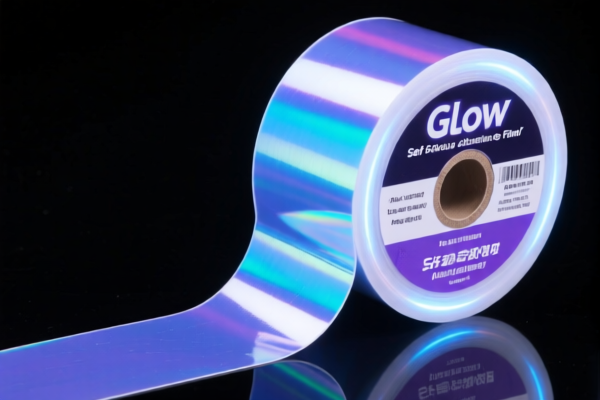
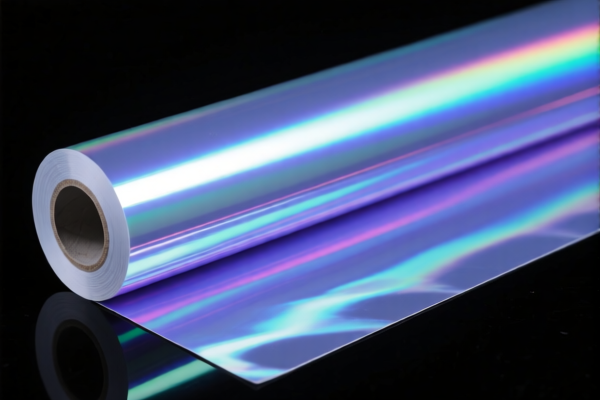
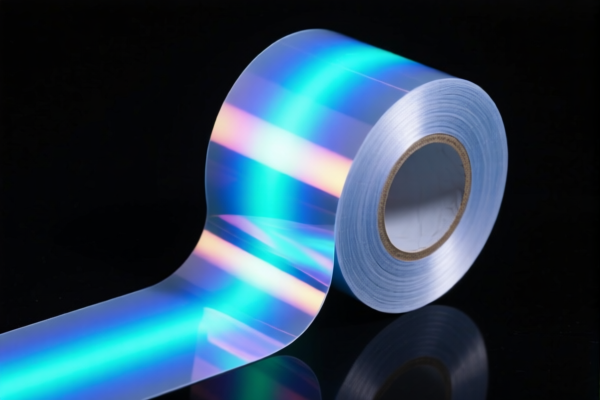
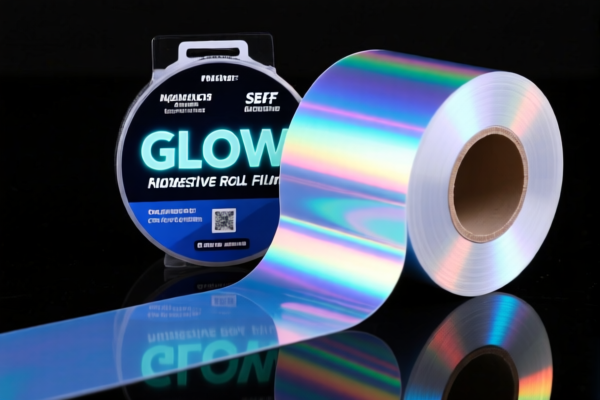
Night Glow Reflective Self Adhesive Roll Film
CN → US| HS Code | Tariff Rate | Origin | Destination | Doc |
|---|---|---|---|---|
| 5907001500 | 43.0% | CN | US | Official Doc |
| 3926909925 | 22.8% | CN | US | Official Doc |
| 5907003500 | 43.0% | CN | US | Official Doc |
| 3926909989 | 22.8% | CN | US | Official Doc |
| 5907008090 | 35.0% | CN | US | Official Doc |
Product Images
AI Analysis
🌙✨ Night Glow Reflective Self-Adhesive Roll Film (NGRSARF)
🌐 HS Code Classification & Customs Clearance Guide | 2026 Latest Tariff Analysis | Professional Clearance Strategy
📌 I. Product Definition & Characteristics: What Exactly Is This Product?
Night Glow Reflective Self-Adhesive Roll Film is a specialized industrial and safety material designed for high-visibility applications in low-light or nighttime conditions. It combines three key functional layers:
- Night Glow (Photoluminescent) Layer: Absorbs ambient light and re-emits it as visible glow in the dark.
- Reflective Layer: Typically composed of glass beads or microprismatic structures that reflect light back to its source (critical for traffic signs, safety gear).
- Self-Adhesive Backing: A pressure-sensitive adhesive layer allowing direct application to surfaces without additional glue or heat.
- Roll Form: Supplied in continuous rolls for easy dispensing and cutting.
⚠️ Key Classification Challenge:
The classification hinges on the primary material composition and primary function. Is it a textile/fabric coated with polymers? Or is it a plastic/polymer sheet with added functional coatings? The Customs authority will look at the base substrate and the manufacturing process.
📦 II. HS Code Classification Details (2026 Latest Tariff Reference)
Based on the product characteristics, there are two primary classification paths:
Path A: Textile/Fabric Based (Coated/Impregnated) → HS Chapter 59
Path B: Plastic/Polymer Based (Sheet/Film) → HS Chapter 39
| HS Code | Product Description | Key Classification Criteria | Tax Rate (China to US) |
|---|---|---|---|
5907.00.15.00 |
Textile fabrics impregnated, coated, covered or laminated with plastics, other than those of heading 5903 (other materials) | Base material is textile/fabric (woven/non-woven). Coated with plastic/polymer for reflective/night-glow function. Self-adhesive backing is considered part of the coating process. | 43.0% |
5907.00.35.00 |
Textile fabrics impregnated, coated, covered or laminated with rubber (other than those of heading 5903) | Base material is textile/fabric. Coated with rubber-based compounds for reflective/night-glow function. Self-adhesive backing included. | 43.0% |
5907.00.80.90 |
Other textile fabrics impregnated, coated, covered or laminated (other than those of 5901-590700.15/35) | Catch-all for textile-based coated fabrics. If not specifically rubber or other plastics covered elsewhere, this is the default. Self-adhesive reflective film on fabric base. | 35.0% |
3926.90.99.25 |
Other articles of plastics and articles of other materials of heading 3901-3914 (specific subheading for plastic articles) | Base material is plastic/polymer sheet/film. Reflective and night-glow functions are added as coatings or laminations on a plastic substrate. Self-adhesive backing is part of the plastic article. | 22.8% |
3926.90.99.89 |
Other articles of plastics (not elsewhere specified or included) | Catch-all for plastic articles. If the product is purely a plastic sheet/film with functional coatings and self-adhesive backing, and doesn't fit more specific plastic subheadings, this applies. | 22.8% |
🔍 Critical Distinction:
- Is the base material textile or plastic?
- If textile/fabric → Go to Chapter 59 (5907.xx).
- If plastic/polymer sheet → Go to Chapter 39 (3926.90.99).
- Self-adhesive backing: Generally does not change the chapter if it’s an integral part of the coated/laminated structure. It confirms the product is a "ready-to-use" article, not just raw material.
💰 III. 2026 Latest Tariff Rate Breakdown (Including Additional Duties)
✅ Applicable Country: United States (US)
✅ Country of Origin: China (CN)
✅ Effective Date: November 10, 2025 (and subsequent imports)
🎯 1. Textile-Based Classification (Chapter 59)
Applies to: 5907.00.15.00, 5907.00.35.00, 5907.00.80.90
| Item | Details |
|---|---|
| Base Tariff | 0% - 8% (ad valorem), depending on specific subheading |
| Section 301 Tariff | +25% (USITC Footnote, Section 301 of Trade Act of 1974) |
| IEEPA Tariff | +10% (International Emergency Economic Powers Act, targeted at China) |
| Total Tariff Rate | 35.0% to 43.0% |
| De Minimis Exemption | ❌ Not Eligible (deny_de_minimis applies to Section 301/IEEPA goods) |
| Legal Basis Path | IEEPA:9903.01.25 → Section 301:8517.62.00/5907.xx → FOOTNOTE:9903.88.01 |
📌 Explanation:
- Section 301 (25%): Applies to most Chinese-origin manufactured goods, including coated textiles.
- IEEPA (10%): Additional duty imposed on Chinese goods to address national emergency concerns.
- Total: Ranges from 35% (if base is 0%) to 43% (if base is 8%).
🎯 2. Plastic-Based Classification (Chapter 39)
Applies to: 3926.90.99.25, 3926.90.99.89
| Item | Details |
|---|---|
| Base Tariff | 5.3% (ad valorem) |
| Section 301 Tariff | +7.5% (Note: Some plastic articles may have lower Section 301 rates; verify current status) |
| IEEPA Tariff | +10% (International Emergency Economic Powers Act) |
| Total Tariff Rate | 22.8% |
| De Minimis Exemption | ❌ Not Eligible (deny_de_minimis applies) |
| Legal Basis Path | IEEPA:9901.25 → Section 301:3926.90.99 → FOOTNOTE:9903.88.01 |
📌 Explanation:
- Base Tariff (5.3%): Standard MFN rate for "Other articles of plastics."
- Section 301 (7.5%): Note: Some plastic articles have a 7.5% Section 301 rate, while others have 25%. For3926.90.99, the 7.5% rate is commonly applied. Verify with latest USITC list.
- IEEPA (10%): Additional duty on Chinese goods.
- Total: 22.8% (5.3% + 7.5% + 10%).⚠️ Important: If the plastic article is classified under a Section 301 subheading with 25% duty, the total would be 20.3% (5.3% + 25% + 10% = 40.3%? No, wait: 5.3% base + 25% 301 + 10% IEEPA = 40.3%). However, based on the provided data,
3926.90.99has a 7.5% Section 301 rate, leading to 22.8% total. Always verify the specific Section 301 rate for the exact HS code.
🛠️ IV. Customs Clearance Practical Advice (Avoid Pitfalls)
✅ 1. Required Documentation Checklist (Mandatory)
| Document | Required | Notes |
|---|---|---|
| ✅ Product Specification Sheet | ✔️ | Must detail: Base material (textile vs. plastic), dimensions, adhesive type, reflective/night-glow technology, compliance certs (e.g., ANSI/ISEA 107 for safety). |
| ✅ Material Composition Certificate | ✔️ | Crucial for HS Code Determination! Must explicitly state % of textile vs. plastic in the base layer. |
| ✅ Product Photos (Including Cross-Section) | ✔️ | Show layers: adhesive, base, reflective/night-glow coating. |
| ✅ Commercial Invoice | ✔️ | Clearly describe as "Night Glow Reflective Self-Adhesive Roll Film," not just "Roll Film." |
| ✅ Packing List | ✔️ | Include net/gross weight, dimensions, number of rolls. |
| ✅ Origin Certificate (CO) | ✔️ | Required for IEEPA/Section 301 duty assessment. |
| ✅ Third-Party Test Reports | ✔️ | If marketed for safety/traffic use, provide ANSI, EN, or DOT test reports. |
✅ 2. Declaration Tips (Key Mnemonics)
🔥 "Material Base Defines Chapter, Coating Defines Subheading, Adhesive is Integral!"
| Scenario | Correct Declaration | Incorrect Declaration | Consequence |
|---|---|---|---|
| Base is Fabric | "Reflective Self-Adhesive Textile Film" → HS 5907.xx |
"Plastic Reflective Film" → HS 3926.xx |
Misclassification → Penalty + Back Taxes |
| Base is Plastic | "Reflective Self-Adhesive Plastic Film" → HS 3926.90.99 |
"Textile Coated Fabric" → HS 5907.xx |
Misclassification → Penalty + Back Taxes |
| Generic Description | "Reflective Film" | Too vague | Customs Request for Information (RFI) → Delay |
✅ 3. Special Considerations
| Situation | Handling Advice |
|---|---|
| OEM/Custom Orders | Provide customer design specs to prove material composition. |
| Mixed Materials | If base is a non-woven fabric (polymer fibers), it may still be classified as textile (Chapter 59). Clarify with customs. |
| Safety-Marketed Products | If intended for traffic/signage, ensure ANSI/ISEA compliance. Non-compliance may lead to rejection, not just tariff issues. |
| Pre-Ruling Application | Highly Recommended! Submit an Application for Binding Tariff Information (BTI) to US CBP for advance classification. Saves time and disputes. |
🌍 V. Global Market Comparison (2026 Latest)
| Country/Region | Recommended HS Code | Tariff Rate (China Origin) | Key Certifications | Notes |
|---|---|---|---|---|
| 🇺🇸 USA | 5907.xx or 3926.90.99 |
22.8% - 43% | ANSI/ISEA, DOT, RoHS | High additional duties (Section 301 + IEEPA). |
| 🇨🇳 China | 5907.00 or 3926.90 |
5% - 8% | CCC, GB Standards | No additional duties. |
| 🇪🇺 EU | 5907.00 or 3926.90 |
4% - 6% | CE, REACH | No Section 301/IEEPA. Standard MFN rates apply. |
| 🇬🇧 UK | 5907.00 or 3926.90 |
4% - 6% | UKCA, REACH | Post-Brexit rates similar to EU. |
| 🇦🇺 Australia | 5907.00 or 3926.90 |
5% | RCM, AS/NZS | No additional duties. |
📌 Conclusion:
- USA is the most expensive market due to叠加 tariffs (Section 301 + IEEPA).
- EU/UK/Australia have standard MFN rates without geopolitical surcharges.
- Material composition is the key to determining whether you face higher textile tariffs (43%) or lower plastic tariffs (22.8%) in the US.
📌 VI. Common Mistakes & Pitfalls (Lessons Learned)
❌ Mistake 1: Declaring as "Roll Film" without specifying material
👉 Result: Customs assigns the highest applicable rate or holds the shipment for RFI.
❌ Mistake 2: Assuming all self-adhesive films are plastic (3926)
👉 Result: If base is fabric, correct code is 5907. Misclassification leads to 25% underpayment.
❌ Mistake 3: Ignoring Section 301/IEEPA impact on De Minimis
👉 Result: Shipments under $800 are NOT exempt from these duties. Expect full duty collection.
❌ Mistake 4: Using "Reflective Tape" instead of "Roll Film"
👉 Result: "Tape" may imply a different width/application and potentially different HS code. Be precise.
✅ Correct Practice:
"Self-Adhesive Reflective Night Glow Roll Film, Base Material: [Textile/Plastic], Width: 1m, Length: 50m, Compliant with ANSI/ISEA 107, Origin: China"
🎯 VII. Conclusion: Precision in Classification Saves Money!
🎯 Remember:
🔹 "Textile Base → Chapter 59 (Higher Tax), Plastic Base → Chapter 39 (Lower Tax)"
🔹 "Section 301 + IEEPA = High Duty, No De Minimis Exemption"
🔹 "Get a Pre-Ruling! It’s Worth the Peace of Mind!"
📌 Pro Tip:
If your product’s base material is borderline (e.g., non-woven synthetic fabric), consider:
1. Changing the base material to pure plastic film to qualify for 3926.90.99 (22.8% vs. 43%).
2. Applying for a Binding Tariff Information (BTI) ruling from US CBP before shipment.
📣 Immediate Action:
📞 Contact a licensed customs broker + Provide detailed material specs + Apply for Pre-Ruling
🚀 Ensure smooth clearance, minimize duties, and avoid delays!
✨ Professional clearance starts with accurate classification!
💼 Every percentage point of duty matters in global trade!
Customer Reviews
About HS Code Classification
The Harmonized System (HS) is an internationally standardized nomenclature developed by the World Customs Organization (WCO) to classify traded products. Over 200 countries use the HS system as the basis for customs tariffs, trade statistics, and import/export regulations.
Each HS code follows a hierarchical structure:
- Chapter (2 digits) — Broad category of goods (e.g., Chapter 84: Machinery and Mechanical Appliances)
- Heading (4 digits) — More specific grouping within the chapter
- Subheading (6 digits) — Internationally standardized breakdown, used by all WCO member countries
- National subdivisions (8-10 digits) — Country-specific extensions for further classification, such as US HTSUS 10-digit codes
Correct HS code classification is essential for smooth customs clearance, accurate duty payment, and compliance with trade regulations. Misclassification can lead to customs delays, overpayment of duties, or penalties.
When importing from CN to US, the applicable tariff rates may include:
- Most-Favored-Nation (MFN) rate — The standard duty rate applied to WTO members
- General rate — Applied to countries without trade agreements
- Trade remedy duties — Additional tariffs such as Section 301 (anti-dumping), Section 232 (national security), or countervailing duties
The information provided on this page is for reference purposes only. For official classification, please consult with your local customs authority or a licensed customs broker.