Night Light Flashlight
CN → US| HS Code | Tariff Rate | Origin | Destination | Doc |
|---|---|---|---|---|
| 9405298010 | 38.9% | CN | US | Official Doc |
| 8513102000 | 22.5% | CN | US | Official Doc |
| 8513104000 | 13.5% | CN | US | Official Doc |
| 9503000090 | 10.0% | CN | US | Official Doc |
| 9405198010 | 38.9% | CN | US | Official Doc |
Product Images
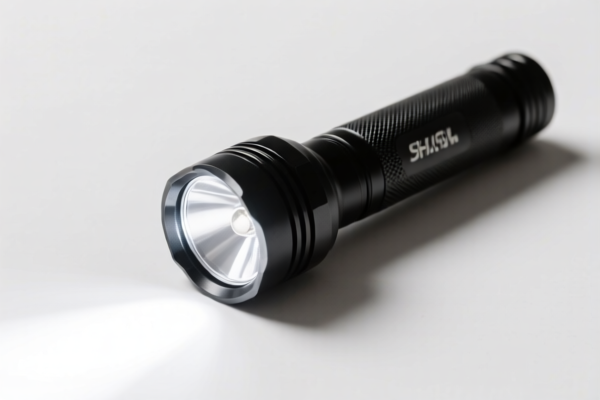
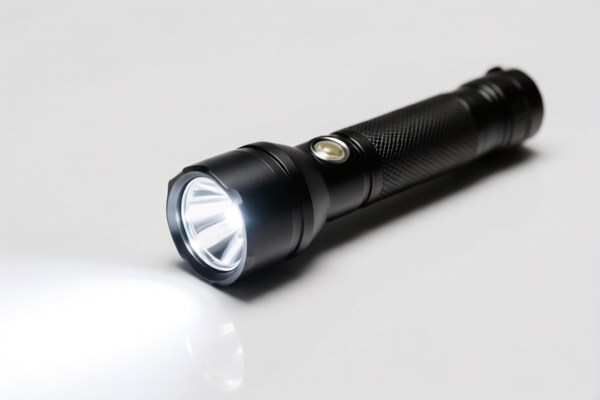
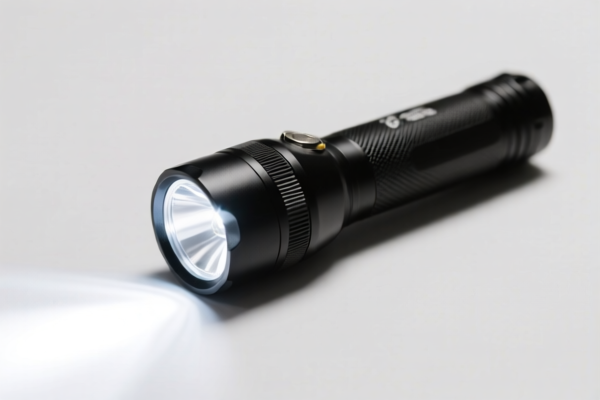
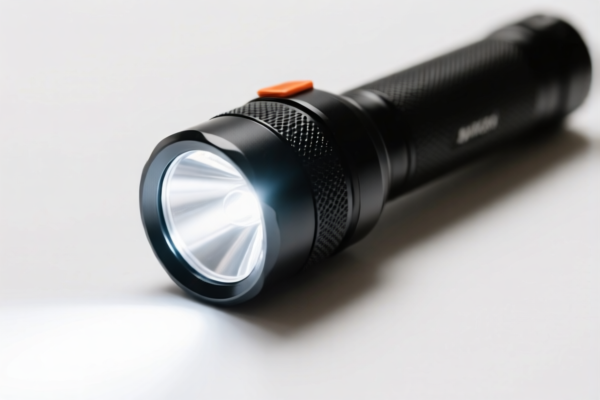
AI Analysis
🔦 Night Light Flashlight (Portable Lighting Devices)
🌐 HS Code Reference & Clearance Guide | 2026 Latest Tariff Analysis | Professional Customs Strategy
📌 I. Product Definition: What is a "Night Light Flashlight"?
A "Night Light Flashlight" is a dual-purpose portable lighting device. In international trade, its classification depends heavily on its primary function and design intent:
- Portable Electric Lamp: If the device is designed primarily for illumination (e.g., camping, emergency, task lighting) and may have dimming features for "night light" use.
- Toy/Decorative Light: If the device is designed primarily as a children’s toy, novelty item, or decorative object, where lighting is secondary to form or play.
- Home Lighting Fixture: If the device is intended for permanent or semi-permanent installation in the home (e.g., plugged-in, sensor-activated) rather than handheld portability.
⚠️ Key Distinction Point:
- If it is handheld, battery-operated, and used for general illumination → Likely 8513 (Portable Electric Lamps).
- If it is a stationary or plug-in unit for home ambiance → Likely 9405 (Lamps & Lighting Fittings).
- If it is sold as a toy or ornament → Likely 9503 (Toys) or 9405 (Decorative Lights).
📦 II. HS Code Classification Details (2026 Tariff Data)
Based on the provided dataset, here are the five potential HS Codes with their specific rationales:
| HS Code | Product Description | Rationale from Data |
|---|---|---|
9405.29.80.10 |
Other electric lamps and lighting fittings, non-portable (Home Lighting) | "Night light belongs to lighting fixtures, fits household lighting appliance use, no material conflict." |
8513.10.20.00 |
Portable electric lamps, battery-operated | "Night light belongs to portable electric lamps, fits lighting equipment use, no material or form conflict." |
8513.10.40.00 |
Other portable electric lamps | "Night light fits electric lamps for illumination, inferred to have portable or self-contained energy attributes based on common sense." |
9503.00.00.90 |
Other toys, put up sets, assembled kits | "Night light belongs to lamp-type toys or decorations, fits the residual definition for categories not explicitly subdivided." |
9405.19.80.10 |
Lamps fitted with fluorescent tubes (or general home lamps) | "Night light belongs to household lighting lamps, form and use consistent, inferred to be an electric light source product based on common sense." |
🔍 Key Takeaway:
The choice between 8513 (Portable) and 9405 (Home/Decor) is critical for duty savings. 9503 offers the lowest tariff but carries high scrutiny if the product is not marketed strictly as a toy.
💰 III. 2026 Latest Tariff Rate Details (Detailed Breakdown)
✅ Applicable Country: United States (US)
✅ Origin: China (CN)
✅ Effective Date: 2025-11-10 onwards (for subsequent imports)
🎯 1. 9405.29.80.10 & 9405.19.80.10 —— Home Lighting Fittings (High Risk)
These codes classify the item as a stationary or semi-permanent household lamp.
| Item | Detail |
|---|---|
| Base Tariff | 3.9% |
| Section 301 (Add-on Tariff) | +25.0% |
| Section 122 Tariff | +10.0% |
| Total Tariff Rate | 38.9% |
| Tax Calculation | CIF Value × 38.9% |
| De Minimis Exemption? | ❌ No |
| Legal Basis | High duty burden due to Section 301 and Section 122 additions. |
📌 Explanation:
- These codes are subject to the highest combined tariffs.
- The 25% Section 301 tariff is a major cost driver.
- The 10% Section 122 tariff adds further burden.
- Result: A 38.9% total duty makes these codes expensive for importers.
🎯 2. 8513.10.20.00 —— Portable Electric Lamps (Battery Operated)
This code classifies the item as a standard portable flashlight or lantern.
| Item | Detail |
|---|---|
| Base Tariff | 12.5% |
| Section 301 (Add-on Tariff) | 0.0% |
| Section 122 Tariff | +10.0% |
| Total Tariff Rate | 22.5% |
| Tax Calculation | CIF Value × 22.5% |
| De Minimis Exemption? | ❌ No |
| Legal Basis | IEEPA:9903.01.10 (if applicable) + Base Rate + Sec 122. |
📌 Explanation:
- The Section 301 (25%) tariff does NOT apply to this code (0% add-on).
- However, the Base Tariff is high (12.5%).
- The 10% Section 122 still applies.
- Result: 22.5% is significantly cheaper than the 38.9% home lighting codes.
🎯 3. 8513.10.40.00 —— Other Portable Electric Lamps (Lowest Duty)
This code captures other portable electric lamps not elsewhere specified.
| Item | Detail |
|---|---|
| Base Tariff | 3.5% |
| Section 301 (Add-on Tariff) | 0.0% |
| Section 122 Tariff | +10.0% |
| Total Tariff Rate | 13.5% |
| Tax Calculation | CIF Value × 13.5% |
| De Minimis Exemption? | ❌ No |
| Legal Basis | Lowest base rate among lighting categories. |
📌 Explanation:
- Lowest Base Rate (3.5%).
- No Section 301 Tariff (0%).
- Only the 10% Section 122 applies.
- Result: 13.5% is the most cost-effective classification if the product qualifies as a "portable electric lamp."
🎯 4. 9503.00.00.90 —— Toys/Decorations (Lowest Absolute Cost)
This code classifies the item as a toy or novelty decoration.
| Item | Detail |
|---|---|
| Base Tariff | 0.0% |
| Section 301 (Add-on Tariff) | 0.0% |
| Section 122 Tariff | +10.0% |
| Total Tariff Rate | 10.0% |
| Tax Calculation | CIF Value × 10.0% |
| De Minimis Exemption? | ❌ No |
| Legal Basis | Toy/Decoration category. |
📌 Explanation:
- Zero Base Tariff.
- Zero Section 301 Tariff.
- Only the 10% Section 122 applies.
- Result: 10.0% is the lowest total duty.
- ⚠️ Risk: US Customs may reclassify this as a lighting device (8513or9405) if the product is not clearly marketed as a toy, leading to back taxes and penalties.
🛠️ IV. Customs Clearance Practical Advice (Pitfall Avoidance Guide)
✅ 1. Documentation Checklist (Essential)
| Document | Required | Description |
|---|---|---|
| ✅ Product Specification Sheet | ✔️ | Must detail dimensions, power source (battery/plug), light output (lumens), and intended use. |
| ✅ Marketing Materials/Packaging | ✔️ | Crucial for 9503. If packaging says "For Kids" or "Toy," it supports toy classification. If it says "Emergency Flashlight," it supports 8513. |
| ✅ Product Photos (Including Label) | ✔️ | Clear view of model number, voltage, wattage, and any safety marks (FCC, UL). |
| ✅ FCC Certification | ✔️ | Required for all electronic devices emitting radio frequency or containing circuits. |
| ✅ Commercial Invoice | ✔️ | Must accurately describe the item as "Portable Electric Lamp" or "Toy Light," matching the HS Code. |
| ✅ Packing List | ✔️ | Must match the invoice and show contents clearly. |
✅ 2. Declaration Strategy (Key Mantra)
🔥 “Define Purpose First, Match Code Second, Avoid Misclassification!”
| Scenario | Recommended HS Code | Reasoning |
|---|---|---|
| Handheld, Battery-Operated, for Light | 8513.10.40.00 |
Best balance of duty (13.5%) and low risk. |
| Child’s Toy, Novelty Shape, Simple Light | 9503.00.00.90 |
Lowest duty (10.0%) but high scrutiny. |
| Plug-in, Home Decor, Sensor-Activated | 9405.29.80.10 |
High duty (38.9%) but accurate for stationary home use. |
| Flashlight with Dimming for Night Use | 8513.10.20.00 |
Intermediate duty (22.5%) if it’s a standard portable lamp. |
⚠️ Critical Warning:
- Do NOT declare a high-tech flashlight as a toy (9503) to save duty. Customs will likely reclassify it, resulting in back taxes + penalties.
- Do NOT declare a simple night light as a portable lamp (8513) if it is clearly a plug-in fixture; this may lead to delays.
✅ 3. Special Circumstances
| Situation | Advice |
|---|---|
| Product is Both Toy and Light | Market it explicitly as a "Toy" with packaging and instructions targeting children. Use 9503. |
| Product is High-End Flashlight | Use 8513. It is too functional to be a toy, and misclassification risks are too high. |
| Product is Plug-In Home Decor | Use 9405. Accept the higher duty (38.9%) as it is the legally correct classification. |
🌍 V. Global Market Comparison (2026 Latest)
| Country/Region | Recommended HS Code | Tariff (China Origin) | Notes |
|---|---|---|---|
| 🇺🇸 USA | 8513.10.40.00 |
13.5% | Best for portable lights. 9503 is 10% but risky. |
| 🇨🇳 China | 8513.10.40.00 |
~5-10% | Import duties may vary; check latest Chinese tariff schedule. |
| 🇪🇺 EU | 8513.10.40.00 |
0-4% | Generally low duties for portable electric lamps. |
| 🇬🇧 UK | 8513.10.40.00 |
0-4% | Post-Brexit, duties are aligned with UK Global Tariff. |
| 🇦🇺 Australia | 8513.10.40.00 |
5% | Low duties, straightforward clearance. |
📌 Conclusion:
- USA is the most complex market due to Section 301 and Section 122 tariffs.
- Portability is the key to lower duties in the US (8513>9405).
- Toy Classification (9503) is the cheapest but requires careful marketing and product design alignment.
📌 VI. Common Errors & Pitfalls (Lessons Learned)
❌ Error 1: Declaring a plug-in night light as a "Portable Flashlight" (8513)
👉 Consequence: Customs may reject the declaration because the product lacks portability features (no battery, or explicitly plug-in). Result: Delay or Rejection.
❌ Error 2: Declaring a functional flashlight as a "Toy" (9503)
👉 Consequence: High risk of reclassification to 8513 or 9405. Result: Back Taxes + Penalties (could be 10-25% more than declared).
❌ Error 3: Ignoring Section 122 Tariff
👉 Consequence: Even if Section 301 is 0%, the 10% Section 122 still applies to most lighting products from China. Result: Underpayment of Duties.
✅ Correct Practice:
"Portable LED Flashlight, Battery Operated, 100 Lumens, Model XYZ, FCC Certified" → HS Code 8513.10.40.00
🎯 VII. Conclusion: Professional Declaration for Cost Efficiency
🎯 Remember the Mantra:
🔹 "Portable = 8513 (13.5%) – Safe & Cheap"
🔹 "Toy = 9503 (10%) – Cheapest but Risky"
🔹 "Home Light = 9405 (38.9%) – Accurate but Expensive"
🔹 "Always Pay Section 122 (10%)"
📌 Tip:
If your product can be reasonably marketed as a toy (e.g., fun shapes, bright colors, simple functions), consider using 9503.00.00.90 for the 10.0% rate. However, ensure your packaging and marketing materials strongly support this classification to avoid customs disputes.
For standard portable flashlights or night lights intended for general use, 8513.10.40.00 at 13.5% is the safest and most cost-effective choice in the US market.
📣 Immediate Action:
📞 Contact a licensed customs broker + Provide product photos + Request an Advance Ruling if unsure about classification.
🚀 Ensure accurate documentation to avoid delays and maximize profit margins!
✨ Professional Customs Clearance Starts with Accurate Classification!
💼 Every percentage point of duty matters to your bottom line!
Customer Reviews
About HS Code Classification
The Harmonized System (HS) is an internationally standardized nomenclature developed by the World Customs Organization (WCO) to classify traded products. Over 200 countries use the HS system as the basis for customs tariffs, trade statistics, and import/export regulations.
Each HS code follows a hierarchical structure:
- Chapter (2 digits) — Broad category of goods (e.g., Chapter 84: Machinery and Mechanical Appliances)
- Heading (4 digits) — More specific grouping within the chapter
- Subheading (6 digits) — Internationally standardized breakdown, used by all WCO member countries
- National subdivisions (8-10 digits) — Country-specific extensions for further classification, such as US HTSUS 10-digit codes
Correct HS code classification is essential for smooth customs clearance, accurate duty payment, and compliance with trade regulations. Misclassification can lead to customs delays, overpayment of duties, or penalties.
When importing from CN to US, the applicable tariff rates may include:
- Most-Favored-Nation (MFN) rate — The standard duty rate applied to WTO members
- General rate — Applied to countries without trade agreements
- Trade remedy duties — Additional tariffs such as Section 301 (anti-dumping), Section 232 (national security), or countervailing duties
The information provided on this page is for reference purposes only. For official classification, please consult with your local customs authority or a licensed customs broker.