Night Lights
CN → US| HS Code | Tariff Rate | Origin | Destination | Doc |
|---|---|---|---|---|
| 9405298010 | 38.9% | CN | US | Official Doc |
| 9405198010 | 38.9% | CN | US | Official Doc |
| 8513102000 | 22.5% | CN | US | Official Doc |
| 8513104000 | 13.5% | CN | US | Official Doc |
| 9503000090 | 10.0% | CN | US | Official Doc |
Product Images
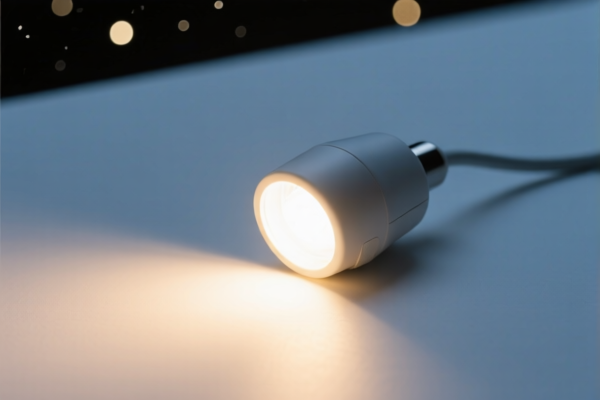
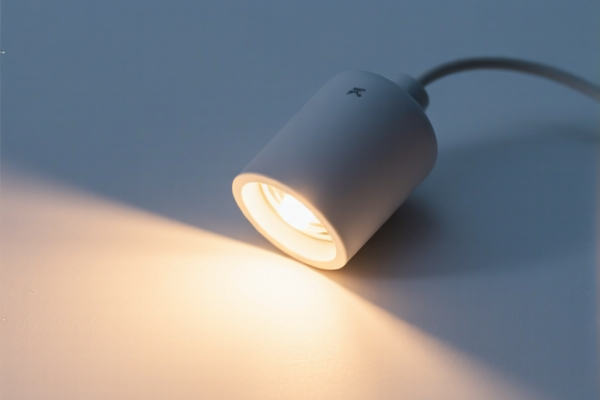
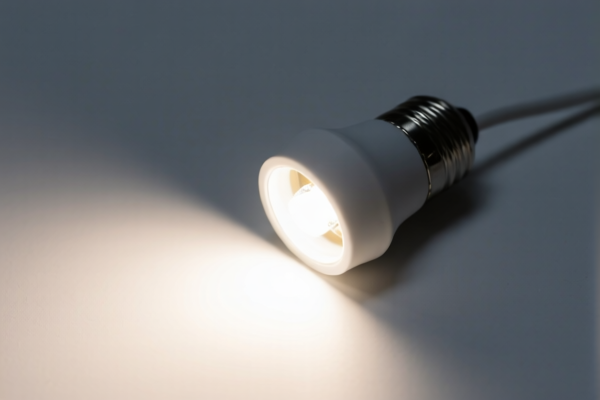
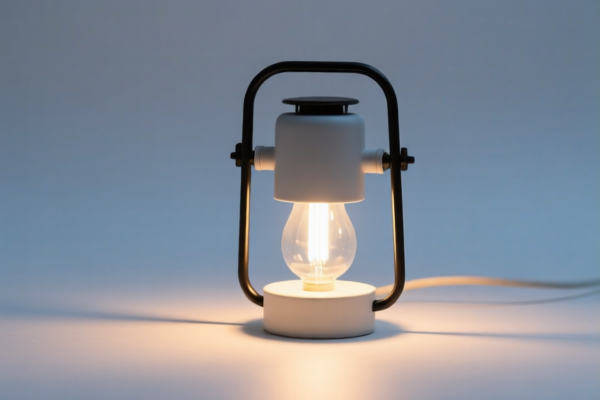
AI Analysis
🌙 Night Lights (Bedside Lamps / Portable Lighting)
🌐 HS Code Reference & Customs Clearance Guide | 2026 Latest Tariff Analysis | Professional Clearance Strategy
📌 I. Product Definition & Classification: What Exactly Is a "Night Light"?
Night lights are small, low-intensity lighting devices primarily used for ambient illumination in bedrooms, hallways, or nurseries. In international trade, they are classified based on their form factor, power source, and portability. The key distinction lies in whether the device is:
- Stationary/Home Use: Plugged into a wall outlet or base, intended for fixed placement (e.g., plug-in LED night lights, decorative bedside lamps).
- Portable/Battery-Operated: Self-contained, battery-powered, or rechargeable, designed to be moved freely (e.g., battery-operated night lights, lantern-style night lights).
⚠️ Key Distinction Point:
- If the night light is a plug-in unit or a fixed decorative lamp without independent portable power → It likely falls under Chapter 94 (Furniture/Lighting Fixtures).
- If the night light is battery-operated or has its own power source (rechargeable) → It falls under Chapter 85 (Electrical Machinery & Portable Electric Lamps).
- If the night light is explicitly designed as a toy or novelty item → It may fall under Chapter 95 (Toys).
📦 II. HS Code Classification Details (2026 Latest Tariff Authoritative Comparison)
| HS Code | Product Description | Application Scenario | Power Source / Portability |
|---|---|---|---|
9405.29.80.10 |
Night lights for domestic use; other electric lamps and lighting fittings | Plug-in night lights, bedside lamps, decorative home lighting | ❌ No (Fixed/Wall Plugged) |
9405.19.80.10 |
Chandeliers and other electric lighting fittings for domestic use | Similar to above; broader category for domestic electric lighting fixtures | ❌ No (Fixed/Wall Plugged) |
8513.10.20.00 |
Portable electric lamps designed to function by their own source of energy | Battery-operated night lights, rechargeable LED night lights | ✅ Yes (Portable/Battery) |
8513.10.40.00 |
Other portable electric lamps designed to function by their own source of energy | Other battery/rechargeable night lights not classified above | ✅ Yes (Portable/Battery) |
9503.00.00.90 |
Other toys; reduced-size ("scale") models and similar recreational models | Night lights sold primarily as toys or children's decorative novelties | ❓ Depends (Toy Classification) |
🔍 Important Reminder:
- Portable vs. Fixed is Critical: If a night light has a battery pack, it MUST be classified under 8513, not 9405, even if it looks like a lamp. Misclassification here leads to significant tariff discrepancies.
- Toy Classification: Only classify under 9503 if the primary characteristic is play value (e.g., a light-up toy animal). If it’s primarily for lighting, use 9405 or 8513.
💰 III. 2026 Latest Tariff Rate Breakdown (Including Surtaxes & Policy Add-ons)
✅ Applicable Country: United States (US)
✅ Country of Origin: China (CN)
✅ Effective Date: From November 10, 2025 (including subsequent imports)
🎯 1. 9405.29.80.10 & 9405.19.80.10 —— Fixed/Plug-In Night Lights (Domestic Use)
| Item | Detail |
|---|---|
| Base Tariff | 3.9% |
| Section 301 Surcharge | +25.0% |
| IEEPA Surtax | +10.0% (122 Clause, targeting Chinese products) |
| Total Tariff Rate | 38.9% |
| Tax Calculation | CIF Value × 38.9% |
| De Minimis Eligibility | ❌ No (deny_de_minimis applies due to high surtaxes) |
| Legal Basis Path | IEEPA:9903.01.25 → USITC:9405.29.80.10 / 9405.19.80.10 → FOOTNOTE:9903.88.01 |
📌 Explanation:
- These goods are classified as "Electric Lamps and Lighting Fittings for Domestic Use."
- The 38.9% rate is composed of the standard MFN duty (3.9%) plus significant trade war tariffs (25% from Section 301 + 10% from IEEPA).
- High Cost Alert: This is a heavy tariff burden. Cost control or supply chain diversification is essential.
🎯 2. 8513.10.20.00 & 8513.10.40.00 —— Portable/Battery-Operated Night Lights
| Item | Detail |
|---|---|
| Base Tariff | 3.5% - 12.5% (varies by sub-category) |
| Section 301 Surcharge | +0.0% (No additional 25% for most portable lamps in this sub-category) |
| IEEPA Surtax | +10.0% (122 Clause) |
| Total Tariff Rate | 13.5% (for 8513.10.40) or 22.5% (for 8513.10.20) |
| Tax Calculation | CIF Value × Total Rate |
| De Minimis Eligibility | ❌ No (deny_de_minimis applies) |
| Legal Basis Path | IEEPA:9903.01.24 → USITC:8513.10.xx.xx |
📌 Note:
- Significant Savings: Portable night lights enjoy a much lower total tariff (13.5% - 22.5%) compared to fixed lamps (38.9%).
- Reason: The 25% Section 301 surcharge does not apply to most portable electric lamps under HS 8513, unlike the 25% that applies to fixed lighting fixtures.
- Strategy: If your product can operate on batteries or be rechargeable, classify under 8513 to save ~15-25% in tariffs.
🎯 3. 9503.00.00.90 —— Night Lights Classified as Toys
| Item | Detail |
|---|---|
| Base Tariff | 0.0% |
| Section 301 Surcharge | +0.0% |
| IEEPA Surtax | +10.0% (122 Clause) |
| Total Tariff Rate | 10.0% |
| Tax Calculation | CIF Value × 10.0% |
| De Minimis Eligibility | ❌ No (deny_de_minimis applies) |
| Legal Basis Path | IEEPA:9903.01.24 → USITC:9503.00.00.90 |
📌 Warning:
- This is the lowest tariff rate (10%), but it carries a high risk of reclassification.
- Customs will scrutinize whether the item is primarily a toy or primarily a light. If sold in a lighting store or marketed for sleep aid, it will likely be reclassified to 9405 or 8513, leading to penalties.
- Only use this classification if the product is explicitly a toy (e.g., a light-up plushie) and meets toy standards.
🛠️ IV. Customs Clearance Practical Advice (Battle-Tested Pitfall Avoidance Guide)
✅ 1. Essential Documentation Checklist (None Can Be Missing)
| Document | Required | Description |
|---|---|---|
| ✅ Product Specifications | ✔️ | Must specify: Power source (Battery/Plug-in), Voltage, Wattage, Dimensions. |
| ✅ Photos (Clear) | ✔️ | Front, back, and label. Show if it has a plug or battery compartment. |
| ✅ Commercial Invoice | ✔️ | Description must match HS code: e.g., "Portable LED Night Light, Battery Operated" vs. "Plug-in Decorative Night Light". |
| ✅ Battery Report (If Portable) | ✔️ | UN38.3, MSDS for lithium-ion batteries. Critical for 8513 classification. |
| ✅ Certifications | ✔️ | FCC (for electronics), CPSC (if marketed to children), UL/ETL (for safety). |
| ✅ Packing List | ✔️ | Detail contents to prove no separate large appliances are included. |
✅ 2. Declaration Strategy (Key Mnemonic)
🔥 "Portable is Cheaper, Fixed is Expensive, Toy is Risky but Low!"
| Scenario | Correct HS Code | Mistake to Avoid |
|---|---|---|
| Battery/Rechargeable Night Light | 8513.10.20.00 or 8513.10.40.00 |
Declaring as 9405 → Pays 38.9% instead of 13.5% |
| Plug-in/Wall Night Light | 9405.29.80.10 or 9405.19.80.10 |
Declaring as 8513 → Misclassification penalty |
| Light-up Toy (e.g., Glow Stick, Light-up Doll) | 9503.00.00.90 |
Declaring as 9405 → Overpaying taxes |
| Plug-in Lamp with Battery Backup | Likely 8513 or 9405 depending on primary function |
Ambiguous declaration → Customs Audit |
✅ 3. Special Handling Cases
| Case | Recommendation |
|---|---|
| OEM Night Lights | Provide design drawings showing power source. If it can be unplugged and run on battery, argue for 8513. |
| Night Light + Sensor | If it’s a motion-sensor night light (battery or plug-in), clarify the power source. Sensor tech doesn’t change HS code; power source does. |
| Children’s Night Light | Ensure CPSC compliance. If it’s a "toy," use 9503. If it’s for sleep, use 9405 or 8513. Do not mix toy and lighting claims ambiguously. |
| Smart Night Lights (Wi-Fi/Bluetooth) | Still classified by physical form. If plug-in → 9405. If portable/battery → 8513. Smart features don’t change the core HS code. |
🌍 V. Global Market Clearance Comparison (2026 Latest)
| Country/Region | Recommended HS Code | Tariff (China Origin) | Certification Requirements | Notes |
|---|---|---|---|---|
| 🇺🇸 USA | 8513.10.40.00 (Portable) |
13.5% | FCC, UL/ETL | Lowest tariff for portable; 38.9% for fixed. |
| 🇨🇳 China | 9405.29.80.10 |
5% | CCC (if applicable) | No surtaxes. Domestic market different. |
| 🇪🇺 EU | 9405.40.30 |
0% - 4% | CE, RoHS, WEEE | No "Trade War" tariffs. Very competitive. |
| 🇬🇧 UK | 9405.40.30 |
0% - 4% | UKCA, RoHS | Post-Brexit standards apply. |
| 🇦🇺 Australia | 9405.40.30 |
5% | RCM, C-Tick | No high surtaxes. |
📌 Conclusion:
- USA is the most expensive market due to Section 301 and IEEPA tariffs.
- Portability is your best friend in the US market. Switching from plug-in (9405) to portable (8513) saves ~15-25% in duties.
- EU/UK/AU are tariff-friendly, but compliance (CE/UKCA) is strict.
📌 VI. Common Mistakes & Pitfall Guide (Lessons from Tears)
❌ Mistake 1: Declaring a plug-in night light as 8513 (Portable).
👉 Consequence: Customs flags missing battery reports or inconsistent description. Retrospective duty payment + penalty.
❌ Mistake 2: Declaring a battery-operated night light as 9405 (Fixed).
👉 Consequence: Overpaying 25-27% in tariffs unnecessarily. You could save thousands.
❌ Mistake 3: Using 9503 (Toy) for a standard night light sold in a home goods store.
👉 Consequence: Customs reclassifies to 9405 or 8513. Back-tariff + fraud investigation risk.
❌ Mistake 4: Ignoring IEEPA 10% surtax in cost calculations.
👉 Consequence: Margins wiped out. Always include the 10% IEEPA in your landed cost model for China-origin goods.
✅ Correct Approach:
"Portable LED Night Light, Battery Operated, Model XYZ, FCC Certified" → HS 8513.10.40.00 (13.5%)
"Plug-in Decorative Night Light, Model ABC, UL Listed" → HS 9405.29.80.10 (38.9%)
🎯 VII. Conclusion: Professional Declaration Saves Money!
🎯 Remember the Mnemonic:
🔹 "Portable Wins (13.5%), Fixed Loses (38.9%), Toy is Tricky (10% but risky)!"
🔹 "Battery = 8513, Plug = 9405. Get it wrong, pay double!"
📌 Pro Tip:
If your night light can be either plug-in or battery-operated (dual mode), consult a customs broker to determine the primary function. Often, the more expensive classification applies if both are possible, so design clarity is key.
Consider applying for an Advance Ruling from US Customs if you have a high-volume product with ambiguous power characteristics.
📣 Immediate Action:
📞 Contact a licensed customs broker
📸 Provide clear product photos showing power source
📄 Apply for HS Code Advance Ruling
🚀 Clear customs smoothly, maximize profits, avoid penalties!
✨ Professional clearance starts with precise classification!
💼 Every cent in tariff savings counts!
Customer Reviews
About HS Code Classification
The Harmonized System (HS) is an internationally standardized nomenclature developed by the World Customs Organization (WCO) to classify traded products. Over 200 countries use the HS system as the basis for customs tariffs, trade statistics, and import/export regulations.
Each HS code follows a hierarchical structure:
- Chapter (2 digits) — Broad category of goods (e.g., Chapter 84: Machinery and Mechanical Appliances)
- Heading (4 digits) — More specific grouping within the chapter
- Subheading (6 digits) — Internationally standardized breakdown, used by all WCO member countries
- National subdivisions (8-10 digits) — Country-specific extensions for further classification, such as US HTSUS 10-digit codes
Correct HS code classification is essential for smooth customs clearance, accurate duty payment, and compliance with trade regulations. Misclassification can lead to customs delays, overpayment of duties, or penalties.
When importing from CN to US, the applicable tariff rates may include:
- Most-Favored-Nation (MFN) rate — The standard duty rate applied to WTO members
- General rate — Applied to countries without trade agreements
- Trade remedy duties — Additional tariffs such as Section 301 (anti-dumping), Section 232 (national security), or countervailing duties
The information provided on this page is for reference purposes only. For official classification, please consult with your local customs authority or a licensed customs broker.