Night Reflective Plastic Sticker
CN → US| HS Code | Tariff Rate | Origin | Destination | Doc |
|---|---|---|---|---|
| 3921905050 | 39.8% | CN | US | Official Doc |
| 3919901000 | 41.5% | CN | US | Official Doc |
| 3919905010 | 40.8% | CN | US | Official Doc |
| 3921190090 | 41.5% | CN | US | Official Doc |
| 3919905010 | 40.8% | CN | US | Official Doc |
Product Images
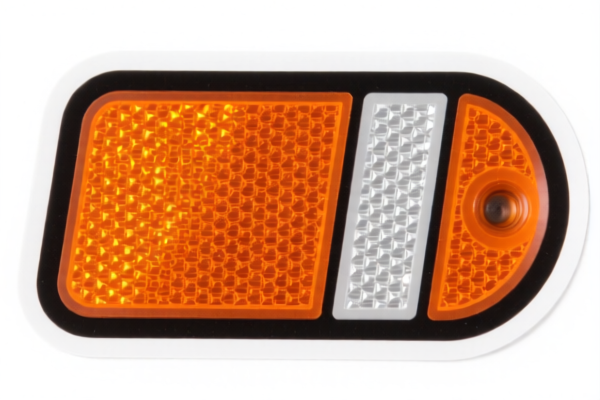
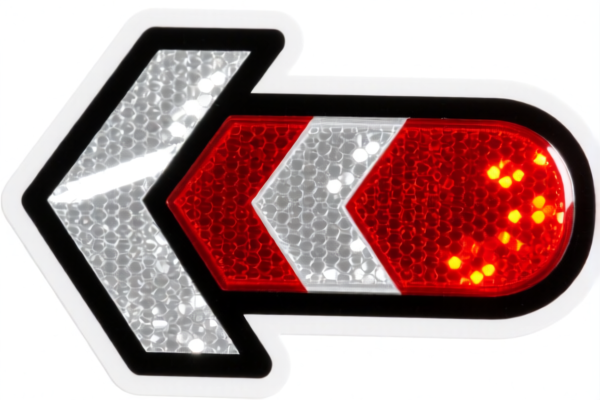
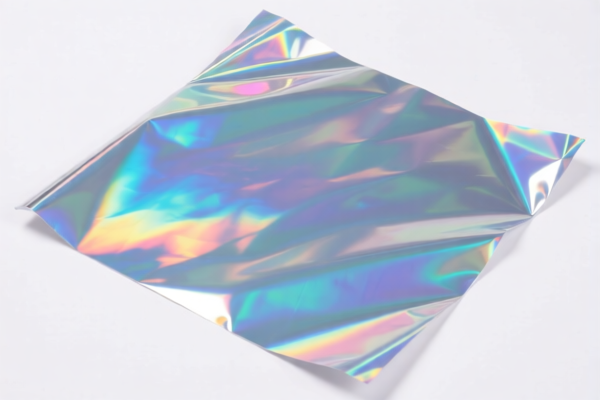
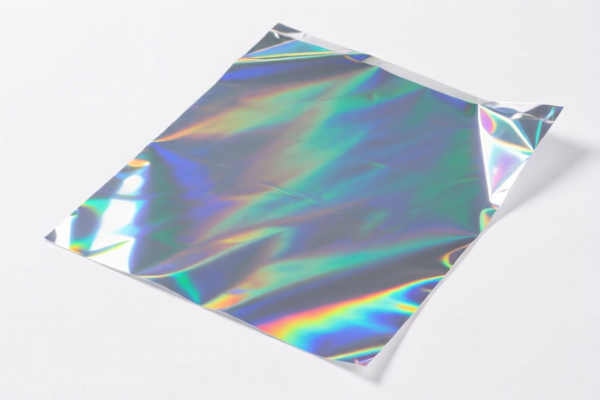
AI Analysis
🌙 Night Reflective Plastic Sticker (Night Glow / Retro-reflective Stickers)
🌐 HS Code Reference & Customs Clearance Guide | 2026 Latest Tariff Analysis | Professional Clearance Strategy
📌 I. Product Definition and Classification: Do You Really Understand "Night Reflective Plastic Stickers"?
Night reflective plastic stickers are adhesive materials embedded with glass beads or micro-prisms that reflect light back to its source. They are widely used in traffic signs, safety apparel, vehicle markings, and industrial equipment labeling. In international trade, they are classified under Chapter 39 (Plastics and Articles Thereof), specifically focusing on self-adhesive products or plastic sheets/films depending on their structure.
⚠️ Key Distinction Points:
- If the product is a ready-made self-adhesive sticker with backing paper, it typically falls under Heading 3919.
- If the product is a roll/film intended for further processing or lacks a permanent adhesive backing in the final form, it may fall under Heading 3921.
- The "reflective" nature is a functional attribute but does not change the primary material classification (Plastic).
📦 II. HS Code Classification Details (2026 Latest Tariff Authority Comparison)
Based on the provided data, here are the most relevant HS Codes for Night Reflective Plastic Stickers:
| HS Code | Product Description | Applicability Scenario | Tax Rate (US/China Origin) |
|---|---|---|---|
3921.90.50.50 |
Other plastic plates, sheets, films, foil, and strips | Stickers made of plastic, considered as "other plastic articles" under general categories | 39.8% |
3919.90.10.00 |
Self-adhesive plates, sheets, film, etc. (Other) | Stickers/strip format, plastic material, reflective function via glass beads | 41.5% |
3919.90.50.10 |
Self-adhesive plates, sheets, film, etc. (Other) | Stickers, plastic material, reflective use, fully compliant with material/form/use definition | 40.8% |
3921.19.00.90 |
Plastic plates, sheets, etc. (Other) | Plastic stickers falling under "plates, sheets, films, foil, strips" category | 41.5% |
3919.90.50.10 |
Reflective Night Film (Roll/Film form) | Film form, reflective purpose, plastic material inferred from film attribute | 40.8% |
🔍 Critical Note:
- The difference between3919(Self-adhesive) and3921(Plastic sheets/films) depends on whether the product is sold as a finished sticker (with adhesive backing) or as a raw material/film.
- Most ready-to-use "stickers" are classified under 3919.
- If the product is a "reflective film" without adhesive or with a weak adhesive for further lamination, it may fall under 3921.
💰 III. 2026 Latest Tariff Rate Breakdown (Including Surtaxes, Policy Surcharges)
✅ Applicable Country: United States (US)
✅ Origin: China (CN)
✅ Effective Time: Current rates apply (including Section 301 and Section 122 tariffs)
🎯 1. 3921.90.50.50 — Other Plastic Articles (Stickers as Plastic Sheets)
| Item | Content |
|---|---|
| Base Tariff | 4.8% (ad valorem) |
| Section 301 Surtax | +25.0% (Trade Act Section 301) |
| Section 122 Surtax | +10.0% (Uyghur Forced Labor Prevention Act / Other Section 122 provisions) |
| Total Tax Rate | 39.8% |
| Tax Calculation | CIF Value × 39.8% |
| De Minimis Exemption | ❌ Not Applicable (High duty rate excludes Section 321 exemption) |
| Legal Basis Path | HTSUS:3921.90.50.50 → Section 301:9903.88.01 → Section 122:9903.01.24 |
📌 Explanation:
- Base Tariff (4.8%): Standard MFN rate for other plastic articles.
- Section 301 (25%): Additional duty on Chinese-origin goods under Trump/Biden trade policies.
- Section 122 (10%): Additional duty related to specific trade restrictions (e.g., Uyghur region, though often grouped with other surcharges).
- Total 39.8%: High cost, requiring careful margin calculation.
🎯 2. 3919.90.10.00 — Self-Adhesive Plastic Stickers (Strip Format)
| Item | Content |
|---|---|
| Base Tariff | 6.5% |
| Section 301 Surtax | +25.0% |
| Section 122 Surtax | +10.0% |
| Total Tax Rate | 41.5% |
| Tax Calculation | CIF Value × 41.5% |
| De Minimis Exemption | ❌ Not Applicable |
| Legal Basis Path | HTSUS:3919.90.10.00 → Section 301:9903.88.01 → Section 122:9903.01.24 |
📌 Note:
- Higher base rate (6.5%) compared to3921due to specific subheading for self-adhesive products.
- Same surtaxes apply, leading to the highest total rate in this group.
🎯 3. 3919.90.50.10 — Self-Adhesive Reflective Stickers (Best Match for Standard Stickers)
| Item | Content |
|---|---|
| Base Tariff | 5.8% |
| Section 301 Surtax | +25.0% |
| Section 122 Surtax | +10.0% |
| Total Tax Rate | 40.8% |
| Tax Calculation | CIF Value × 40.8% |
| De Minimis Exemption | ❌ Not Applicable |
| Legal Basis Path | HTSUS:3919.90.50.10 → Section 301:9903.88.01 → Section 122:9903.01.24 |
📌 Recommendation:
- This code is often considered the most accurate for standard night reflective plastic stickers because it explicitly covers "self-adhesive" products with "reflective" functionality.
- Total rate is 40.8%, slightly lower than3919.90.10.00but higher than3921.90.50.50.
🎯 4. 3921.19.00.90 — Other Plastic Plates/Sheets (Stickers as Plastic Films)
| Item | Content |
|---|---|
| Base Tariff | 6.5% |
| Section 301 Surtax | +25.0% |
| Section 122 Surtax | +10.0% |
| Total Tax Rate | 41.5% |
| Tax Calculation | CIF Value × 41.5% |
| De Minimis Exemption | ❌ Not Applicable |
| Legal Basis Path | HTSUS:3921.19.00.90 → Section 301:9903.88.01 → Section 122:9903.01.24 |
📌 Note:
- Applies if the product is classified as a "plastic sheet" rather than a "self-adhesive sticker."
- Higher base rate (6.5%) makes it less favorable than3921.90.50.50(4.8%).
🎯 5. 3919.90.50.10 — Reflective Night Film (Roll/Film Form)
| Item | Content |
|---|---|
| Base Tariff | 5.8% |
| Section 301 Surtax | +25.0% |
| Section 122 Surtax | +10.0% |
| Total Tax Rate | 40.8% |
| Tax Calculation | CIF Value × 40.8% |
| De Minimis Exemption | ❌ Not Applicable |
| Legal Basis Path | HTSUS:3919.90.50.10 → Section 301:9903.88.01 → Section 122:9903.01.24 |
📌 Note:
- Same as #3 but specified for "film" form.
- Suitable for large rolls of reflective material not yet cut into stickers.
🛠️ IV. Customs Clearance Practical Advice (Battle-Tested Pitfall Guide)
✅ 1. Required Documentation Checklist (All are mandatory)
| Document | Must Provide | Description |
|---|---|---|
| ✅ Product Specification Sheet | ✔️ | Include material composition (e.g., PVC, PET, Microprismatic film), adhesive type, reflective technology (glass beads vs. prisms). |
| ✅ Product Photos | ✔️ | Clear images showing the sticker, backing, adhesive side, and reflective surface. |
| ✅ Commercial Invoice | ✔️ | Must clearly state "Night Reflective Plastic Sticker" and HS Code. |
| ✅ Packing List | ✔️ | Detail dimensions, weight, and quantity. |
| ✅ Proof of Origin (CO) | ✔️ | If claiming preferential rates (not applicable here due to high tariffs, but still required). |
| ✅ Third-Party Test Report | ✔️ | Reflectivity coefficient test (retro-reflective performance), adhesive strength, durability. |
✅ 2. Declaration Tips (Key Mantra)
🔥 "Sticker vs. Film, Adhesive is Key! Name It Right, Rates Stay Low!"
| Scenario | Correct Declaration | Wrong Practice |
|---|---|---|
| Ready-to-use Sticker | 3919.90.50.10 (Self-adhesive) |
Misclassifying as 3921 (Sheet) → Risk of audit |
| Roll of Reflective Material | 3919.90.50.10 or 3921.90.50.50 (depending on adhesive) |
Declaring as "Sticker" when it's a roll |
| Sticker with Glass Beads | Specify "Glass Bead Retro-reflective" in description | Vague description like "Plastic Sticker" |
| Sticker with Microprisms | Specify "Microprismatic Retro-reflective" | Vague description |
📌 Warning:
- Do not declare as "Plastic Film" if it has a strong permanent adhesive backing. Customs may reclassify it to3919(higher base rate) or even9023(optical instruments) if misinterpreted.
- Always emphasize "Self-Adhesive" in the product description for3919classification.
✅ 3. Special Case Handling
| Scenario | Handling Advice |
|---|---|
| OEM Custom Stickers | Provide design files and order confirmation to prove custom nature. |
| High Reflectivity (Diamond Grade) | Still falls under 3919.90.50.10 or 3921.90.50.50. No special tariff for "high performance." |
| Small Quantity Samples | If under $800 (Section 321), de minimis exemption may apply, but NOT for high-risk origins or if prohibited items. Check current enforcement. |
| Combined Shipments (Stickers + Other Goods) | Declare separately. Do not bundle under one HS Code. |
🌍 V. Global Main Market Clearance Comparison (2026 Latest)
| Country/Region | Recommended HS Code | Tariff Rate | Certification Requirements | Notes |
|---|---|---|---|---|
| 🇺🇸 USA | 3919.90.50.10 |
40.8% | No specific certification | High duty due to Section 301 & 122 |
| 🇪🇺 EU | 3919.90.00 |
6.5% | CE (if applicable) | No Section 301 surtax |
| 🇨🇳 China | 3919.90.00 |
6.5% | CCC (if applicable) | Standard import duty |
| 🇬🇧 UK | 3919.90.00 |
6.5% | UKCA | Post-Brexit tariff alignment |
| 🇯🇵 Japan | 3919.90.00 |
6.0% | PSE (if applicable) | Low base rate |
📌 Conclusion:
- USA is the most expensive market due to additional tariffs (Section 301 & 122).
- EU, China, Japan, UK have much lower base tariffs (6.0–6.5%) and no additional surcharges.
- Consider supply chain diversification (e.g., producing in Vietnam or Mexico) if exporting to the US to avoid high tariffs.
📌 VI. Common Mistakes & Pitfall Guide (Lessons Learned)
❌ Mistake 1: Declaring "Plastic Sticker" without specifying "Self-Adhesive"
👉 Consequence: Customs may classify under 3921 (higher base rate) or request clarification → Delay & Extra Costs
❌ Mistake 2: Using "Reflective Film" for ready-made stickers
👉 Consequence: Misclassification → Penalties + Back Taxes
❌ Mistake 3: Ignoring Section 122 Surcharge (10%)
👉 Consequence: Underpayment of duties → Fines + Seizure
❌ Mistake 4: Assuming De Minimis Exemption Applies
👉 Consequence: For high-value or high-risk shipments, exemptions are often denied → Full Duty Payment
✅ Correct Approach:
"Self-Adhesive Night Reflective Plastic Sticker, PVC Material, Glass Bead Retro-Reflective, Roll Form, Model XYZ, HS Code 3919.90.50.10"
🎯 VII. Conclusion: Precision in Classification Saves Money!
🎯 Remember the Mantra:
🔹 "Self-Adhesive = 3919, Plastic Sheet = 3921!"
🔹 "Section 301 & 122 Add 35%, Total Rate ~40%!"
🔹 "Name It Right, Avoid Audits, Save Costs!"
📌 Tips:
- If your stickers are small samples under $800, check if Section 321 still applies.
- For large shipments, consider Advance Rulings from US Customs (CBP) to confirm HS Code and duty liability.
- Explore duty drawback programs if you re-export the goods.
📣 Immediate Action:
📞 Contact a licensed customs broker
📦 Provide detailed product specs
🚀 Secure Your Supply Chain, Optimize Your Tariffs!
✨ Professional Customs Clearance Starts with Accurate Classification!
💼 Every Percent of Duty Matters!
Customer Reviews
About HS Code Classification
The Harmonized System (HS) is an internationally standardized nomenclature developed by the World Customs Organization (WCO) to classify traded products. Over 200 countries use the HS system as the basis for customs tariffs, trade statistics, and import/export regulations.
Each HS code follows a hierarchical structure:
- Chapter (2 digits) — Broad category of goods (e.g., Chapter 84: Machinery and Mechanical Appliances)
- Heading (4 digits) — More specific grouping within the chapter
- Subheading (6 digits) — Internationally standardized breakdown, used by all WCO member countries
- National subdivisions (8-10 digits) — Country-specific extensions for further classification, such as US HTSUS 10-digit codes
Correct HS code classification is essential for smooth customs clearance, accurate duty payment, and compliance with trade regulations. Misclassification can lead to customs delays, overpayment of duties, or penalties.
When importing from CN to US, the applicable tariff rates may include:
- Most-Favored-Nation (MFN) rate — The standard duty rate applied to WTO members
- General rate — Applied to countries without trade agreements
- Trade remedy duties — Additional tariffs such as Section 301 (anti-dumping), Section 232 (national security), or countervailing duties
The information provided on this page is for reference purposes only. For official classification, please consult with your local customs authority or a licensed customs broker.