Non Coniferous Wood Power Poles
CN → US| HS Code | Tariff Rate | Origin | Destination | Doc |
|---|---|---|---|---|
| 4407990295 | 35.0% | CN | US | Official Doc |
| 4421917040 | 35.0% | CN | US | Official Doc |
| 4406920000 | 35.0% | CN | US | Official Doc |
| 4406120000 | 35.0% | CN | US | Official Doc |
| 4407290296 | 35.0% | CN | US | Official Doc |
Product Images
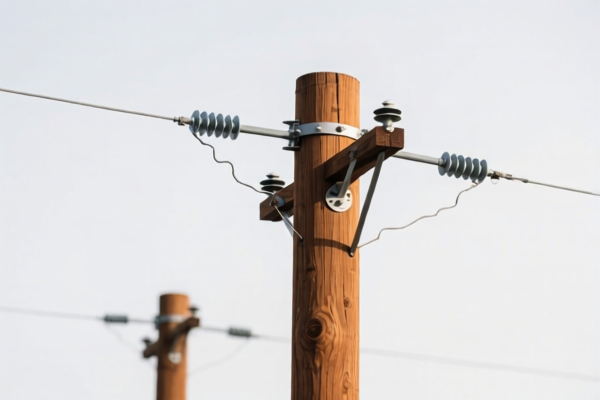
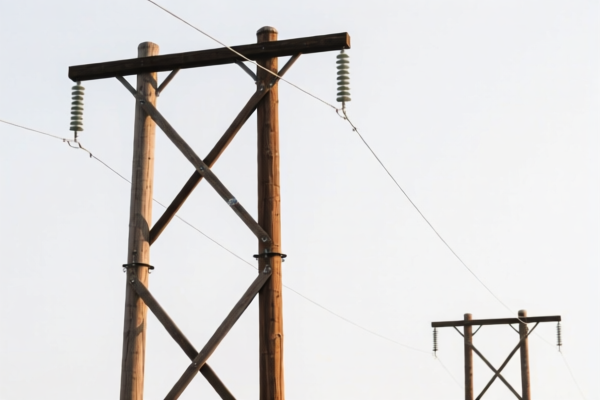
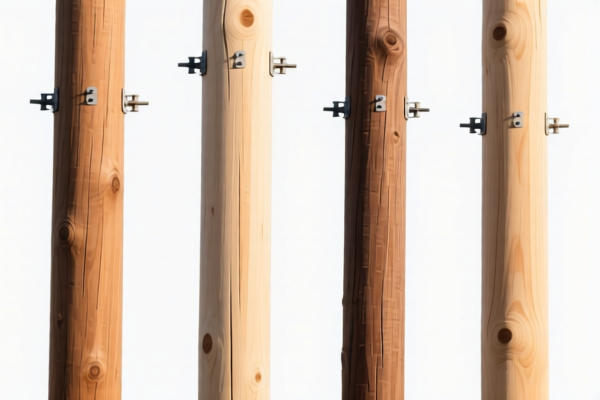
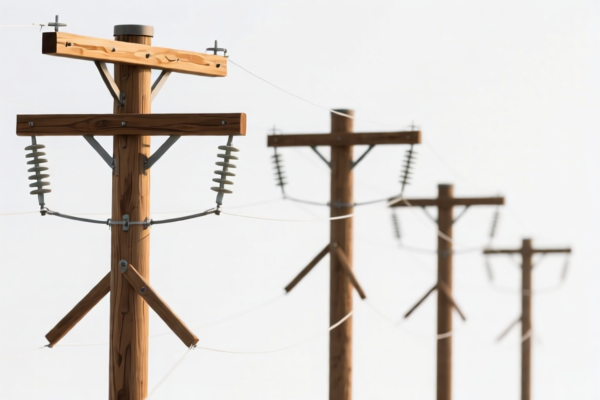
AI Analysis
🪵 Non-Coniferous Wood Power Poles: The Ultimate 2026 Import & Customs Clearance Guide
🌐 HS Code Reference & Customs Strategy | 2026 Latest Tariff Analysis | Professional Clearance Tactics
📌 I. Product Definition & Classification: Do You Really Understand "Non-Coniferous Wood Poles"?
Non-coniferous wood power poles are critical infrastructure components used in electrical distribution networks, telecommunications, and construction. Unlike traditional pine or spruce (coniferous) poles, these are made from hardwoods (e.g., Acacia, Eucalyptus, Ironwood, Tropical Hardwoods).
In international trade, they are not simply "sticks." They are engineered wood products that must be classified based on their processing level and specific application.
⚠️ Key Classification Logic:
- Are they prepared specifically for use as poles (treated, tapered)? → Likely 4406.xxxx
- Are they simply sawn or roughly shaped generic timber used as poles? → Likely 4407.99.xxxx
- Are they finished posts (not necessarily full-length poles)? → Likely 4421.91.xxxx
The classification significantly impacts duty rates and customs scrutiny. Below is the detailed breakdown based on the provided data.
📦 II. HS Code Classification Matrix (2026 Latest Tariff Alignment)
| HS Code | Product Description | Applicable Scenario | Key Distinction |
|---|---|---|---|
4407.99.02.95 |
Sawn Wood of Other Woods: Non-coniferous poles, matching non-coniferous material & processed wood attributes | Roughly sawn or dimensioned hardwood timber intended for pole use | Material Focus: Classified as general processed wood. Used when the wood is treated/sawn but not uniquely structured as a "pole" in the technical sense. |
4421.91.70.40 |
Other Wooden Articles: Non-coniferous columnar wood products, classified as other wood products | Finished posts, short poles, or columnar wood items | Finished Goods Focus: If the item is a short post, deck post, or columnar shape (not a full transmission pole), it falls here. |
4406.92.00.00 |
Railway Sleepers? No!: Non-coniferous wood power poles, matching non-coniferous material & wooden structural components | Treated, tapered hardwood poles ready for installation | Application Focus: Classified under "Other Wooden Posts & Poles". This is the most accurate code for actual utility poles made of non-coniferous wood. |
4406.12.00.00 |
Wooden Posts/Poles: Non-coniferous wood power poles, matching treated wood usage category | Preservative-treated, tapered hardwood poles for power lines | Process Focus: Specifically for treated wood. If your poles are pressure-treated for durability, this is the primary classification. |
4407.29.02.96 |
Tropical Wood: Non-coniferous poles, matching tropical wood category & longitudinally processed wood extended application | Hardwoods from tropical regions (e.g., Eucalyptus, Acacia) longitudinally processed | Origin Focus: Applies specifically if the wood is classified as Tropical Wood. Adds specificity to the material origin. |
🔍 Critical Reminder:
-4406series is generally preferred for actual utility poles (tapered, treated, ready for embedding).
-4407series is for raw/sawn timber that will be made into poles or used as generic wood.
-4421series is for finished non-structural or semi-structural wood items (like fence posts, deck posts).
💰 III. 2026 Latest Tariff Rate Breakdown (Including Additional Duties & Policy Surcharges)
✅ Applicable Country: United States (US)
✅ Country of Origin: China (CN)
✅ Effective Date: From November 10, 2025 (including subsequent imports)
🎯 All HS Codes Listed Above Share the Same Tariff Structure
Based on the provided data, all five HS codes (4407.99.02.95, 4421.91.70.40, 4406.92.00.00, 4406.12.00.00, 4407.29.02.96) have an identical tax breakdown:
| Item | Content |
|---|---|
| Base Tariff | 0.0% (Ad Valorem) |
| Section 301 Additional Tariff | +25.0% |
| Section 122 Tariff | +10.0% |
| Total Effective Tariff Rate | 35.0% |
| Tax Calculation Base | CIF Value (Cost, Insurance, and Freight) × 35% |
| De Minimis Eligibility | ❌ NO (Denied under Section 122/301 rules for these categories) |
| Legal Basis Path | USITC: 301 Clause → USITC: 122 Clause → HS Code Specific Footnotes |
📌 Explanation of the 35% Total:
1. Base Tariff (0%): Standard MFN (Most Favored Nation) rate for wood products is often zero.
2. Section 301 Tariff (+25%): Imposed on Chinese-origin goods under the U.S. Trade Act of 1974. This is the largest component of the tax.
3. Section 122 Tariff (+10%): A specific additional duty often applied to certain wood products or under specific trade actions.
4. Total (35%): This is a high-cost import scenario. You must factor this into your landed cost immediately.
🛠️ IV. Customs Clearance Practical Advice (Battle-Tested Pitfall Avoidance)
✅ 1. Document Checklist (Mandatory)
| Document | Required? | Notes |
|---|---|---|
| ✅ Product Specification Sheet | ✔️ | Must state: Wood species (e.g., Eucalyptus), treatment type (pressure-treated, creosote, etc.), dimensions, and length. |
| ✅ Phytosanitary Certificate | ✔️ | CRITICAL for wood. Issued by the country of origin's plant quarantine agency to prove no pests. |
| ✅ Treatment Certificate | ✔️ | Proof of chemical/heat treatment for durability. Required for 4406 classifications. |
| ✅ Commercial Invoice | ✔️ | Must clearly state: "Non-Coniferous Wood Power Poles," HS Code, Country of Origin (China). |
| ✅ Packing List | ✔️ | Detail dimensions and weight. Wood is heavy; accurate weight is vital for freight. |
| ✅ ISF (10+2) Filing | ✔️ | Importer Security Filing must be submitted 24 hours before loading. |
✅ 2. Declaration Strategy (Key Mantras)
🔥 "Be Specific: Species, Treatment, and Use."
Vague descriptions like "Wooden Pole" lead to customs delays. Use precise language.
| Scenario | Correct Declaration | Incorrect Declaration | Consequence of Error |
|---|---|---|---|
| Treated Utility Poles | "Pressure-Treated Non-Coniferous Wood Power Poles, Species: Acacia, Length: 30ft" | "Wooden Sticks" or "Timber" | ❌ High risk of misclassification, fines, or seizure. |
| Raw Hardwood Logs | "Roughly Sawn Non-Coniferous Timber" | "Power Poles" | ❌ If they aren't tapered/treated, they may not fit 4406. |
| Short Posts (Fence/Deck) | "Non-Coniferous Wooden Posts for Decking" | "Power Poles" | ❌ Misuse of 4406 for 4421 items. |
| Tropical Hardwood Poles | "Tropical Hardwood Power Poles, Longitudinally Processed" | "Generic Wood Poles" | ❌ Misses 4407.29 specificity, potential audit risk. |
✅ 3. Special Case Handling
| Situation | Handling Advice |
|---|---|
| Pesticide/Treatment Chemicals | If poles are treated with Chromium Copper Arsenate (CCA) or Creosote, ensure proper hazard labeling. Some treatments are restricted. |
| Origin Transshipment | If wood is sourced from Vietnam but treated in China, origin is likely China. Do not misdeclare to avoid Section 301 penalties. |
| Damaged Wood | If wood has visible insect damage, customs may reject it even with a Phytosanitary Certificate. Inspect thoroughly before shipment. |
| Pre-Cutting Services | If poles are cut to length in China, ensure the classification remains under 4406 (if treated) or 4407 (if raw). |
🌍 V. Global Market Customs Comparison (2026 Update)
| Country/Region | Recommended HS Code | Tariff (China Origin) | Key Certification | Notes |
|---|---|---|---|---|
| 🇺🇸 USA | 4406.92.00.00 / 4406.12.00.00 |
35% (Base 0% + 25% Sec 301 + 10% Sec 122) | Phytosanitary, Treatment Cert | High Tariff. Strict wood inspection. |
| 🇨🇳 China | 4406 Series |
~5-10% | N/A | Low tariff, high volume import. |
| 🇪🇺 EU | 4406.92 |
~0-5% (if FSC Certified) | FSC/PEFC, Phytosanitary | Low tariff, strict environmental compliance. |
| 🇦🇺 Australia | 4406.92 |
~5% | Biosecurity Permit | Extremely Strict biosecurity. Requires fumigation. |
| 🇯🇵 Japan | 4406 |
~5% | ISPM 15 (if packaging) | Strict pest checks. |
📌 Conclusion:
- The USA is the most expensive market for these goods due to the 35% combined tariff.
- Biosecurity is the biggest operational hurdle globally. A missing Phytosanitary Certificate will result in instant rejection or fumigation at importer's cost.
📌 VI. Common Mistakes & Pitfalls (Blood Lessons)
❌ Mistake 1: Declaring "Power Poles" without specifying "Non-Coniferous"
👉 Result: Customs may assign a default higher rate or reject the entry if coniferous rules don't match.
❌ Mistake 2: Using 4406 for untreated, rough logs
👉 Result: Misclassification. Rough logs should be 4403 or 4407. 4406 is for prepared/processed poles.
❌ Mistake 3: Ignoring Section 122
👉 Result: Underestimating landed cost by 10%. The total is 35%, not 25%.
❌ Mistake 4: Poor Phytosanitary Documentation
👉 Result: US CBP and USDA APHIS will seize or destroy the cargo if no valid certificate is present.
✅ Correct Approach:
"Non-Coniferous Pressure-Treated Acacia Power Poles, 30ft Length, Creosote Treated, Phytosanitary Certificate Attached, HS Code: 4406.92.00.00, Origin: China."
🎯 VII. Conclusion: Professional Clearance, Cost Control, Efficiency!
🎯 Remember the Mantra:
🔹 "35% is the Floor, Not the Ceiling." (Base + Sec 301 + Sec 122)
🔹 "Phytosanitary is King." (No cert = No entry)
🔹 "Treated = 4406, Raw = 4407." (Processing level determines code)
📌 Pro Tip:
If you are importing large volumes, consider applying for a Customs Ruling from CBP to confirm the HS Code (4406 vs 4407) before shipment. This avoids unexpected duties at the port.
📣 Immediate Action:
📞 Contact a Licensed Customs Broker
📄 Prepare Phytosanitary & Treatment Certificates
🚀 Calculate Landed Cost at 35% Tariff
Let your wood poles pass customs smoothly, avoid destruction, and protect your profit margins!
✨ Professional Customs Clearance Starts with Precise Classification!
💼 Every Percentage Point Matters!
Customer Reviews
About HS Code Classification
The Harmonized System (HS) is an internationally standardized nomenclature developed by the World Customs Organization (WCO) to classify traded products. Over 200 countries use the HS system as the basis for customs tariffs, trade statistics, and import/export regulations.
Each HS code follows a hierarchical structure:
- Chapter (2 digits) — Broad category of goods (e.g., Chapter 84: Machinery and Mechanical Appliances)
- Heading (4 digits) — More specific grouping within the chapter
- Subheading (6 digits) — Internationally standardized breakdown, used by all WCO member countries
- National subdivisions (8-10 digits) — Country-specific extensions for further classification, such as US HTSUS 10-digit codes
Correct HS code classification is essential for smooth customs clearance, accurate duty payment, and compliance with trade regulations. Misclassification can lead to customs delays, overpayment of duties, or penalties.
When importing from CN to US, the applicable tariff rates may include:
- Most-Favored-Nation (MFN) rate — The standard duty rate applied to WTO members
- General rate — Applied to countries without trade agreements
- Trade remedy duties — Additional tariffs such as Section 301 (anti-dumping), Section 232 (national security), or countervailing duties
The information provided on this page is for reference purposes only. For official classification, please consult with your local customs authority or a licensed customs broker.