Non Coniferous Wood Stain
CN → US| HS Code | Tariff Rate | Origin | Destination | Doc |
|---|---|---|---|---|
| 3209100000 | 40.1% | CN | US | Official Doc |
| 3209900000 | 40.9% | CN | US | Official Doc |
| 3210000000 | 36.8% | CN | US | Official Doc |
Product Images
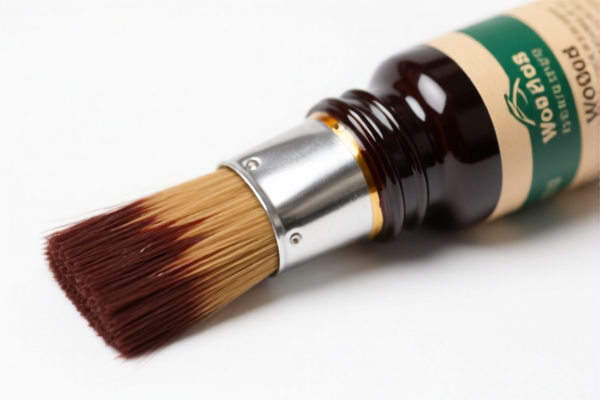
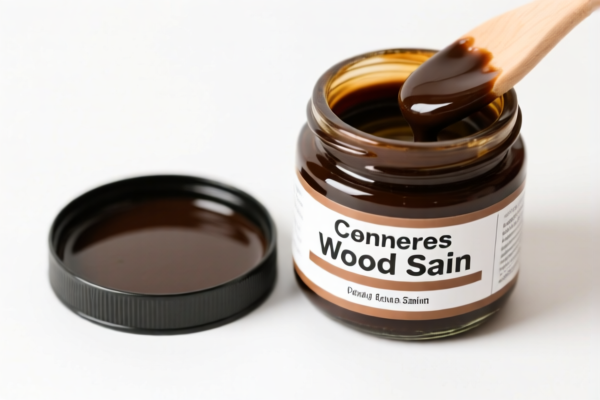
AI Analysis
🪵 Non Coniferous Wood Stain (Anti-Corrosive/Preservative Coatings)
🌐 HS Code Reference & Customs Clearance Guide | 2026 Latest Tariff Analysis | Professional Strategy for US-China Trade
📌 I. Product Definition & Classification: What is "Non-Coniferous Wood Stain"?
In international trade, Non-Coniferous Wood Stain generally refers to liquid coating products used for preserving, coloring, or protecting wood made from broad-leaved trees (hardwoods like oak, maple, birch, etc.). These products fall primarily under Chapter 32 (Tanning or Dyeing Extracts; Tannins and Their Derivatives; Dyes, Pigments and Other Coloring Matter; Paints and Varnishes; Putty and Other Mastics; Inks).
The classification depends heavily on the base resin and chemical composition: 1. Synthetic Polymer-Based: If the paint/varnish is based on synthetic polymers (e.g., acrylic, alkyd, polyurethane), it typically falls under 3209. 2. Other Paints/Varnishes: If it does not fit the specific definition of 3209 (e.g., certain chemical-modified resins or non-polymer-based coatings), it may fall under 3210.
⚠️ Critical Distinction:
- If the product is a paint or varnish containing synthetic polymers → HS 3209
- If it is an other paint/varnish (not covered by 3209/3208/3207/3208) → HS 3210
- Note: "Non-coniferous" implies the substrate, but the HS code is determined by the chemical formulation of the coating itself.
📦 II. HS Code Classification Details (2026 Authoritative Data)
Based on the provided data, here are the three possible HS Codes for this product, with their corresponding tax structures.
| HS Code | Product Description (Summary) | Key Characteristic | Total Tax Rate (US Imports from CN) |
|---|---|---|---|
| 3209.10.00.00 | Non-coniferous preservative stain; matching form/usage; belongs to paint/varnish category; contains synthetic polymer components. | Synthetic Polymer Based | 40.1% |
| 3209.90.00.00 | Non-coniferous preservative stain; matching material/usage; contains synthetic or chemically modified polymers; other paint category. | Chemically Modified Polymer | 40.9% |
| 3210.00.00.00 | Non-coniferous preservative stain; belongs to other paints and varnishes; no material conflict. | Other Paints/Varnishes | 36.8% |
🔍 Analysis of Tax Differences:
- 3210.00.00.00 has the lowest total tax rate (36.8%), primarily due to a lower base tariff (1.8%).
- 3209.10.00.00 and 3209.90.00.00 have higher base tariffs (5.1% and 5.9%) but similar additional taxes, resulting in higher total rates (40.1% and 40.9%).
- The choice depends on the exact chemical composition of the stain. If it strictly contains synthetic polymers, 3209 is mandatory. If it is a different type of varnish/paint not covered by 3209, 3210 is the correct code.
💰 III. 2026 Latest Tariff Rate Breakdown (Detailed Policy Add-ons)
✅ Applicable Country: United States (US)
✅ Country of Origin: China (CN)
✅ Effective Time: Includes imports after November 10, 2025 (Section 122 & Section 301 policies)
🎯 1. 3209.10.00.00 – Paints/Varnishes based on Synthetic Polymers
| Item | Detail |
|---|---|
| Base Tariff | 5.1% (ad valorem) |
| Section 301 Tariff | +25.0% (USITC Footnote for Chapter 32) |
| Section 122 Tariff | +10.0% (Specific additional duty) |
| Total Tax Rate | 40.1% |
| Tax Calculation | CIF Value × 40.1% |
| De Minimis Exemption | ❌ Not Eligible (Denied under current policies for this category) |
| Legal Basis Path | USITC:3209.10.00.00 → Section 301: +25% → Section 122: +10% |
📌 Explanation:
- This code is for stains where the binder is a synthetic polymer (e.g., acrylic latex).
- The 25% Section 301 tariff applies to most Chinese chemical products.
- The 10% Section 122 tariff is an additional layer, bringing the total added burden to 35% on top of the base rate.
🎯 2. 3209.90.00.00 – Other Paints/Varnishes with Synthetic/Chemically Modified Polymers
| Item | Detail |
|---|---|
| Base Tariff | 5.9% (ad valorem) |
| Section 301 Tariff | +25.0% |
| Section 122 Tariff | +10.0% |
| Total Tax Rate | 40.9% |
| Tax Calculation | CIF Value × 40.9% |
| De Minimis Exemption | ❌ Not Eligible |
| Legal Basis Path | USITC:3209.90.00.00 → Section 301: +25% → Section 122: +10% |
📌 Note:
- Use this code if the product contains chemically modified polymers that do not fit the standard definition of 3209.10.
- The 0.8% difference in base tariff (5.9% vs 5.1%) makes this the most expensive option among the three. Avoid this code unless the chemical composition strictly requires it.
🎯 3. 3210.00.00.00 – Other Paints and Varnishes
| Item | Detail |
|---|---|
| Base Tariff | 1.8% (ad valorem) |
| Section 301 Tariff | +25.0% |
| Section 122 Tariff | +10.0% |
| Total Tax Rate | 36.8% |
| Tax Calculation | CIF Value × 36.8% |
| De Minimis Exemption | ❌ Not Eligible |
| Legal Basis Path | USITC:3210.00.00.00 → Section 301: +25% → Section 122: +10% |
📌 Advantage:
- This code has the lowest base tariff (1.8%).
- If your stain does not primarily rely on synthetic polymers (e.g., it might be a specialized oil-based or chemical-modified varnish that falls outside 3209), this is the most cost-effective classification.
- However, misclassifying a synthetic polymer-based stain as "Other Paints" is a high-risk violation. Only use if legally justified.
🛠️ IV. Customs Clearance Practical Advice (Pitfall Avoidance Guide)
✅ 1. Required Documentation Checklist
| Document | Mandatory | Description |
|---|---|---|
| ✅ Product Specification Sheet | ✔️ | Must clearly state: Base Resin Type (Synthetic Polymer vs. Other), Active Ingredients, VOC content. |
| ✅ SDS (Safety Data Sheet) | ✔️ | Critical for customs to verify chemical composition and hazard class. |
| ✅ Commercial Invoice | ✔️ | Must specify "Wood Stain for Non-Coniferous Wood" and clearly state the HS Code. |
| ✅ Certificate of Origin (CO) | ✔️ | To confirm origin as China (triggering Section 301/122 tariffs). |
| ✅ Packing List | ✔️ | Detailed itemization, net/gross weight. |
| ✅ EPA Registration Number | ✔️ | Crucial! Paints/Stains in the US require EPA approval for VOC content and toxicity. |
✅ 2. Declaration Strategy (Key Rules)
🔥 "Chemical Basis Defines Code, EPA Compliance is Key!"
| Scenario | Correct HS Code | Incorrect Code | Consequence |
|---|---|---|---|
| Stain based on Acrylic/Polyurethane (Synthetic Polymer) | 3209.10.00.00 or 3209.90.00.00 |
3210.00.00.00 |
Penalty for misclassification. |
| Stain based on Other Resins (Not synthetic polymer) | 3210.00.00.00 |
3209.xx.xx.xx |
Overpayment of tax (36.8% vs 40.1%/40.9%). |
| Stain without EPA Registration | Cannot Clear | Any HS Code | Seizure and Destruction by CBP/EPA. |
| Stain for Coniferous Wood | Same Codes | N/A | The HS code does not change based on wood type; only the usage description changes. |
✅ 3. Special Handling Tips
| Situation | Advice |
|---|---|
| High VOC Content | Ensure the product meets US EPA VOC limits. Non-compliant products may be rejected regardless of HS Code. |
| OEM/Private Label | Provide the manufacturer's formula sheet to prove the base resin type. This is essential for distinguishing between 3209 and 3210. |
| Sample vs. Bulk | Both samples and bulk shipments are subject to the same tariffs. Do not attempt to ship samples as "free goods" to avoid Section 122/301 taxes. |
| Origin Marking | Must clearly mark "Made in China" on the container and inner packaging to comply with US Customs regulations. |
🌍 V. Global Market Comparison (2026 Overview)
| Country/Region | Recommended HS Code | Total Tariff (Approx.) | Key Certification | Remarks |
|---|---|---|---|---|
| 🇺🇸 USA | 3209.10.00.00 / 3210.00.00.00 |
36.8% - 40.9% | EPA, FDA (if food-contact) | High Section 301/122 tariffs. |
| 🇨🇳 China | 3209.10.00.00 / 3210.00.00.00 |
~5-7% | GB Standards | Low import tariff for domestic sale. |
| 🇪🇺 EU | 3208.90.00.00 / 3209.90.00.00 |
~0-6.5% | REACH, CLP | No Section 301/122 tariffs. |
| 🇨🇦 Canada | 3209.10.00.00 / 3210.00.00.00 |
~5-6.5% | Canada Pest Management Agency | Similar to US but lower extra tariffs. |
📌 Conclusion:
- The US market is the most challenging due to the 35% additional tariffs (25% + 10%).
- EU and Canada offer significantly lower tariff burdens.
- For US imports, accurate chemical classification is key to avoiding overpayment (3210 vs 3209) or underpayment penalties.
📌 VI. Common Errors & Pitfalls (Lessons Learned)
❌ Error 1: Declaring "Wood Stain" as 3210 when it is actually a synthetic polymer-based paint.
👉 Consequence: Customs audit reveals the error → Back taxes + Penalties + Possible seizure.
✅ Fix: Provide SDS and formula sheet to prove resin type.
❌ Error 2: Ignoring EPA Registration.
👉 Consequence: Product held at border for months → Storage fees + Return shipping.
✅ Fix: Ensure all products have valid EPA Registration Numbers before shipment.
❌ Error 3: Assuming "Non-Coniferous" changes the HS Code.
👉 Consequence: No change in HS Code, but possible miscommunication in description → Delays.
✅ Fix: Use clear descriptions: "Paint for Hardwood" rather than "Non-Coniferous Stain" which is not a standard HS term.
🎯 VII. Conclusion: Professional Classification, Cost Efficiency
🎯 Remember the Mantra:
🔹 "Synthetic Polymer = 3209 (40%+), Other Paint = 3210 (36.8%), EPA is Mandatory."
🔹 "Base Tariff + 25% (301) + 10% (122) = Total Tax."
🔹 "Check the Formula, Not Just the Name."
📌 Pro Tip:
If your product uses chemically modified polymers that are ambiguous, consider applying for a Binding Ruling from US Customs and Border Protection (CBP) before shipment. This provides legal certainty and avoids unexpected duties.
📣 Immediate Action:
📞 Consult with a Customs Broker
📄 Prepare SDS and Formula Sheets
🏷️ Ensure EPA Compliance
🚀 Clear Customs Smoothly, Minimize Taxes, Maximize Profit!
✨ Professional Customs Clearance Starts with Accurate Classification!
💼 Your Profit Margin Depends on the Decimal Points in Your Tariff!
Customer Reviews
About HS Code Classification
The Harmonized System (HS) is an internationally standardized nomenclature developed by the World Customs Organization (WCO) to classify traded products. Over 200 countries use the HS system as the basis for customs tariffs, trade statistics, and import/export regulations.
Each HS code follows a hierarchical structure:
- Chapter (2 digits) — Broad category of goods (e.g., Chapter 84: Machinery and Mechanical Appliances)
- Heading (4 digits) — More specific grouping within the chapter
- Subheading (6 digits) — Internationally standardized breakdown, used by all WCO member countries
- National subdivisions (8-10 digits) — Country-specific extensions for further classification, such as US HTSUS 10-digit codes
Correct HS code classification is essential for smooth customs clearance, accurate duty payment, and compliance with trade regulations. Misclassification can lead to customs delays, overpayment of duties, or penalties.
When importing from CN to US, the applicable tariff rates may include:
- Most-Favored-Nation (MFN) rate — The standard duty rate applied to WTO members
- General rate — Applied to countries without trade agreements
- Trade remedy duties — Additional tariffs such as Section 301 (anti-dumping), Section 232 (national security), or countervailing duties
The information provided on this page is for reference purposes only. For official classification, please consult with your local customs authority or a licensed customs broker.