Non Coniferous Wood Surface Treatment
CN → US| HS Code | Tariff Rate | Origin | Destination | Doc |
|---|---|---|---|---|
| 3208900000 | 38.2% | CN | US | Official Doc |
| 4407990295 | 35.0% | CN | US | Official Doc |
| 3208100000 | 38.7% | CN | US | Official Doc |
| 4407290296 | 35.0% | CN | US | Official Doc |
| 4407990295 | 35.0% | CN | US | Official Doc |
Product Images
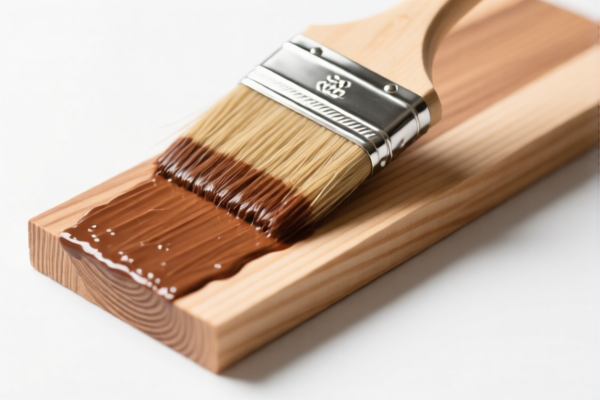
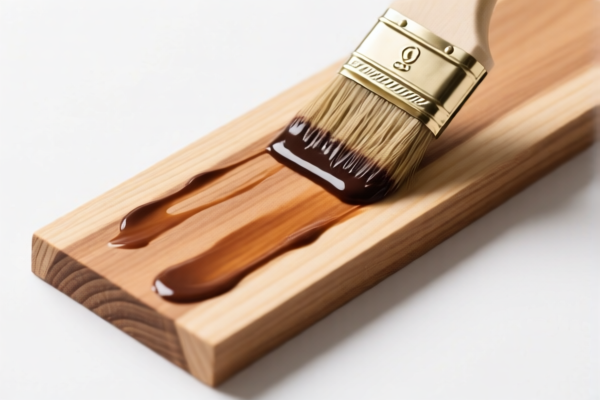


AI Analysis
🪵 Non-Coniferous Wood Surface Treatment (Painted/Treated Wood)
🌐 HS Code Classification & Customs Clearance Guide | 2024/2025 Trade Data Analysis | Strategic Tariff Optimization
📌 Part 1: Product Definition & Classification — What is "Non-Coniferous Wood Surface Treatment"?
Non-coniferous wood (broadleaf timber) surface treatment refers to wood products that have undergone chemical, paint, or varnish processing to enhance durability, aesthetics, or resistance to decay. In international trade, the classification hinges on whether the product is primarily viewed as a raw material (wood) or a manufactured good (paint/coating application).
Key Distinction Criteria: * Processed Timber (Wood Chapters 44): If the primary characteristic is the wood structure, and surface treatment is incidental or for protection → Classified under Chapter 44. * Paints & Varnishes (Chapter 32): If the product is sold as a paint/liquid coating product, regardless of the wood context → Classified under Chapter 32.
⚠️ Critical Alert:
- If the wood is processed (sawn, planed, treated) but retains its wood identity → HS 4407.xxxx
- If the product is paint/varnish applied for specific chemical composition (synthetic polymers/polyesters) → HS 3208.xxxx
- Do not mix these categories incorrectly, as tariffs differ significantly!
📦 Part 2: HS Code Classification Details (Based on Provided Data)
| HS Code | Product Description | Classification Logic | Total Tax Rate* |
|---|---|---|---|
4407.99.02.95 |
Painted Non-Coniferous Wood, General Processing | Non-coniferous wood, processed, not specifically identified elsewhere. Surface treatment (paint) does not change the fundamental wood identity. | 35.0% |
4407.29.02.96 |
Painted Non-Coniferous Wood for Construction | Non-coniferous tropical wood, processed for building/construction use. Specific subheading for construction-grade timber. | 35.0% |
3208.90.00.00 |
Paints & Varnishes Based on Synthetic Polymers | Classified as a paint/coating product, not the wood itself. "For coating purposes" implies the product is the chemical finish. | 38.2% |
3208.10.00.00 |
Paints & Varnishes Based on Polyesters | Classified as a paint/coating product with specific chemical base (polyester). Higher tax due to specific chemical classification. | 38.7% |
🔍 Note on Duplicates:
4407.99.02.95appears twice in the data with slightly different summaries but identical tax rates (35.0%). Both refer to general processed non-coniferous wood.
💰 Part 3: Detailed Tariff Breakdown (The "Tax Stack")
✅ Applicable Jurisdiction: United States (US)
✅ Origin: China (CN)
✅ Effective Date: Post-2018 Trade War Measures (Section 301 & IEEPA)
All items in the provided data include the following three-tier tax structure:
| Tax Component | Rate | Source / Legal Basis | Explanation |
|---|---|---|---|
| 1. Basic Tariff (MFN) | 0.0% – 3.7% | USHTS Base Rate | - For HS 4407: 0.0% - For HS 3208: 3.2% – 3.7% |
| 2. Section 301 Additional Tariff | 25.0% | USITC Footnote 9903.88.01 | Applied to most Chinese-origin goods under Section 301. No exemption for these wood/paint codes. |
| 3. IEEPA Tariff (Section 122/Executive Order) | 10.0% | International Emergency Economic Powers Act | Additional levy on Chinese products, often referred to as "122 Clauses" or specific EO tariffs. |
| TOTAL EFFECTIVE RATE | 35.0% – 38.7% | Sum of above | 35.0% for Wood (HS 4407) 38.2% for Synthetic Paint (HS 3208.90) 38.7% for Polyester Paint (HS 3208.10) |
📌 Key Insight:
- The 25% Section 301 tariff is the biggest cost driver.
- The 10% IEEPA tariff is the secondary cost driver.
- Total tax is ~35-39%, which is very high for wood products. This significantly impacts profitability.
🛠️ Part 4: Customs Clearance Practical Advice
✅ 1. Documentation Checklist (Mandatory)
| Document | Requirement | Why It Matters |
|---|---|---|
| Commercial Invoice | Must specify "Non-Coniferous Wood" or "Paint/Varnish" accurately. | Wrong description leads to misclassification (e.g., declaring as "raw wood" when it's "painted"). |
| Bill of Lading | Clear description matching invoice. | Must not omit "Painted" or "Treated" if it affects classification. |
| Product Specification Sheet | - For Wood: Diameter, length, treatment type. - For Paint: Chemical composition, solid content, solvent type. |
Customs officers need this to distinguish between HS 4407 (wood) and HS 3208 (paint). |
| Certificate of Origin | Must state China origin. | Essential for applying (or defending) the 25%+10% tariffs. If transshipped, original CO is needed. |
| Fumigation Certificate | Required for wood products (ISPM 15). | Prevents pest-related rejection, even if wood is painted. |
✅ 2. Classification Strategy (How to Avoid Pitfalls)
| Scenario | Correct HS Code | Risk if Misclassified |
|---|---|---|
| Pre-painted wood planks (ready for use) | 4407.99.02.95 or 4407.29.02.96 | If declared as "Paint" (3208), you may face questions on why wood is listed as chemical. |
| Buckets of wood paint/varnish | 3208.90.00.00 or 3208.10.00.00 | If declared as "Wood", customs may reject for missing wood specs. |
| Wood + Paint Kit (sold together) | Primary Purpose Rule: If sold as a set, classify based on the essential character (usually the wood if the paint is just for touch-up). | Complex; may require separate line items to avoid higher combined duty assessment. |
🔥 "Golden Rule" for Clearance:
- If it looks like wood, smells like wood, and is used as wood → HS 4407.
- If it’s a liquid/paste in a can, meant to be applied → HS 3208.
✅ 3. Special Considerations for Section 301 & IEEPA
| Issue | Solution |
|---|---|
| High Tariff Cost | Consider transshipment (risky) or supply chain diversification (e.g., sourcing from Vietnam/Thailand if rules of origin allow). |
| Exemption Requests | Historically, some wood products had exclusions, but current data shows no exclusions for these codes. Check USTR exclusion lists periodically. |
| Valuation | Ensure CIF value is accurate. Tariffs are calculated on (Cost + Insurance + Freight). Under-declaring value leads to penalties. |
🌍 Part 5: Global Market Comparison (2024/2025)
| Country/Region | HS Code (Wood) | HS Code (Paint) | Basic Duty | Additional Duties (China) | Total Impact |
|---|---|---|---|---|---|
| 🇺🇸 USA | 4407 | 3208 | 0-3.7% | +35% (25% Sec 301 + 10% IEEPA) | 35-38.7% |
| 🇨🇳 China | 4407 | 3208 | 5-10% | N/A | Low (if importing TO China) |
| 🇪🇺 EU | 4407 | 3208 | 0-6.5% | No Section 301 | Low |
| 🇦🇺 Australia | 4407 | 3208 | 5% | No Section 301 | ~5% |
📌 Conclusion:
- USA is the most expensive market for Chinese non-coniferous wood and paints due to the 35%+ effective tariff.
- EU/Australia are more cost-effective if supply chain allows.
- Strategy: If targeting USA, consider value-added processing in a third country to change origin, or absorb cost if margins allow.
📌 Part 6: Common Errors & How to Avoid Them
❌ Error 1: Declaring painted wood as "raw wood" (HS 4407 without noting treatment)
👉 Risk: Customs may reject for misdescription or require fumigation certificates if treatment didn't comply.
✅ Fix: Clearly state "Painted/Treated Non-Coniferous Wood" in invoice.
❌ Error 2: Declaring wood paint as "wood products"
👉 Risk: Wrong HS code (3208 vs 4407) leads to underpayment of duty (if 3208 has higher basic rate) or overpayment (if 4407 is simpler).
✅ Fix: Use product spec sheet to confirm if it’s a chemical product (3208) or wood (4407).
❌ Error 3: Ignoring Section 122/IEEPA 10% tariff
👉 Risk: Budget miscalculation. Many traders only account for 25% (Sec 301) and forget the 10%.
✅ Fix: Always calculate Total Tax = Basic + 25% + 10%.
🎯 Part 7: Conclusion & Action Plan
🎯 Key Takeaway:
"Wood vs. Paint is a critical classification choice. In the USA, both face ~35-39% total tariffs. Accuracy in description is non-negotiable."
✅ Action Items: 1. Confirm Product Nature: Is it wood (4407) or paint (3208)? 2. Calculate Landed Cost: Include 35-39% tax in your pricing model. 3. Prepare Docs: Invoice, CO, Fumigation Certificate (for wood), Spec Sheet. 4. Check Origin: If not China, avoid these additional tariffs.
📣 Immediate Next Step:
📞 Consult a Customs Broker for Pre-Ruling on your specific product formulation.
🚀 Optimize your supply chain to mitigate the 35-39% tariff burden.
✨ Accurate Classification Saves Thousands!
💼 Every percent of duty counts in global trade.
Customer Reviews
About HS Code Classification
The Harmonized System (HS) is an internationally standardized nomenclature developed by the World Customs Organization (WCO) to classify traded products. Over 200 countries use the HS system as the basis for customs tariffs, trade statistics, and import/export regulations.
Each HS code follows a hierarchical structure:
- Chapter (2 digits) — Broad category of goods (e.g., Chapter 84: Machinery and Mechanical Appliances)
- Heading (4 digits) — More specific grouping within the chapter
- Subheading (6 digits) — Internationally standardized breakdown, used by all WCO member countries
- National subdivisions (8-10 digits) — Country-specific extensions for further classification, such as US HTSUS 10-digit codes
Correct HS code classification is essential for smooth customs clearance, accurate duty payment, and compliance with trade regulations. Misclassification can lead to customs delays, overpayment of duties, or penalties.
When importing from CN to US, the applicable tariff rates may include:
- Most-Favored-Nation (MFN) rate — The standard duty rate applied to WTO members
- General rate — Applied to countries without trade agreements
- Trade remedy duties — Additional tariffs such as Section 301 (anti-dumping), Section 232 (national security), or countervailing duties
The information provided on this page is for reference purposes only. For official classification, please consult with your local customs authority or a licensed customs broker.