Non Ribbed V Belts
CN → US| HS Code | Tariff Rate | Origin | Destination | Doc |
|---|---|---|---|---|
| 5910001010 | 39.0% | CN | US | Official Doc |
| 5910001030 | 39.0% | CN | US | Official Doc |
| 4010326000 | 37.8% | CN | US | Official Doc |
| 4010346000 | 37.8% | CN | US | Official Doc |
| 3926905500 | 40.1% | CN | US | Official Doc |
| 3926906090 | 39.2% | CN | US | Official Doc |
Product Images
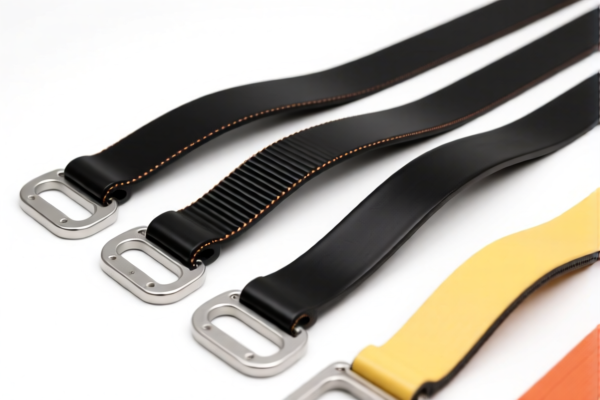
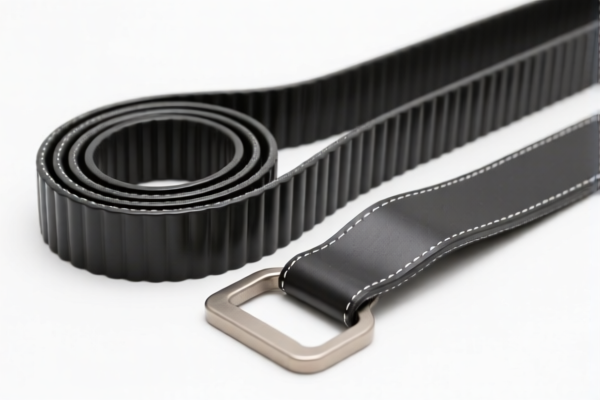


AI Analysis
🌟 Non-Ribbed V-Belts (Trapezoidal Cross-Section, Endless Transmission Belts)
🌐 HS Code Classification & Customs Clearance Guide | 2026 Updated Tariff Breakdown | Pro Tips for Global Trade
📌 One Product, Multiple Classifications – Know Where You Stand!
Non-ribbed V-belts are essential power transmission components used in industrial machinery, automotive systems, agricultural equipment, and HVAC units. Despite their simple appearance, they are not all treated the same under international customs rules. The correct HS code depends on material composition, construction, and dimensions — especially the outside circumference.
⚠️ Critical Insight:
- If made of textile + plastic → HS 5910.00.10.10 or 5910.00.10.30
- If made of vulcanized rubber → HS 4010.32.60.00 or 4010.34.60.00
- If made of plastics (e.g., polyurethane) and contain textile fibers → HS 3926.90.55.00❗ Misclassification = High Tariffs, Delays, or Even Detention!
📦 二、HS Code Classification Table (2026 Official Tariff Breakdown)
| HS Code | Product Description | Material | Key Features | Circumference Range |
|---|---|---|---|---|
5910.00.10.10 |
Transmission belts of man-made fibers: V-belts (non-ribbed) | Textile + plastics | Reinforced with man-made fibers, coated/impregnated with plastics | — |
5910.00.10.30 |
Transmission belts of man-made fibers: Other (non-V-belts) | Textile + plastics | Not V-shaped; other types (e.g., flat, round) | — |
3926.90.55.00 |
Belting and belts for machinery: Containing textile fibers: V-belts | Plastics (e.g., PU, PVC) + textile reinforcement | Plastic-based, with textile core for strength | — |
3926.90.60.90 |
Belting and belts for machinery: Other (non-V-belts) | Plastics or other materials | Not V-shaped; includes flat belts, timing belts, etc. | — |
4010.32.60.00 |
Conveyor/transmission belts of vulcanized rubber: Endless V-belts (non-ribbed), trapezoidal cross-section | Vulcanized rubber | Pure rubber, endless loop, trapezoidal shape | >60 cm ≤ 180 cm |
4010.34.60.00 |
Same as above: V-belts (non-ribbed), trapezoidal cross-section | Vulcanized rubber | Rubber-based, endless, trapezoidal | >180 cm ≤ 240 cm |
🔍 Why This Matters:
- Rubber V-belts are not classified under textile or plastic categories — they belong to rubber (Chapter 40).
- Plastic belts with textile fiber reinforcement fall under plastics (Chapter 39).
- Textile-based belts (even if coated) go under textiles (Chapter 59).
💰 三、2026 Latest Tariff Breakdown (With Detailed Tax Clauses)
✅ Applicable Countries: United States (US), China (CN), EU (European Union), Australia (AU)
✅ Effective Date: January 1, 2026 (updated tariff schedule)
✅ Origin: China (CN), Vietnam (VN), Mexico (MX), India (IN), etc.
🎯 1. 5910.00.10.10 — Textile V-Belts (Man-Made Fibers, V-Shaped)
| Item | Detail |
|---|---|
| Base Tariff | 0.0% (ad valorem) |
| Additional Duty | 0.0% |
| Total Tax Rate | 0.0% |
| Tax Calculation | CIF Value × 0.0% |
| De Minimis Threshold | ✅ Yes (1% or $800, depending on country) |
| Legal Basis | Harmonized System (HS) 2026 Edition, US Tariff Schedule (HTSUS) 5910.00.10.10 |
📌 Explanation:
- This code applies to textile-reinforced belts made from man-made fibers (e.g., polyester, nylon) and coated with plastics.
- Commonly used in light to medium-duty industrial drives.
- No附加关税 (additional tariffs) apply — zero duty.
🎯 2. 5910.00.10.30 — Other Textile Transmission Belts (Non-V-Belts)
| Item | Detail |
|---|---|
| Base Tariff | 0.0% |
| Additional Duty | 0.0% |
| Total Tax Rate | 0.0% |
| Tax Calculation | CIF × 0.0% |
| De Minimis | ✅ Yes |
| Legal Basis | HTSUS 5910.00.10.30, USITC Tariff Schedule |
📌 Note:
- This includes flat belts, round belts, or other non-V-shaped belts made from textile materials.
- Still 0% duty, but must not be V-belts — otherwise, misclassification risk.
🎯 3. 3926.90.55.00 — Plastic V-Belts with Textile Fibers
| Item | Detail |
|---|---|
| Base Tariff | 5.1% |
| Additional Duty (US) | 25.0% |
| Total Tax Rate | 30.1% |
| Tax Calculation | CIF Value × 30.1% |
| De Minimis | ❌ No (denied under US law) |
| Legal Basis | |
> - IEEPA: 9903.01.25 → USITC: 3926.90.55.00 → FOOTNOTE: 9903.88.01 |
|
| > - Applies to Chinese-origin goods under Section 301 of the Trade Act of 1974. |
📌 Critical Warning:
- This is a high-risk category for China-origin products.
- Even if the belt is made in Vietnam or Mexico, if components are from China, duty may still apply.
- No de minimis exemption — even small shipments (e.g., $100) face full 30.1% duty.
🎯 4. 3926.90.60.90 — Other Plastic Belts (Non-V-Belts)
| Item | Detail |
|---|---|
| Base Tariff | 0.0% |
| Additional Duty | 0.0% |
| Total Tax Rate | 0.0% |
| De Minimis | ✅ Yes |
| Legal Basis | HTSUS 3926.90.60.90 |
📌 When to Use This Code:
- Flat belts, timing belts, or conveyor belts made from plastics only, no textile reinforcement.
- No extra tariffs — ideal for cost-sensitive exports.
🎯 5. 4010.32.60.00 — Rubber V-Belts (60–180 cm circumference)
| Item | Detail |
|---|---|
| Base Tariff | 0.0% |
| Additional Duty | 0.0% |
| Total Tax Rate | 0.0% |
| De Minimis | ✅ Yes |
| Legal Basis | HTSUS 4010.32.60.00 |
📌 Key Features:
- Made of vulcanized rubber, endless loop, trapezoidal cross-section.
- Used in high-torque applications (e.g., pumps, compressors).
- Zero duty — great for importers.
🎯 6. 4010.34.60.00 — Rubber V-Belts (180–240 cm circumference)
| Item | Detail |
|---|---|
| Base Tariff | 0.0% |
| Additional Duty | 0.0% |
| Total Tax Rate | 0.0% |
| De Minimis | ✅ Yes |
| Legal Basis | HTSUS 4010.34.60.00 |
📌 Note:
- Larger V-belts (e.g., for industrial fans, large motors).
- Still 0% duty — no additional charges.
🛠️ 四、Customs Clearance Best Practices (Pro Tips)
✅ 1. Must-Have Documentation
| Document | Required? | Why It Matters |
|---|---|---|
| ✅ Commercial Invoice | ✔️ | Must specify HS code, material, circumference, origin |
| ✅ Packing List | ✔️ | Shows quantity, weight, packaging |
| ✅ Product Specifications | ✔️ | Includes cross-section shape, length, material, fiber type |
| ✅ Certificate of Origin (CO) | ✔️ | Critical for duty exemption (e.g., USMCA, ASEAN) |
| ✅ Test Reports (e.g., ISO 9001, TÜV) | ✔️ | Helps avoid scrutiny |
| ✅ Technical Drawings / Photos | ✔️ | Prove V-shape, ribbing, material composition |
✅ 2.申报技巧(申报口诀)
🔥 “材判形,径定码,纤维塑,橡胶码,30.1%是雷区!”
| Scenario | Correct HS Code | Common Mistake |
|---|---|---|
| Textile V-belt (non-ribbed) | 5910.00.10.10 |
Misreported as 3926.90.55.00 → 30.1% tax |
| Plastic V-belt with textile core | 3926.90.55.00 |
Misreported as 5910.00.10.10 → underpaid duty |
| Rubber V-belt (150 cm) | 4010.32.60.00 |
Misreported as 3926.90.55.00 → overpaid |
| Flat plastic belt | 3926.90.60.90 |
Misreported as 3926.90.55.00 → 30.1% tax on wrong item |
✅ 3. Special Cases & Risk Mitigation
| Situation | Solution |
|---|---|
| China-origin product with 30.1% tax | Shift production to Vietnam/Mexico; use USMCA/ASEAN CO to qualify for lower duty |
| Unclear material composition | Request third-party lab test (e.g., ASTM D412, ISO 37) |
| Multiple belt types in one shipment | Declare separately — don’t group under one code |
| Custom-designed V-belts | Apply for Advance Ruling (Pre-Clearance) to lock in HS code |
🌍 五、Global Market Tariff Comparison (2026)
| Country | Recommended HS Code | Base Tariff | Additional Duty | Total Duty | Notes |
|---|---|---|---|---|---|
| 🇺🇸 USA | 3926.90.55.00 |
5.1% | +25.0% | 30.1% | High risk for China-origin |
| 🇨🇳 China | 5910.00.10.10 |
5% | 0% | 5% | Domestic trade only |
| 🇪🇺 EU | 3926.90.55.00 |
0% | 0% | 0% | Free trade with Vietnam, Thailand |
| 🇦🇺 Australia | 3926.90.55.00 |
5% | 0% | 5% | No extra tariffs |
| 🇯🇵 Japan | 3926.90.55.00 |
0% | 0% | 0% | Prefer non-Chinese origin |
📌 Insight:
- USA is the only market with 30.1% duty on plastic V-belts with textile fibers.
- EU, Japan, Australia are much friendlier — no extra tariffs.
📌 六、常见错误 & How to Avoid Them (Avoid the Pitfalls!)
❌ Mistake 1:
Using
5910.00.10.10for a plastic-coated textile belt with polyurethane
👉 Result: Underpaid duty → penalties + audits
✅ Fix: Use 3926.90.55.00 → 30.1% tax applies
❌ Mistake 2:
Grouping rubber V-belts and plastic V-belts in one invoice
👉 Result: Customs may reject the entire shipment or apply highest rate
✅ Fix: Separate by material — use multiple line items
❌ Mistake 3:
Declaring a rubber V-belt as
5910.00.10.10(textile)
👉 Result: Misclassification → fines, delays, or seizure
✅ Fix: Always verify material — rubber = Chapter 40
🎯 七、Final Verdict: Get It Right the First Time!
🔹 Textile V-belts? →
5910.00.10.10→ 0% duty
🔹 Plastic V-belts with textile core? →3926.90.55.00→ 30.1% in USA (China origin)
🔹 Rubber V-belts (60–240 cm)? →4010.32.60.00or4010.34.60.00→ 0% duty📌 Golden Rule:
Material determines HS code — not appearance or function!
📣 Action Now!
📞 Contact a certified customs broker + provide:
- Product photos (with dimensions)
- Material specs (fiber type, coating)
- Origin documents
- Request HS Code Pre-Ruling (Advance Ruling)🚀 Avoid surprise tariffs, delays, or rejections.
💼 Your export success starts with the right HS code.
✨ Pro Tip:
If your V-belts are made in Vietnam, Mexico, or Thailand, and you have valid CO, you can avoid the 30.1% US tariff — even if components are from China.
✅ Apply for USMCA/ASEAN Certificate of Origin — save thousands per shipment!
📌 Summary Table: Quick Reference
| Material | HS Code | Duty (USA) | Risk Level |
|---|---|---|---|
| Textile (man-made fibers), V-belt | 5910.00.10.10 |
0.0% | Low |
| Plastic + textile fiber, V-belt | 3926.90.55.00 |
30.1% | High (China origin) |
| Rubber, V-belt (60–180 cm) | 4010.32.60.00 |
0.0% | Low |
| Rubber, V-belt (180–240 cm) | 4010.34.60.00 |
0.0% | Low |
🎯 Remember:
“One wrong code = 30.1% tax on every belt.”
“Right code = zero duty, fast clearance, happy customers.”
📣 Your next shipment starts with a single decision: Choose the right HS code.
💼 Do it right. Do it once.
🚀 Go global with confidence!
Customer Reviews
About HS Code Classification
The Harmonized System (HS) is an internationally standardized nomenclature developed by the World Customs Organization (WCO) to classify traded products. Over 200 countries use the HS system as the basis for customs tariffs, trade statistics, and import/export regulations.
Each HS code follows a hierarchical structure:
- Chapter (2 digits) — Broad category of goods (e.g., Chapter 84: Machinery and Mechanical Appliances)
- Heading (4 digits) — More specific grouping within the chapter
- Subheading (6 digits) — Internationally standardized breakdown, used by all WCO member countries
- National subdivisions (8-10 digits) — Country-specific extensions for further classification, such as US HTSUS 10-digit codes
Correct HS code classification is essential for smooth customs clearance, accurate duty payment, and compliance with trade regulations. Misclassification can lead to customs delays, overpayment of duties, or penalties.
When importing from CN to US, the applicable tariff rates may include:
- Most-Favored-Nation (MFN) rate — The standard duty rate applied to WTO members
- General rate — Applied to countries without trade agreements
- Trade remedy duties — Additional tariffs such as Section 301 (anti-dumping), Section 232 (national security), or countervailing duties
The information provided on this page is for reference purposes only. For official classification, please consult with your local customs authority or a licensed customs broker.