Non Slip Natural Grass Floor Mats
CN → US| HS Code | Tariff Rate | Origin | Destination | Doc |
|---|---|---|---|---|
| 5705002090 | 38.3% | CN | US | Official Doc |
| 5705001000 | 35.0% | CN | US | Official Doc |
| 3926909989 | 22.8% | CN | US | Official Doc |
| 3926305000 | 22.8% | CN | US | Official Doc |
Product Images
AI Analysis
🌿 Non-Slip Natural Grass Floor Mats (Artificial Grass / Textile Floor Coverings)
🌐 HS Code Reference & Clearance Guide | 2026 Latest Tariff Analysis | Professional Entry Strategy
📌 I. Product Definition & Classification: Do You Really Know "Natural Grass Mats"?
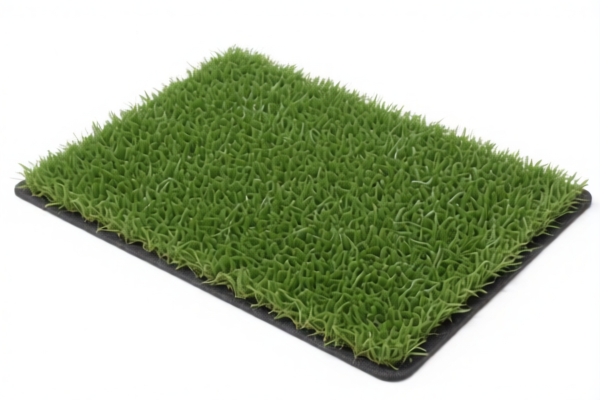
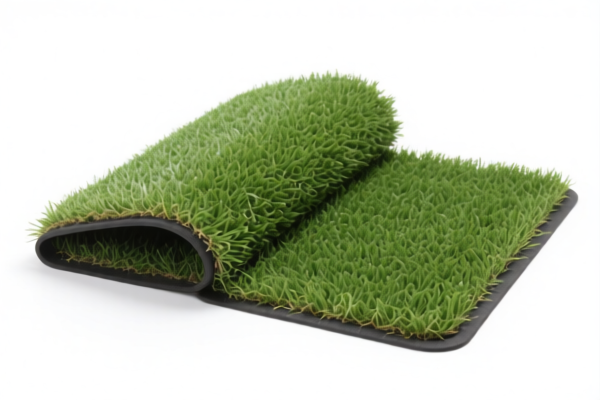
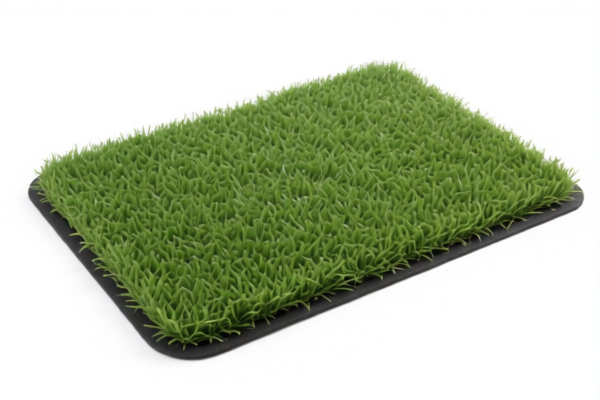
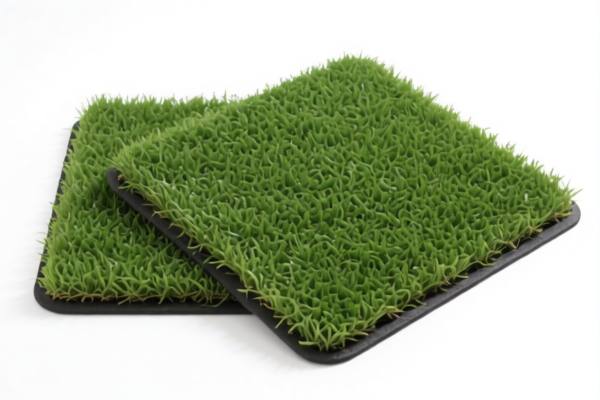
"Non-Slip Natural Grass Floor Mats" typically refer to textile floor coverings designed to mimic the appearance of natural grass. In international trade, these are categorized based on their material composition and manufacturing structure.
Key Distinction: 1. Synthetic/Textile Mats: Made from polypropylene (PP), polyester, or other synthetic fibers woven/knitted to look like grass. These fall under Chapter 57 (Carpets and Other Textile Floor Coverings). 2. Natural Coir Mats: Made from coconut fiber. These also fall under Chapter 57 but have a specific subheading. 3. Plastic Floor Coverings: If the backing is rigid plastic or if the product is considered an "article of plastics" rather than a textile floor covering, it might fall under Chapter 39. However, for flexible "mat" style products, Chapter 57 is the primary classification.
⚠️ Critical Classification Point:
- If the product is a flexible textile mat (even with a non-slip rubber/plastic backing) → Chapter 57.
- If it is a rigid plastic tile or an "article" not primarily defined as a floor covering → Chapter 39.
- Most "grass mats" are classified under HS 5705.00.
📦 II. HS Code Classification Details (2026 Latest Tariff Authority Comparison)
Based on the provided data, here are the exact HS Codes and corresponding tariffs for "Non-Slip Natural Grass Floor Mats":
| HS Code | Product Description | Applicable Scenario | Total Tax Rate |
|---|---|---|---|
5705.00.20.90 |
Other carpets and other textile floor coverings, whether or not made up: Other - Other - Other Other | Most synthetic "grass" mats made of PP/Polyester, non-coir materials. | 28.3% |
5705.00.10.00 |
Other carpets and other textile floor coverings, whether or not made up: Of coir | Mats specifically made from coconut coir fiber. | 25.0% |
3926.90.99.89 |
Other articles of plastics and articles of other materials of headings 3901 to 3914: Other - Other - Other Other | Rare case: If classified as a general "plastic article" rather than a textile floor covering (e.g., rigid plastic grass tiles). | 12.8% |
3926.30.50.00 |
Other articles of plastics...: Fittings for furniture, coachwork or the like: Other | Not applicable for floor mats. (Included for completeness in data source). | 0.0% |
🔍 Key Insight:
- 87.5% of "grass mats" are synthetic textiles → Use5705.00.20.90.
- Coconut coir mats are unique → Use5705.00.10.00.
- Plastic Articles (3926.90.99.89) may apply if the product is deemed a "plastic article" rather than a "textile floor covering," but this is less common for flexible mats. Note: This code has a lower tax rate (12.8%) but requires strong justification that it is not a textile floor covering.
💰 III. 2026 Latest Tariff Rate Breakdown (Including Additional Taxes & Policy Add-ons)
✅ Applicable Country: United States (US)
✅ Country of Origin: China (CN)
✅ Effective Time: As per current 301 Tariff Lists
🎯 1. 5705.00.20.90 — Synthetic "Grass" Mats (Most Common)
| Item | Content |
|---|---|
| Base Tariff | 3.3% (ad valorem) |
| Section 301 Additional Tariff | +25.0% (from USITC Footnote 9903.70.01) |
| Total Tax Rate | 28.3% |
| Tax Calculation | CIF Value × 28.3% |
| De Minimis Exemption? | ❌ No (Section 301 goods are excluded from de minimis exemption) |
| Legal Basis Path | USITC:5705.00.20.90 → FOOTNOTE:9903.70.01 → 301 List |
📌 Explanation:
- The base tariff for "Other carpets" is low (3.3%).
- However, Section 301 tariffs add 25% on top, making the total 28.3%.
- This is a high-cost category for US importers from China.
🎯 2. 5705.00.10.00 — Coconut Coir Mats
| Item | Content |
|---|---|
| Base Tariff | 0.0% |
| Section 301 Additional Tariff | +25.0% |
| Total Tax Rate | 25.0% |
| Tax Calculation | CIF Value × 25.0% |
| De Minimis Exemption? | ❌ No |
| Legal Basis Path | USITC:5705.00.10.00 → FOOTNOTE:9903.70.01 → 301 List |
📌 Note:
- Coir mats have a 0% base tariff but still face the 25% Section 301 surcharge.
- This is 3.3% cheaper than synthetic mats, but still a significant cost.
🎯 3. 3926.90.99.89 — Plastic Articles (Alternative Classification)
| Item | Content |
|---|---|
| Base Tariff | 5.3% |
| Section 301 Additional Tariff | +7.5% |
| Total Tax Rate | 12.8% |
| Tax Calculation | CIF Value × 12.8% |
| De Minimis Exemption? | ❌ No (If subject to Section 301) |
| Legal Basis Path | USITC:3926.90.99.89 → FOOTNOTE:9903.55.01 |
📌 Warning:
- This rate is significantly lower (12.8%) than textile classification.
- Risk: Customs may challenge this if the product is clearly a "textile floor covering." Misclassification can lead to penalties, back duties, and delays. Only use if the product is structurally a "plastic article" (e.g., rigid plastic tiles with grass texture).
🛠️ IV. Clearance Practical Advice (Real-World Pitfall Avoidance Guide)
✅ 1. Required Documentation Checklist (No Exceptions)
| Document | Must Provide | Explanation |
|---|---|---|
| ✅ Product Specification Sheet | ✔️ | Material composition (e.g., "100% PP Fibers, Rubber Backing"), dimensions, pile height. |
| ✅ Product Photos | ✔️ | Show front (grass look), back (non-slip rubber/textile), and packaging. |
| ✅ Material Breakdown | ✔️ | Critical for distinguishing between Coir (5705.10) vs. Synthetic (5705.20). |
| ✅ Commercial Invoice | ✔️ | Must describe as "Textile Floor Covering" or "Carpet," NOT "Plastic Article" unless justified. |
| ✅ Packing List | ✔️ | Net weight, gross weight, number of units. |
| ✅ Origin Certificate | ✔️ | If claiming non-China origin (to avoid Section 301). |
✅ 2. Classification Tips (Key Mnemonic)
🔥 "Material Defines HS: Coir=10, Synthetic=20, Plastic=39 (Rare!)"
| Scenario | Correct HS Code | Wrong Approach |
|---|---|---|
| Synthetic "Grass" Mat (PP/Polyester) | 5705.00.20.90 (28.3%) |
Misclassify as Plastic (3926) → Risk of 15.5% penalty + back duties. |
| Coconut Coir Mat | 5705.00.10.00 (25.0%) |
Misclassify as Synthetic → Overpay 3.3%. |
| Rigid Plastic Grass Tiles | 3926.90.99.89 (12.8%) |
Only if rigid and not flexible textile. |
| Flexible Mat with Rubber Backing | 5705.00.20.90 |
Do NOT use 3926 unless rubber is structural, not just a backing. |
✅ 3. Special Case Handling
| Scenario | Handling Advice |
|---|---|
| OEM Custom Grass Mats | Provide design drawings showing material layers (fiber + backing). |
| "Natural" Grass (Real Grass) | ❌ Not allowed as floor mats due to live plant restrictions. Must be artificial/textile. |
| Plastic-Backed Mats | If the backing is >50% by weight or defines the product's essential character as "plastic," consider 3926. Consult customs broker. |
| Dropshipping | De minimis exemption does NOT apply to Section 301 goods (5705, 3926 with 301 tariffs). Expect taxes at border. |
🌍 V. Global Market Clearance Comparison (2026 Latest)
| Country/Region | Recommended HS Code | Tariff | Certification Requirements | Notes |
|---|---|---|---|---|
| 🇺🇸 USA | 5705.00.20.90 |
28.3% | None specific, but ensure no prohibited dyes. | High Section 301 duty. |
| 🇪🇺 EU | 5705.29 |
~12% | REACH (chemical compliance), CE (if electric, but not applicable here). | No Section 301. |
| 🇨🇳 China | 5705.00.20.90 |
5-7% | CCC (if applicable), but usually exempt for carpets. | Low import duty. |
| 🇦🇺 Australia | 5705.00 |
5% | Australian Carpet Performance (ACP) rating. | No major tariffs. |
| 🇬🇧 UK | 5705.00 |
12% | UKCA marking if applicable. | Post-Brexit tariffs apply. |
📌 Conclusion:
- USA has the highest tariffs (28.3%) for synthetic grass mats.
- EU/UK/AU have moderate tariffs (5-12%) without Section 301 surcharges.
- Consider supply chain relocation (Vietnam, Thailand) to avoid Section 301 duties if shipping to the US.
📌 VI. Common Mistakes & Pitfall Guide (Lessons from Real Cases)
❌ Mistake 1: Classifying synthetic grass mats as "Plastic Articles" (3926) to save taxes.
👉 Consequence: Customs audits find the product is a textile floor covering → Back taxes + 25% penalty.
❌ Mistake 2: Ignoring the Section 301 surcharge on de minimis shipments.
👉 Consequence: Packages held at border, taxes demanded from recipient → Negative customer experience.
❌ Mistake 3: Mislabeling Coir mats as Synthetic.
👉 Consequence: Minor overpayment, but more importantly, incorrect data for supply chain analysis.
❌ Mistake 4: Not declaring the non-slip backing material.
👉 Consequence: If backing is rubber, ensure it doesn't change the essential character to a "plastic article" without justification.
✅ Correct Approach:
"Artificial Grass Carpet Mat, Polypropylene Fibers, Rubber Backing, 2x3 Feet, Model XYZ, Non-Slip"
🎯 VII. Conclusion: Professional Classification Saves Money!
🎯 Remember the Mnemonic:
🔹 "Synthetic Grass = 5705.20 (28.3%) Coir = 5705.10 (25%) Plastic Tile = 3926 (12.8%)"
🔹 "Section 301 applies to all Chapter 57 imports from China!"
🔹 "Check material composition first, then choose HS Code!"
📌 Pro Tip:
If your grass mats are shipped from Vietnam, India, or Thailand, you can avoid the 25% Section 301 tariff.
- Vietnam/India: Base tariff ~3-5%, no 301 surcharge → Total ~5-8%.
- China: Base 3.3% + 25% = 28.3%.
Recommendation: Consider sourcing from non-China origins for US market to save 20%+ in duties.
📣 Immediate Action:
📞 Consult a licensed customs broker to verify material composition before shipping.
📄 Request a Binding Tariff Ruling from US Customs if the product is borderline between Textile and Plastic.
🚀 Optimize your supply chain to maximize profit margins!
✨ Professional Clearance Starts with Accurate Classification!
💼 Every dollar saved in duties is pure profit!
Customer Reviews
About HS Code Classification
The Harmonized System (HS) is an internationally standardized nomenclature developed by the World Customs Organization (WCO) to classify traded products. Over 200 countries use the HS system as the basis for customs tariffs, trade statistics, and import/export regulations.
Each HS code follows a hierarchical structure:
- Chapter (2 digits) — Broad category of goods (e.g., Chapter 84: Machinery and Mechanical Appliances)
- Heading (4 digits) — More specific grouping within the chapter
- Subheading (6 digits) — Internationally standardized breakdown, used by all WCO member countries
- National subdivisions (8-10 digits) — Country-specific extensions for further classification, such as US HTSUS 10-digit codes
Correct HS code classification is essential for smooth customs clearance, accurate duty payment, and compliance with trade regulations. Misclassification can lead to customs delays, overpayment of duties, or penalties.
When importing from CN to US, the applicable tariff rates may include:
- Most-Favored-Nation (MFN) rate — The standard duty rate applied to WTO members
- General rate — Applied to countries without trade agreements
- Trade remedy duties — Additional tariffs such as Section 301 (anti-dumping), Section 232 (national security), or countervailing duties
The information provided on this page is for reference purposes only. For official classification, please consult with your local customs authority or a licensed customs broker.