Non alloy Steel Heat treated Bar
CN → US| HS Code | Tariff Rate | Origin | Destination | Doc |
|---|---|---|---|---|
| 7214990060 | 10.0% | CN | US | Official Doc |
| 7214990075 | 10.0% | CN | US | Official Doc |
Product Images
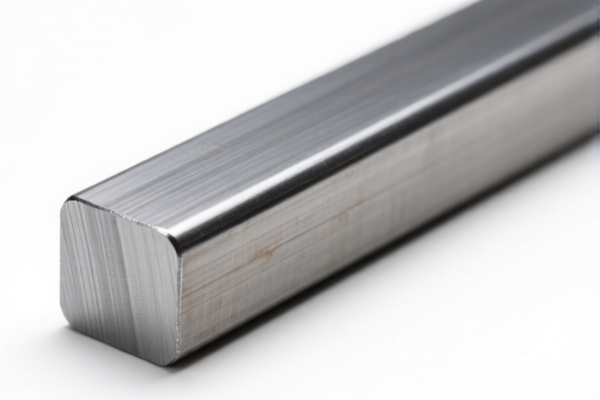
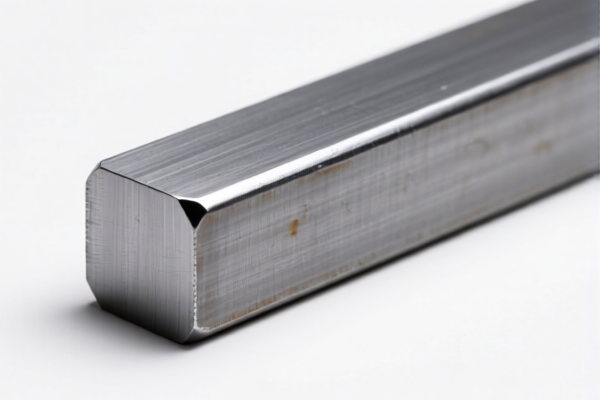
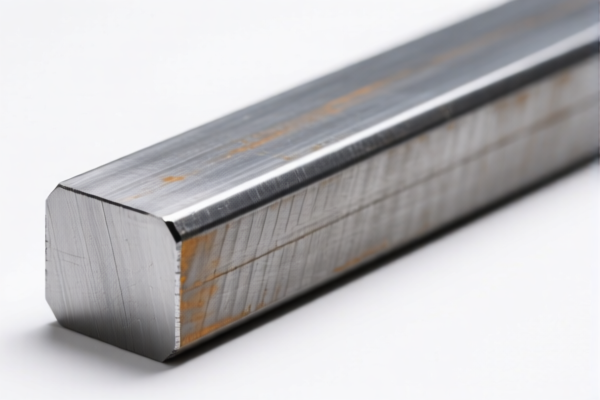
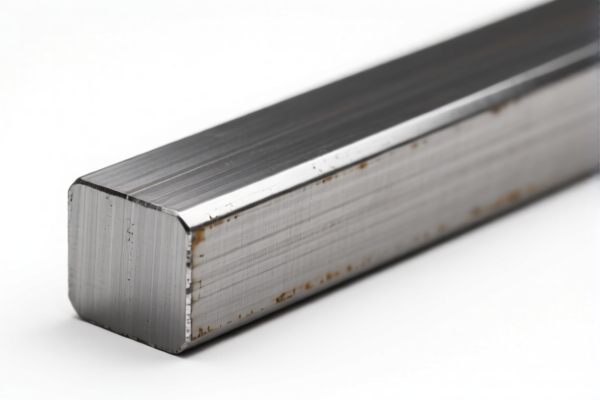
AI Analysis
🏗️ Non-Alloy Steel Heat Treated Bar
🌐 HS Code Reference & Customs Clearance Guide | 2026 Latest Tariff Analysis | Professional Clearance Strategy
📌 1. Product Definition and Classification: What is "Heat-Treated Bar"?
Non-alloy steel bars are iron-carbon alloys with less than 0.25% to 0.6% carbon content (depending on the grade), not further worked than forged, hot-rolled, hot-drawn, or hot-extruded. "Heat treated" indicates the steel has undergone thermal processing (e.g., annealing, normalizing, quenching, tempering) to adjust its mechanical properties like hardness, strength, or ductility. In international trade, classification depends on carbon content, which directly impacts duty rates and trade restrictions.
⚠️ Key Distinction Point:
- If carbon content is < 0.25% → Low-carbon steel bars (HS 7214.99.00.60)
- If carbon content is ≥ 0.25% but < 0.6% → Medium-carbon steel bars (HS 7214.99.00.75)
- Heat treatment does not change the HS code unless it alters the physical form (e.g., into coils or sheets).
📦 2. HS Code Classification Details (2026 Latest Tariff Authority Comparison)
| HS Code | Product Description | Applicable Scenario | Carbon Content | Heat Treated? |
|---|---|---|---|---|
7214.99.00.60 |
Other bars/rods of iron/non-alloy steel, hot-rolled/drawn/extruded, not further worked | Structural steel, shafts, bolts, general machinery parts | < 0.25% | ✅ Yes/No (irrelevant for HS) |
7214.99.00.75 |
Other bars/rods of iron/non-alloy steel, hot-rolled/drawn/extruded, not further worked | Spring steel, automotive components, gears | ≥ 0.25% but < 0.6% | ✅ Yes/No (irrelevant for HS) |
🔍 Important Reminder:
- Heat treatment alone does not change the HS code. The key factor is carbon weight percentage.
- If bars are forged and then heat-treated, they still fall under 7214.99 if not further worked (e.g., cut, threaded).
- If bars are cold-drawn or machined, they may fall under different HS codes (e.g., 7215.90, 7213.10).
💰 3. 2026 Latest Tariff Rate Details (Including Additional Taxes, Policy Add-ons)
✅ Applicable Country: United States (US)
✅ Origin: China (CN)
✅ Effective Time: 2025 November 10 onwards (including subsequent imports)
🎯 1. 7214.99.00.60 – Low-Carbon Steel Bars (< 0.25% Carbon)
| Item | Content |
|---|---|
| Base Tariff Rate | 0% (ad valorem) |
| USITC Additional Tariff | +25% (from USITC Footnote 9903.88.01) |
| IEEPA Additional Tariff | +10% (for China/Hong Kong products, effective Nov 10, 2025) |
| Total Tariff Rate | 45% |
| Tax Calculation | CIF Value × 45% |
| De Minimis Exemption Eligible? | ❌ Not Eligible (deny_de_minimis) |
| Legal Basis Path | IEEPA:9903.01.25 → IEEPA:9903.01.24 → USITC:7214.99.00.60 → FOOTNOTE:9903.88.01 |
📌 Explanation:
- The "USITC Additional Tariff 25%" comes from Section 301 of the U.S. Trade Act under "Additional Duties";
- The "IEEPA 10%" is the Additional Tariff under the International Emergency Economic Powers Act for China;
- Total 45%, which is a very high tariff, must be predicted in advance!
🎯 2. 7214.99.00.75 – Medium-Carbon Steel Bars (≥ 0.25% but < 0.6% Carbon)
| Item | Content |
|---|---|
| Base Tariff Rate | 0% |
| USITC Additional Tariff | +25% |
| IEEPA Additional Tariff | +10% |
| Total Tariff Rate | 45% |
| Tax Calculation | CIF × 45% |
| De Minimis Exemption Eligible? | ❌ Not Eligible |
| Legal Basis Path | IEEPA:9901.25 → IEEPA:9903.01.24 → USITC:7214.99.00.75 → FOOTNOTE:9903.88.01 |
📌 Note:
- Same as above, both categories have identical tariff rates;
- Whether the steel is "heat treated" or not does not affect the tariff rate;
- Even if the bars are used for springs, gears, or automotive parts, as long as they meet the carbon content criteria, they apply this tariff.
🛠️ 4. Customs Clearance Practical Advice (Battlefield Pitfall Avoidance Guide)
✅ 1. Preparation Material Checklist (Indispensable)
| Material | Must Provide | Description |
|---|---|---|
| ✅ Product Specification Sheet | ✔️ | Include dimensions, carbon content, heat treatment process (annealing, quenching, etc.), mechanical properties |
| ✅ Material Test Certificate | ✔️ | Must show carbon content weight percentage (critical for HS code determination) |
| ✅ Product Photos (with labels) | ✔️ | Clear display of model number, brand, heat treatment marks (if any) |
| ✅ Third-Party Test Report | ✔️ | ASTM, ISO, or equivalent standards for mechanical properties |
| ✅ Commercial Invoice | ✔️ | Must specify "Non-Alloy Steel Bar, Heat Treated" |
| ✅ Certificate of Origin (CO) | ✔️ | If not from China, can apply for preferential tariff |
| ✅ Packing List | ✔️ | Indicate relationship between main goods and accessories, avoid split declaration |
✅ 2. Declaration Techniques (Key Mantra)
🔥 "Check Carbon, Not Heat; Declare Accurately, Taxes Are Clearer!"
| Situation | Correct Declaration Method | Wrong Practice |
|---|---|---|
| Steel bars with carbon < 0.25% | 7214.99.00.60 |
Misdeclared as 7214.99.00.75 → 45% (same rate, but incorrect HS) |
| Steel bars with carbon ≥ 0.25% but < 0.6% | 7214.99.00.75 |
Misdeclared as 7214.99.00.60 → 45% (same rate, but incorrect HS) |
| Bars with heat treatment marks | Still declare based on carbon content | Assume heat treatment changes HS code → Compliance risk |
| Cold-drawn or machined bars | 7215.90 or 7213.10 |
Declare as 7214.99 → 45% (wrong category) |
✅ 3. Special Case Handling
| Situation | Handling Advice |
|---|---|
| OEM Custom Steel Bars | Provide customer order + design drawings to avoid being deemed "non-standard" |
| Heat-Treated Bars with Surface Coating | Still declare as 7214.99 if coating is minimal and doesn’t change classification |
| Bars Used in Medical Equipment | If for special equipment, may apply for "non-commercial use" exemption, but requires proof |
| Bars for Military/Aerospace | May apply for "special use" declaration, tariff may be reduced, contact in advance |
🌍 5. Global Main Market Customs Clearance Comparison (2026 Latest)
| Country/Region | Recommended HS Code | Tariff | Certification Requirements | Remarks |
|---|---|---|---|---|
| 🇺🇸 United States | 7214.99.00.60 / 7214.99.00.75 |
45% (China origin) | None | High tariff, de minimis denied |
| 🇨🇳 China | 7214.99.00.60 / 7214.99.00.75 |
5% | GB Standards | No additional tariffs |
| 🇪🇺 European Union | 7214.99.00 |
0% (if compliant with CE) | CE + RoHS | No additional tariffs |
| 🇦🇺 Australia | 7214.99.00 |
5% | RCM | No additional tariffs |
| 🇯🇵 Japan | 7214.99.00 |
0% | PSE | No additional tariffs |
📌 Conclusion:
- The United States is the only market imposing high additional tariffs on steel bars;
- Steel bars from China face extremely high customs clearance costs in the US;
- It is recommended to evaluate in advance whether to transfer production or adjust the supply chain.
📌 6. Common Mistakes & Pitfall Avoidance Guide (Blood Lessons)
❌ Mistake 1: Assuming "heat treatment" changes the HS code
👉 Consequence: Incorrect HS code declaration → Back taxes + fines!
❌ Mistake 2: Not providing carbon content test reports
👉 Consequence: Customs cannot determine HS code → Delay in release or return!
❌ Mistake 3: Using vague terms like "Steel Bar" without specifying carbon content
👉 Consequence: Customs may assign the higher-risk HS code → 45% tariff!
❌ Mistake 4: Declaring cold-drawn or machined bars as hot-rolled bars
👉 Consequence: Wrong HS code → 45% tariff!
✅ Correct Practice:
"Non-Alloy Steel Bar, Heat Treated, Carbon Content 0.35%, Diameter 20mm, Length 3m, ASTM A108, Model XYZ, Heat Treatment: Quenched and Tempered"
🎯 7. Conclusion: Professional Declaration, Save Time, Reduce Costs, Increase Efficiency!
🎯 Remember the Mantra:
🔹 "Check Carbon, Not Heat; Declare Accurately, Taxes Are Clearer!"
🔹 "HS Code Determines Destiny, Tariff Difference 25 Points, Declaration Step Wrong, Back Taxes Upwards!"
📌 Tips:
If your steel bars are originated from Vietnam, Mexico, Thailand, Malaysia, you can apply for IEEPA Exemption, tariff is only 0%~5%;
It is recommended to apply for Advance Ruling in advance to avoid customs clearance risks.
📣 Take Action Immediately:
📞 Contact Professional Customs Broker + Provide Product Photos + Apply for HS Code Advance Ruling
🚀 Let your steel bars, smooth customs clearance, efficient export, profit doubling!
✨ Professional Customs Clearance Starts with Accurate Classification!
💼 Every Cent of Your Cost Deserves to Be Calculated Precisely!
Customer Reviews
About HS Code Classification
The Harmonized System (HS) is an internationally standardized nomenclature developed by the World Customs Organization (WCO) to classify traded products. Over 200 countries use the HS system as the basis for customs tariffs, trade statistics, and import/export regulations.
Each HS code follows a hierarchical structure:
- Chapter (2 digits) — Broad category of goods (e.g., Chapter 84: Machinery and Mechanical Appliances)
- Heading (4 digits) — More specific grouping within the chapter
- Subheading (6 digits) — Internationally standardized breakdown, used by all WCO member countries
- National subdivisions (8-10 digits) — Country-specific extensions for further classification, such as US HTSUS 10-digit codes
Correct HS code classification is essential for smooth customs clearance, accurate duty payment, and compliance with trade regulations. Misclassification can lead to customs delays, overpayment of duties, or penalties.
When importing from CN to US, the applicable tariff rates may include:
- Most-Favored-Nation (MFN) rate — The standard duty rate applied to WTO members
- General rate — Applied to countries without trade agreements
- Trade remedy duties — Additional tariffs such as Section 301 (anti-dumping), Section 232 (national security), or countervailing duties
The information provided on this page is for reference purposes only. For official classification, please consult with your local customs authority or a licensed customs broker.