Non cellular Rubber Automotive Profiles
CN → US| HS Code | Tariff Rate | Origin | Destination | Doc |
|---|---|---|---|---|
| 4008210000 | 35.0% | CN | US | Official Doc |
| 6813810050 | 35.0% | CN | US | Official Doc |
| 4008294000 | 37.9% | CN | US | Official Doc |
| 6813890050 | 35.0% | CN | US | Official Doc |
Product Images
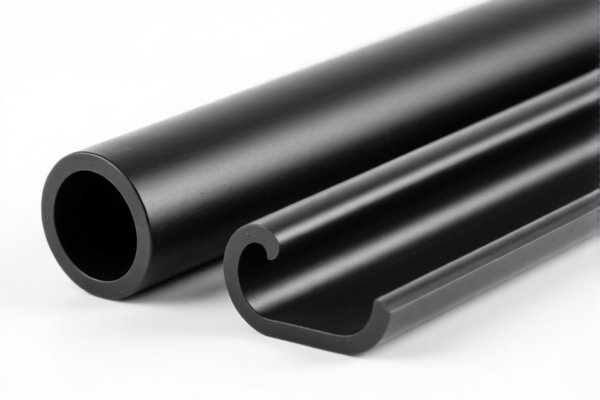
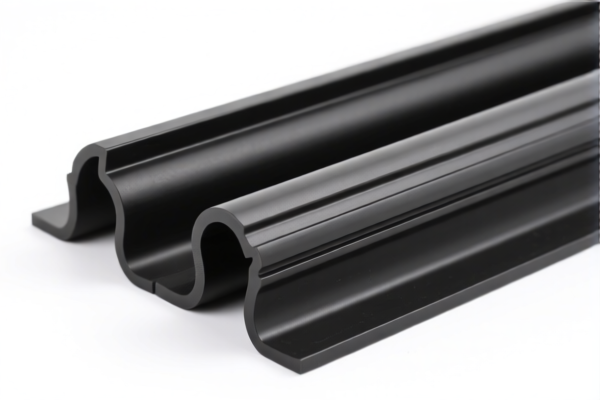
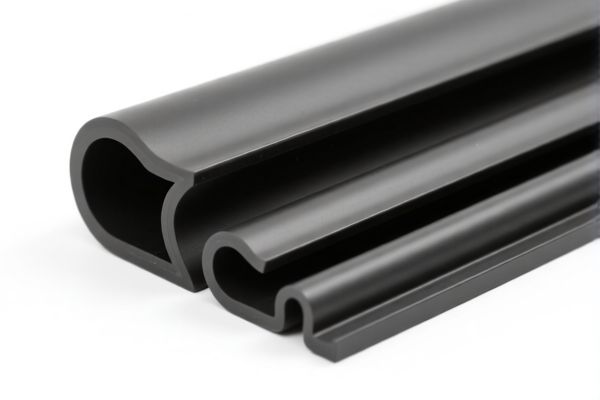
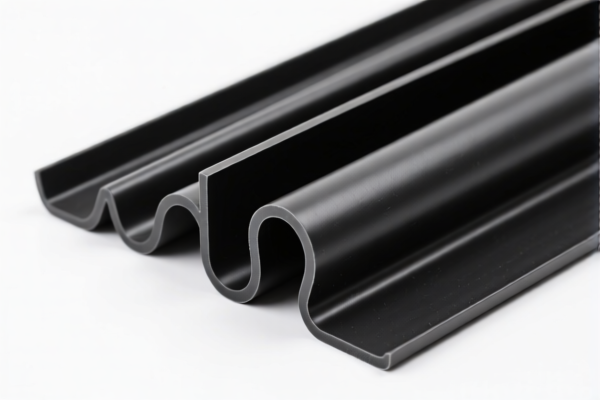
AI Analysis
🚗 Non-Cellular Rubber Automotive Profiles
🌐 HS Code Reference & Clearance Guide | 2026 Latest Tariff Analysis | Professional Customs Strategy
📌 I. Product Definition & Classification: What Are "Non-Cellular Rubber Automotive Profiles"?
Non-Cellular Rubber Automotive Profiles refer to solid (non-porous, non-foamed) rubber extrusions used in the automotive industry. These include weatherstrips, door seals, window channels, gaskets, and vibration dampeners. They are characterized by their dense, solid structure without air pockets (unlike foam rubber).
In international trade, these products face complex classification because they can be viewed either as general rubber articles or as specific friction/brake components depending on their exact material composition and intended use.
⚠️ Key Distinction Point:
- If the product is a solid rubber plate/sheet/strip used for general sealing or as a raw material → Classified under Chapter 40 (Rubber).
- If the product functions specifically as a brake/clutch friction pad or specific composite material → Classified under Chapter 68 (Articles of Stone, Plaster, Cement, Asbestos, Mica, or Similar Materials), often containing rubber binders.
- Crucial Note: The term "Profile" implies an extruded shape. The tax burden varies significantly based on whether it is classified as a general rubber good or a specialized friction material.
📦 II. HS Code Classification Details (2026 Latest Tariff Alignment)
Based on the provided data, there are four possible HS Codes for "Non Cellular Rubber Automotive Profiles," reflecting different interpretations of material and use.
| HS Code | Product Description | Application Scenario | Material/Format Logic |
|---|---|---|---|
4008.21.00.00 |
Non-cellular rubber plates, sheets, strips | General automotive seals, solid rubber profiles, non-foamed parts | ✅ Solid Rubber (Plate/Sheet/Strip) |
6813.81.00.50 |
Friction material plates/sheets | Brake pads, clutch faces where rubber acts as a binder in friction materials | ✅ Friction Material (Rubber-based composite) |
4008.29.40.00 |
Other non-cellular rubber plates/sheets | General purpose solid rubber parts not specified elsewhere | ✅ Solid Rubber (Other) |
6813.89.00.50 |
Other friction material articles | Fallback classification for rubber-based friction components not listed elsewhere | ✅ Other Friction Materials |
🔍 Key Insight:
- Ch 40 vs. Ch 68: The biggest risk is misclassifying a rubber seal (40xx) as a friction pad (68xx) or vice versa. While both have high tariffs, the base duty differs (0%vs2.9%).
- "Profile" Interpretation: If the profile is simply a solid rubber extrusion (e.g., door weatherstrip),4008.21or4008.29is more appropriate. If it is a specialized brake lining profile,6813applies.
💰 III. 2026 Latest Tariff Rate Breakdown (Including Surtaxes & Policy Levies)
✅ Applicable Country: United States (US)
✅ Origin: China (CN)
✅ Effective Date: 2025 Nov 10 onwards (Includes subsequent imports)
🎯 1. 4008.21.00.00 – Non-Cellular Rubber Plates, Sheets, Strips
| Item | Content |
|---|---|
| Base Duty Rate | 0.0% (ad valorem) |
| USITC Surtax (Sec 301) | +25.0% (USITC Footnote related to rubber products) |
| 122 Section Tariff (IEEPA) | +10.0% (Targeting specific Chinese goods) |
| Total Duty Rate | 35.0% |
| Tax Calculation | CIF Value × 35% |
| De Minimis Exemption | ❌ Not Applicable |
| Legal Basis Path | USITC:4008.21.00.00 → 122:10% → 301:25% |
📌 Explanation:
- This code has 0% base duty, but the surtaxes bring the total to 35%.
- It is classified as a standard non-cellular rubber product.
🎯 2. 6813.81.00.50 – Friction Material Plates/Sheets (Brake/Clutch)
| Item | Content |
|---|---|
| Base Duty Rate | 0.0% (ad valorem) |
| USITC Surtax (Sec 301) | +25.0% |
| 122 Section Tariff (IEEPA) | +10.0% |
| Total Duty Rate | 35.0% |
| Tax Calculation | CIF Value × 35% |
| De Minimis Exemption | ❌ Not Applicable |
| Legal Basis Path | USITC:6813.81.00.50 → 122:10% → 301:25% |
📌 Explanation:
- Although it belongs to Chapter 68, the base duty is 0%.
- The surtaxes are identical to Chapter 40.
- Risk: If customs determines this is NOT a friction material but a general rubber seal, you may be fined for misclassification.
🎯 3. 4008.29.40.00 – Other Non-Cellular Rubber Plates/Sheets
| Item | Content |
|---|---|
| Base Duty Rate | 2.9% (ad valorem) |
| USITC Surtax (Sec 301) | +25.0% |
| 122 Section Tariff (IEEPA) | +10.0% |
| Total Duty Rate | 37.9% |
| Tax Calculation | CIF Value × 37.9% |
| De Minimis Exemption | ❌ Not Applicable |
| Legal Basis Path | USITC:4008.29.40.00 → 122:10% → 301:25% |
📌 Explanation:
- This code has a 2.9% base duty, leading to a higher total of 37.9%.
- Used for rubber profiles that do not fit the "specific" definition of4008.21or are general "other" rubber articles.
🎯 4. 6813.89.00.50 – Other Friction Material Articles
| Item | Content |
|---|---|
| Base Duty Rate | 0.0% (ad valorem) |
| USITC Surtax (Sec 301) | +25.0% |
| 122 Section Tariff (IEEPA) | +10.0% |
| Total Duty Rate | 35.0% |
| Tax Calculation | CIF Value × 35% |
| De Minimis Exemption | ❌ Not Applicable |
| Legal Basis Path | USITC:6813.89.00.50 → 122:10% → 301:25% |
📌 Explanation:
- A fallback code for friction materials.
- Total duty is 35%, same as6813.81.
🛠️ IV. Clearance Operational Advice (Practical Pitfall Avoidance Guide)
✅ 1. Documentation Checklist (Must-Have)
| Document | Required | Description |
|---|---|---|
| ✅ Product Specification Sheet | ✔️ | Must explicitly state "Non-Cellular" (Solid) vs. "Cellular/Foam." Include density (g/cm³). |
| ✅ Material Composition Certificate | ✔️ | Detailed breakdown of rubber compound. If >50% by weight is friction material, consider Ch 68. |
| ✅ Product Photos (Clear & Detailed) | ✔️ | Show cross-section to prove it is solid (no bubbles/holes). Show application (e.g., "Door Seal"). |
| ✅ Commercial Invoice | ✔️ | Clearly describe as "Solid Rubber Profile for Automotive Sealing" (not "Friction Pad" unless true). |
| ✅ Origin Certificate (CO) | ✔️ | Essential for proving Chinese origin and applying surtaxes correctly. |
| ✅ HS Code Pre-Ruling | ✔️ | Highly Recommended due to Ch 40 vs. Ch 68 ambiguity. |
✅ 2. Declaration Tips (Key Mantras)
🔥 "Solid is Key, Foam is Denied, Friction Needs Proof, Seal Needs Proof!"
| Scenario | Correct Declaration | Incorrect Declaration |
|---|---|---|
| Solid Rubber Door Seal | 4008.21.00.00 |
6813.89.00.50 → High Audit Risk |
| Brake Pad Profile (Friction) | 6813.81.00.50 |
4008.21.00.00 → Misclassification Penalty |
| Foam Rubber Seal (Wrong Input) | Reject | Declaring "Non-Cellular" when it is foam → Rejection/Destruction |
| Generic Rubber Strip | 4008.29.40.00 |
4008.21.00.00 if it doesn't meet specific plate/sheet definitions |
📌 Critical Advice:
- If the profile is used for sealing/weatherproofing, it is almost certainly Chapter 40.
- If the profile is used for friction/braking/clutch engagement, it is Chapter 68.
- Do not claim "Friction Material" if it is just a soft rubber seal. Customs will request material tests.
✅ 3. Special Case Handling
| Situation | Handling Advice |
|---|---|
| Mixed Packaging (Profiles + Adhesive Tape) | Declare as one unit if the adhesive is incidental. Otherwise, split codes. |
| Custom Extruded Shapes | Emphasize "Non-Cellular" in description. Provide density data (e.g., >1.0 g/cm³ indicates solid). |
| OEM Automotive Parts | Provide OEM part number and application list to prove "Automotive Profile" use, supporting Ch 40 classification. |
| High-Frequency Vibration Dampeners | If made of solid rubber, still Ch 40. If composite with metal/friction, check Ch 68. |
🌍 V. Global Market Comparison (2026 Latest)
| Country/Region | Recommended HS Code | Base Duty | Surtaxes (China) | Total Estimate | Remarks |
|---|---|---|---|---|---|
| 🇺🇸 USA | 4008.21.00.00 or 6813.81.00.50 |
0% | +35% (Sec 301 + 122) | 35% - 37.9% | High barrier. |
| 🇨🇳 China | 4008.21.00.00 |
10% | 0% | 10% | No surtaxes. |
| 🇪🇺 EU | 4008.21.00.00 |
6.5% | 0% | 6.5% | No China surtax. |
| 🇲🇽 Mexico | 4008.21.00.00 |
0% (USMCA) | 0% | 0% | Preferential if meets rules. |
| 🇻🇳 Vietnam | 4008.21.00.00 |
0-5% | Varies | ~5% | Supply chain diversification. |
📌 Conclusion:
- USA is the most challenging market due to the 35%+ total duty.
- EU and China are more favorable with single-digit base duties.
- Consider supply chain shifts to Mexico or Vietnam for US-bound goods to avoid US surtaxes.
📌 VI. Common Errors & Pitfalls (Blood Lessons)
❌ Error 1: Calling "Solid Rubber Seal" a "Friction Material" to confuse customs.
👉 Consequence: Audits, fines, and potential blacklisting for misdeclaration.
❌ Error 2: Failing to prove "Non-Cellular" nature.
👉 Consequence: Customs may classify as "Cellular Rubber" (different code), leading to duty recalculations and delays.
❌ Error 3: Not declaring "Automotive Use" correctly.
👉 Consequence: Loss of potential duty drawbacks if eligible for manufacturing exemptions (rare but possible).
❌ Error 4: Confusing 4008.21 with 4008.11 (Honeycomb/Cellular).
👉 Consequence: 4008.11 has different tax rules. If you import solid profiles but declare cellular, you risk penalty.
✅ Correct Declaration Example:
"Non-Cellular Solid Rubber Automotive Door Weatherstrip Profile, Model XYZ, Black, 50mm Width, Density 1.2 g/cm³, For Use in Sealing Car Doors"
🎯 VII. Conclusion: Professional Declaration, Save Time & Money!
🎯 Remember the Mantra:
🔹 "Solid is 40, Friction is 68, Base is 0 or 2.9, Surtax is 35!"
🔹 "Proof of Non-Cellular is Key, Avoid the Foam Trap!"
📌 Pro Tip:
If your automotive profiles are originally from Vietnam, Mexico, or Thailand, you may qualify for USMCA or EVFTA benefits, potentially reducing duties to 0%.
Recommend applying for a Pre-Ruling (Advance Ruling) from US Customs to secure the correct HS Code before shipping.
📣 Immediate Action:
📞 Contact a professional customs broker + Provide cross-section photos + Apply for HS Code Pre-Ruling
🚀 Let your automotive profiles clear smoothly, reduce costs, and boost profits!
✨ Professional Clearance Starts with Accurate Classification!
💼 Every cent of duty is worth calculating precisely!
Customer Reviews
About HS Code Classification
The Harmonized System (HS) is an internationally standardized nomenclature developed by the World Customs Organization (WCO) to classify traded products. Over 200 countries use the HS system as the basis for customs tariffs, trade statistics, and import/export regulations.
Each HS code follows a hierarchical structure:
- Chapter (2 digits) — Broad category of goods (e.g., Chapter 84: Machinery and Mechanical Appliances)
- Heading (4 digits) — More specific grouping within the chapter
- Subheading (6 digits) — Internationally standardized breakdown, used by all WCO member countries
- National subdivisions (8-10 digits) — Country-specific extensions for further classification, such as US HTSUS 10-digit codes
Correct HS code classification is essential for smooth customs clearance, accurate duty payment, and compliance with trade regulations. Misclassification can lead to customs delays, overpayment of duties, or penalties.
When importing from CN to US, the applicable tariff rates may include:
- Most-Favored-Nation (MFN) rate — The standard duty rate applied to WTO members
- General rate — Applied to countries without trade agreements
- Trade remedy duties — Additional tariffs such as Section 301 (anti-dumping), Section 232 (national security), or countervailing duties
The information provided on this page is for reference purposes only. For official classification, please consult with your local customs authority or a licensed customs broker.