Non cellular polyvinyl chloride plastic sheets for packaging
CN → US| HS Code | Tariff Rate | Origin | Destination | Doc |
|---|---|---|---|---|
| 3919905060 | 40.8% | CN | US | Official Doc |
| 3919905040 | 40.8% | CN | US | Official Doc |
| 3920490000 | 40.8% | CN | US | Official Doc |
| 3921125000 | 41.5% | CN | US | Official Doc |
| 3920435000 | 39.2% | CN | US | Official Doc |
Product Images

AI Analysis
📦 Non-Cellular Polyvinyl Chloride (PVC) Plastic Sheets for Packaging
🌐 HS Code Reference & Customs Clearance Guide | 2026 Latest Tariff Analysis | Professional Compliance Strategy
📌 I. Product Definition & Classification: What Exactly Are "Non-Cellular PVC Sheets"?
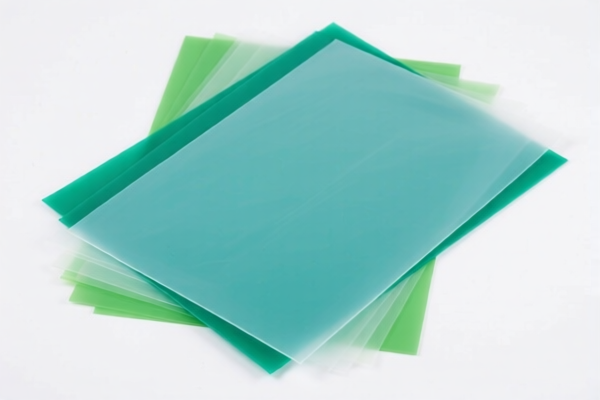
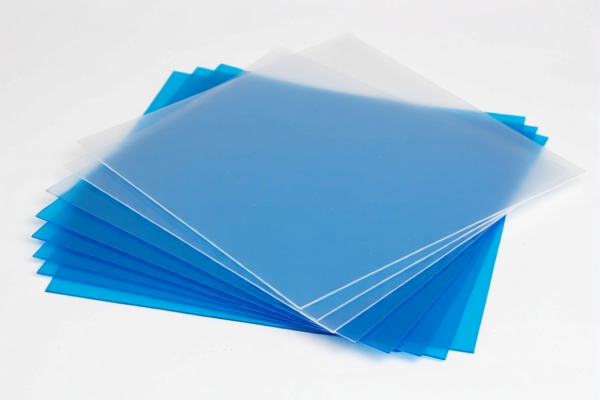
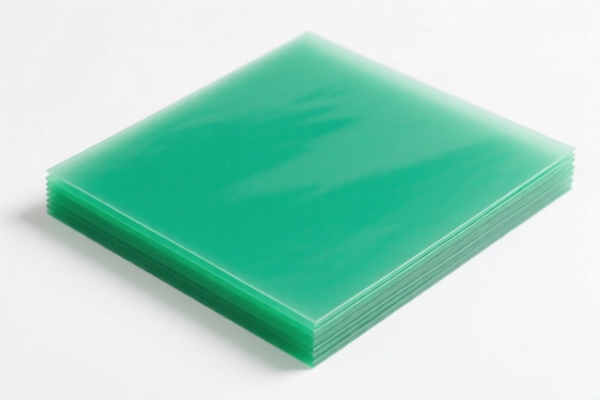
Non-cellular polyvinyl chloride (PVC) plastic sheets are rigid, flat plastic products made from polyvinyl chloride resin. The term "non-cellular" is critical: it means the material is solid and dense, with no foam, bubbles, or porous structure. These sheets are widely used in packaging (e.g., blister packs, clamshells, rigid containers) due to their clarity, durability, and chemical resistance.
⚠️ Key Classification Points:
- Material: Must be polyvinyl chloride (PVC). If it contains significant amounts of other polymers (e.g., PET, PP), it may fall under a different HS code.
- Form: Must be in sheet/plate form (flat, not extruded into complex shapes).
- Structure: Non-cellular = solid, no foam. If cellular (foamed PVC), it belongs to a different subheading (e.g., 3919 or 3920.49 with cellular distinction).
- Use Case: "For packaging" does not change the HS code; classification is based on material and form, not end-use.
📦 II. HS Code Classification Details (2026 Latest Tariff Authority Cross-Reference)
Based on your input data, here are the five most relevant HS codes for non-cellular PVC sheets, along with detailed explanations for each classification:
| HS Code | Product Description | Applicable Scenario | Tax Rate (Total) | Tax Breakdown |
|---|---|---|---|---|
3919.90.50.60 |
Non-cellular PVC plastic sheets, PVC material, sheet form, no conflict. | PVC sheets with self-adhesive backing? Note: HS 3919 is for self-adhesive plates/sheets/tapes. If non-adhesive, this may be misclassified. | 40.8% | Base: 5.8%, Section 301: 25%, Section 122: 10% |
3919.90.50.40 |
Non-cellular PVC plastic sheets, PVC material, sheet form, meets flat shape definition. | Same as above; likely applies if sheets are self-adhesive and flat. Caution: Verify if product is adhesive. | 40.8% | Base: 5.8%, Section 301: 25%, Section 122: 10% |
3920.49.00.00 |
Non-cellular PVC plastic sheets, vinyl polymer material, non-cellular plastic sheet, fully consistent. | Best fit for non-adhesive, rigid, non-cellular PVC sheets. Vinyl polymers include PVC. | 40.8% | Base: 5.8%, Section 301: 25%, Section 122: 10% |
3921.12.50.00 |
Non-cellular PVC plastic sheets, PVC material, plastic sheet form, meets classification requirements. | PVC sheets that are composite or reinforced (e.g., PVC with paper/fabric backing). Check if your product is composite. | 41.5% | Base: 6.5%, Section 301: 25%, Section 122: 10% |
3920.43.50.00 |
Non-cellular PVC plastic sheets, PVC material, plastic sheet form, non-cellular, fully compliant. | Best fit for rigid, non-cellular, non-adhesive PVC sheets with specific hardness or thickness profiles. | 39.2% | Base: 4.2%, Section 301: 25%, Section 122: 10% |
🔍 Critical Analysis:
- HS 3919 is for self-adhesive plates, sheets, and tapes. If your PVC sheets are not self-adhesive, 3919.90.50.60/40 may be incorrect.
- HS 3920.49.00.00 and 3920.43.50.00 are the most accurate for non-adhesive, rigid, non-cellular PVC sheets.
- HS 3921.12.50.00 applies if the sheet is composite (e.g., PVC laminated with paper, fabric, or metal).
- Section 122 Tariff (10%) applies to certain PVC products under US Trade Act provisions.
- Section 301 Tariff (25%) applies to Chinese-origin PVC sheets.
- Base Tariff varies (4.2%–6.5%) depending on exact subheading.
💰 III. 2026 Latest Tariff Rate Breakdown (Including Additional Duties & Policy Surcharges)
✅ Applicable Country: United States (US)
✅ Origin: China (CN)
✅ Effective Date: Ongoing (as of 2026)
🎯 1. 3920.49.00.00 – Non-Cellular PVC Sheets (Vinyl Polymer, Non-Cellular)
| Item | Details |
|---|---|
| Base Tariff | 5.8% (ad valorem) |
| Section 301 Additional Tariff | +25% (USITC Footnote 9903.88.01) |
| Section 122 Additional Tariff | +10% (Trade Act provisions) |
| Total Tariff | 40.8% |
| Tax Calculation | CIF Value × 40.8% |
| De Minimis Exemption? | ❌ No (deny_de_minimis) |
| Legal Path | IEEPA:9903.01.25 → IEEPA:9903.01.24 → USITC:3920.49.00.00 → FOOTNOTE:9903.88.01 |
📌 Explanation:
- This is the standard classification for rigid, non-cellular PVC sheets without adhesive backing.
- Total duty is 40.8%, which is very high.
- No de minimis exemption applies (small shipments still pay full duty).
🎯 2. 3920.43.50.00 – Non-Cellular PVC Sheets (Specific Profile)
| Item | Details |
|---|---|
| Base Tariff | 4.2% |
| Section 301 Additional Tariff | +25% |
| Section 122 Additional Tariff | +10% |
| Total Tariff | 39.2% |
| Tax Calculation | CIF Value × 39.2% |
| De Minimis Exemption? | ❌ No |
| Legal Path | IEEPA:9903.01.25 → IEEPA:9903.01.24 → USITC:3920.43.50.00 → FOOTNOTE:9903.88.01 |
📌 Note:
- Slightly lower total tariff (39.2%) due to a lower base rate (4.2% vs. 5.8%).
- Applies if the sheets meet specific technical criteria (e.g., hardness, thickness).
- Verify with USITC if your product qualifies.
🎯 3. 3921.12.50.00 – Composite PVC Sheets
| Item | Details |
|---|---|
| Base Tariff | 6.5% |
| Section 301 Additional Tariff | +25% |
| Section 122 Additional Tariff | +10% |
| Total Tariff | 41.5% |
| Tax Calculation | CIF Value × 41.5% |
| De Minimis Exemption? | ❌ No |
📌 Warning:
- Only apply if your PVC sheets are composite (e.g., PVC + paper/fabric/metal).
- If your product is pure PVC, this code is incorrect and may lead to customs penalties.
🎯 4. 3919.90.50.60 & 3919.90.50.40 – Self-Adhesive PVC Sheets
| Item | Details |
|---|---|
| Base Tariff | 5.8% |
| Section 301 Additional Tariff | +25% |
| Section 122 Additional Tariff | +10% |
| Total Tariff | 40.8% |
| De Minimis Exemption? | ❌ No |
⚠️ Critical Check:
- HS 3919 is ONLY for self-adhesive products.
- If your PVC sheets are not self-adhesive, do not use these codes.
- Misclassification can lead to audits, fines, or shipment delays.
🛠️ IV. Customs Clearance Practical Advice (Real-World Pitfall Avoidance)
✅ 1. Documentation Checklist (All Required)
| Document | Required | Notes |
|---|---|---|
| ✅ Product Specification Sheet | ✔️ | Include material (PVC), form (sheet), structure (non-cellular), thickness, hardness |
| ✅ Technical Data Sheet (TDS) | ✔️ | Confirm no adhesive, no foam, no composite layers |
| ✅ Product Photos (Front/Back/Side) | ✔️ | Show flat, rigid, non-foamed structure |
| ✅ Commercial Invoice | ✔️ | Clearly state "Non-Cellular PVC Plastic Sheets, Not Self-Adhesive" |
| ✅ Packing List | ✔️ | List quantity, weight, dimensions |
| ✅ Certificate of Origin (CO) | ✔️ | If non-Chinese origin, may qualify for lower tariffs |
| ✅ USITC Compliance Statement | ✔️ | Confirm no Section 301 exemption applies |
✅ 2. Declaration Tips (Key Mantra)
🔥 "Non-adhesive, Non-foamed, Pure PVC = 3920.49/43, NOT 3919!"
| Scenario | Correct Declaration | Incorrect Practice |
|---|---|---|
| Pure PVC sheets (no adhesive, no foam) | 3920.49.00.00 or 3920.43.50.00 |
Misdeclare as 3919 → Audit risk |
| Self-adhesive PVC sheets | 3919.90.50.40/60 |
Misdeclare as 3920 → Wrong tariff |
| Composite PVC (e.g., PVC + paper) | 3921.12.50.00 |
Misdeclare as 3920 → Penalty |
| Foamed PVC sheets | Not in your data | Misdeclare as 3920 → Wrong classification |
✅ 3. Special Cases
| Scenario | Handling Advice |
|---|---|
| OEM Custom Sheets | Provide customer order + design specs to prove material composition |
| Clear vs. Colored Sheets | Same HS code; color does not affect classification |
| Recycled PVC | Still 3920.49/43; recycling status does not change HS |
| Small Sample Shipments | No de minimis exemption; duty still applies |
🌍 V. Global Market Customs Comparison (2026 Latest)
| Country/Region | Recommended HS Code | Tariff | Certification | Notes |
|---|---|---|---|---|
| 🇺🇸 USA | 3920.49.00.00 |
40.8% (China origin) | FDA (if food contact), REACH | High duty due to Section 301 + 122 |
| 🇨🇳 China | 3920.49.00.00 |
~5–6% | GB Standard | No additional tariffs |
| 🇪🇺 EU | 3920.49.00 |
0–6.5% | REACH, RoHS | No Section 301 equivalent |
| 🇬🇧 UK | 3920.49.00 |
0–6.5% | UKCA | Post-Brexit rules apply |
| 🇦🇺 Australia | 3920.49.00 |
5% | ACCC | No Section 301 |
📌 Conclusion:
- USA is the most expensive market due to Section 301 (25%) + Section 122 (10%).
- EU, UK, Australia, China have significantly lower tariffs (0–6.5%).
- Consider supply chain diversification (e.g., Vietnam, India) to avoid US tariffs.
📌 VI. Common Mistakes & Pitfall Avoidance (Lessons from Real Cases)
❌ Mistake 1: Declaring non-adhesive PVC sheets as 3919 (self-adhesive)
👉 Consequence: Customs audit, potential penalties, shipment delays.
❌ Mistake 2: Ignoring the "non-cellular" requirement
👉 Consequence: If sheets are foamed, they belong to a different HS code (e.g., 3919 or 3920.49 with cellular distinction).
❌ Mistake 3: Using "PVC Packaging Sheets" as the product name
👉 Consequence: Vague description leads to customs confusion. Use: "Non-Cellular, Non-Adhesive PVC Plastic Sheets, Rigid, for Packaging."
❌ Mistake 4: Assuming de minimis exemption applies
👉 Consequence: Small shipments still pay full duty (40.8%). No exemption for PVC sheets from China.
✅ Correct Practice:
"Non-Cellular Polyvinyl Chloride (PVC) Plastic Sheets, Rigid, Non-Adhesive, Clear/Colored, Thickness: 0.5mm–3mm, HS Code: 3920.49.00.00"
🎯 VII. Conclusion: Precision Classification Saves Money!
🎯 Remember the Mantra:
🔹 "Non-adhesive = 3920, NOT 3919!"
🔹 "Non-cellular = Solid, NOT Foamed!"
🔹 "PVC Sheets from China = 40.8% Duty in USA!"
🔹 "De Minimis Does NOT Apply!"
📌 Pro Tip:
If your PVC sheets are not made in China (e.g., Vietnam, Thailand, India), you may avoid Section 301 tariffs and reduce duty to 5.8–6.5%.
Consider pre-ruling (Advance Ruling) from US Customs to confirm HS code and avoid post-entry audits.
📣 Immediate Action Required:
📞 Contact a licensed customs broker + Provide product specs + Apply for HS Code Advance Ruling
🚀 Ensure smooth customs clearance, minimize costs, and avoid penalties!
✨ Professional clearance starts with accurate classification!
💼 Every percentage point of duty affects your bottom line!
Customer Reviews
About HS Code Classification
The Harmonized System (HS) is an internationally standardized nomenclature developed by the World Customs Organization (WCO) to classify traded products. Over 200 countries use the HS system as the basis for customs tariffs, trade statistics, and import/export regulations.
Each HS code follows a hierarchical structure:
- Chapter (2 digits) — Broad category of goods (e.g., Chapter 84: Machinery and Mechanical Appliances)
- Heading (4 digits) — More specific grouping within the chapter
- Subheading (6 digits) — Internationally standardized breakdown, used by all WCO member countries
- National subdivisions (8-10 digits) — Country-specific extensions for further classification, such as US HTSUS 10-digit codes
Correct HS code classification is essential for smooth customs clearance, accurate duty payment, and compliance with trade regulations. Misclassification can lead to customs delays, overpayment of duties, or penalties.
When importing from CN to US, the applicable tariff rates may include:
- Most-Favored-Nation (MFN) rate — The standard duty rate applied to WTO members
- General rate — Applied to countries without trade agreements
- Trade remedy duties — Additional tariffs such as Section 301 (anti-dumping), Section 232 (national security), or countervailing duties
The information provided on this page is for reference purposes only. For official classification, please consult with your local customs authority or a licensed customs broker.