Non cellular rubber automotive profile
CN → US| HS Code | Tariff Rate | Origin | Destination | Doc |
|---|---|---|---|---|
| 8708990300 | 35.0% | CN | US | Official Doc |
| 8708995500 | 37.5% | CN | US | Official Doc |
| 4016931010 | 37.5% | CN | US | Official Doc |
| 4016931050 | 37.5% | CN | US | Official Doc |
Product Images
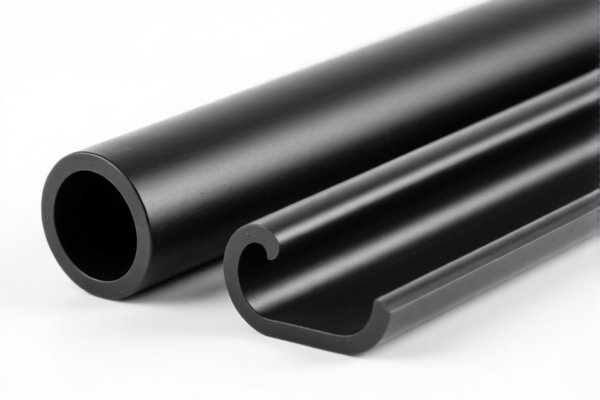
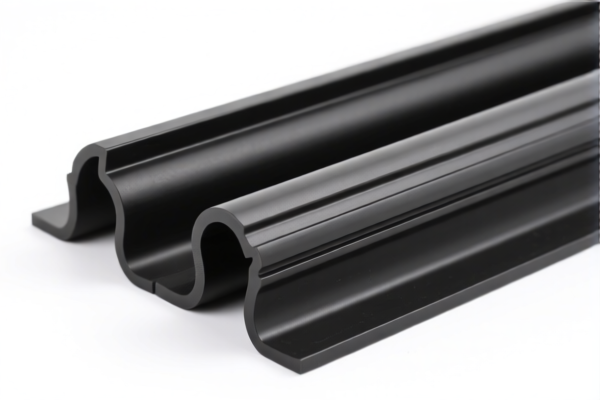
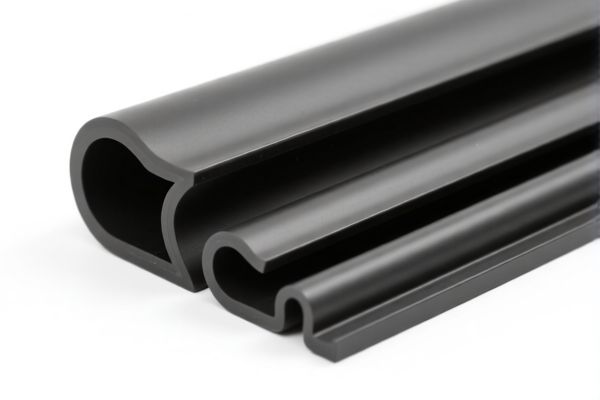
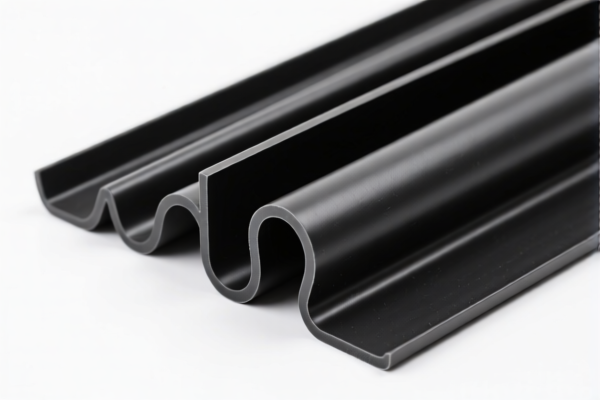
AI Analysis
🔴 Non-Cellular Rubber Automotive Profiles (Vulcanized Rubber Goods)
🌐 HS Code Reference & Customs Clearance Guide | 2026 Latest Tariff Analysis | Professional Compliance Strategy
📌 I. Product Definition & Classification: Do You Truly Understand "Non-Cellular Rubber Automotive Profiles"?
"Non-cellular rubber automotive profiles" refer to solid (dense), vulcanized rubber components used in the automotive sector (Chapter 87). Unlike foam or cellular rubber, these materials are dense, durable, and primarily used for sealing, gasketing, and vibration control.
In international trade, these goods are broadly categorized into two main functional groups:
1. Seals, Gaskets, and Washers: Solid rubber rings, O-rings, and flat seals designed to prevent fluid or air leakage in automotive systems (engines, transmissions, chassis).
2. Vibration Control Goods: Solid rubber blocks, mounts, or profiles designed to absorb shock and reduce noise/vibration in automotive structures.
⚠️ Key Distinction Point:
- If the product is specifically designed as an O-Ring for automotive use → It falls under 4016.93.10.10.
- If the product is a general seal/gasket/washer for automotive use (but not an O-Ring) → It falls under 4016.93.10.50.
- If the product is a vibration control mount/block (part of the vehicle structure) → It falls under 8708.99.03.00 (for tractors/agricultural) or 8708.99.55.00 (for other motor vehicles).
📦 II. HS Code Classification Details (2026 Latest Tariff Authority对照)
| HS Code | Product Description | Application Scenario | Tax Rate (CN Origin → US) |
|---|---|---|---|
4016.93.10.10 |
O-Rings for automotive goods (Chapter 87) | Engine seals, hydraulic system seals, circular seals | 27.5% |
4016.93.10.50 |
Other gaskets, washers, seals for automotive goods | Flat gaskets, flange seals, non-O-ring profiles | 27.5% |
8708.99.03.00 |
Vibration control goods containing rubber (Tractors/Agricultural) | Rubber mounts for agricultural tractors (Heading 8701) | 25.0% |
8708.99.55.00 |
Other vibration control goods containing rubber | Rubber mounts/bushings for cars, trucks, buses (Headings 8701-8705) | 27.5% |
🔍 Critical Note:
- "Non-cellular" implies solid vulcanized rubber. Do not confuse with cellular (foam) rubber, which may have different subheadings.
- Function is King: Even if it’s a rubber profile, if its primary function is vibration damping in a car, it’s a Chapter 87 part (8708...). If its primary function is sealing a joint, it’s a Chapter 40 article (4016...).
- O-Rings vs. Other Seals: O-rings have a specific subheading (4016.93.10.10). All other shapes (rectangular, triangular, custom profiles) fall under "Other" (4016.93.10.50).
💰 III. 2026 Latest Tariff Rate Details (Including Surtaxes & Policy Add-ons)
✅ Applicable Country: United States (US)
✅ Origin: China (CN)
✅ Effective Date: November 10, 2025 (including subsequent imports)
🎯 1. 4016.93.10.10 & 4016.93.10.50 – Rubber Seals, Gaskets, Washers (Automotive)
| Item | Detail |
|---|---|
| Basic Tariff | 2.5% (Ad Valorem) |
| Section 301 Surcharge | +25.0% |
| Total Tax Rate | 27.5% |
| Tax Calculation | CIF Value × 27.5% |
| De Minimis Eligibility | ❌ Not Eligible (Subject to high tariffs) |
| Legal Basis Path | USITC:4016.93.10.10/50 → FOOTNOTE:301 |
📌 Explanation:
- The 2.5% is the standard Most Favored Nation (MFN) base rate for other vulcanized rubber articles.
- The 25% is the additional tariff imposed under Section 301 of the Trade Act of 1974 on Chinese goods.
- Total: 27.5%. This is a significant cost burden. Ensure your invoice clearly describes the item as "Rubber Gasket/O-Ring" and not just "Plastic/Rubber Part" to avoid misclassification penalties.
🎯 2. 8708.99.03.00 – Vibration Control Goods (Tractors/Agricultural)
| Item | Detail |
|---|---|
| Basic Tariff | 0.0% (Ad Valorem) |
| Section 301 Surcharge | +25.0% |
| Total Tax Rate | 25.0% |
| Tax Calculation | CIF Value × 25.0% |
| De Minimis Eligibility | ❌ Not Eligible |
| Legal Basis Path | USITC:8708.99.03.00 → FOOTNOTE:301 |
📌 Note:
- This specific subheading applies to tractors suitable for agricultural use (Heading 8701).
- Base rate is 0%, but the 301 surcharge still applies, bringing the total to 25%.
🎯 3. 8708.99.55.00 – Vibration Control Goods (Other Motor Vehicles)
| Item | Detail |
|---|---|
| Basic Tariff | 2.5% (Ad Valorem) |
| Section 301 Surcharge | +25.0% |
| Total Tax Rate | 27.5% |
| Tax Calculation | CIF Value × 27.5% |
| De Minimis Eligibility | ❌ Not Eligible |
| Legal Basis Path | USITC:8708.99.55.00 → FOOTNOTE:301 |
📌 Note:
- This covers rubber mounts, bushings, and vibration dampeners for cars, trucks, buses (Headings 8702-8705).
- Total rate is 27.5%, same as rubber seals.
🛠️ IV. Customs Clearance Practical Advice (Real-World Pitfall Avoidance)
✅ 1. Required Documentation Checklist (All Must Be Provided)
| Document | Mandatory? | Explanation |
|---|---|---|
| ✅ Product Specification Sheet | ✔️ | Must specify material (e.g., EPDM, NBR, Silicone), hardness (Shore A), and density (confirming "non-cellular/solid"). |
| ✅ Product Photos (Labeled) | ✔️ | Clear images showing cross-section (to prove no air cells/foam) and installation view. |
| ✅ Commercial Invoice | ✔️ | Must clearly state "Rubber Gasket for Automotive Engine" or "Vibration Mount for Car Chassis." Avoid vague terms like "Rubber Piece." |
| ✅ Bill of Lading/Air Waybill | ✔️ | Standard shipping documents. |
| ✅ Certificate of Origin (CO) | ✔️ | To verify Chinese origin and confirm applicability of 301 tariffs. |
✅ 2. Declaration Tips (Key Mnemonics)
🔥 "Function Defines Chapter, Shape Defines Subheading!"
| Scenario | Correct HS Code | Wrong Approach | Consequence |
|---|---|---|---|
| Solid O-Ring for car engine | 4016.93.10.10 |
Declare as "Rubber Part" → Risk of general classification error | Audit + Back Taxes |
| Rectangular Rubber Seal for car door | 4016.93.10.50 |
Declare as "Vibration Mount" → Wrong Chapter | 27.5% vs 25%? Not huge, but compliance is key. |
| Rubber Bushing for car suspension | 8708.99.55.00 |
Declare as "Gasket" → Wrong Function | Misdeclaration penalty |
| Rubber Mount for Tractor | 8708.99.03.00 |
Declare as "Other Rubber Part" (Ch 40) | May miss the 0% base rate benefit (though 301 still applies) |
✅ 3. Special Situation Handling
| Situation | Handling Advice |
|---|---|
| Custom-Shaped Rubber Profiles | If it’s a long profile cut to size for sealing (not a standard O-ring), use 4016.93.10.50. Provide drawings showing it’s a seal, not a structural mount. |
| Mixed Containers (Seals + Mounts) | Do not mix in one line item. Declare rubber seals under Ch 40 and vibration mounts under Ch 87 separately to avoid customs confusion. |
| OEM vs. Aftermarket | For OEM parts, provide the car manufacturer’s part number. For aftermarket, provide generic description + application (e.g., "Fits Toyota Camry 2020"). |
| Material Declaration | Clearly state "Vulcanized Rubber" and "Non-Cellular/Solid." If it’s foam (cellular), the HS code changes entirely, and tariffs may differ. |
🌍 V. Global Market Comparison (2026 Latest)
| Country/Region | Recommended HS Code | Tariff (China Origin) | Certification Requirement | Notes |
|---|---|---|---|---|
| 🇺🇸 USA | 4016.93.10.10/50 or 8708.99.55.00 |
27.5% | None specific for rubber, but RoHS/REACH if EU-bound | High tariff impact; cost-sensitive. |
| 🇨🇳 China | Same HS Codes | Varies (0-10%) | CCC (if automotive part) | Lower tariffs, but focus on domestic market. |
| 🇪🇺 EU | Similar HS Codes | 0-4% | REACH, RoHS, ELV (End-of-Life Vehicles) | Strict environmental regulations. |
| 🇲🇽 Mexico | Similar HS Codes | 0-5% (USMCA) | None | Favorable for automotive supply chain if originating in NA. |
| 🇻🇳 Vietnam | Similar HS Codes | Varies | None | Potential for lower tariffs if manufactured locally. |
📌 Conclusion:
- The US market is the most costly due to the 25% Section 301 surcharge.
- Mexico offers the best tariff advantage for automotive suppliers serving the US under USMCA.
📌 VI. Common Mistakes & Pitfalls (Lessons Learned)
❌ Mistake 1: Describing items as "Rubber Parts" without specifying function.
👉 Result: Customs may classify under a general higher-tariff heading or request detailed explanation, causing delays.
❌ Mistake 2: Confusing "O-Rings" with "Other Seals."
👉 Result: O-rings have a specific code (4016.93.10.10). Using the "Other" code (4016.93.10.50) for O-rings is technically incorrect, though the tariff is the same. Consistency in documentation is key.
❌ Mistake 3: Ignoring "Cellular" vs. "Non-Cellular."
👉 Result: If the rubber is foamed (cellular), it belongs to a different subheading (e.g., 4016.93.90 or 4016.99). Misdeclaration can lead to audits.
❌ Mistake 4: Not declaring automotive application.
👉 Result: If you don’t specify "for automotive use," customs might classify it under general industrial rubber goods, which could have different (often higher) base rates or different regulatory requirements.
✅ Correct Approach:
"Solid EPDM Rubber O-Ring, Automotive Use, Part No. XYZ, Non-Cellular, Vulcanized"
OR
"Rubber Vibration Mount, Automotive Suspension System, Part No. ABC, Solid Rubber"
🎯 VII. Conclusion: Precise Classification Saves Money!
🎯 Remember the Mantra:
🔹 "O-Ring is 4016.93.10.10, Other Seal is .50, Vibration Mount is 8708.99.55.00."
🔹 "All these carry 27.5% (or 25%) for China-origin goods to the US."
🔹 "Don’t guess the HS Code; define the function!"
📌 Pro Tip:
If your rubber profiles are sourced from Vietnam, Thailand, or Mexico, you may qualify for lower or zero tariffs under various trade agreements (like USMCA for Mexico).
Recommendation: Apply for a Pre-Ruling (Advance Ruling) from US Customs if your shipment volume is large, to lock in the classification and avoid surprise audits.
📣 Take Action Now:
📞 Contact a licensed customs broker.
📄 Provide cross-section photos to prove "non-cellular" status.
🚀 Ensure smooth customs clearance and protect your margins!
✨ Professional Clearance Starts with Accurate Classification!
💼 Every percentage point of tariff matters in the automotive supply chain!
Customer Reviews
About HS Code Classification
The Harmonized System (HS) is an internationally standardized nomenclature developed by the World Customs Organization (WCO) to classify traded products. Over 200 countries use the HS system as the basis for customs tariffs, trade statistics, and import/export regulations.
Each HS code follows a hierarchical structure:
- Chapter (2 digits) — Broad category of goods (e.g., Chapter 84: Machinery and Mechanical Appliances)
- Heading (4 digits) — More specific grouping within the chapter
- Subheading (6 digits) — Internationally standardized breakdown, used by all WCO member countries
- National subdivisions (8-10 digits) — Country-specific extensions for further classification, such as US HTSUS 10-digit codes
Correct HS code classification is essential for smooth customs clearance, accurate duty payment, and compliance with trade regulations. Misclassification can lead to customs delays, overpayment of duties, or penalties.
When importing from CN to US, the applicable tariff rates may include:
- Most-Favored-Nation (MFN) rate — The standard duty rate applied to WTO members
- General rate — Applied to countries without trade agreements
- Trade remedy duties — Additional tariffs such as Section 301 (anti-dumping), Section 232 (national security), or countervailing duties
The information provided on this page is for reference purposes only. For official classification, please consult with your local customs authority or a licensed customs broker.