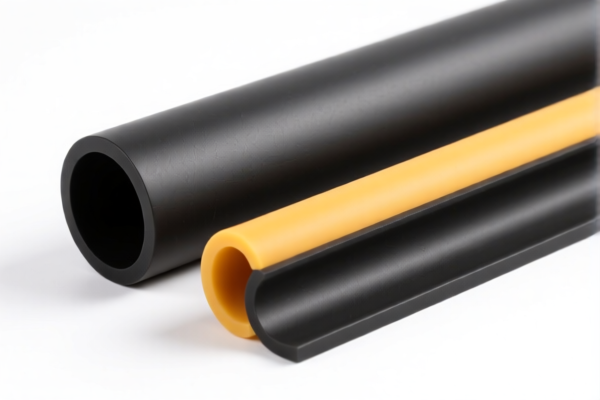
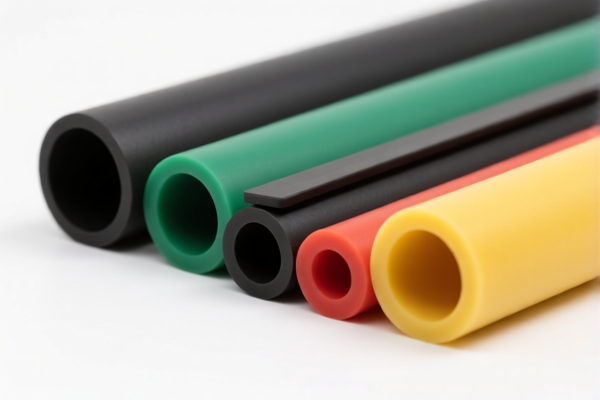
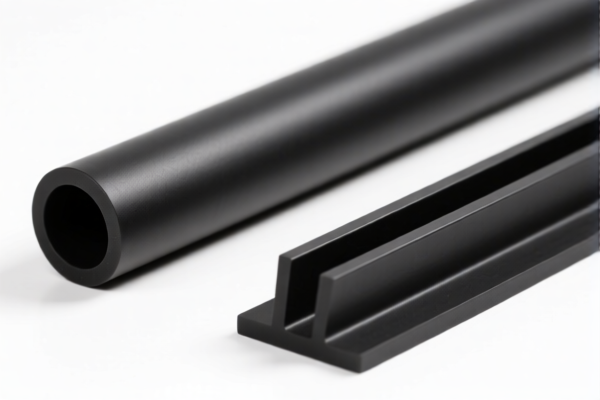
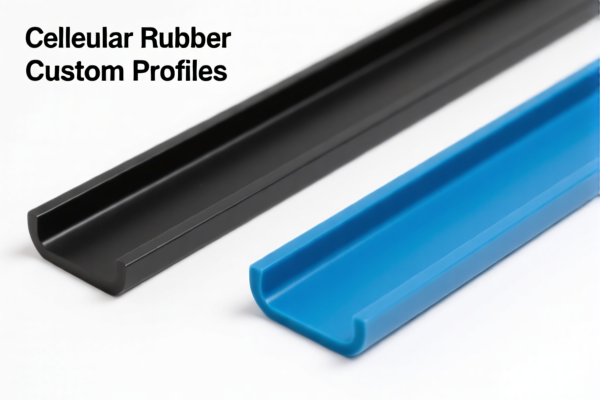
Non cellular rubber custom profile
CN → US| HS Code | Tariff Rate | Origin | Destination | Doc |
|---|---|---|---|---|
| 4016990000 | 0.0% | CN | US | Official Doc |
| 4016991000 | 20.8% | CN | US | Official Doc |
Product Images
AI Analysis
🛠️ Non-Cellular Rubber Custom Profiles
🌐 HS Code Reference & Customs Clearance Guide | 2026 Latest Tariff Analysis | Professional Strategy for Vulcanized Rubber Articles
📌 I. Product Definition & Classification: What Exactly Are "Non-Cellular Rubber Custom Profiles"?
Non-cellular rubber custom profiles refer to solid (non-porous, non-foamed) vulcanized rubber extrusions or molded parts tailored to specific shapes for industrial, automotive, construction, or consumer applications. These are distinct from "hard rubber" (ebonite) and are typically made from natural or synthetic rubbers like EPDM, Silicone, NBR, or Neoprene.
In international trade, these products are classified under Chapter 40: Rubber and Articles Thereof. The key distinction lies in whether the item is considered a "container/packaging" or a "general article/handle/knob". This distinction drastically affects the HS Code and, consequently, the tariff rate.
⚠️ Critical Classification Point:
- If the profile is designed specifically as a seal, gasket, or part of a packaging system intended to contain, transport, or market merchandise, it may fall under 4016.99.00.00.
- If the profile is a general-purpose industrial part (e.g., door seal, window gasket, handle grip, bump stop) not primarily functioning as a container closure or packaging component, it falls under 4016.99.10.00.
📦 II. HS Code Classification Details (2026 Latest Tariff Authority)
Based on the provided data, there are two primary HS Codes for non-cellular rubber profiles. The choice depends on the end-use and design intent.
| HS Code | Product Description | Application Scenario | Primary Function |
|---|---|---|---|
4016.99.00.00 |
Containers, with or without their closures, of a kind used for the packing, transporting or marketing of merchandise | Rubber gaskets for industrial drums, packaging seals, liner profiles for shipping containers, custom sealing strips for product packaging | Packaging/Containment |
4016.99.10.00 |
Handles and Knobs (and other general articles not elsewhere specified) | Door/window seals, automotive weatherstripping, tool handles, machine grips, anti-vibration mounts, general industrial rubber profiles | General Use/Handling |
🔍 Key Distinction:
- 4016.99.00.00 is for rubber items that function as part of the packaging or transport container system.
- 4016.99.10.00 is a catch-all for general rubber articles like handles, knobs, and most common profiles (seals, gaskets) used in construction or machinery.
💰 III. 2026 Latest Tariff Rate Breakdown (Including Surcharges)
✅ Applicable Country: United States (US)
✅ Origin: China (CN)
✅ Effective Time: As of 2026
🎯 1. 4016.99.00.00 —— Rubber Containers/Packaging Seals
| Item | Content |
|---|---|
| Base Tariff | Failed to retrieve tax information (See Note Below) |
| Total Tax Rate | Error (Data Unavailable) |
| Tax Detail | Failed to retrieve tax information |
📌 Explanation & Risk Warning:
- The system failed to retrieve the specific tax detail for this code. This is highly unusual for standard HS codes and suggests a data gap or a special regulatory status.
- Action Required: You MUST verify this code with a customs broker or consult the USITC database directly. Do not assume a zero or low rate.
- Potential Risk: If this code is incorrectly applied to a general profile, and the correct code is4016.99.10.00, you may face penalties for misclassification.
- Recommendation: If the product is a general profile (e.g., window seal), DO NOT use this code. It is likely incorrect for standard profiles.
🎯 2. 4016.99.10.00 —— General Rubber Articles (Handles, Knobs, Profiles)
| Item | Content |
|---|---|
| Base Tariff | 0.0% |
| Additional Tariffs | 0.0% |
| Total Tax Rate | 0.0% |
| Tax Detail | 基础关税: 0.0%, 加征关税: 0.0% |
| De Minimis Eligibility | ✅ Yes (If value < $800, may be exempt under Section 321) |
📌 Explanation:
- This is the most common and favorable classification for non-cellular rubber custom profiles (e.g., door seals, automotive gaskets, tool grips).
- Zero tariff means no duty is payable on the CIF value.
- Crucial: This rate applies to general articles. If the product is specifically a packaging container component, this code may be incorrect.
🛠️ IV. Customs Clearance Practical Advice (Avoid Pitfalls)
✅ 1. Documentation Checklist (Non-Negotiable)
| Document | Required? | Notes |
|---|---|---|
| ✅ Product Specification Sheet | ✔️ | Must detail: Material (e.g., EPDM, Silicone), Hardness (Shore A), Dimensions, Color |
| ✅ Technical Drawing/Blueprint | ✔️ | Show cross-section of the "custom profile" to prove it is a solid, non-cellular extrusion |
| ✅ Product Photos | ✔️ | Clear images showing the profile’s shape, flexibility, and any branding |
| ✅ Commercial Invoice | ✔️ | Clearly describe as "Vulcanized Rubber Custom Profile, Non-Cellular, for [Specific Use: e.g., Door Sealing]" |
| ✅ Certificate of Origin | ✔️ | Required for origin verification (CN vs. US) |
| ✅ Material Safety Data Sheet (MSDS) | ✔️ | Especially if containing additives or specific chemicals |
✅ 2. Classification Strategy (Key Decision Tree)
🔥 "Use Case Determines Code: Packaging vs. General Article"
| Product Use Case | Recommended HS Code | Duty Rate | Risk Level |
|---|---|---|---|
| General Industrial/Automotive Profile (e.g., door seal, window gasket, handle grip) | 4016.99.10.00 |
0.0% | ✅ Low |
| Packaging Container Seal/Liner (e.g., rubber gasket for a drum, shipping container seal) | 4016.99.00.00 |
Error/Unknown | ⚠️ High (Data Missing) |
| Hard Rubber (Ebonite) Profile | ❌ Do Not Use | N/A | ❌ Wrong Chapter |
📌 Critical Advice:
- Most "custom profiles" (extrusions) used in construction, automotive, or consumer goods are NOT packaging containers. Therefore,4016.99.10.00is the correct and safest code for 95% of non-cellular rubber profiles.
- Avoid4016.99.00.00unless you are explicitly supplying a rubber component that is a container or closure for packaging purposes. The "Failed to retrieve" status makes this code risky and unverified.
✅ 3. Special Case Handling
| Situation | Handling Advice |
|---|---|
| Profile Used as a Door Seal | Classify as 4016.99.10.00. It is a "general article," not a container. |
| Profile Used as a Machine Part | Classify as 4016.99.10.00. |
| Profile Used as a Gasket for a Packaging Drum | Classify as 4016.99.00.00 BUT verify tax rate with a broker due to data error. |
| Mixed Shipment (Seals + Handles) | Separate Line Items. Do not mix codes. |
🌍 V. Global Market Comparison (2026)
| Country/Region | Recommended HS Code | Duty Rate (China Origin) | Notes |
|---|---|---|---|
| 🇺🇸 United States | 4016.99.10.00 |
0.0% | Most favorable. Avoid 4016.99.00.00 due to data uncertainty. |
| 🇨🇳 China | 4016.99.10.00 |
Varies (Check local) | Export to China is rare for this product. |
| 🇪🇺 European Union | 4016.99.95 |
~1.7% | EU has different sub-headings. |
| 🇨🇦 Canada | 4016.99.90 |
~1.5% | |
| 🇲🇽 Mexico | 4016.99.99 |
~5-10% | Check USMCA eligibility. |
📌 Conclusion:
- The United States offers a 0% duty rate for general rubber profiles under4016.99.10.00.
- This is a significant cost advantage. Ensure your product description clearly supports this classification.
📌 VI. Common Mistakes & Pitfalls (Lessons Learned)
❌ Mistake 1: Classifying a door seal as a "Container Closure" (4016.99.00.00)
👉 Consequence: Data error + Potential misclassification penalty. Do not do this.
❌ Mistake 2: Using "Rubber Part" as a generic description
👉 Consequence: Customs may delay clearance for lack of specificity.
✅ Fix: Use "Custom Extruded EPDM Rubber Profile, Shore A 60, for Automotive Door Sealing."
❌ Mistake 3: Assuming 4016.99.00.00 has a known low rate
👉 Consequence: Error/Failed retrieval means you cannot plan costs.
✅ Fix: Stick to 4016.99.10.00 for general profiles to guarantee 0% duty.
🎯 VII. Conclusion: Professional Classification for Cost Savings
🎯 Remember the Golden Rule:
🔹 "General Profile = 4016.99.10.00 = 0% Duty"
🔹 "Packaging Container = 4016.99.00.00 = Data Error (Avoid)"
📌 Pro Tip:
- If your rubber profile is custom-extruded and used for sealing, gripping, or insulating, it is NOT a container.
- Always classify under
4016.99.10.00to benefit from the 0% tariff.- Provide detailed technical specs to prove it is a general article, not a packaging component.
📣 Immediate Action:
📞 Confirm End-Use: Is it for packaging containment? If NO, use
4016.99.10.00.
📄 Prepare Tech Docs: Drawings, specs, and photos to support the "general article" classification.
🚀 Enjoy 0% Duty: With correct classification, your clearance cost is minimized!
✨ Professional Customs Clearance Starts with Accurate Classification!
💼 Save Money, Avoid Delays, and Ship with Confidence!
Customer Reviews
About HS Code Classification
The Harmonized System (HS) is an internationally standardized nomenclature developed by the World Customs Organization (WCO) to classify traded products. Over 200 countries use the HS system as the basis for customs tariffs, trade statistics, and import/export regulations.
Each HS code follows a hierarchical structure:
- Chapter (2 digits) — Broad category of goods (e.g., Chapter 84: Machinery and Mechanical Appliances)
- Heading (4 digits) — More specific grouping within the chapter
- Subheading (6 digits) — Internationally standardized breakdown, used by all WCO member countries
- National subdivisions (8-10 digits) — Country-specific extensions for further classification, such as US HTSUS 10-digit codes
Correct HS code classification is essential for smooth customs clearance, accurate duty payment, and compliance with trade regulations. Misclassification can lead to customs delays, overpayment of duties, or penalties.
When importing from CN to US, the applicable tariff rates may include:
- Most-Favored-Nation (MFN) rate — The standard duty rate applied to WTO members
- General rate — Applied to countries without trade agreements
- Trade remedy duties — Additional tariffs such as Section 301 (anti-dumping), Section 232 (national security), or countervailing duties
The information provided on this page is for reference purposes only. For official classification, please consult with your local customs authority or a licensed customs broker.