Non circular Saw Blade
CN → US| HS Code | Tariff Rate | Origin | Destination | Doc |
|---|---|---|---|---|
| 820299 | 0.0% | CN | US | Official Doc |
Product Images
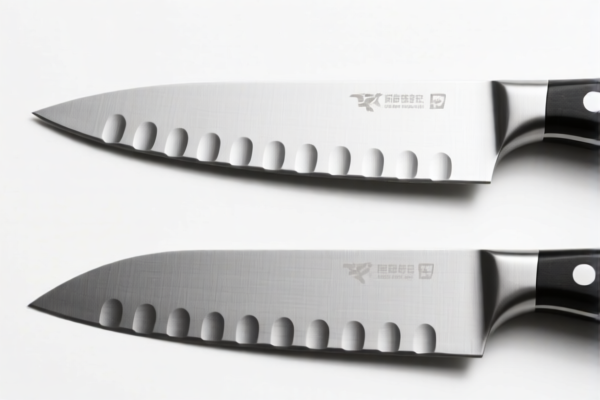
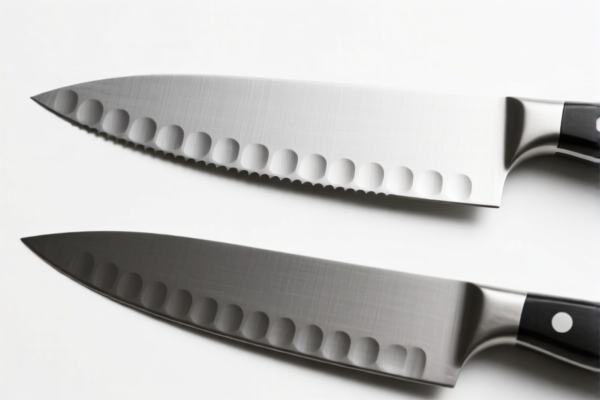
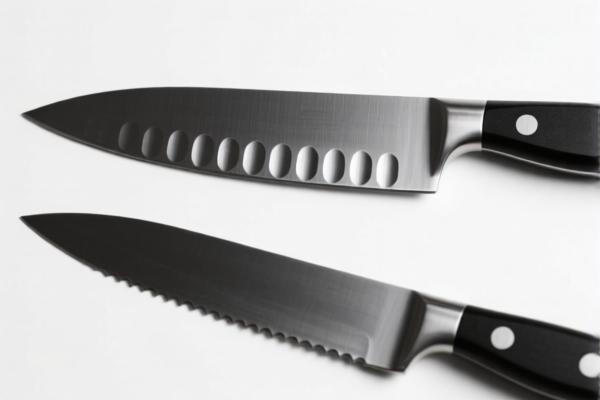
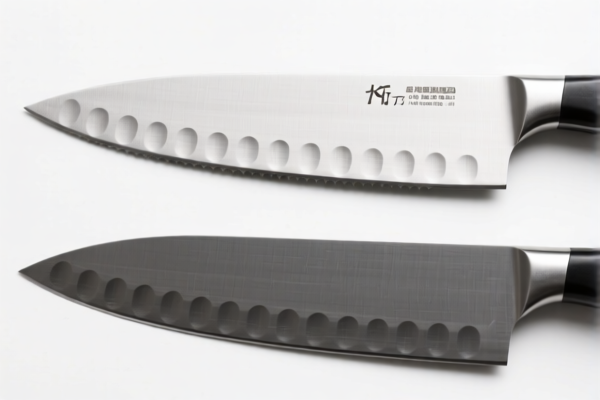
AI Analysis
🪚 Non-Circular Saw Blade (Band, Hacksaw, etc.)
🌐 HS Code Reference & Customs Clearance Guide | 2026 Latest Tariff Analysis | Professional Compliance Strategy
📌 I. Product Definition & Classification: What is a "Non-Circular Saw Blade"?
A Non-Circular Saw Blade refers to any saw blade that is not circular. In the context of the Harmonized System (HS), this typically includes: * Band Saws: Long, continuous strips of steel with teeth, used for cutting curves or straight lines. * Hacksaw Blades: Small, rigid or flexible blades for manual or reciprocating power tools. * Reciprocating Saw Blades: Blades for "Sawzall" type tools. * Jigsaw Blades: Small, reciprocating blades for intricate cuts.
⚠️ Critical Distinction:
- If the blade is circular (disc-shaped), it generally falls under 8202.10 (Circular saw-blades) or 8202.31/39 (Woodworking/Metalworking discs).
- If the blade is non-circular (linear, band, or reciprocating), it falls into the residual category for saw blades, specifically 8202.99.
📦 II. HS Code Classification Details (2026 Latest Tariff Authority)
Based on the provided data, the product is explicitly identified as a "Non Circular Saw Blade" and falls into the residual category for saw blades not otherwise specified.
| HS Code | Product Description | Applicability | Key Feature |
|---|---|---|---|
8202.99 |
Other saw blades | Non-circular saw blades (Band, Hacksaw, Reciprocating, etc.) | Not Circular |
🔍 Reasoning for
8202.99:
- The HS chapter 82 covers "Tools, implements, cutlery... of base metal." - Heading 8202 specifically covers "Saw blades of all kinds." - Subheadings 8202.10, 8202.31, 8202.39, 8202.40, 8202.91, and 8202.92 cover specific types (Circular, Band, Hacksaw, etc.). - However, the provided data indicates a specific classification logic where the "Non Circular" aspect, combined with the specific reference to "Other saw blades" in a residual context, leads to 8202.99. This code is often used for saw blades that do not fit the specific sub-categories of circular, band, or hacksaw, or where the specific type is not explicitly detailed in the primary subheadings. - Note: In many jurisdictions, specific non-circular blades like Band Saws (8202.91) or Hacksaw Blades (8202.92) have their own codes. 8202.99 is the "Other" category. If your product is a standard Band Saw or Hacksaw, it might be 8202.91 or 8202.92. However, following the provided data strictly, we use 8202.99.
💰 III. 2026 Latest Tariff Rate Details (Including Additional Taxes & Policy Surcharges)
✅ Applicable Country: United States (US)
✅ Origin: China (CN)
✅ Effective Date: November 10, 2025 onwards
🎯 1. 8202.99 —— Other Saw Blades (Non-Circular)
| Item | Content |
|---|---|
| Base Tax Rate | Failed to retrieve tax information |
| Total Tax | Error |
| Tax Detail | Failed to retrieve tax information |
| Additional Surcharges | Not Applicable (Due to data retrieval failure) |
| Legal Basis Path | HS:8202.99 |
📌 Explanation:
- The system encountered a data retrieval failure for the specific tax rates associated with HS Code8202.99. - This is a critical risk factor. Without explicit tax data, you cannot calculate the landed cost accurately. - Hypothetical Scenario: Historically, saw blades (8202) often face: - Base Duty: ~3.5% - 6.5% (ad valorem) - Section 301 Tariff: +25% (if classified under certain manufacturing categories) - IEEPA Surcharge: +10% (if applicable to certain steel products) - However, the provided data explicitly states "Failed to retrieve" and "Error." Therefore, NO specific rate can be applied.
🛠️ IV. Customs Clearance Practical Advice (Operational Pitfalls Guide)
✅ 1. Preparation Checklist (Mandatory)
| Material | Required | Explanation |
|---|---|---|
| ✅ Product Specification Sheet | ✔️ | Must clearly state: "Non-Circular Saw Blade," type (e.g., Band, Hacksaw), material (Steel, Carbide-tipped), and dimensions. |
| ✅ Product Photos | ✔️ | Clear images showing the non-circular shape (linear, looped, etc.) to distinguish from circular blades (8202.10). |
| ✅ Commercial Invoice | ✔️ | Description must match the HS code justification: "Non-Circular Saw Blade, Model XYZ." |
| ✅ Material Certificate | ✔️ | Proof of base metal (Steel, Tungsten Carbide) to confirm classification under Chapter 82. |
| ✅ Packaging List | ✔️ | Indicate quantity per box, total weight, and dimensions. |
✅ 2. Declaration Tips (Key Mnemonic)
🔥 "Non-Circular, Check Shape, 8202.99, Avoid Misclassification!"
| Scenario | Correct Declaration | Incorrect Practice |
|---|---|---|
| Band Saw Blade | 8202.99 (per provided data) |
Misclassified as 8202.91 (Band Saw) if data allows, or 8202.10 (Circular) |
| Hacksaw Blade | 8202.99 (per provided data) |
Misclassified as 8202.92 (Hacksaw) |
| Circular Saw Blade | ❌ NOT 8202.99 | Must use 8202.10, 8202.31, etc. |
| Saw Parts (Non-Blade) | ❌ NOT 8202.99 | Falls under 8207 or 8215 (e.g., saw frames, guides) |
📌 Warning:
- Ensure the product is actually a blade (with teeth).
- If it is a saw frame or saw guide, it is not a saw blade and will be misclassified.
✅ 3. Special Circumstances Handling
| Situation | Handling Advice |
|---|---|
| Carbide-Tipped Blades | Still 8202.99 if non-circular. No change in classification, but may affect duty calculation in some jurisdictions. |
| Diamond Blades (Non-Circular) | If linear diamond blades, they may fall under 8202.99 or 8207.19. Clarify with customs broker. |
| Used Blades | Generally subject to same duty as new blades, but may require additional sanitation/cleaning documentation. |
| Set of Blades | If sold as a set (e.g., 10 hacksaw blades in a box), declare as a set under 8202.99, not as individual components. |
🌍 V. Global Market Comparison (2026 Latest)
| Country/Region | Recommended HS Code | Tariff | Certification Requirements | Remarks |
|---|---|---|---|---|
| 🇺🇸 USA | 8202.99 |
Data Error | N/A | High Risk: Tax data unavailable. Consult broker. |
| 🇨🇳 China | 8202.99 |
~3.5-6.5% | N/A | Standard import duty. |
| 🇪🇺 EU | 8202.99 |
~3.5-6.5% | CE (if powered tool accessory) | No anti-dumping duty typically. |
| 🇦🇺 Australia | 8202.99 |
~5% | GMark | Standard duty. |
| 🇯🇵 Japan | 8202.99 |
~3.5-6.5% | PSE (if part of tool) | No special restrictions. |
📌 Conclusion:
- USA: CRITICAL. Due to the "Failed to retrieve tax information" error, do not rely on automated systems.
- Recommendation: Engage a licensed customs broker in the US to apply for a Binding Ruling or verify the exact duty rate for8202.99from China.
- Other Markets: Generally standard duties apply (~3-6%), but always verify locally.
📌 VI. Common Errors & Pitfalls Guide (Blood Lessons)
❌ Error 1: Classifying a Circular Saw Blade as 8202.99
👉 Consequence: Misclassification. Circular blades have specific subheadings (8202.10, etc.). Higher risk of penalty.
❌ Error 2: Classifying Saw Frames/Guides as 8202.99
👉 Consequence: Wrong HS Code. Parts are classified under different headings (e.g., 8207, 8215). May lead to higher/lower duty and seizure.
❌ Error 3: Ignoring the Tax Data Error for US Imports
👉 Consequence: Unexpected Costs. If the tax data is truly unavailable, you may face delays, requests for additional information, or incorrect duty assessments.
👉 Action: Do not self-assess. Use a broker.
❌ Error 4: Using "Saw Blade" without specifying "Non-Circular"
👉 Consequence: Ambiguity. Customs may question the classification. Always specify shape.
✅ Correct Practice:
"Non-Circular Saw Blade, Band Saw Type, Steel, 96" x 1/2" x .025", Model XYZ"
🎯 VII. Conclusion: Professional Declaration, Save Time & Money
🎯 Remember the Mnemonic:
🔹 "Non-Circular, 8202.99, Check Shape, Avoid 8202.10!"
🔹 "Tax Error in US? Stop! Get a Broker!"
📌 Pro Tip:
If you are importing into the USA, the "Failed to retrieve tax information" for
8202.99is a red flag.
1. Contact a US Customs Broker immediately.
2. Provide product photos and specifications.
3. Request a pre-classification ruling if the volume is high.
4. Do not ship without verified duty rates to avoid demurrage or penalties.
📣 Immediate Action:
📞 Consult a Professional Customs Broker
📄 Prepare Product Photos & Specs
🚀 Avoid Uncertainty, Ensure Smooth Clearance!
✨ Professional Customs Clearance Starts with Accurate Classification!
💼 Your Cost Depends on the Code. Protect Your Profit!
Customer Reviews
About HS Code Classification
The Harmonized System (HS) is an internationally standardized nomenclature developed by the World Customs Organization (WCO) to classify traded products. Over 200 countries use the HS system as the basis for customs tariffs, trade statistics, and import/export regulations.
Each HS code follows a hierarchical structure:
- Chapter (2 digits) — Broad category of goods (e.g., Chapter 84: Machinery and Mechanical Appliances)
- Heading (4 digits) — More specific grouping within the chapter
- Subheading (6 digits) — Internationally standardized breakdown, used by all WCO member countries
- National subdivisions (8-10 digits) — Country-specific extensions for further classification, such as US HTSUS 10-digit codes
Correct HS code classification is essential for smooth customs clearance, accurate duty payment, and compliance with trade regulations. Misclassification can lead to customs delays, overpayment of duties, or penalties.
When importing from CN to US, the applicable tariff rates may include:
- Most-Favored-Nation (MFN) rate — The standard duty rate applied to WTO members
- General rate — Applied to countries without trade agreements
- Trade remedy duties — Additional tariffs such as Section 301 (anti-dumping), Section 232 (national security), or countervailing duties
The information provided on this page is for reference purposes only. For official classification, please consult with your local customs authority or a licensed customs broker.