Non coniferous Garden Fence Post
CN → US| HS Code | Tariff Rate | Origin | Destination | Doc |
|---|---|---|---|---|
| 7308909590 | 85.0% | CN | US | Official Doc |
| 4407990295 | 35.0% | CN | US | Official Doc |
| 4403120040 | 35.0% | CN | US | Official Doc |
| 4421997040 | 35.0% | CN | US | Official Doc |
| 4407290296 | 35.0% | CN | US | Official Doc |
Product Images
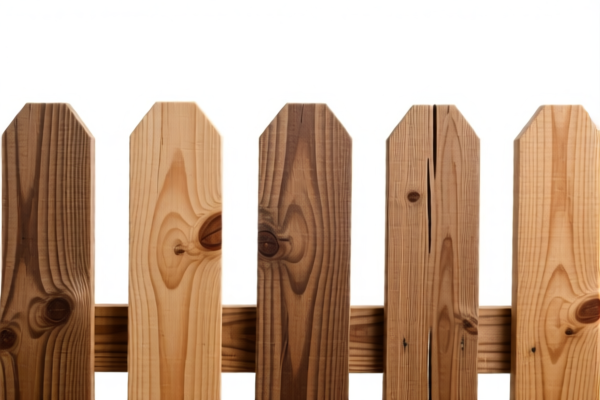
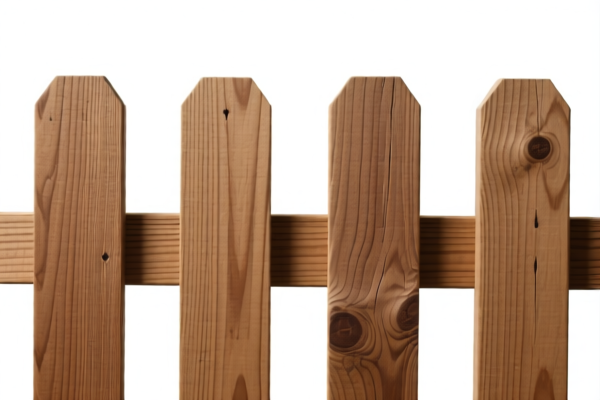
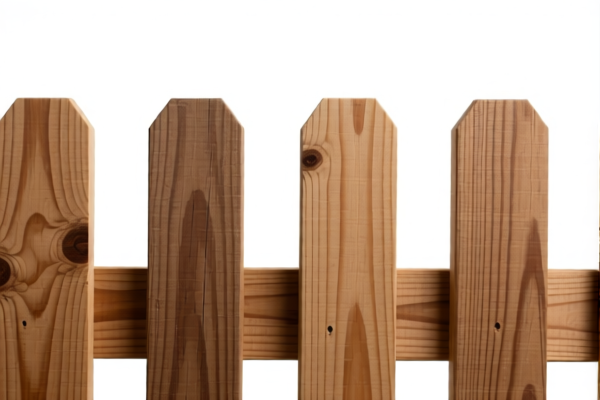
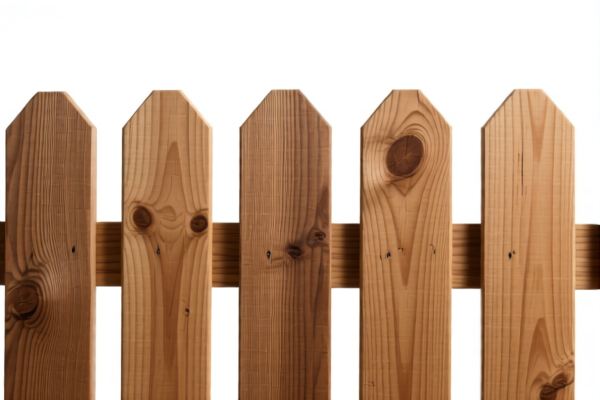
AI Analysis
🏡 Non Coniferous Garden Fence Post
🌐 HS Code Reference & Customs Clearance Guide | 2026 Latest Tariff Analysis | Professional Clearance Strategy
📌 I. Product Definition & Classification: Understanding "Non-Coniferous Fence Posts"
Non-coniferous garden fence posts are critical structural components for residential and commercial landscaping. In international trade, they are classified based on material (Wood vs. Metal) and processing state. The key distinction lies in whether the post is made from processed timber or iron/steel structures, which drastically affects the tariff burden due to Section 301 and Section 232 tariffs.
⚠️ Key Classification Distinction:
- If made of Wood (Non-coniferous, e.g., hardwoods, tropical wood): Falls under Chapter 44 (Wood and articles of wood).
- If made of Metal (Iron/Steel): Falls under Chapter 73 (Articles of iron or steel).
- Crucial Note: Misclassification between wood and metal can lead to severe duty penalties, especially with the high "Section 232" steel tariffs.
📦 II. HS Code Classification Details (2026 Latest Tariff Authority Mapping)
| HS Code | Product Description | Application Scenario | Material/Processing State |
|---|---|---|---|
7308.90.95.90 |
Structures and parts of structures (e.g., bridges, bridge-sections, towers, lattice masts, columns and pillars for fences or gates), of iron or steel | Metal Fence Posts: Steel/Iron posts for industrial or high-durability garden fences | ✅ Iron/Steel Structure |
4407.99.02.95 |
Wood sawn or chipped lengthwise, sliced or peeled, whether or not planed, sanded, end-jointed or tongue-and-grooved, of a thickness exceeding 6 mm, not further manufactured than sawn | Non-Coniferous Wood Posts: Processed hardwoods/tropical woods, sawn/planned, thickness >6mm | ✅ Processed Non-Coniferous Wood |
4403.12.00.40 |
Wood prepared for use as pallets, boxes, crates, drums or similar packings; wood blocks for paving; wood stakes and fence posts, whether or not treated with creosote or other preservatives, of non-coniferous wood | Non-Coniferous Fence Poles: Specifically classified as fence posts, often treated | ✅ Fence Post (Wood) |
4421.99.70.40 |
Other articles of wood | Non-Coniferous Wood Posts: Other wood articles including sawn posts, fences, and rails not specified elsewhere | ✅ Other Wood Article (Post) |
4407.29.02.96 |
Wood sawn or chipped lengthwise, sliced or peeled, whether or not planed, sanded, end-jointed or tongue-and-grooved, of a thickness exceeding 6 mm, of tropical wood species | Non-Coniferous Wood Boards/Rails: Specifically for boards/rails >6mm, tropical wood species | ✅ Processed Tropical Wood (Board/Rail) |
🔍 Critical Reminder:
- Metal vs. Wood: A post made of steel is classified under7308.90.95.90, while a wooden post is under Chapter 44. Do not mix these in a single declaration if they are distinct products.
- "Fence Post" Specificity:4403.12.00.40is the most specific code for "fence posts" of non-coniferous wood. Using generic "wood articles" (4421.99) may attract scrutiny if a more specific code exists.
- Processing Level: If the wood is merely sawn (thickness >6mm), it may fall under4407. If it is specifically shaped as a post,4403or4421is more appropriate.
💰 III. 2026 Latest Tariff Rate Breakdown (Including Additional Duties & Policy Add-ons)
✅ Applicable Country: United States (US)
✅ Origin: China (CN)
✅ Effective Time: 2025/2026 (Current Trade War Rates)
🎯 1. 7308.90.95.90 —— Structures/Parts of Structures (Iron or Steel)
| Item | Content |
|---|---|
| Basic Tariff | 0% (ad valorem) |
| USITC Additional Duty (Section 301) | +25% |
| IEEPA Additional Duty (Section 232) | +50% (For Steel, Aluminum, Copper Products under Section 232) |
| Total Tax Rate | 85.0% |
| Tax Calculation | CIF Value × 85% |
| De Minimis Exemption | ❌ Not Eligible (High tariff items excluded) |
| Legal Basis Path | IEEPA:9903.01.25 (Steel 232) → USITC:7308.90.95.90 → FOOTNOTE:Section 232/301 |
📌 Explanation:
- The 50% Section 232 tariff applies specifically to steel products due to national security concerns.
- The 25% Section 301 tariff applies to Chinese goods.
- Total 85% is extremely high. This classification should only be used if the post is strictly iron/steel.
- Risk: High audit risk for misclassification of wood posts as steel to avoid higher wood tariffs (though wood is also high here, the legal basis differs).
🎯 2. 4407.99.02.95 —— Processed Non-Coniferous Wood (>6mm thickness)
| Item | Content |
|---|---|
| Basic Tariff | 0% |
| USITC Additional Duty (Section 301) | +25% |
| IEEPA Additional Duty | +10% (Specific to Chinese non-coniferous wood products under recent IEEPA orders) |
| Total Tax Rate | 35.0% |
| Tax Calculation | CIF Value × 35% |
| De Minimis Exemption | ❌ Not Eligible |
| Legal Basis Path | IEEPA:9903.01.24 → USITC:4407.99.02.95 → FOOTNOTE:301 |
📌 Note:
- This code applies to sawn, planed, or processed non-coniferous wood.
- If the wood is tropical, it may fall under4407.29(see below).
- Total 35% is significant but lower than the 85% steel rate.
🎯 3. 4403.12.00.40 —— Non-Coniferous Wood Fence Poles/Posts
| Item | Content |
|---|---|
| Basic Tariff | 0% |
| USITC Additional Duty (Section 301) | +25% |
| IEEPA Additional Duty | +10% |
| Total Tax Rate | 35.0% |
| Tax Calculation | CIF Value × 35% |
| De Minimis Exemption | ❌ Not Eligible |
| Legal Basis Path | IEEPA:9903.01.24 → USITC:4403.12.00.40 → FOOTNOTE:301 |
📌 Explanation:
- This is the most specific code for "fence posts" made of non-coniferous wood.
- It explicitly covers posts whether treated (creosote) or untreated.
- Total 35% applies.
- Advantage: Using the specific "fence post" code reduces ambiguity during customs inspection.
🎯 4. 4421.99.70.40 —— Other Wood Articles (Sawn Posts, Fences, Rails)
| Item | Content |
|---|---|
| Basic Tariff | 0% |
| USITC Additional Duty (Section 301) | +25% |
| IEEPA Additional Duty | +10% |
| Total Tax Rate | 35.0% |
| Tax Calculation | CIF Value × 35% |
| De Minimis Exemption | ❌ Not Eligible |
| Legal Basis Path | IEEPA:9903.01.24 → USITC:4421.99.70.40 → FOOTNOTE:301 |
📌 Note:
- This code is a "catch-all" for wood articles of fences, posts, and rails not specified in other subheadings.
- If4403.12.00.40is not applicable (e.g., for non-typical posts), this code is used.
- Total 35% is consistent with other wood classifications.
🎯 5. 4407.29.02.96 —— Processed Tropical Wood (Non-Coniferous, >6mm)
| Item | Content |
|---|---|
| Basic Tariff | 0% |
| USITC Additional Duty (Section 301) | +25% |
| IEEPA Additional Duty | +10% |
| Total Tax Rate | 35.0% |
| Tax Calculation | CIF Value × 35% |
| De Minimis Exemption | ❌ Not Eligible |
| Legal Basis Path | IEEPA:9903.01.24 → USITC:4407.29.02.96 → FOOTNOTE:301 |
📌 Explanation:
- Applies specifically to tropical wood species (e.g., Teak, Mahogany, Ipe) that are sawn or planed.
- Often used for fence boards/rails or high-end decorative posts.
- Total 35% is consistent.
- Important: If the wood is not tropical (e.g., Oak, Ash), do not use this code; use4407.99instead.
🛠️ IV. Customs Clearance Practical Advice (Pitfall Avoidance Guide)
✅ 1. Preparation Checklist (Essential Documents)
| Document | Mandatory? | Description |
|---|---|---|
| ✅ Product Specifications | ✔️ | Material type (e.g., Ipe, Oak, Steel), dimensions, treatment (e.g., creosote, pressure-treated) |
| ✅ Material Certificate | ✔️ | For wood: Proof of species (Non-coniferous, Tropical vs. Temperate). For metal: Mill certificates. |
| ✅ Photos (Labeled) | ✔️ | Clear images showing cross-section (to verify wood grain or steel type), ends, and overall structure. |
| ✅ Commercial Invoice | ✔️ | Must clearly state "Fence Post" or "Garden Fence Post" and HS Code. |
| ✅ Packing List | ✔️ | Detail quantity, weight, and packaging type. |
| ✅ Phytosanitary Certificate | ✔️ | Required for Wood. Must be issued by origin country to prove freedom from pests. |
| ✅ Treatment Certificate | ✔️ | If wood is treated with chemicals (e.g., creosote), proof of treatment is required. |
✅ 2. Declaration Tips (Key Mnemonics)
🔥 "Wood Needs Phytosanitary, Metal Needs Steel Proof, Species Matters for Wood!"
| Scenario | Correct Declaration | Wrong Action |
|---|---|---|
| Wooden Post (Non-Coniferous) | 4403.12.00.40 (Most Specific) |
Generic "Wooden Post" → Audit Risk |
| Steel Post | 7308.90.95.90 |
Misclassified as Wood → 85% vs 35% Duty Discrepancy |
| Tropical Wood Post | 4407.29.02.96 (if >6mm sawn) |
Generic "Hardwood" → May be rejected if species not declared |
| Untreated Wooden Post | 4403.12.00.40 |
Claiming "Treated" without Certificate → Seizure Risk |
| Mixed Container (Wood + Metal) | Separate Lines on Invoice | Mixing items → Delays, Re-inspection |
✅ 3. Special Case Handling
| Situation | Handling Advice |
|---|---|
| OEM Custom Posts | Provide design drawings and material specs. Avoid generic names. |
| Pressure-Treated Wood | Must declare treatment type. Phytosanitary certificate is mandatory. |
| Recycled Steel Posts | Still subject to 50% Section 232 tariff if from China. No exemption for recycled content. |
| Composite Materials | If post is wood core with metal cap, classify based on essential character. Consult a customs broker. |
| De Minimis (Section 321) | ❌ Not Applicable. These HS codes are excluded from $800 de minimis exemption due to high duties. |
🌍 V. Global Market Comparison (2026 Latest)
| Country/Region | Recommended HS Code | Tariff (China Origin) | Certification Required | Notes |
|---|---|---|---|---|
| 🇺🇸 USA | 4403.12.00.40 (Wood)7308.90.95.90 (Steel) |
35% (Wood) 85% (Steel) |
Phytosanitary (Wood) Mill Cert (Steel) |
Highest Duty. Section 301 + IEEPA. |
| 🇨🇳 China | 4403.12.00.40 |
5-10% | CCC (if applicable) | No additional tariffs. |
| 🇪🇺 EU | 4403.12.00.40 |
0-10% (depending on FTA) | EUDR (Deforestation Regulation) | EUDR Compliance: Traceability of wood origin is now mandatory. |
| 🇬🇧 UK | 4403.12.00.40 |
0-10% | UKCA Mark | Post-Brexit regulations apply. |
| 🇦🇺 Australia | 4403.12.00.40 |
5% | Biosecurity Permit | Strict quarantine on wood imports. |
📌 Conclusion:
- USA imposes the highest tariffs due to trade wars.
- EU now requires EUDR (EU Deforestation Regulation) compliance for all wood products, including fence posts. Ensure legal sourcing documentation.
- Australia has strict biosecurity laws; wood must be heat-treated or fumigated.
📌 VI. Common Errors & Pitfall Guide (Lessons Learned)
❌ Error 1: Classifying Steel Posts as Wood to avoid Section 232 Tariff
👉 Consequence: Customs audit reveals steel composition → 85% Duty Backcharge + Penalties.
❌ Error 2: Importing Wooden Posts without Phytosanitary Certificate
👉 Consequence: Shipment Rejected/Destroyed at port due to pest risk.
❌ Error 3: Misidentifying Tropical Wood as Temperate Wood
👉 Consequence: Incorrect HS Code (4407.29 vs 4407.99) → Delayed clearance, potential fines.
❌ Error 4: Claiming De Minimis Exemption for these goods
👉 Consequence: HS codes 7308.90.95.90 and wood posts under 301/232 are excluded. Shipment held, duties assessed.
✅ Correct Practice:
"Non-Coniferous Hardwood Fence Post, Ipe Wood, 2"x4"x8ft, Heat-Treated, Phytosanitary Cert No. XYZ, HS 4403.12.00.40"
🎯 VII. Conclusion: Professional Declaration, Save Time, Reduce Cost!
🎯 Remember the Mnemonic:
🔹 "Wood: 35%, Steel: 85%, No De Minimis, Phytosanitary is Key!"
🔹 "Specific HS Code:4403.12.00.40for Wood Posts,7308.90.95.90for Steel."
📌 Pro Tip:
- For wooden posts, ensure EUDR compliance if exporting to EU.
- For US imports, consider pre-arrival ruling if unsure about material composition.
- Always provide Phytosanitary Certificates for wood to avoid port delays.
📣 Immediate Action:
📞 Contact a licensed customs broker + Provide Product Photos + Verify Material Composition
🚀 Ensure Phytosanitary and Mill Certificates are ready before shipment.
✨ Professional Customs Clearance Starts with Accurate Classification!
💼 Your Cost Efficiency Depends on Precise Tariff Calculation!
Customer Reviews
About HS Code Classification
The Harmonized System (HS) is an internationally standardized nomenclature developed by the World Customs Organization (WCO) to classify traded products. Over 200 countries use the HS system as the basis for customs tariffs, trade statistics, and import/export regulations.
Each HS code follows a hierarchical structure:
- Chapter (2 digits) — Broad category of goods (e.g., Chapter 84: Machinery and Mechanical Appliances)
- Heading (4 digits) — More specific grouping within the chapter
- Subheading (6 digits) — Internationally standardized breakdown, used by all WCO member countries
- National subdivisions (8-10 digits) — Country-specific extensions for further classification, such as US HTSUS 10-digit codes
Correct HS code classification is essential for smooth customs clearance, accurate duty payment, and compliance with trade regulations. Misclassification can lead to customs delays, overpayment of duties, or penalties.
When importing from CN to US, the applicable tariff rates may include:
- Most-Favored-Nation (MFN) rate — The standard duty rate applied to WTO members
- General rate — Applied to countries without trade agreements
- Trade remedy duties — Additional tariffs such as Section 301 (anti-dumping), Section 232 (national security), or countervailing duties
The information provided on this page is for reference purposes only. For official classification, please consult with your local customs authority or a licensed customs broker.