Non coniferous Other Wood Material
CN → US| HS Code | Tariff Rate | Origin | Destination | Doc |
|---|---|---|---|---|
| 4407990295 | 35.0% | CN | US | Official Doc |
| 4407990242 | 35.0% | CN | US | Official Doc |
| 4407190001 | 35.0% | CN | US | Official Doc |
| 4407190066 | 35.0% | CN | US | Official Doc |
| 4409101020 | 35.0% | CN | US | Official Doc |
Product Images
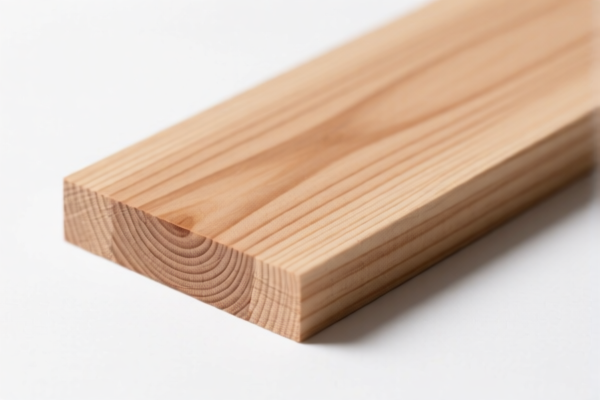
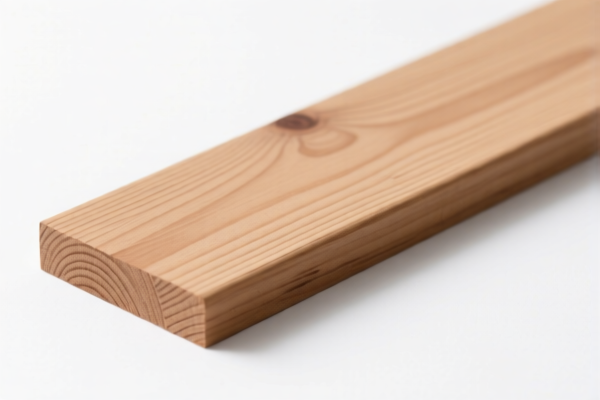
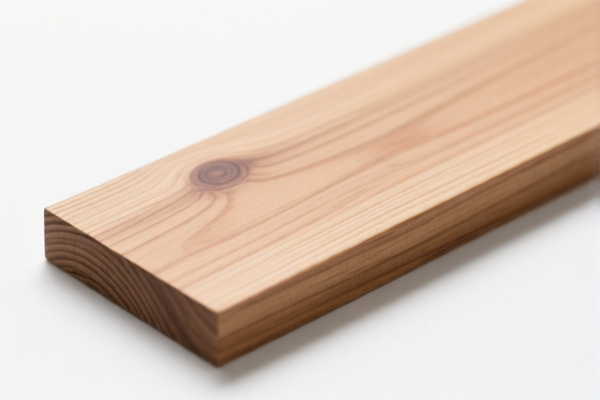
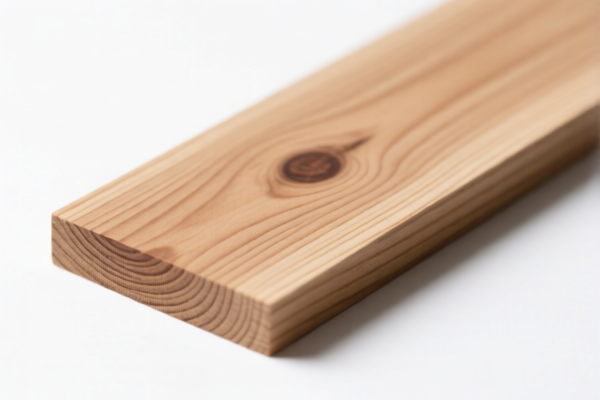
AI Analysis
🌲 Non-Coniferous Wood Materials (Other Wood)
🌐 HS Code Reference & Customs Clearance Guide | 2024/2025 Latest Tariff Analysis | Strategic Clearance Strategy for US Imports from China
📌 I. Product Definition & Classification: Do You Really Understand "Non-Coniferous Wood"?
Non-coniferous wood materials (also known as broadleaf wood) refer to wood derived from deciduous trees. In international trade, particularly for the US market, these materials are strictly categorized based on their processing level and intended use. The provided data focuses specifically on wood used for construction, which includes squared, sawn, or planed timber ready for structural or finishing applications.
⚠️ Key Distinction:
- Construction-Grade Wood: Squared, sawn, or planed timber (even if not yet joined) intended for building structures, frames, or fixtures. → HS Codes starting with 4407 or 4409.
- Raw Logs/Sawn Logs: Unprocessed or roughly squared logs. → Not included in the provided data (typically HS 4403/4406).
- Plywood/Engineered Wood: → Not included in the provided data (typically HS 4412).
The provided dataset specifically targets Processed Non-Coniferous & Coniferous Wood for Construction, highlighting the severe tariff impact on Chinese-origin goods entering the US.
📦 II. HS Code Classification Details (2026 Latest Tariff Authority Cross-Reference)
| HS Code | Product Description | Application Scenario | Wood Type |
|---|---|---|---|
4407.99.02.95 |
Other wood, sawn or chipped lengthwise, sliced or peeled, dressed or sanded, of a thickness exceeding 6 mm (Non-Coniferous) | Hardwood flooring, beams, construction lumber, furniture components | Broadleaf (e.g., Oak, Maple, Walnut) |
4407.99.02.42 |
Other wood, sawn or chipped lengthwise, sliced or peeled, dressed or sanded, of a thickness exceeding 6 mm (Non-Coniferous) | Hardwood construction materials, structural elements | Broadleaf (e.g., Birch, Beech, Poplar) |
4407.19.00.01 |
Other coniferous wood, sawn or chipped lengthwise, sliced or peeled, dressed or sanded, of a thickness exceeding 6 mm | Softwood construction lumber (e.g., Pine, Spruce) for building | Coniferous (Softwood) |
4407.19.00.66 |
Other coniferous wood, sawn or chipped lengthwise, sliced or peeled, dressed or sanded, of a thickness exceeding 6 mm | Softwood framing, decking, siding | Coniferous (Softwood) |
4409.10.10.20 |
Wood continuously shaped (e.g., tongue, groove) along any of its edges, faces or ends, of coniferous wood | Softwood molding, tongue-and-groove flooring, paneling | Coniferous (Softwood) |
🔍 Critical Note:
- All codes listed above share the same tax profile due to Section 301 and IEEPA restrictions.
- The distinction between4407(sawn/sliced) and4409(shaped/tongue-and-groove) is crucial for correct declaration. Misclassification can lead to delays or audits.
- "Construction Use": If the wood is merely "dressed" (sanded/dressed) but not yet assembled into a structure, it falls under these codes. Once assembled into furniture or windows, it may move to Chapter 94 or 95.
💰 III. 2024/2025 Latest Tariff Rate Breakdown (Including Additional Taxes & Policy Surcharges)
✅ Applicable Country: United States (US)
✅ Origin: China (CN)
✅ Effective Time: Ongoing (Since July 2018 for Section 301, Nov 2025 for IEEPA adjustments as per dataset context)
🎯 1. Universal Tax Profile for All Listed HS Codes
(Applies to: 4407.99.02.95, 4407.99.02.42, 4407.19.00.01, 4407.19.00.66, 4409.10.10.20)
| Item | Content |
|---|---|
| Base Tariff Rate | 0% (ad valorem) – Note: Some general MFN rates may apply, but dataset specifies 0% base |
| Section 301 Additional Tariff | +25% (USITC Footnote 9903.88.01 / Trade Act of 1974 Section 301) |
| IEEPA Tariff (Section 122/Executive Order) | +10% (Targeting Chinese-origin goods, effective from Nov 10, 2025, or as per latest directive) |
| Total Effective Tariff Rate | 35.0% |
| Tax Calculation Basis | CIF Value (Cost + Insurance + Freight) × 35% |
| De Minimis Exemption Available? | ❌ No (High-risk category for de minimis/sham shipments) |
| Legal Authority Path | USITC:4407/4409 → Section 301: 25% → IEEPA/122: 10% → Total 35% |
📌 Explanation:
- Section 301 Tariff (25%): This is the primary punitive tariff on Chinese hardwood and softwood construction materials, intended to protect US timber industries.
- IEEPA/122 Tariff (10%): This additional layer reflects ongoing trade tensions and specific executive orders targeting strategic or dual-use materials, including certain wood products.
- Total 35%: This is a massive cost burden. Importers must factor this into their landed cost calculations immediately. A $10,000 shipment incurs $3,500 in duties alone, excluding port fees, broker fees, and potential storage.
🛠️ IV. Customs Clearance Practical Advice (Battle-Tested Pitfall Avoidance)
✅ 1. Documentation Checklist (Non-Negotiable)
| Document | Must Provide | Description |
|---|---|---|
| ✅ Commercial Invoice | ✔️ | Must clearly state "Sawn Wood for Construction" and specify species (e.g., "Oak," "Pine"). Vague descriptions like "Wood" will trigger audits. |
| ✅ Packing List | ✔️ | Detailed list of cartons/pallets, net/gross weight, and dimensions. |
| ✅ Bill of Lading (B/L) | ✔️ | Clean on-board B/L is essential. |
| ✅ Certificate of Origin (CO) | ✔️ | Critical: Must confirm China Origin. If claiming FTA benefits from other countries, ensure no Chinese content violates rules. |
| ✅ Species Declaration | ✔️ | Specify exact botanical name (e.g., Quercus alba). Customs often rejects generic terms like "Hardwood." |
| ✅ Phytosanitary Certificate | ✔️ | Required by USDA/APHIS to prove wood is free from pests/diseases. Without this, goods will be held or destroyed. |
| ✅ ISPM 15 Marking | ✔️ | Packaging (pallets, crates) must be heat-treated/fumigated and stamped with ISPM 15. |
✅ 2. Declaration Strategies (Key Mnemonics)
🔥 “Species Specific, Use Clear, Pack Standard, Avoid Delays!”
| Scenario | Correct Declaration Method | Wrong Approach |
|---|---|---|
| Hardwood Beams | 4407.99.02.95 + "Oak Beams for Construction" |
"Wooden Parts" → 45%+ risk of seizure |
| Softwood Lumber | 4407.19.00.01 + "Pine Lumber for Framing" |
"Timber" → Vague, leads to exam |
| Tongue & Groove Flooring | 4409.10.10.20 (if coniferous) |
Declare as 4407 → Misclassification penalty |
| Unprocessed Logs | Not in dataset (Check 4403) |
Declare as 4407 → Wrong code, fines |
✅ 3. Special Situations & Handling
| Situation | Handling Advice |
|---|---|
| Mixed Containers | If container has both Chinese and non-Chinese wood, ensure segregation. Picking up Chinese wood triggers the 35% tariff. Non-Chinese wood may have lower/no tariffs. |
| Re-export/Transshipment | Warning: Shipment via Mexico or Canada does not exempt Chinese origin goods from Section 301/IEEPA duties. CBP looks through transshipment. |
| Small Samples | Even small samples are subject to 35% if over de minimis thresholds or if flagged. |
| USDA Compliance | Ensure wood is kiln-dried or certified. High moisture content can lead to rejection by APHIS, causing storage fees. |
🌍 V. Global Market Comparison (2024/2025 Latest)
| Country/Region | Recommended HS Code | Tariff (China Origin) | Certification Requirements | Notes |
|---|---|---|---|---|
| 🇺🇸 USA | 4407.xxxx / 4409.xxxx |
35% (25% Sec 301 + 10% IEEPA) | Phytosanitary, ISPM 15, Fumigation | Highest barrier due to trade war. |
| 🇨🇳 China | Same HS Codes | Varies (Low/Zero for export) | None for export (Import duties apply) | China is a major exporter; focus on US compliance. |
| 🇪🇺 EU | 4407.xxxx |
0% - 6.5% (MFN) | FSC/PEFC (optional but common), No phyto for processed wood | No Section 301 equivalent; easier clearance. |
| 🇬🇧 UK | 4407.xxxx |
0% - 5% | Similar to EU | Post-Brexit rules apply; check UK Global Tariff. |
| 🇯🇵 Japan | 4407.xxxx |
0% - 5% | Fumigation often required | CPTPP may offer benefits if non-China origin. |
📌 Conclusion:
- The US market is uniquely hostile to Chinese wood products due to layered tariffs.
- EU and Asia remain viable alternatives for Chinese exporters, but must ensure compliance with local phytosanitary standards.
- Supply Chain Diversification: Consider sourcing wood from Vietnam, Thailand, or Eastern Europe to avoid the 35% US duty, provided the country of origin rule is strictly met.
📌 VI. Common Mistakes & Pitfall Guide (Lessons from the Field)
❌ Mistake 1: Using generic description "Wooden Material" on Invoice
👉 Consequence: Customs exam, delay of 2-4 weeks, possible re-classification and back taxes.
❌ Mistake 2: Ignoring ISPM 15 on Pallets
👉 Consequence: Shipment destroyed or re-exported at importer’s cost. Strict enforcement in US.
❌ Mistake 3: Assuming "Construction Wood" is exempt from Section 301
👉 Consequence: 35% tariff applies. No exemption for general construction lumber from China.
❌ Mistake 4: Confusing 4407 (Sawn) with 4409 (Shaped)
👉 Consequence: If you declare tongue-and-groove as "sawn," customs may reject the HS code, leading to valuation disputes.
✅ Correct Practice:
"Sawmill, Hardwood, Oak, 2x4, Kiln-Dried, ISPM 15 Marked, for Residential Construction, HS 4407.99.02.95"
🎯 VII. Conclusion: Strategic Sourcing & Cost Management
🎯 Remember the Golden Rules:
🔹 "35% is the floor, not the ceiling; misclassification costs more."
🔹 "Phytosanitary is non-negotiable; no paper, no entry."
🔹 "Origin matters; transshipment won't save you from Section 301."
📌 Pro Tips:
- If your volume is high, consider Applying for an Exclusion (if still available/eligible) or Supply Chain Restructuring.
- Always request a Pre-Ruling from CBP if your product is on the edge of classification (e.g., is it "sawn" or "shaped"?).
- Partner with a licensed customs broker experienced in Chapter 44 to ensure accurate valuation and classification.
📣 Immediate Action:
📞 Engage a customs broker + Provide species details + Verify ISPM 15 marking
🚀 Ensure smooth clearance, avoid costly delays, and protect your margins!
✨ Professional clearance starts with precise classification!
💼 Your bottom line depends on getting the HS Code right!
Customer Reviews
About HS Code Classification
The Harmonized System (HS) is an internationally standardized nomenclature developed by the World Customs Organization (WCO) to classify traded products. Over 200 countries use the HS system as the basis for customs tariffs, trade statistics, and import/export regulations.
Each HS code follows a hierarchical structure:
- Chapter (2 digits) — Broad category of goods (e.g., Chapter 84: Machinery and Mechanical Appliances)
- Heading (4 digits) — More specific grouping within the chapter
- Subheading (6 digits) — Internationally standardized breakdown, used by all WCO member countries
- National subdivisions (8-10 digits) — Country-specific extensions for further classification, such as US HTSUS 10-digit codes
Correct HS code classification is essential for smooth customs clearance, accurate duty payment, and compliance with trade regulations. Misclassification can lead to customs delays, overpayment of duties, or penalties.
When importing from CN to US, the applicable tariff rates may include:
- Most-Favored-Nation (MFN) rate — The standard duty rate applied to WTO members
- General rate — Applied to countries without trade agreements
- Trade remedy duties — Additional tariffs such as Section 301 (anti-dumping), Section 232 (national security), or countervailing duties
The information provided on this page is for reference purposes only. For official classification, please consult with your local customs authority or a licensed customs broker.