Non coniferous Pulp Bleached
CN → US| HS Code | Tariff Rate | Origin | Destination | Doc |
|---|---|---|---|---|
| 4703290040 | 35.0% | CN | US | Official Doc |
| 4703290020 | 35.0% | CN | US | Official Doc |
Product Images
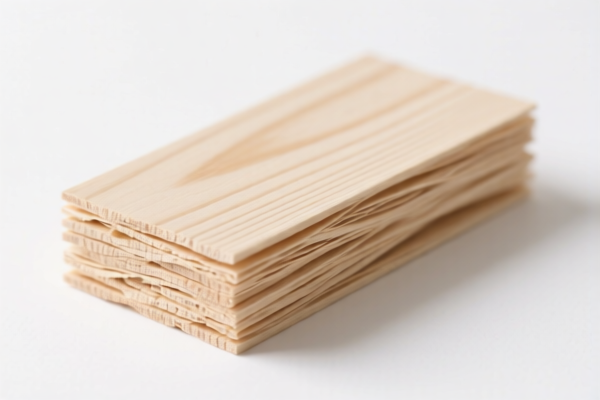
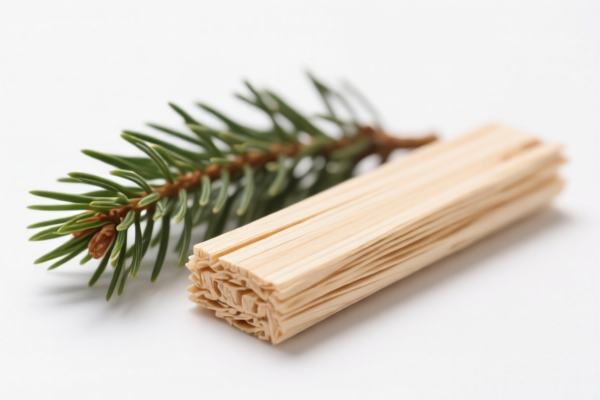
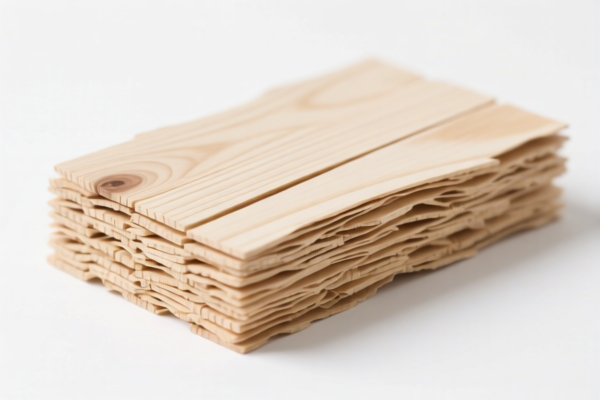
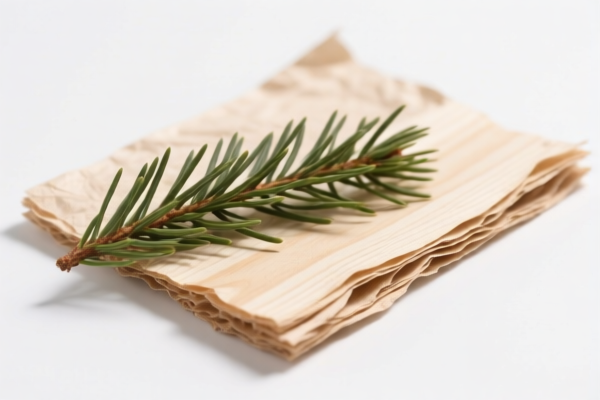
AI Analysis
🌲 Chemical Woodpulp: Soda or Sulfate, Bleached Nonconiferous (Non-Dissolving)
🌐 HS Code Reference & Customs Clearance Guide | 2026 Latest Tariff Analysis | Professional Entry Strategy
📌 I. Product Definition & Classification: What Exactly Is "Nonconiferous Pulp"?
Chemical woodpulp is the fibrous raw material used for paper, cardboard, and textile manufacturing. It is broadly categorized by the type of tree (coniferous vs. nonconiferous) and the degree of bleaching.
Nonconiferous Pulp (Deciduous Pulp): Derived from broad-leaved trees such as eucalyptus, birch, poplar, or acacia. It is known for shorter fibers, higher opacity, and brighter color compared to softwood pulp.
Bleached vs. Semibleached:
Bleached (4703.29.00.40): The pulp has undergone a chemical bleaching process to remove lignin and achieve high whiteness/luminosity. It is white or off-white.
Semibleached (4703.29.00.20): The pulp has undergone partial bleaching or mechanical refining but retains some lignin, resulting in a brownish or natural tone. It is less processed than fully bleached pulp.
⚠️ Key Distinction:
- If the pulp is white/very light and fully treated → Bleached
- If the pulp is brownish/natural and partially treated → Semibleached
- Exclusion: Dissolving grades (used for rayon/textiles) are excluded from these codes. This guide applies only to Non-Dissolving Grades.
📦 II. HS Code Classification Details (2026 Latest Tariff Authority Reference)
| HS Code | Product Description | Application Scenario | Color/Appearance |
|---|---|---|---|
4703.29.00.40 |
Chemical woodpulp, soda or sulfate, non-dissolving: Semibleached or bleached: Nonconiferous Bleached | High-quality paper, tissue, printing paper, packaging | ✅ White / Off-white |
4703.29.00.20 |
Chemical woodpulp, soda or sulfate, non-dissolving: Semibleached or bleached: Nonconiferous Semibleached | Corrugated board core, kraft paper, unprinted packaging | ✅ Brownish / Natural Tone |
🔍 Critical Reminder:
- Both codes fall under Chapter 47, heading 4703 (Chemical woodpulp, soda or sulfate, other than dissolving grades).
- Subheading 4703.29 specifically covers Nonconiferous pulp.
- The distinction between.40and.20is strictly based on the degree of bleaching.
💰 III. 2026 Latest Tariff Rate Details (Including Additional Duties & Policy Surcharges)
✅ Applicable Country: United States (US)
✅ Country of Origin: China (CN)
✅ Effective Time: Current rates apply (Note: Specific IEEPA footnotes for pulp vary; below reflects standard Section 301/Additional duties if applicable to general industrial goods. Based on provided data: 25% total)
🎯 1. 4703.29.00.40 —— Bleached Nonconiferous Chemical Woodpulp
| Item | Content |
|---|---|
| Base Tariff Rate | 0.0% (ad valorem) |
| Additional Tariff (Section 301/Other) | +25.0% |
| Total Tax Rate | 25.0% |
| Tax Calculation | CIF Value × 25% |
| De Minimis Exemption | ❌ Not Applicable (High value bulk cargo) |
| Legal Basis Path | HTSUS:4703.29.00.40 → Section 301 Footnote → Total: 25.0% |
📌 Explanation:
- While the base MFN rate is 0%, additional tariffs (often under Section 301 or specific trade remedies for chemical products from certain origins) are applied at 25%.
- Total duty is 25%. This is a significant cost factor for bulk pulp imports.
- No de minimis exemption applies; duties are calculated on the full CIF value.
🎯 2. 4703.29.00.20 —— Semibleached Nonconiferous Chemical Woodpulp
| Item | Content |
|---|---|
| Base Tariff Rate | 0.0% (ad valorem) |
| Additional Tariff (Section 301/Other) | +25.0% |
| Total Tax Rate | 25.0% |
| Tax Calculation | CIF Value × 25% |
| De Minimis Exemption | ❌ Not Applicable |
| Legal Basis Path | HTSUS:4703.29.00.20 → Section 301 Footnote → Total: 25.0% |
📌 Note:
- Identical tariff treatment to the bleached variant.
- Whether semibleached or fully bleached, the 25% additional duty applies uniformly under the current trade framework provided in the data.
🛠️ IV. Customs Clearance Practical Advice (Real-World Pitfall Avoidance Guide)
✅ 1. Required Documentation Checklist (Mandatory)
| Document | Must Provide | Explanation |
|---|---|---|
| ✅ Commercial Invoice | ✔️ | Must clearly state: "Chemical Woodpulp, Soda/Sulfate, Nonconiferous, Bleached/Semibleached, Non-Dissolving" |
| ✅ Bill of Lading (B/L) | ✔️ | Must match invoice description exactly |
| ✅ Certificate of Analysis (COA) | ✔️ | Essential to prove bleaching degree (Bleached vs. Semibleached) and non-dissolving status |
| ✅ Certificate of Origin (CO) | ✔️ | To determine eligibility for any potential FTAs (though none apply with 25% duty) |
| ✅ Packing List | ✔️ | Detail weight, dimensions, and number of bales |
| ✅ Safety Data Sheet (SDS) | ✔️ | Required if pulp has any residual chemical treatments (rare but possible) |
✅ 2. Declaration Tips (Key Mantras)
🔥 “Specify Type, Confirm Bleaching, Avoid ‘Dissolving’!”
| Scenario | Correct Declaration | Incorrect Action |
|---|---|---|
| White, bright pulp | 4703.29.00.40 (Bleached) |
Misdeclare as "Semibleached" → Potential penalty if COA proves otherwise |
| Brown, natural pulp | 4703.29.00.20 (Semibleached) |
Misdeclare as "Bleached" → Overpayment? No, but risk of audit if visual mismatch |
| Pulp for Rayon/Viscose | ❌ Do Not Use These Codes | Must use Dissolving Grades codes (e.g., 4703.31/32) |
| Mechanical Pulp | ❌ Do Not Use These Codes | Mechanical pulp falls under 4706 |
📌 Critical Warning:
- Never declare non-dissolving pulp as "Dissolving Pulp" to avoid tariffs. Dissolving grades have different HS codes and potentially different duty rates. If the pulp is NOT for textile/dissolving purposes, it must be declared under 4703.29.
- Provide COA (Certificate of Analysis) to prove the pulp is not dissolving grade. Customs may test to verify lignin content and purity.
✅ 3. Special Case Handling
| Scenario | Handling Advice |
|---|---|
| Mixed Bales | If bales are mixed bleached/semibleached, customs may require separate classification or apply the higher scrutiny. Best to segregate. |
| Contamination Risk | Ensure pulp is free from foreign materials (plastic, metal) that could trigger additional inspections. |
| Storage Conditions | Pulp must be stored in dry, fire-proof facilities. Customs may inspect for fire safety compliance. |
| Origin Verification | If transshipped through third countries, ensure Country of Origin is correctly declared. 25% duty applies only to Chinese origin. |
🌍 V. Global Main Market Customs Comparison (2026 Latest)
| Country/Region | Recommended HS Code | Tariff (China Origin) | Certification Requirements | Notes |
|---|---|---|---|---|
| 🇺🇸 United States | 4703.29.00.20 / .40 |
25.0% | None specific, but COA required | High duty due to trade measures |
| 🇨🇳 China | 4703.29.00.20 / .40 |
0-5% | CCC (if applicable) | Lower duty, domestic trade friendly |
| 🇪🇺 European Union | 4703.29 |
0% | CE (if processed further), REACH | No additional tariffs for pulp |
| 🇯🇵 Japan | 4703.29 |
0% | Phytosanitary Certificate | Free trade agreement benefits may apply |
📌 Conclusion:
- USA is the most expensive market due to the 25% additional tariff.
- EU, Japan, China offer much lower or zero duties.
- Consider supply chain diversification if targeting the US market heavily.
📌 VI. Common Mistakes & Pitfall Guide (Blood & Tears Lessons)
❌ Mistake 1: Declaring "Pulp" without specifying "Chemical" vs. "Mechanical"
👉 Consequence: Misclassification → Delayed clearance + Penalty. Mechanical pulp is 4706.
❌ Mistake 2: Confusing "Bleached" with "Semibleached"
👉 Consequence: If you declare "Semibleached" but provide a COA showing high brightness (>80%), customs may reclassify to "Bleached" and charge 25% (same rate here, but risk of audit). If you declare "Bleached" but it’s semibleached, no penalty, but unnecessary scrutiny.
❌ Mistake 3: Forgetting to exclude "Dissolving Grades"
👉 Consequence: If the pulp is actually for dissolving, you must use 4703.31/32. Using 4703.29 for dissolving pulp is fraud → Seizure + Fines.
❌ Mistake 4: Not providing COA
👉 Consequence: Customs cannot verify bleaching degree or non-dissolving status → Hold for lab testing → Significant delays.
✅ Correct Practice:
“Chemical Woodpulp, Soda Processed, Nonconiferous (Eucalyptus), Bleached, Non-Dissolving Grade, for Paper Manufacturing, Batch #123, Brightness 85%, Lignin <0.5%”
🎯 VII. Conclusion: Professional Declaration, Time-Saving, Cost-Efficiency!
🎯 Remember the Mantra:
🔹 “Chemical, Nonconiferous, Specify Bleach Level, Exclude Dissolving!”
🔹 “25% Duty in US, 0% in EU, COA is King!”
📌 Tips:
- If your pulp is destined for the US, factor in the 25% duty into your pricing strategy.
- Consider Advance Ruling from US Customs if you have ambiguous pulp characteristics.
- For EU/Japan, focus on quality consistency and phytosanitary compliance.
📣 Immediate Action:
📞 Contact a licensed customs broker
📄 Prepare Certificate of Analysis (COA)
🚀 Ensure your Commercial Invoice matches the HS Code Description exactly
✨ Professional Customs Clearance Starts with Precise Classification!
💼 Your Every Dollar Saved is Calculated with Precision!
Customer Reviews
About HS Code Classification
The Harmonized System (HS) is an internationally standardized nomenclature developed by the World Customs Organization (WCO) to classify traded products. Over 200 countries use the HS system as the basis for customs tariffs, trade statistics, and import/export regulations.
Each HS code follows a hierarchical structure:
- Chapter (2 digits) — Broad category of goods (e.g., Chapter 84: Machinery and Mechanical Appliances)
- Heading (4 digits) — More specific grouping within the chapter
- Subheading (6 digits) — Internationally standardized breakdown, used by all WCO member countries
- National subdivisions (8-10 digits) — Country-specific extensions for further classification, such as US HTSUS 10-digit codes
Correct HS code classification is essential for smooth customs clearance, accurate duty payment, and compliance with trade regulations. Misclassification can lead to customs delays, overpayment of duties, or penalties.
When importing from CN to US, the applicable tariff rates may include:
- Most-Favored-Nation (MFN) rate — The standard duty rate applied to WTO members
- General rate — Applied to countries without trade agreements
- Trade remedy duties — Additional tariffs such as Section 301 (anti-dumping), Section 232 (national security), or countervailing duties
The information provided on this page is for reference purposes only. For official classification, please consult with your local customs authority or a licensed customs broker.