Non coniferous Semi bleached Chemical Wood Pulp
CN → US| HS Code | Tariff Rate | Origin | Destination | Doc |
|---|---|---|---|---|
| 4703290020 | 35.0% | CN | US | Official Doc |
| 4703210020 | 35.0% | CN | US | Official Doc |
| 4705000000 | 35.0% | CN | US | Official Doc |
| 4702000040 | 10.0% | CN | US | Official Doc |
| 4703110000 | 35.0% | CN | US | Official Doc |
Product Images
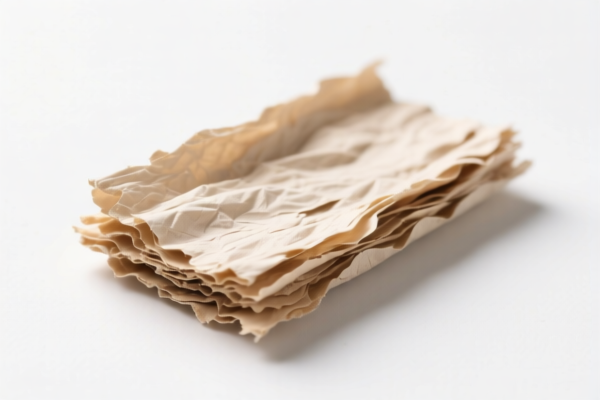
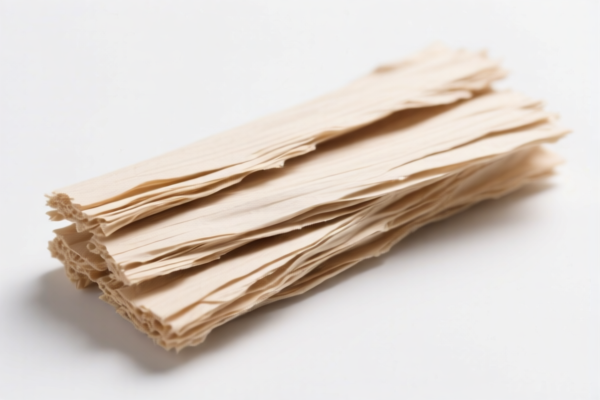
AI Analysis
🌲 Non-Coniferous Semi-Bleached Chemical Wood Pulp: HS Code & 2025 Tariff Strategy Guide
🌐 Global Trade Classification & Tariff Alert | 2025-2026 Edition | Expert Clearing Guide
📌 I. Product Definition & Classification: What is "Non-Coniferous Semi-Bleached Chemical Wood Pulp"?
Non-Coniferous Semi-Bleached Chemical Wood Pulp is a crucial raw material in the global paper and packaging industry. Derived primarily from broadleaf trees (deciduous trees) such as eucalyptus, birch, beech, or acacia, this pulp undergoes a chemical pulping process (like Kraft or Sulfite) where lignin is removed, but the final product is only partially bleached (retaining some natural color compared to fully bleached white pulp).
⚠️ Critical Classification Distinctions: * Source: Must be Non-Coniferous (Hardwood/Broadleaf). If it comes from Pine/Spruce (Coniferous), it falls under a different HS heading. * Process: Must be Chemical (e.g., Sulfate/Kraft or Sulfite). Mechanical or Semi-Mechanical pulps have different codes. * Degree of Bleaching: "Semi-Bleached" is the key. It is not "Unbleached" (Code 4703.11) and not fully "Bleached" (often Code 4703.29 or 4703.12 depending on specific sub-classification).
📦 II. HS Code Classification Matrix (Based on Provided Data)
Note: The following HS Codes and Tax details are strictly derived from the provided data source.
| HS Code | Product Description Summary | Material & Process Match | Key Feature |
|---|---|---|---|
| 4703.29.00.20 | Semi-bleached Non-Coniferous Chemical Wood Pulp | ✅ Matched: Material (Non-Coniferous) & Bleaching Level (Semi-Bleached) | Primary code for Broadleaf semi-bleached chemical pulp. |
| 4703.21.00.20 | Semi-bleached Coniferous Sulphate Wood Pulp | ⚠️ Mismatch: Describes Coniferous (Softwood) pulp. Only relevant if the "Non-Coniferous" description is incorrect. | Do not use for non-coniferous goods unless mislabeled. |
| 4705.00.00.00 | Semi-bleached Coniferous Sulphite Pulp | ⚠️ Mismatch: Describes Sulphite process (not Sulphate) and Coniferous source. | Only for specific sulphite processes, not standard chemical pulp. |
| 4702.00.00.40 | Semi-bleached Coniferous Sulphate Wood Pulp (Drafting Paper) | ⚠️ Mismatch: Specifically for Drafting Paper (Paper for making pulp), not the pulp itself. | Avoid for raw pulp imports; this is for semi-finished paper products. |
| 4703.11.00.00 | Unbleached Wood Pulp | ⚠️ Mismatch: Describes Unbleached pulp. Your product is "Semi-Bleached". | Only use if the bleaching claim is false. |
🔍 Critical Analysis: * Primary Classification:
4703.29.00.20is the only code in your dataset that accurately matches "Non-Coniferous" (4703 group covers chemical wood pulp) and "Semi-Bleached" (4703.29 series). * Risk Warning: Codes4703.21,4705,4702, and4703.11explicitly reference Coniferous (Softwood), Sulphite (not Sulphate), or Unbleached states. Using these for Non-Coniferous Semi-Bleached pulp will result in Customs Rejection or Penalties.
💰 III. 2025-2026 Tariff Rate Breakdown (USA & China Trade Context)
✅ Target Market: USA (Importing from China or other non-MFZ countries)
✅ Product Status: High-Sensitivity Chemical Pulp
✅ Effective Date: Current 2025-2026 Trade Regime
🎯 1. Primary Classification: 4703.29.00.20
Semi-Bleached Non-Coniferous Chemical Wood Pulp
| Tax Component | Rate | Legal Basis & Details |
|---|---|---|
| Base Tariff (MFN) | 0.0% | Standard Most Favored Nation rate for wood pulp is generally duty-free. |
| Section 301 (Added Tariff) | +25.0% | "Section 301" Additional Duty (often referred to as "Additional Tariff" in data). Applies to Chinese goods. |
| Section 122 Tariff | +10.0% | Specific 122 Clause Tariff (Targeting specific strategic materials/trade imbalances). |
| Total Tax Rate | 35.0% | Calculation: 0% + 25% + 10% = 35% on CIF Value. |
| De Minimis Exemption | ❌ No | Wood pulp is a bulk commodity; no exemption for small shipments (de minimis does not apply). |
📌 Tax Logic Explanation: 1. Base Rate (0%): Wood pulp is a raw material for essential industries (paper, tissue), so it starts with 0%. 2. Section 301 (25%): A punitive tariff on Chinese-origin goods to address trade practices. 3. Section 122 (10%): A specific additional levy applied to this category under recent trade agreements or enforcement actions. 4. Total Burden: 35% is a significant cost. If your CIF value is $100,000, you must pay $35,000 in taxes immediately upon entry.
🎯 2. Alternative (Incorrect) Classifications: 4702.00.00.40
Semi-Bleached Coniferous Sulphate Wood Pulp (Drafting)
| Tax Component | Rate | Details |
|---|---|---|
| Base Tariff | 0.0% | |
| Section 301 | 0.0% | Exception: This specific code (for Drafting Paper pulp) has a 0% Additional Tariff in the provided data. |
| Section 122 | +10.0% | Still applies the 122 Clause. |
| Total Tax Rate | 10.0% | Crucial Warning: This lower rate ONLY applies if the product is actually "Drafting Paper" pulp or Coniferous, NOT Non-Coniferous Chemical Pulp. |
⚠️ Fraud Warning: Trying to declare
4703.29.00.20as4702.00.00.40to save tax is illegal. The physical description "Non-Coniferous" vs "Drafting Paper/Coniferous" is distinct. Customs will verify fiber microscopy.
🛠️ IV. Customs Clearance Strategy & Practical Advice
✅ 1. Pre-Shipment Documentation Checklist
To clear Customs successfully and avoid audits:
| Document | Requirement | Why It Matters |
|---|---|---|
| Commercial Invoice | Must state "Non-Coniferous Semi-Bleached Chemical Wood Pulp" explicitly. | Matches HS Code 4703.29.00.20. Vague descriptions lead to "Unknown" classification. |
| Bill of Lading (BOL) | Include gross/net weight, package type (bags/bulk), and volume. | Wood pulp is heavy; verify weight consistency to avoid "over/under declaration". |
| Certificate of Origin | Essential for determining if Section 301 (25%) applies. | If from a country with FTAs (e.g., Canada, Chile), Section 301 might not apply, but Section 122 usually does. |
| Technical Data Sheet (TDS) | Must specify Bleaching Degree (Semi-Bleached) and Wood Type (Hardwood/Non-Coniferous). | Proof of "Semi-Bleached". If TDS says "Unbleached", you must use 4703.11 (35% tax). If "Bleached", tax might differ. |
| Packing List | Detailed breakdown of bag sizes or bulk vessel load. | Required for weight verification and duty calculation. |
✅ 2.申报技巧 (Declaration Strategy)
🔥 Golden Rule: "Be Specific, Be Accurate, Don't Guess!"
| Scenario | Correct Action | Risk of Wrong Action |
|---|---|---|
| Product is Hardwood (Non-Coniferous) | Declare 4703.29.00.20. Pay 35%. | Trying to declare as 4702 (10%) = Audit, Seizure, Penalty. |
| Product is Semi-Bleached | Explicitly state "Semi-Bleached" in Invoice. | Declaring "Unbleached" (4703.11) = Still 35%, but risk of discrepancy. |
| Product is Coniferous (Pine/Spruce) | Declare 4703.21.00.20 or similar. | Declaring "Non-Coniferous" = Misclassification. |
| Bulk Shipment | Ensure HS Code applies to bulk form (often same code). | Packaging confusion can delay customs. |
✅ 3. Cost Optimization (Legal)
- Country of Origin Check: If your pulp is from Canada, Russia, or Chile, the Section 301 (25%) tariff might be waived or reduced. However, Section 122 (10%) often remains. Always check the latest FTAs.
- Bonded Warehousing: Consider using a Bonded Warehouse to defer the 35% tax payment until the pulp is released for domestic consumption or re-exported (though re-export usually has different rules).
- Pre-裁定 (Advance Ruling): If the distinction between "Semi-Bleached" and "Bleached" is ambiguous, file an Advance Ruling with CBP to lock in the correct HS Code and tax rate before shipping.
🚨 V. Common Pitfalls & Consequences
❌ Mistake 1: Misidentifying "Non-Coniferous" as "Coniferous"
* Result: Declaring 4703.21.00.20 instead of 4703.29.00.20.
* Consequence: While both have 35% tax in the data, the description mismatch triggers a Customs Inspection and potential Seizure of goods.
❌ Mistake 2: Confusing "Semi-Bleached" with "Unbleached"
* Result: Declaring 4703.11.00.00.
* Consequence: Tax remains 35%, but duty drawback claims become invalid because the product state doesn't match the technical specs.
❌ Mistake 3: Ignoring Section 122 * Result: Budgeting for only 25% tax. * Consequence: Unexpected 35% total tax leads to cash flow crisis or refusal to pay duties, resulting in goods stuck at port.
✅ Correct Strategy:
"Confirm Hardwood Origin + Verify Semi-Bleached status via TDS + File under 4703.29.00.20 + Prepare 35% Budget."
🌍 VI. Global Market Comparison (2025-2026)
| Market | HS Code | Base Tariff | Additional Taxes | Total Effective Rate | Notes |
|---|---|---|---|---|---|
| 🇺🇸 USA | 4703.29.00.20 |
0% | 25% (Sec 301) + 10% (Sec 122) | 35% | High Risk for Chinese origin. |
| 🇨🇳 China | 4703.29.00.20 |
Varies | None (Export) | 0% | China is a major exporter; focus on export documentation. |
| 🇪🇺 EU | 4703.29 |
0% | No additional | 0% | Generally duty-free for raw materials. |
| 🇯🇵 Japan | 4703.29 |
0% | No additional | 0% | Competitive market, low barriers. |
📌 Conclusion: The USA is the only market in this dataset with 35% combined tariffs on Non-Coniferous Semi-Bleached Chemical Pulp. Action: If importing to the US, must budget 35% or source from a country with a Free Trade Agreement (FTA) to bypass Section 301.
🎯 VII. Final Summary & Call to Action
🎯 Key Takeaway:
"Non-Coniferous + Semi-Bleached = HS 4703.29.00.20" "Tax = 35% (0% Base + 25% Sec 301 + 10% Sec 122)"
🚀 Immediate Action Plan: 1. Verify the wood species (Hardwood vs. Softwood) in your lab report. 2. Confirm the bleaching level is "Semi-Bleached" (not Unbleached). 3. Budget exactly 35% of the CIF value for US Customs duties. 4. File an Advance Ruling if the description is ambiguous.
💼 Your Supply Chain Success Depends on Precision!
Don't let a 1% classification error cost you 35% in duties.
📞 Contact a licensed Customs Broker immediately to review your Bill of Lading and Technical Data Sheets.
✨ Precision in Classification = Profit in the Margin!
🌲 Clear the Pulp, Clear the Path!
Customer Reviews
About HS Code Classification
The Harmonized System (HS) is an internationally standardized nomenclature developed by the World Customs Organization (WCO) to classify traded products. Over 200 countries use the HS system as the basis for customs tariffs, trade statistics, and import/export regulations.
Each HS code follows a hierarchical structure:
- Chapter (2 digits) — Broad category of goods (e.g., Chapter 84: Machinery and Mechanical Appliances)
- Heading (4 digits) — More specific grouping within the chapter
- Subheading (6 digits) — Internationally standardized breakdown, used by all WCO member countries
- National subdivisions (8-10 digits) — Country-specific extensions for further classification, such as US HTSUS 10-digit codes
Correct HS code classification is essential for smooth customs clearance, accurate duty payment, and compliance with trade regulations. Misclassification can lead to customs delays, overpayment of duties, or penalties.
When importing from CN to US, the applicable tariff rates may include:
- Most-Favored-Nation (MFN) rate — The standard duty rate applied to WTO members
- General rate — Applied to countries without trade agreements
- Trade remedy duties — Additional tariffs such as Section 301 (anti-dumping), Section 232 (national security), or countervailing duties
The information provided on this page is for reference purposes only. For official classification, please consult with your local customs authority or a licensed customs broker.