Non coniferous Split Poles
CN → US| HS Code | Tariff Rate | Origin | Destination | Doc |
|---|---|---|---|---|
| 4404200080 | 35.0% | CN | US | Official Doc |
| 4404200090 | 35.0% | CN | US | Official Doc |
| 4407990295 | 35.0% | CN | US | Official Doc |
| 4407290296 | 35.0% | CN | US | Official Doc |
| 4401120000 | 35.0% | CN | US | Official Doc |
| 4401220000 | 35.0% | CN | US | Official Doc |
Product Images
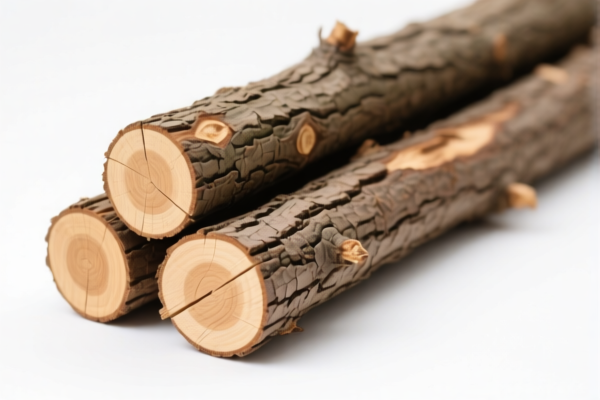
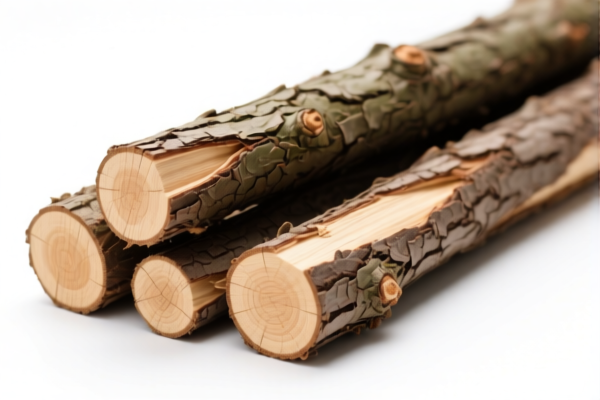
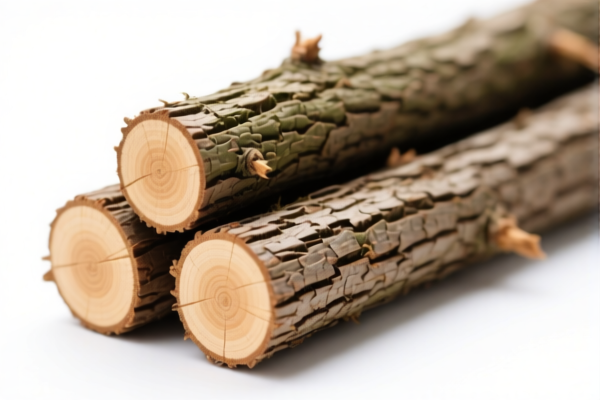
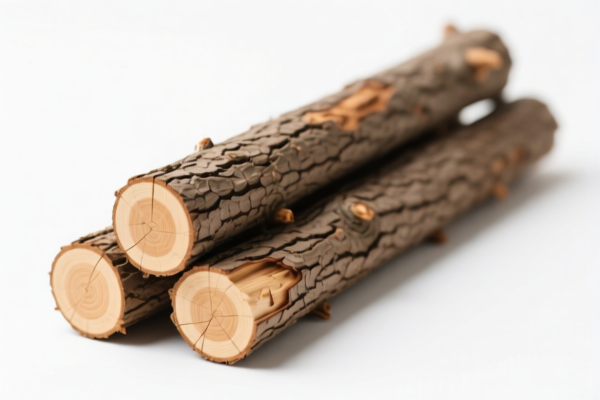
AI Analysis
🌲 Non-Coniferous Split Poles & Wood Products (Classification Guide)
🌐 HS Code Reference & Customs Clearance Guide | 2026 Latest Tariff Analysis | Strategic Compliance Strategy
📌 I. Product Definition & Classification: Do You Understand "Wood Poles"?
Non-coniferous Split Poles refer to wooden articles derived from broad-leaved (hardwood) trees, specifically processed by splitting rather than sawing. In international trade, these products are categorized based on their geometric form and processing level.
The key distinction lies in whether the wood is: 1. Split/Pointed Stakes/Poles (HS 4404): Roughly shaped, pointed at one end, or split for use as fencing, pile drivers, or construction supports. 2. Fuel Wood (HS 4401): Prepared specifically for burning (logs, billets, chips). 3. Sawn Wood (HS 4407): Planks, beams, or veneers sliced lengthwise for furniture or flooring.
⚠️ Critical Distinction Point:
- If the wood is roughly trimmed, pointed, or split but not planed, sanded, or joined into boards → It falls under Chapter 4404.
- If the wood is chipped, in logs, or used as fuel → It falls under Chapter 4401.
- If the wood is sliced, planed, or sawn into specific dimensions (>6mm thickness) → It falls under Chapter 4407.
📦 II. HS Code Classification Details (2026 Latest Tariff Authority Cross-Reference)
| HS Code | Product Description | Application Scenario | Processing Level |
|---|---|---|---|
4404.20.00.80 |
Nonconiferous Poles, piles, and posts | Fence posts, railway sleepers, construction piles | ✅ Split/Pointed, Not Sawn Lengthwise |
4404.20.00.90 |
Nonconiferous Other (Hoopwood/Stakes) | Walking stick blanks, umbrella handles, chipwood | ✅ Roughly Trimmed, Not Turned/Bent |
4401.12.00.00 |
Fuel Wood, Nonconiferous (Logs/Billets) | Firewood, biomass fuel pellets, logs for heating | ✅ For Combustion |
4401.22.00.00 |
Wood in Chips or Particles, Nonconiferous | Wood chips for paper pulp, biomass energy | ✅ Chipped/Granular |
4407.99.02.95 |
Other Wood Sawn/Sliced, Nonconiferous | General hardwood lumber, planks, boards | ✅ Sliced/Sawn, Planed/Sanded |
4407.29.02.96 |
Tropical Wood, Other, Nonconiferous | Tropical hardwood planks, exotic lumber | ✅ Sliced/Sawn, Tropical Origin |
🔍 Key Reminder:
- Split poles and stakes are distinct from sawn timber. They retain the natural grain structure and are not processed into standardized board dimensions. - Fuel wood is strictly defined by its intended use (combustion), regardless of shape (logs vs. chips). - Tropical wood (e.g., Teak, Mahogany) used for lumber falls under4407.29..., while general non-coniferous hardwood lumber falls under4407.99....
💰 III. 2026 Latest Tariff Rate Breakdown (Including Additional Taxes & Policy Add-ons)
✅ Applicable Country: United States (US)
✅ Origin: China (CN)
✅ Effective Date: November 10, 2025 (and subsequent imports)
🎯 1. 4404.20.00.80 & 4404.20.00.90 —— Non-Coniferous Split Poles, Stakes, and Poles
| Item | Content |
|---|---|
| Base Tariff Rate | 0% (ad valorem) |
| USITC Additional Tariff | +25% (Pursuant to USITC Footnote 9903.88.01 / Section 301) |
| Total Tariff Rate | 25.0% |
| Tax Calculation | CIF Value × 25% |
| De Minimis Exemption Available? | ❌ No (deny_de_minimis) |
| Legal Basis Path | USITC:4404.20.00.80/90 → FOOTNOTE:9903.88.01 |
📌 Explanation:
- Although the base MFN tariff is 0%, a 25% additional tariff applies to Chinese-origin wood products in this category. - This is a high-cost item for importers. The 25% rate is flat and applies to the CIF value. - Note: These goods are not eligible for de minimis exceptions (Section 321). Shipments under $800 must still declare and pay the 25% duty.
🎯 2. 4401.12.00.00 & 4401.22.00.00 —— Fuel Wood & Wood Chips (Non-Coniferous)
| Item | Content |
|---|---|
| Base Tariff Rate | 0% (ad valorem) |
| USITC Additional Tariff | +25% |
| Total Tariff Rate | 25.0% |
| Tax Calculation | CIF Value × 25% |
| De Minimis Exemption Available? | ❌ No |
📌 Note:
- Biomass and fuel wood face the same 25% additional tariff. - Ensure accurate declaration of "Fuel Wood" vs. "Wood Chips" based on physical form to avoid misclassification penalties.
🎯 3. 4407.99.02.95 & 4407.29.02.96 —— Sawn/Sliced Hardwood Lumber
| Item | Content |
|---|---|
| Base Tariff Rate | 0% (ad valorem) |
| USITC Additional Tariff | +25% |
| Total Tariff Rate | 25.0% |
| Tax Calculation | CIF Value × 25% |
| De Minimis Exemption Available? | ❌ No |
📌 Note:
- Processed hardwood lumber (planks, boards) also incurs the 25% additional tariff. - Misdeclaring sawn lumber as split poles (4404) to seek different treatment is risky; customs may reclassify based on physical evidence.
🛠️ IV. Customs Clearance Practical Advice (Real-World Pitfall Prevention)
✅ 1. Documentation Checklist (Non-Negotiable)
| Document | Must Provide | Description |
|---|---|---|
| ✅ Product Specification Sheet | ✔️ | Dimensions, wood species (e.g., Oak, Hickory), treatment status (heat-treated/fumigated) |
| ✅ Processing Method Proof | ✔️ | Photos or technical docs showing splitting vs. sawing. Crucial for 4404 vs. 4407. |
| ✅ Commercial Invoice | ✔️ | Clear description: "Non-coniferous Split Poles, Pointed Ends" |
| ✅ Packing List | ✔️ | Weight, volume, number of units. Ensure consistency with invoice. |
| ✅ Phytosanitary Certificate | ✔️ | Mandatory for all wood products. Must show no pests. |
| ✅ ISPM 15 Marking (if applicable) | ✔️ | If pallets or packaging are made of raw wood, they must be stamped. |
| ✅ Certificate of Origin | ✔️ | To prove origin (China). |
✅ 2. Declaration Tips (Key Mantras)
🔥 "Split Not Saw, Pointed Not Planed, Fuel for Burn, Lumber for Build!"
| Scenario | Correct Declaration | Wrong Practice |
|---|---|---|
| Rough, pointed fence posts | 4404.20.00.80 |
Misdeclare as "Lumber" → Higher duty/risk |
| Rough sticks for handles | 4404.20.00.90 |
Misdeclare as "Tools" → Penalty |
| Logs for burning | 4401.12.00.00 |
Misdeclare as "Raw Material" → Delay |
| Sanded planks for flooring | 4407.99.02.95 |
Misdeclare as "Poles" → Rejection |
✅ 3. Special Case Handling
| Situation | Handling Advice |
|---|---|
| Wood Treated with Chemicals | Must declare "Treated Wood" in invoice. May require additional environmental declarations. |
| Mixed Shipments (Poles + Lumber) | Do not combine in one HS Code. Split line items clearly. Misclassification leads to audits. |
| Tropical Wood Identification | Provide species names (e.g., "Teak") for 4407.29.... Generic "Hardwood" may cause delays. |
| Biomass/Fuel Wood | Ensure moisture content and density specs are clear to distinguish from "wood waste." |
🌍 V. Global Market Comparison (2026 Latest)
| Country/Region | Recommended HS Code | Tariff (China Origin) | Certification | Notes |
|---|---|---|---|---|
| 🇺🇸 USA | 4404.20.00.80 / 4404.20.00.90 |
25% (Base 0% + 25%) | Phytosanitary + ISPM 15 | High compliance cost. No de minimis. |
| 🇨🇳 China | 4404.20.00 |
0-5% (Varies) | None (Domestic) | Low barrier for domestic trade. |
| 🇪🇺 EU | 4404.20 |
0% (Most) | Timber Regulation (EUTR) | Strict due diligence required for legality. |
| 🇯🇵 Japan | 4404.20 |
0-3.2% | Phytosanitary | Quality standards are strict. |
📌 Conclusion:
- The US market is the most expensive due to the 25% additional tariff on all listed wood products. - EU and Japan have lower direct tariffs but stricter phytosanitary and legality documentation. - Misclassification risk is high between4404(split) and4407(sawn). Ensure physical evidence supports your HS code.
📌 VI. Common Mistakes & Pitfall Guide (Lessons Learned)
❌ Mistake 1: Declaring sawn lumber as split poles to avoid documentation complexity.
👉 Consequence: Customs inspection reveals saw marks → Reclassification, fines, and cargo hold.
❌ Mistake 2: Ignoring Phytosanitary Certificates.
👉 Consequence: Cargo detained or destroyed due to pest risk.
❌ Mistake 3: Assuming De Minimis ($800) applies.
👉 Consequence: 25% duty still owed on small shipments. Do not rely on Section 321.
❌ Mistake 4: Mixing fuel wood and lumber in one invoice line.
👉 Consequence: Customs rejects the entry or applies the higher duty rate to all items.
✅ Correct Practice:
"Non-Coniferous Hardwood Split Poles, Pointed Ends, Heat-Treated, No Chemical Preservative, Model XYZ, Phytosanitary Certified"
🎯 VII. Conclusion: Precision in Classification Saves Money!
🎯 Remember the Mantra:
🔹 "Split is 4404, Saw is 4407, Fuel is 4401. 25% Tax Hits All, De Minimis No Fall!"
🔹 "HS Code Determines Duty, 25% is the Rule, Misclassification Costs You Gold!"
📌 Pro Tip:
If your wood products are sourced from Vietnam, Mexico, or Thailand, they may be exempt from the 25% Section 301 tariff (if originating properly).
✅ Recommendation: Apply for an Advance Ruling with US CBP before shipping to confirm your HS code and tariff status.
📣 Immediate Action Required:
📞 Contact a licensed customs broker + Provide Product Photos + Verify Phytosanitary Compliance
🚀 Ensure Smooth Clearance, Avoid Delays, Protect Your Margins!
✨ Professional Clearance Starts with Accurate Classification!
💼 Every Percent of Duty Saved is Profit Earned!
Customer Reviews
About HS Code Classification
The Harmonized System (HS) is an internationally standardized nomenclature developed by the World Customs Organization (WCO) to classify traded products. Over 200 countries use the HS system as the basis for customs tariffs, trade statistics, and import/export regulations.
Each HS code follows a hierarchical structure:
- Chapter (2 digits) — Broad category of goods (e.g., Chapter 84: Machinery and Mechanical Appliances)
- Heading (4 digits) — More specific grouping within the chapter
- Subheading (6 digits) — Internationally standardized breakdown, used by all WCO member countries
- National subdivisions (8-10 digits) — Country-specific extensions for further classification, such as US HTSUS 10-digit codes
Correct HS code classification is essential for smooth customs clearance, accurate duty payment, and compliance with trade regulations. Misclassification can lead to customs delays, overpayment of duties, or penalties.
When importing from CN to US, the applicable tariff rates may include:
- Most-Favored-Nation (MFN) rate — The standard duty rate applied to WTO members
- General rate — Applied to countries without trade agreements
- Trade remedy duties — Additional tariffs such as Section 301 (anti-dumping), Section 232 (national security), or countervailing duties
The information provided on this page is for reference purposes only. For official classification, please consult with your local customs authority or a licensed customs broker.