Non coniferous Wood for Walking Sticks
CN → US| HS Code | Tariff Rate | Origin | Destination | Doc |
|---|---|---|---|---|
| 4421999880 | 38.3% | CN | US | Official Doc |
| 4421919880 | 38.3% | CN | US | Official Doc |
Product Images
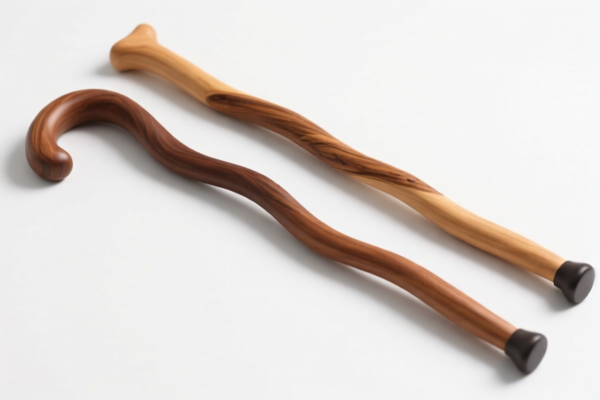
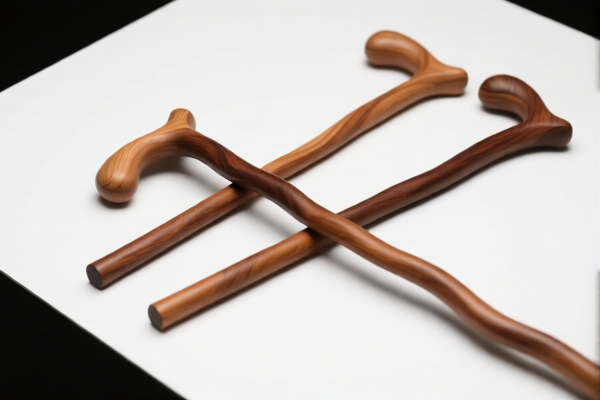
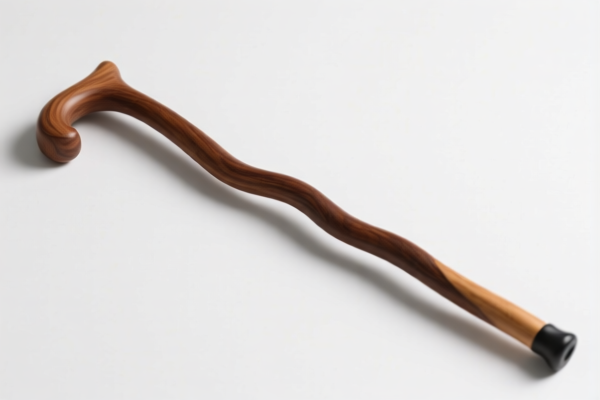
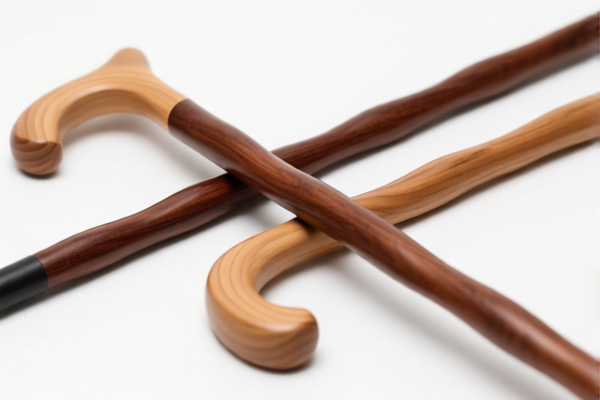
AI Analysis
🦯 Non-Coniferous Wood for Walking Sticks
🌐 HS Code Reference & Customs Clearance Guide | 2026 Latest Tariff Full Analysis | Professional-Level Clearance Strategy
📌 I. Product Definition & Classification: What Exactly Is "Non-Coniferous Wood for Walking Sticks"?
Walking sticks are more than just mobility aids; they are cultural artifacts, fashion accessories, and tools for hiking. In international trade, they fall under Chapter 44 (Wood and Articles of Wood). Specifically, walking sticks made from non-coniferous wood (hardwoods like oak, walnut, ash, cherry, etc.) are classified as "Other articles of wood."
⚠️ Key Distinction:
- Non-Coniferous Wood (Hardwood): Classified under 4421.99.98.80.
- Bamboo Walking Sticks: Classified under 4421.91.98.80.
- Coniferous Wood (Softwood): If the stick is made from pine, fir, or spruce, it generally falls under different subheadings (e.g., 4421.99.98.80 still applies if "other," but bamboo is distinct).🚨 Critical Note:
- Bamboo is NOT a wood; it is a grass. Therefore, bamboo walking sticks have a separate HS Code (4421.91...) compared to true hardwoods (4421.99...).
- Misclassifying bamboo as "non-coniferous wood" or vice versa can lead to customs delays or penalties.
📦 II. HS Code Classification Details (2026 Latest Tariff Authority Comparison)
| HS Code | Product Description | Material Type | Applicable Scenario |
|---|---|---|---|
4421.99.98.80 |
Other articles of wood: Other: Other: Other: Other | Non-Coniferous Wood (Oak, Walnut, Ash, Cherry, etc.) | Traditional hardwood walking sticks, hiking staffs made from hardwood |
4421.91.98.80 |
Other articles of wood: Other: Of bamboo: Other: Other | Bamboo | Bamboo walking sticks, trekking poles made from bamboo |
🔍 Important Reminder:
-4421.99.98.80is for TRUE WOOD that is NOT coniferous (softwood) and NOT bamboo.
-4421.91.98.80is exclusively for BAMBOO.
- Even if a walking stick is made from "non-coniferous wood," if it is specifically bamboo, you MUST use4421.91....
💰 III. 2026 Latest Tariff Rate Breakdown (Including Additional Duties & Policy Surcharges)
✅ Applicable Country: United States (US)
✅ Origin: China (CN)
✅ Effective Date: November 10, 2025 onwards (including subsequent imports)
🎯 1. 4421.99.98.80 – Other Articles of Wood (Non-Coniferous, Not Bamboo)
| Item | Details |
|---|---|
| Base Tariff | 3.3% (ad valorem) |
| Section 301 Additional Tariff | +25.0% |
| Total Tariff Rate | 28.3% |
| Tax Calculation | CIF Value × 28.3% |
| De Minimis Exemption | ❌ Not Eligible (deny_de_minimis) |
| Legal Basis | Section 301: 4421.99.98.80 |
📌 Explanation:
- 3.3% is the standard Most-Favored-Nation (MFN) base tariff for "other articles of wood."
- 25.0% is the Section 301 additional tariff imposed on Chinese-origin goods listed in the US Trade Representative (USTR) list.
- Total: 28.3%. This is a high tariff rate, significantly impacting profitability.
- De Minimis (Section 321): Walking sticks classified under these HS codes are explicitly excluded from the $800 de minimis exemption. This means every single item is subject to full duty and customs processing, regardless of value.
🎯 2. 4421.91.98.80 – Other Articles of Wood: Of Bamboo
| Item | Details |
|---|---|
| Base Tariff | 3.3% (ad valorem) |
| Section 301 Additional Tariff | +25.0% |
| Total Tariff Rate | 28.3% |
| Tax Calculation | CIF Value × 28.3% |
| De Minimis Exemption | ❌ Not Eligible (deny_de_minimis) |
| Legal Basis | Section 301: 4421.91.98.80 |
📌 Note:
- Bamboo products from China are also subject to the 25% Section 301 tariff.
- Total: 28.3%.
- Same high tariff rate as non-coniferous wood.
- De Minimis Excluded: Like hardwood walking sticks, bamboo walking sticks from China cannot be shipped via de minimis (Section 321) to avoid duties.
🛠️ IV. Customs Clearance Practical Advice (Pitfall Avoidance Guide)
✅ 1. Required Documentation Checklist (Mandatory)
| Document | Required | Description |
|---|---|---|
| ✅ Product Specification Sheet | ✔️ | Must clearly state material: "Non-coniferous wood (e.g., Oak)" or "Bamboo." |
| ✅ Material Composition Statement | ✔️ | Explicitly declare if bamboo or hardwood. Avoid vague terms like "wooden stick." |
| ✅ Product Photos | ✔️ | Show the grain pattern. Hardwood has visible grain; bamboo has nodes. |
| ✅ Commercial Invoice | ✔️ | Must match HS Code exactly. Describe as "Wooden Walking Stick" or "Bamboo Walking Stick." |
| ✅ Packing List | ✔️ | Include quantity, weight, and dimensions. |
| ✅ Certificate of Origin (CO) | ✔️ | To prove origin is China (if applicable) for tariff application. |
✅ 2. Declaration Tips (Key Mnemonic)
🔥 "Material First, Bamboo Separate, No De Minimis, Tariff 28.3%!"
| Scenario | Correct Declaration | Wrong Practice |
|---|---|---|
| Hardwood Stick (Oak, Walnut) | HS: 4421.99.98.80Desc: "Non-coniferous wooden walking stick" |
Mislabel as "Bamboo" → Wrong HS |
| Bamboo Stick | HS: 4421.91.98.80Desc: "Bamboo walking stick" |
Mislabel as "Wood" → Wrong HS |
| Softwood Stick (Pine, Fir) | HS: 4421.99.98.80 (if "other")Desc: "Coniferous wooden walking stick" |
Same HS as hardwood, but material differs. |
| Mixed Packaging (Stick + Bag) | Declare stick under 4421..., bag under its own HS |
Do not combine into one wrong HS |
📌 Critical Point:
- Do NOT use "De Minimis" shipping for Chinese-made walking sticks. Customs will reject the entry, demand full duties, and possibly assess penalties.
- Material Declaration is Key: "Non-coniferous wood" and "Bamboo" have different HS Codes. Even though the tax rate is the same (28.3%), misclassification can lead to inspections and delays.
✅ 3. Special Cases
| Case | Handling Advice |
|---|---|
| Customized/Engraved Sticks | Still classified under 4421.99.98.80 or 4421.91.98.80. Engraving does not change the HS Code. |
| Walking Sticks with Metal Tips | If the metal tip is integral, the good is still classified under HS 4421. Do not split the shipment. |
| Gift Sets (Stick + Case) | Declare the stick under 4421... and the case under its own HS (e.g., leather goods). Do not lump them together. |
| Samples | Even samples are subject to 28.3% tariff and cannot use de minimis. |
🌍 V. Global Market Comparison (2026 Latest)
| Country/Region | Recommended HS Code | Tariff (China Origin) | Certification | Notes |
|---|---|---|---|---|
| 🇺🇸 USA | 4421.99.98.80 / 4421.91.98.80 |
28.3% (3.3% Base + 25% Section 301) | None required | No De Minimis. High tariff. |
| 🇨🇳 China | 4421.99.98.80 / 4421.91.98.80 |
0% (Export) | N/A | Export duty is 0%. |
| 🇪🇺 EU | 4421.99.98.80 / 4421.91.98.80 |
Varies (approx. 4.5%) | CE Marking (if functional aid) | No Section 301 equivalent. |
| 🇬🇧 UK | 4421.99.98.80 / 4421.91.98.80 |
Varies (approx. 4.5%) | UKCA Marking | Post-Brexit rules apply. |
| 🇦🇺 Australia | 4421.99.98.80 / 4421.91.98.80 |
5% | N/A | Lower tariff than US. |
📌 Conclusion:
- USA is the most difficult market for Chinese walking sticks due to the 25% Section 301 tariff and exclusion from De Minimis.
- Total cost impact: 28.3% tariff + logistics + compliance = significantly higher landed cost.
- Alternative Markets: EU, UK, and Australia have much lower tariffs (~4.5%-5%) and no additional punitive tariffs.
📌 VI. Common Mistakes & Pitfalls (Blood & Tears Lessons)
❌ Mistake 1: Using "De Minimis" (Section 321) for shipments under $800
👉 Consequence: Customs will reject the entry, demand full 28.3% duty + handling fees + penalties. Delays of 2-4 weeks.
❌ Mistake 2: Misclassifying Bamboo as "Non-Coniferous Wood" or vice versa
👉 Consequence: Although the tax rate is the same, incorrect HS Code triggers manual review, leading to customs holds and potential fines.
❌ Mistake 3: Not declaring "Material" accurately
👉 Consequence: If declared as "Plastic" or "Metal," but found to be Wood, this is fraud. Results in confiscation and legal action.
❌ Mistake 4: Assuming all wood products are the same
👉 Consequence: Coniferous vs. Non-coniferous vs. Bamboo matters for HS Code structure, even if tax is similar. Precision is key.
✅ Correct Approach:
"Wooden Walking Stick, Non-Coniferous (Oak), Made in China, HS 4421.99.98.80, No De Minimis Eligibility"
🎯 VII. Conclusion: Professional Declaration, Save Time, Reduce Costs!
🎯 Remember the Mnemonic:
🔹 "Bamboo vs. Wood, Separate Codes. 28.3% Total, De Minimis Gone. Declare Material, Avoid the Stuck."
🔹 "HS Code Determines Fate, 28.3% is Heavy, Declaration Must Be Steady."
📌 Pro Tip:
- If shipping to the USA, consider shifting sourcing to Vietnam, Thailand, or India for walking sticks to avoid Section 301 tariffs.
- Pre-ruling: Request an Advance Ruling from US CBP if you have large volumes, to confirm HS Code classification before shipment.
📣 Immediate Action:
📞 Contact a professional customs broker + Provide material details + Apply for HS Code pre-ruling
🚀 Ensure your walking sticks, clear customs smoothly, export efficiently, protect profits!
✨ Professional Customs Clearance Starts with Accurate Classification!
💼 Every cent of your cost deserves precise calculation!
Customer Reviews
About HS Code Classification
The Harmonized System (HS) is an internationally standardized nomenclature developed by the World Customs Organization (WCO) to classify traded products. Over 200 countries use the HS system as the basis for customs tariffs, trade statistics, and import/export regulations.
Each HS code follows a hierarchical structure:
- Chapter (2 digits) — Broad category of goods (e.g., Chapter 84: Machinery and Mechanical Appliances)
- Heading (4 digits) — More specific grouping within the chapter
- Subheading (6 digits) — Internationally standardized breakdown, used by all WCO member countries
- National subdivisions (8-10 digits) — Country-specific extensions for further classification, such as US HTSUS 10-digit codes
Correct HS code classification is essential for smooth customs clearance, accurate duty payment, and compliance with trade regulations. Misclassification can lead to customs delays, overpayment of duties, or penalties.
When importing from CN to US, the applicable tariff rates may include:
- Most-Favored-Nation (MFN) rate — The standard duty rate applied to WTO members
- General rate — Applied to countries without trade agreements
- Trade remedy duties — Additional tariffs such as Section 301 (anti-dumping), Section 232 (national security), or countervailing duties
The information provided on this page is for reference purposes only. For official classification, please consult with your local customs authority or a licensed customs broker.