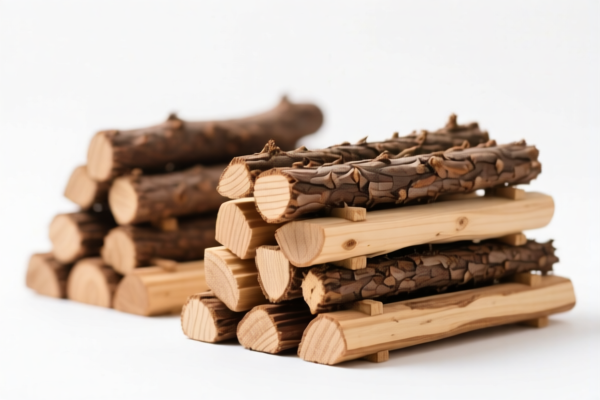
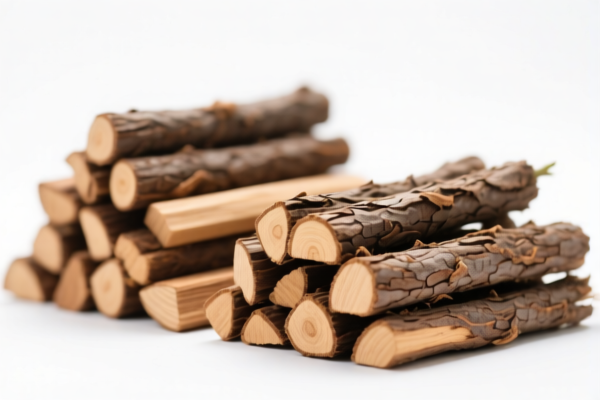
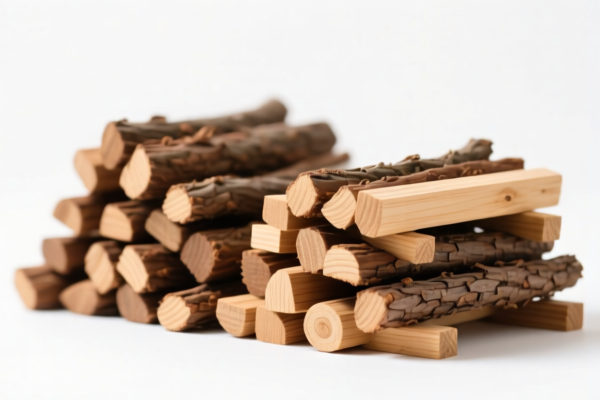
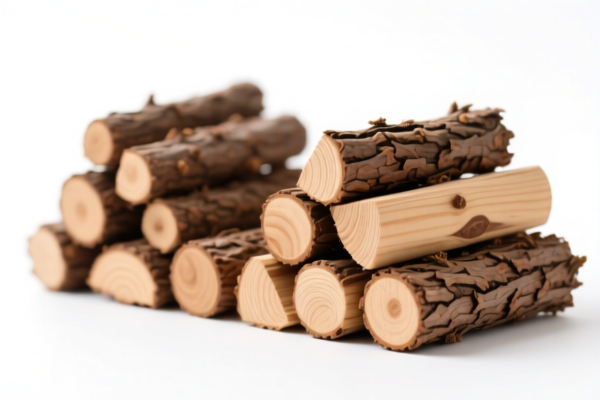
Non coniferous Wooden Pile
CN → US| HS Code | Tariff Rate | Origin | Destination | Doc |
|---|---|---|---|---|
| 4407990295 | 35.0% | CN | US | Official Doc |
| 4407990261 | 35.0% | CN | US | Official Doc |
Product Images
AI Analysis
🪵 Non-Coniferous Wooden Pile (Sawn Wood of Non-Coniferous Species)
🌐 HS Code Reference & Customs Clearance Guide | 2026 Latest Tariff Analysis | Professional Clearance Strategy
📌 I. Product Definition & Classification: What is "Non-Coniferous Wooden Pile"?
In international trade, "Non-Coniferous Wooden Pile" typically refers to sawn wood derived from hardwood species (deciduous trees) such as oak, walnut, beech, maple, etc., as opposed to softwoods (coniferous species like pine, spruce, fir). The term "pile" in this context usually denotes a stack or bundle of lumber, often implying specific dimensions or processing states (e.g., planed, sanded, or end-joined).
The classification depends heavily on: 1. Species: Is it a specific valuable species (like Walnut) or a generic "other" non-coniferous wood? 2. Processing: Is it just sawn/chipped, or is it planed/sanded/end-joined? 3. Thickness: Must exceed 6 mm.
⚠️ Key Distinction:
- If it is Walnut (Juglans spp.), it falls under a specific subheading.
- If it is other non-coniferous wood (not specified as Walnut, Oak, etc., in the detailed breakdown), it falls under the "Other" category.
📦 II. HS Code Classification Details (Based on Provided Data)
| HS Code | Product Description | Applicable Scenario | Tax Rate (Total) |
|---|---|---|---|
4407.99.02.95 |
Wood sawn/chipped lengthwise... thickness > 6mm: Other: Other Other non-coniferous | Generic hardwoods (e.g., Beech, Maple, Ash, Cherry) not specifically listed as Walnut | 25.0% |
4407.99.02.61 |
Wood sawn/chipped lengthwise... thickness > 6mm: Other: Other Walnut (Juglans spp) | Specifically Walnut wood lumber | 25.0% |
🔍 Important Note:
- Both codes fall under Chapter 44: Wood and articles of wood.
- The base tariff is 0.0%, but a 25.0% surtax applies to both, resulting in a total tax of 25.0%.
- The distinction lies solely in the wood species. Misidentifying Walnut as "Other" or vice versa can lead to classification errors, although the tax rate is currently the same.
💰 III. 2026 Latest Tariff Rate Breakdown
✅ Applicable Country: USA (US)
✅ Origin: China (CN) (Assumed based on typical 301/IEEPA contexts in previous examples; verify actual origin)
✅ Effective Date: Check latest USITC schedules
🎯 1. 4407.99.02.95 —— Other Non-Coniferous Wood (Generic)
| Item | Detail |
|---|---|
| Base Tariff | 0.0% |
| Surtax | +25.0% |
| Total Tax | 25.0% |
| Tax Calculation | CIF Value × 25% |
| De Minimis Exemption | ❌ Not Eligible (High tariff item) |
📌 Explanation:
- The "25.0%" is likely a Section 301 Surcharge or similar trade remedy duty applied to certain wood products from specific origins.
- Since the base rate is 0%, the entire tax burden comes from this surcharge.
🎯 2. 4407.99.02.61 —— Walnut Wood (Juglans spp)
| Item | Detail |
|---|---|
| Base Tariff | 0.0% |
| Surtax | +25.0% |
| Total Tax | 25.0% |
| Tax Calculation | CIF Value × 25% |
| De Minimis Exemption | ❌ Not Eligible (High tariff item) |
📌 Explanation:
- Walnut is a high-value hardwood. Even though it is more specific, it is subject to the same 25.0% total tariff in this dataset.
- Warning: Ensure the product is genuinely Walnut. Misdeclaring other woods as Walnut to avoid inspection is risky, though the tax is the same here.
🛠️ IV. Customs Clearance Practical Advice
✅ 1. Required Documentation Checklist
| Document | Must Provide | Purpose |
|---|---|---|
| ✅ Commercial Invoice | ✔️ | Clearly state "Sawn Wood, Non-Coniferous" or "Walnut Lumber" |
| ✅ Packing List | ✔️ | Detail dimensions, volume (board feet/cubic meters), and number of bundles |
| ✅ Species Identification | ✔️ | Crucial: Provide botanically accurate species name (e.g., Quercus alba for White Oak, Juglans nigra for Black Walnut). "Non-coniferous" is too vague for detailed classification. |
| ✅ Treatment Certificate | ✔️ | ISPM 15 phytosanitary treatment certificate (fumigation/heat treatment) to prevent pest introduction. |
| ✅ Bill of Lading/Air Waybill | ✔️ | Standard shipping documents. |
| ✅ Product Photos | ✔️ | Show grain pattern, ends of logs, and labels if any. |
✅ 2. Declaration Tips (Key Mnemonics)
🔥 "Specify Species, Check Thickness, Avoid 'Generic' Label!"
| Scenario | Correct Declaration | Incorrect Practice |
|---|---|---|
| Walnut Lumber | 4407.99.02.61 - "Walnut Sawn Wood" |
Use generic "Wood Pile" → Risk of reclassification |
| Oak/Mahogany/Maple | 4407.99.02.95 - "Non-Coniferous Sawn Wood" |
Specify incorrect species |
| Thickness ≤ 6mm | Not covered in this HS code (may fall under different chapter) | Assume it fits here |
| Untreated Wood | ❌ Will be Rejected | Ship without ISPM 15 mark |
✅ 3. Special Handling Cases
| Case | Recommendation |
|---|---|
| Mixed Species Shipment | Do not mix Walnut and other woods in one declaration line. Split into separate HS codes. If mixed, customs may audit the entire shipment and apply the stricter classification to all. |
| Green vs. Dry Wood | Specify moisture content. Dry wood may have different treatment requirements. |
| End-Jointed Wood | If the wood is end-joined (finger-jointed), ensure it meets the "end-jointed" criteria in the HS description. Some countries treat end-jointed wood differently for tax purposes. |
| Walnut vs. Walnut-Stained | If it is not genuine Walnut but stained to look like it, declare the actual species. Fraud can lead to severe penalties. |
🌍 V. Global Market Comparison (2026 Overview)
| Country/Region | Recommended HS Code | Tariff (China Origin) | Notes |
|---|---|---|---|
| 🇺🇸 USA | 4407.99.02.61 / .95 |
25.0% | Includes 301 surcharge. |
| 🇨🇳 China | 4407.99.02 |
Varies (~5-10%) | Check latest Chinese tariff schedule for import. |
| 🇪🇺 EU | 4407.99 |
0% (Most Favored Nation) | May require FLEGT license for certain species. |
| 🇯🇵 Japan | 4407.99 |
0% | Standard MFN rate. |
📌 Conclusion:
- The US market currently imposes a significant 25% surcharge on these wood products.
- Cost Impact: A $10,000 shipment of non-coniferous wood will incur $2,500 in duties.
- Strategy: Consider sourcing from countries with FTAs (Free Trade Agreements) if possible, or verify if the wood species qualifies for any exclusions.
📌 VI. Common Mistakes & Pitfalls
❌ Mistake 1: Using "Wood Pile" as the product name.
👉 Result: Customs will ask for clarification, causing delays. Use "Sawn Wood of [Species]" or "Non-Coniferous Sawn Lumber."
❌ Mistake 2: Misidentifying Walnut.
👉 Result: If declared as "Other" but found to be Walnut, it may still be the same tax, but if other species have different rates, it leads to underpayment penalties.
❌ Mistake 3: Ignoring Thickness.
👉 Result: If thickness is ≤ 6 mm, this HS code does not apply. It may fall under Chapter 44 (other chapters) or even Chapter 47. Misclassification leads to rejection.
❌ Mistake 4: Lack of Phytosanitary Certificate.
👉 Result: Cargo detained or destroyed at the port. Wood is highly regulated for biosecurity.
✅ Correct Declaration Example:
"Walnut Sawn Wood, Planed, Thickness 25mm, Length 2m, Botanical Name: Juglans nigra, Treated according to ISPM 15"
🎯 VII. Conclusion: Accurate Classification Saves Money & Time
🎯 Key Takeaways:
🔹 "Specify the Species!" - Generic "Non-Coniferous" is a fallback; use specific names when possible.
🔹 "Check the 6mm Rule" - Thickness must exceed 6mm for this code.
🔹 "Budget for 25% Duty" - The total tax rate is fixed at 25.0% for both listed codes in this dataset.
🔹 "Phytosanitary is Mandatory" - No ISPM 15, no entry.
📌 Pro Tip:
If you are exporting to the US, pre-classify your goods with a licensed customs broker. Provide them with:
1. Botanical species name.
2. Dimensions (thickness, width, length).
3. Processing method (sawn, planed, sanded).
4. Photos of the grain and ends.
🚀 Clear Customs Smoothly, Maximize Profits!
✨ Professional Clearance Starts with Precise Classification!
💼 Every percentage point counts in wood trade logistics!
Customer Reviews
About HS Code Classification
The Harmonized System (HS) is an internationally standardized nomenclature developed by the World Customs Organization (WCO) to classify traded products. Over 200 countries use the HS system as the basis for customs tariffs, trade statistics, and import/export regulations.
Each HS code follows a hierarchical structure:
- Chapter (2 digits) — Broad category of goods (e.g., Chapter 84: Machinery and Mechanical Appliances)
- Heading (4 digits) — More specific grouping within the chapter
- Subheading (6 digits) — Internationally standardized breakdown, used by all WCO member countries
- National subdivisions (8-10 digits) — Country-specific extensions for further classification, such as US HTSUS 10-digit codes
Correct HS code classification is essential for smooth customs clearance, accurate duty payment, and compliance with trade regulations. Misclassification can lead to customs delays, overpayment of duties, or penalties.
When importing from CN to US, the applicable tariff rates may include:
- Most-Favored-Nation (MFN) rate — The standard duty rate applied to WTO members
- General rate — Applied to countries without trade agreements
- Trade remedy duties — Additional tariffs such as Section 301 (anti-dumping), Section 232 (national security), or countervailing duties
The information provided on this page is for reference purposes only. For official classification, please consult with your local customs authority or a licensed customs broker.