Non coniferous wood dye
CN → US| HS Code | Tariff Rate | Origin | Destination | Doc |
|---|---|---|---|---|
| 3209100000 | 40.1% | CN | US | Official Doc |
| 3209900000 | 40.9% | CN | US | Official Doc |
| 3210000000 | 36.8% | CN | US | Official Doc |
Product Images
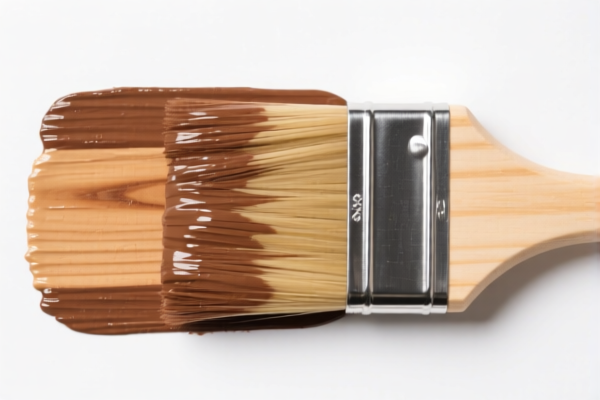
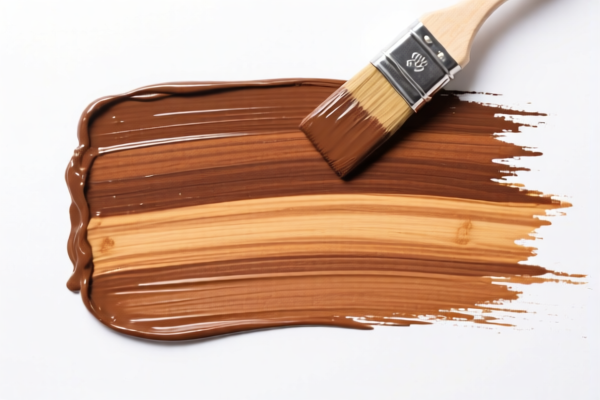

AI Analysis
🎨 Non-Coniferous Wood Dye & Preservative Coatings
🌐 HS Code Reference & Customs Clearance Guide | 2026 Latest Tariff Analysis | Professional通关 Strategy
📌 I. Product Definition & Classification: Do You Really Understand "Wood Dye"?
Non-coniferous wood dye (often formulated as preservative coatings or stains for hardwoods like oak, walnut, mahogany, etc.) falls under Chapter 32 of the Harmonized System (HS). The critical distinction for customs classification is the chemical composition and the state of the polymer used in the formulation.
In international trade, these products are primarily categorized into three sub-headings based on whether they contain synthetic polymers as the primary film-forming substance and the type of resin system used:
- Paints and Varnishes Based on Synthetic Polymers (Chapter 3209): Specifically for products where synthetic polymers are the main binder.
- Other Paints and Varnishes (Chapter 3210): For products that do not fit the strict definition of Chapter 3209 (e.g., non-polymer based or specific chemical modifications not listed elsewhere).
⚠️ Key Distinction Point:
- If the product contains synthetic polymers as the principal component → It typically falls under 3209.10 or 3209.90.
- If it is a general coating not meeting the specific polymer criteria of 3209 → It may fall under 3210.00.
📦 II. HS Code Classification Details (2026 Latest Tariff Authority对照)
| HS Code | Product Description | Application Scenario | Tax Rate (Total) |
|---|---|---|---|
3209.10.00.00 |
Paints and varnishes, based on synthetic polymers, dissolved in non-aqueous media | Non-coniferous wood preservatives/dyes where synthetic polymers are the main binder | 40.1% |
3209.90.00.00 |
Other paints and varnishes, based on synthetic polymers or chemically modified natural polymers | Non-coniferous wood coatings with modified polymers, not primarily dissolved in non-aqueous media (or other polymer types) | 40.9% |
3210.00.00.00 |
Other paints and varnishes (including enamels and liquid lacquers) | General wood dyes/preservatives that do not fit the specific polymer definitions of 3209 | 36.8% |
🔍 重点提醒 (Key Reminders):
-3209.10vs3209.90: The difference lies in the specific chemical formulation. 3209.10 is for synthetic polymers dissolved in non-aqueous media. 3209.90 covers other synthetic or chemically modified polymers.
-3210as a Fallback: If the product is a water-based dye or a natural resin-based coating that doesn't meet the synthetic polymer threshold,3210.00is the likely candidate, which carries a lower base tariff.
💰 III. 2026 Latest Tariff Rate Breakdown (Including Surtaxes & Policy Add-ons)
✅ Applicable Country: United States (US)
✅ Origin: China (CN)
✅ Effective Date: From November 10, 2025 (including subsequent imports)
🎯 1. 3209.10.00.00 —— Paints/Varnishes based on Synthetic Polymers (Non-aqueous)
| Item | Content |
|---|---|
| Base Tariff | 5.1% (ad valorem) |
| Section 301 Surtax | +25.0% (from USITC Footnote) |
| Section 122 Tariff | +10.0% (Specific clause for this category) |
| Total Tax Rate | 40.1% |
| Tax Calculation | CIF Value × 40.1% |
| De Minimis Exemption | ❌ Not Available (deny_de_minimis) |
| Legal Basis Path | Section 301 → Section 122 → USITC:3209.10.00.00 |
📌 Explanation:
- 5.1% Base: Standard most-favored-nation (MFN) rate for synthetic polymer paints.
- 25% Surtax: Part of the broader Section 301 tariffs on Chinese goods.
- 10% Section 122: A specific additional tariff applied to certain industrial coatings.
- Total 40.1%: High tariff burden. Accurate classification is crucial to avoid overpayment or penalties.
🎯 2. 3209.90.00.00 —— Other Synthetic/Modified Polymer Paints
| Item | Content |
|---|---|
| Base Tariff | 5.9% (ad valorem) |
| Section 301 Surtax | +25.0% |
| Section 122 Tariff | +10.0% |
| Total Tax Rate | 40.9% |
| Tax Calculation | CIF Value × 40.9% |
| De Minimis Exemption | ❌ Not Available |
| Legal Basis Path | Section 301 → Section 122 → USITC:3209.90.00.00 |
📌 Note:
- Slightly higher base rate (5.9%) than 3209.10.
- Applies if the product uses chemically modified natural polymers or other synthetic forms not covered by 3209.10.
🎯 3. 3210.00.00.00 —— Other Paints and Varnishes
| Item | Content |
|---|---|
| Base Tariff | 1.8% (ad valorem) |
| Section 301 Surtax | +25.0% |
| Section 122 Tariff | +10.0% |
| Total Tax Rate | 36.8% |
| Tax Calculation | CIF Value × 36.8% |
| De Minimis Exemption | ❌ Not Available |
| Legal Basis Path | Section 301 → Section 122 → USITC:3210.00.00.00 |
📌 Advantage:
- Lowest Total Rate (36.8%) among the three options.
- Suitable for water-based wood dyes, natural resin-based coatings, or products that do not strictly meet the "synthetic polymer" definition of Chapter 3209.
🛠️ IV. Customs Clearance Practical Advice (Pitfall Avoidance Guide)
✅ 1. Document Checklist (Required)
| Document | Required | Description |
|---|---|---|
| ✅ Product Specification Sheet | ✔️ | Must detail chemical composition, especially polymer type and solvent base. |
| ✅ Safety Data Sheet (SDS) | ✔️ | Classifies hazards and provides precise chemical breakdown. |
| ✅ Product Photos (Label & Container) | ✔️ | Clear view of ingredients list, brand, and application instructions. |
| ✅ Commercial Invoice | ✔️ | Clearly state "Non-Coniferous Wood Dye/Preservative Coating". |
| ✅ Certificate of Origin (CO) | ✔️ | If applicable, to verify origin for tariff calculations. |
| ✅ Packaging List | ✔️ | Detail net/gross weight and volume. |
✅ 2. Classification Strategy (Key Tips)
🔥 “Check Polymer, Then Check Solvent, Name It Right, Tariff Light!”
| Scenario | Correct HS Code | Risk of Misclassification |
|---|---|---|
| Synthetic Polymer + Non-Aqueous Solvent | 3209.10.00.00 |
If misclassified as 3209.90 → Overpay by 0.8% |
| Chemically Modified Polymer | 3209.90.00.00 |
If misclassified as 3209.10 → Base rate error |
| Water-Based or Natural Resin | 3210.00.00.00 |
Biggest Risk: Misclassifying as 3209 series → Overpay by ~4% |
| Pure Dye (No Binder) | Consult Specialist | May fall under different chapter (e.g., 3204). Do not guess. |
✅ 3. Special Situations
| Situation | Handling Advice |
|---|---|
| Water-Based Wood Dye | Likely 3210.00.00.00. Ensure SDS shows no synthetic polymer binder > threshold. |
| Oil-Based Wood Stain | Likely 3209.10.00.00 if synthetic polymers are present. |
| Natural Oil/Wax Finishes | May not be "paints/varnishes". Check Chapter 15 or 3204. |
| Preservative + Dye Combo | Classified based on the principal characteristic (usually the paint/varnish aspect if it forms a film). |
🌍 V. Global Market Comparison (2026 Latest)
| Country/Region | Recommended HS Code | Estimated Tariff (CN Origin) | Notes |
|---|---|---|---|
| 🇺🇸 USA | 3210.00.00.00 (Lowest) |
36.8% | Include Section 301 + 122 |
| 🇨🇳 China | 3210.00.00.00 |
Varies (MFN ~5-10%) | No Section 301/122 |
| 🇪🇺 EU | 3208 or 3210 |
~6.5% | REACH compliance required |
| 🇬🇧 UK | 3210 |
~5-10% | Post-Brexit rules apply |
📌 Conclusion:
- USA has the highest effective tariff due to Section 301 and 122.
- Choosing3210can save ~3-4% in total taxes if the product formulation allows (e.g., water-based or non-synthetic binder).
- Accurate SDS is your best tool for justification.
📌 VI. Common Mistakes & Pitfalls (Lessons Learned)
❌ Mistake 1: Classifying all wood dyes as 3209.10.
👉 Consequence: If it’s water-based or natural resin, you pay 40.1% instead of 36.8%. Overpayment!
❌ Mistake 2: Ignoring the "Section 122" tariff.
👉 Consequence: Underestimating landed cost by 10%. Budgeting Error!
❌ Mistake 3: Using vague descriptions like "Wood Dye" on Invoice.
👉 Consequence: Customs may upgrade classification or delay shipment. Delay Risk!
✅ Correct Approach:
"Water-Based Wood Stain for Hardwood, Non-Coniferous, No Synthetic Polymer Binder, Model XYZ, REACH Compliant"
🎯 VII. Conclusion: Precision in Classification, Savings in Tariffs
🎯 Remember:
🔹 “Synthetic Polymer? → 3209. Non-Synthetic? → 3210. Water-Based? → Likely 3210.”
🔹 “Total Tariff = Base + 25% + 10%. Check Every Time!”
📌 Pro Tip:
If your product is water-based or uses natural resins, argue for 3210.00.00.00 to save ~3-4% in tariffs. Provide a detailed SDS to prove the absence of synthetic polymers.
📣 Immediate Action:
📞 Consult a customs broker with your SDS.
🚀 Optimize supply chain costs by selecting the correct HS Code.
✨ Professional Clearance Starts with Accurate Classification!
💼 Every Percent Saved is Profit Earned!
Customer Reviews
About HS Code Classification
The Harmonized System (HS) is an internationally standardized nomenclature developed by the World Customs Organization (WCO) to classify traded products. Over 200 countries use the HS system as the basis for customs tariffs, trade statistics, and import/export regulations.
Each HS code follows a hierarchical structure:
- Chapter (2 digits) — Broad category of goods (e.g., Chapter 84: Machinery and Mechanical Appliances)
- Heading (4 digits) — More specific grouping within the chapter
- Subheading (6 digits) — Internationally standardized breakdown, used by all WCO member countries
- National subdivisions (8-10 digits) — Country-specific extensions for further classification, such as US HTSUS 10-digit codes
Correct HS code classification is essential for smooth customs clearance, accurate duty payment, and compliance with trade regulations. Misclassification can lead to customs delays, overpayment of duties, or penalties.
When importing from CN to US, the applicable tariff rates may include:
- Most-Favored-Nation (MFN) rate — The standard duty rate applied to WTO members
- General rate — Applied to countries without trade agreements
- Trade remedy duties — Additional tariffs such as Section 301 (anti-dumping), Section 232 (national security), or countervailing duties
The information provided on this page is for reference purposes only. For official classification, please consult with your local customs authority or a licensed customs broker.